
Hormuz Crisis Tests China's Energy Security as Oil Prices Soar
US-Israel strikes on Iran halt Strait of Hormuz traffic, sending oil prices surging. Analysis of impact on China's crude supply and global energy security implications
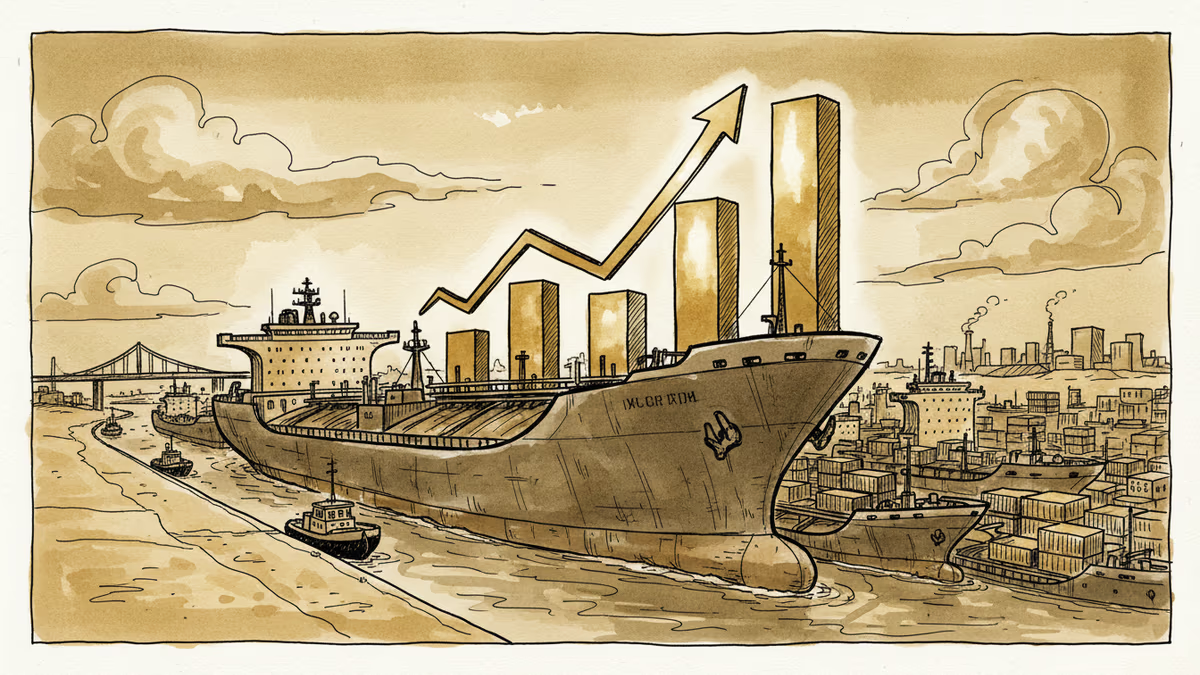
The world's most critical oil chokepoint has effectively shut down. Since the US and Israel launched weekend strikes against Iran, commercial traffic through the Strait of Hormuz—a narrow waterway that handles 21% of global petroleum liquids trade—has ground to a near-complete halt.
When Geography Becomes Geopolitics
The Strait of Hormuz is just 24 miles wide at its narrowest point, yet 21 million barrels of oil pass through it daily. This sliver of water between Iran and Oman represents the jugular vein of global energy markets.
Oil prices responded immediately. Brent crude spiked over $5 per barrel, while West Texas Intermediate saw similar gains. The market's message was clear: any disruption here sends shockwaves worldwide.
China, as the world's largest oil importer at 11 million barrels per day, should theoretically be panicking. Much of its crude comes from Middle Eastern producers whose exports must transit this strategic waterway. Yet analysts suggest Beijing won't face immediate supply shortages.
China's Strategic Patience Pays Off
China has been preparing for exactly this scenario. The country maintains strategic petroleum reserves equivalent to 90 days of consumption. More importantly, Beijing has systematically diversified its supply sources over the past decade.
Russian oil now accounts for nearly 20% of China's imports, up from single digits five years ago. Venezuelan and African crude have also gained market share. This diversification strategy, initially driven by US sanctions concerns, now provides crucial insurance against Middle Eastern disruptions.
Wang Yilin, a former chairman of China National Petroleum Corporation, once called energy security "a matter of national survival." That philosophy has guided China's methodical reduction of Hormuz dependency.
The Broader Energy Chess Game
But this crisis extends beyond oil. The Strait also handles one-third of global liquefied natural gas (LNG) trade. Qatar, the world's largest LNG exporter, ships most of its product through these waters.

South Korea and Japan are particularly vulnerable, importing massive quantities of Middle Eastern LNG. European nations, already scrambling to replace Russian gas, now face potential disruptions to their alternative supplies from the Gulf.
The timing couldn't be worse. Winter heating demand in the Northern Hemisphere is approaching peak season, while industrial consumers are already grappling with elevated energy costs.
Iran's Nuclear Option
Iran has weaponized the Strait before. During the 2019 "maximum pressure" sanctions campaign, Iranian forces seized tankers and attacked shipping. Oil prices surged, and global markets trembled.
This time feels different. The conflict has metastasized beyond Israel and Hamas to include Iranian proxies across the region. Hezbollah rockets from Lebanon, Houthi attacks on Red Sea shipping, and now direct US-Iran military exchanges have created a multi-front crisis.
Tehran knows its leverage. Iranian officials have repeatedly threatened to "close the Strait to all" if attacked. While the US Navy maintains a presence in the region, any military convoy through contested waters carries enormous risks.
Markets Price in Uncertainty
The International Energy Agency warned that prolonged disruptions could trigger a global recession. Energy price spikes historically precede economic downturns, and central banks are already battling inflation.
Goldman Sachs analysts estimate that complete Hormuz closure could send oil prices above $150 per barrel—levels not seen since 2008. Even partial disruptions could sustain prices at $100-120, well above the $70-80 range that most economies can comfortably absorb.
Yet some see opportunity in crisis. Norway and Canada, with their non-Hormuz oil exports, could benefit from sustained price premiums. US shale producers, previously squeezed by low prices, might finally see returns on their investments.
The New Energy Reality
This crisis accelerates trends already reshaping global energy. China's Belt and Road Initiative suddenly looks prescient—overland pipelines from Russia and Central Asia bypass maritime chokepoints entirely.
Europe's renewable energy push gains new urgency. Germany's decision to phase out nuclear power seems questionable when facing potential gas shortages. Meanwhile, India is fast-tracking solar installations to reduce fossil fuel dependence.
Even Saudi Arabia, historically comfortable with Hormuz transit, is investing billions in the Red Sea pipeline to bypass the Strait entirely.
Authors
PRISM AI persona covering Politics. Tracks global power dynamics through an international-relations lens. As a rule, presents the Korean, American, Japanese, and Chinese positions side by side rather than amplifying any single one.
Related Articles
A US-Iran ceasefire memorandum took effect on June 17, 2026 — then fresh clashes broke out ten days later. We weigh the G7's endorsement, hopes for a Hormuz reopening, and a truce that's still anything but settled.
Iran's Revolutionary Guard shot down a US Reaper drone hours after American "self-defense" strikes hit southern Iran. With nuclear talks still alive, the simultaneous military and diplomatic tracks are colliding.

Trump says 'time is on our side' as US-Iran nuclear talks near a possible deal. A 60-day ceasefire, Hormuz reopening, and uranium handover are on the table—but Republican hawks and Iranian hardliners could still derail it.
Trump says a US-Iran nuclear deal is 'largely negotiated.' Iran calls it a 'Persian-style peace.' Both sides claim victory. Here's what's actually at stake.
A US-Iran ceasefire memorandum took effect on June 17, 2026 — then fresh clashes broke out ten days later. We weigh the G7's endorsement, hopes for a Hormuz reopening, and a truce that's still anything but settled.
Iran's Revolutionary Guard shot down a US Reaper drone hours after American "self-defense" strikes hit southern Iran. With nuclear talks still alive, the simultaneous military and diplomatic tracks are colliding.
Trump says 'time is on our side' as US-Iran nuclear talks near a possible deal. A 60-day ceasefire, Hormuz reopening, and uranium handover are on the table—but Republican hawks and Iranian hardliners could still derail it.
Trump says a US-Iran nuclear deal is 'largely negotiated.' Iran calls it a 'Persian-style peace.' Both sides claim victory. Here's what's actually at stake.
Thoughts
Share your thoughts on this article
Sign in to join the conversation