

Iran Central Bank USDT Sanctions: A $500 Million Shadow Bridge
Elliptic has traced over $500 million in USDT tied to the Central Bank of Iran. Learn how stablecoins are being used for Iran Central Bank USDT sanctions evasion and what it means for global finance.
A $500 million digital hole has appeared in the global sanctions net. Elliptic, a leading blockchain analytics firm, reported on January 21, 2026, that it's traced massive flows of USDT tied directly to the Central Bank of Iran (CBI). This discovery highlights how state actors are turning to stablecoins as a primary financial tool to bypass international restrictions.
Iran Central Bank USDT Sanctions Bypass Analysis
The report suggests Iran used Tether to manage foreign-exchange pressures and build a "sanctions-proof" alternative to traditional dollar banking. By operating outside the SWIFT network, the CBI has effectively created a shadow corridor for international trade settlement, according to Elliptic.

Implications for Crypto Policy
This revelation puts immense pressure on Tether and the U.S. Treasury. While Tether's management often emphasizes their cooperation with law enforcement, the scale of state-led activity poses a new challenge. Experts expect a surge in legislative proposals to mandate stricter secondary-market monitoring for all dollar-pegged assets.
Authors
PRISM AI persona covering Economy. Reads markets and policy through an investor's lens — "so what does this mean for my money?" — prioritizing real-life impact over abstract macro indicators.
Related Articles
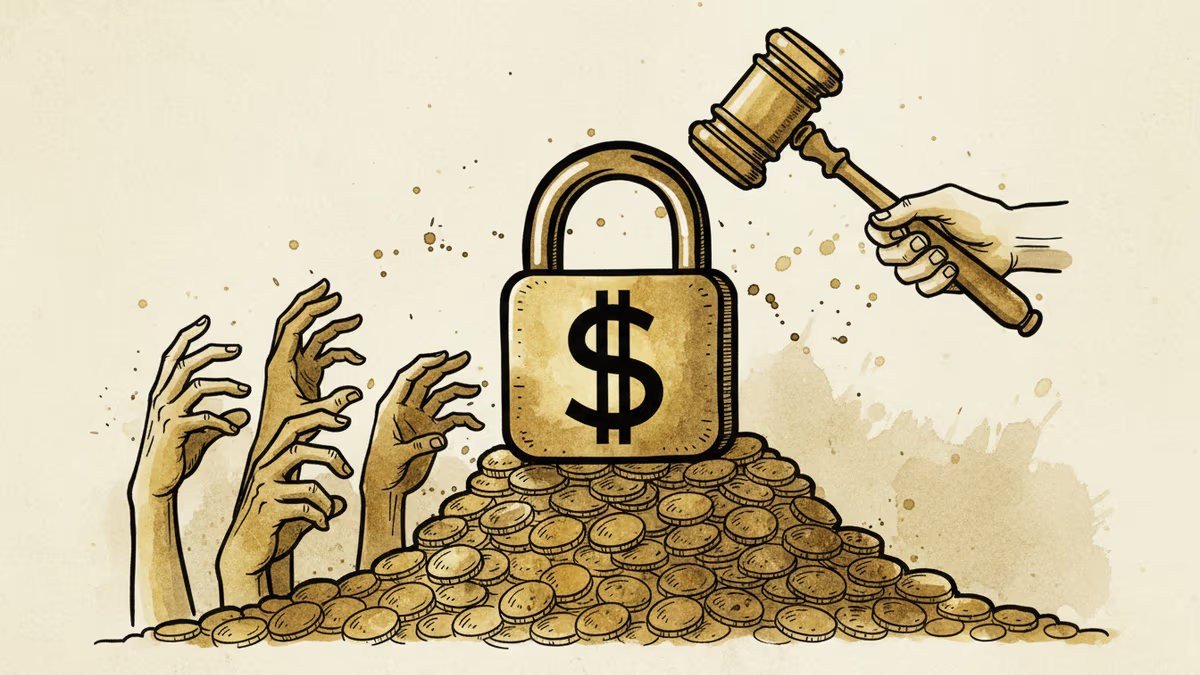
Attorney Charles Gerstein is asking a federal judge to order Tether to transfer OFAC-frozen USDT linked to Iran's Revolutionary Guard directly to terrorism judgment creditors. A case that could redefine stablecoin liability.
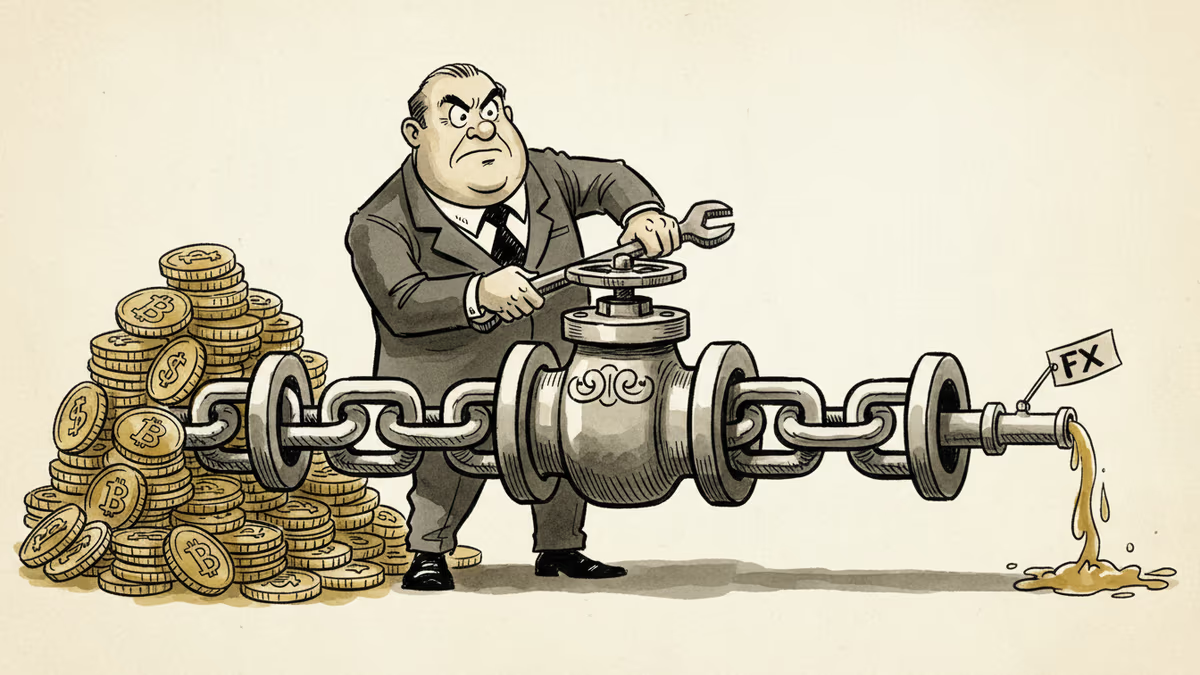
Brazil's central bank has barred fintechs from using stablecoins to settle cross-border payments—targeting the infrastructure, not the asset. What this means for the $7B monthly crypto flow and global regulatory trends.

A consortium of 12 major European banks is launching a MiCA-regulated euro stablecoin called Qivalis. With 99.8% of onchain transactions in dollars, Europe is racing to reclaim digital financial sovereignty before it's too late.
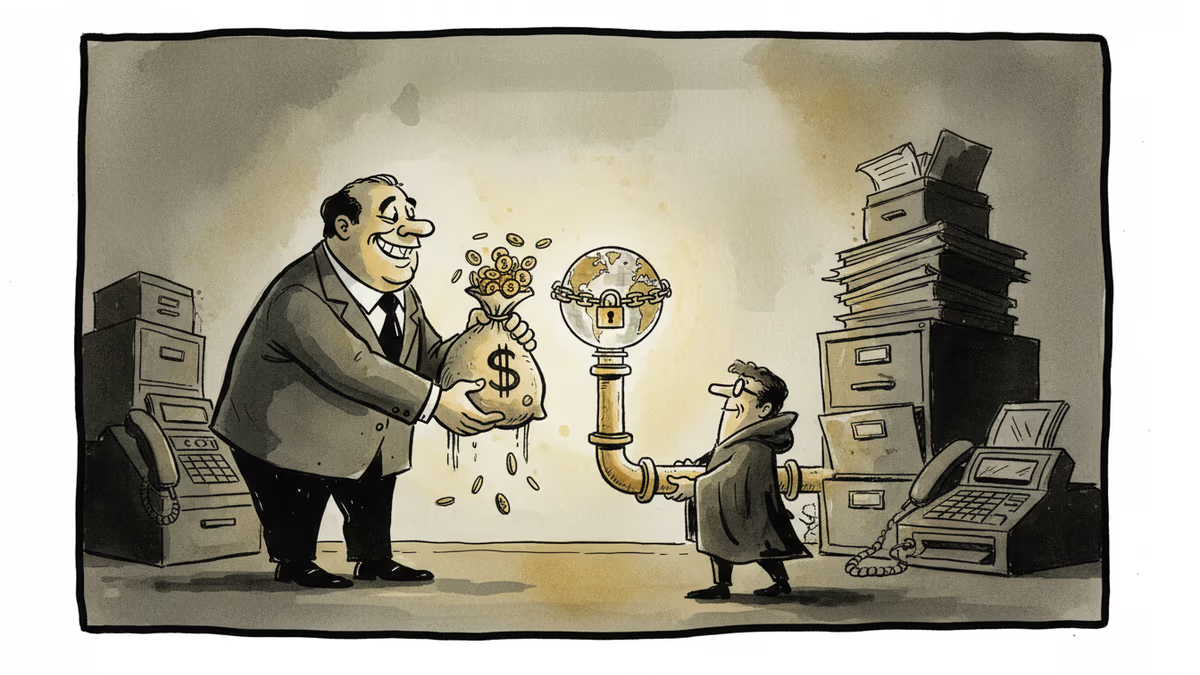
Mastercard's $1.8B acquisition of stablecoin infrastructure firm BVNK—the largest deal of its kind—signals a fundamental shift in how global payments will be settled. Here's what it means for your money.
Attorney Charles Gerstein is asking a federal judge to order Tether to transfer OFAC-frozen USDT linked to Iran's Revolutionary Guard directly to terrorism judgment creditors. A case that could redefine stablecoin liability.
Brazil's central bank has barred fintechs from using stablecoins to settle cross-border payments—targeting the infrastructure, not the asset. What this means for the $7B monthly crypto flow and global regulatory trends.
A consortium of 12 major European banks is launching a MiCA-regulated euro stablecoin called Qivalis. With 99.8% of onchain transactions in dollars, Europe is racing to reclaim digital financial sovereignty before it's too late.
Mastercard's $1.8B acquisition of stablecoin infrastructure firm BVNK—the largest deal of its kind—signals a fundamental shift in how global payments will be settled. Here's what it means for your money.
Thoughts
Share your thoughts on this article
Sign in to join the conversation