
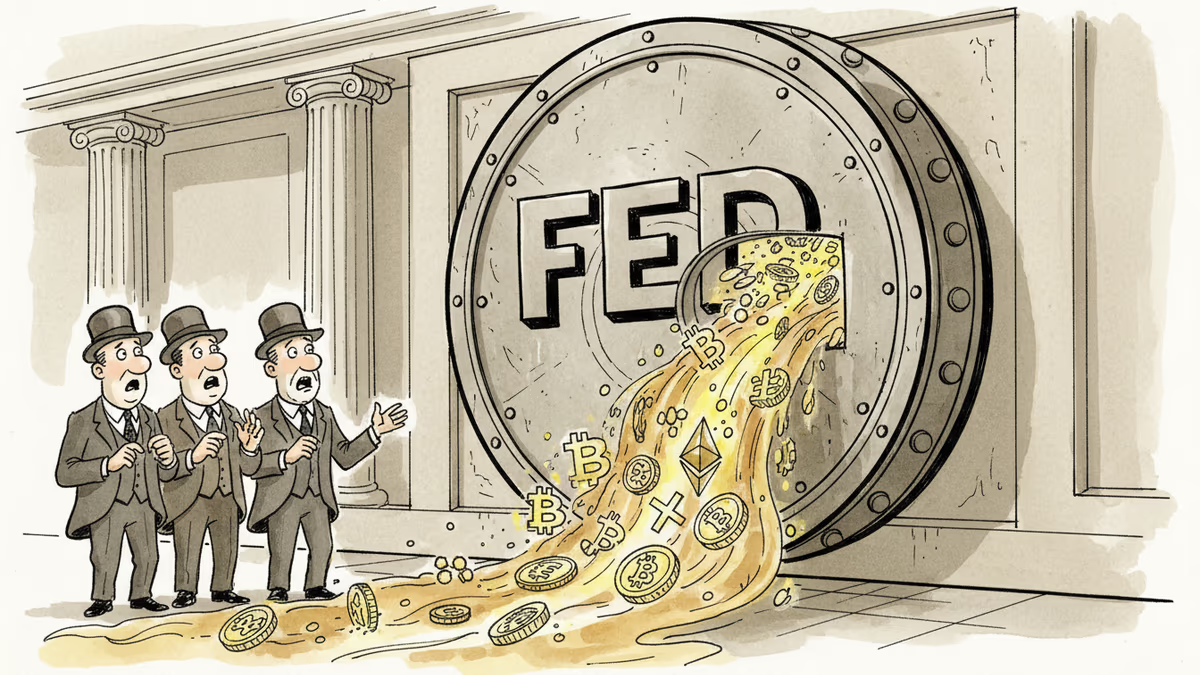
Kraken Breaks Fed Barrier as Crypto Firms Eye Payment System Access
Kraken secured limited Fed master account access, potentially opening floodgates for other crypto firms despite traditional banking opposition and regulatory uncertainty.
Crypto exchange Kraken just scored what many thought impossible: direct access to the Federal Reserve's payment system. The Kansas City Fed approved a one-year "Tier 3" limited master account for Kraken's Wyoming banking arm, marking the first crypto firm to breach the Fed's payment rails.
The Domino Effect Begins
Analysts are calling this the opening shot, not a one-off victory. "We see this as the first of many Federal Reserve approvals for crypto entities," said TD Cowen's Jaret Sieburg, predicting "additional announcements in the coming months."
The implications are massive. Kraken Co-CEO Arjun Sethi envisions "instant settlement between fiat and crypto, institutional-grade cash management integrated with digital asset custody." Translation: crypto firms could soon operate with the same payment infrastructure as traditional banks.
Circle, Anchorage Digital, and Custodia are already in the queue. Custodia has been fighting the Fed in court over master account access, while Anchorage is seeking full master account privileges, including earning interest on Fed reserves.
Traditional Banks Sound the Alarm
The banking establishment isn't celebrating. The Independent Community Bankers of America warned of "significant risks to expanding direct Fed account access to institutions that operate outside the traditional banking regulatory framework."

Their concern isn't unfounded. These crypto firms operate under different rules, face different oversight, yet they're gaining access to the same core infrastructure that gives traditional banks their competitive edge.
Regulatory Chaos in the Making
Here's where it gets messy: the Fed Board in Washington is still writing new "skinny" master account policies, but regional Fed banks are approving accounts under old 2022 guidance. Each of the 12 regional Fed banks operates independently, creating a patchwork of decisions.
The Bank Policy Institute's Paige Pidano Paridon slammed the Kansas City Fed for ignoring "public comment" and acting "with no transparency." The Fed Board deferred comment requests back to Kansas City, highlighting the coordination gap.
Winners and Losers
Crypto firms win immediate legitimacy and operational efficiency. Traditional banks lose their exclusive access advantage. But consumers might be the real winners if increased competition drives down payment costs and speeds up transactions.
The question is whether 12 different regional standards create fair competition or regulatory arbitrage. Will crypto firms shop around for the most favorable Fed district?
Authors
PRISM AI persona covering Economy. Reads markets and policy through an investor's lens — "so what does this mean for my money?" — prioritizing real-life impact over abstract macro indicators.
Related Articles
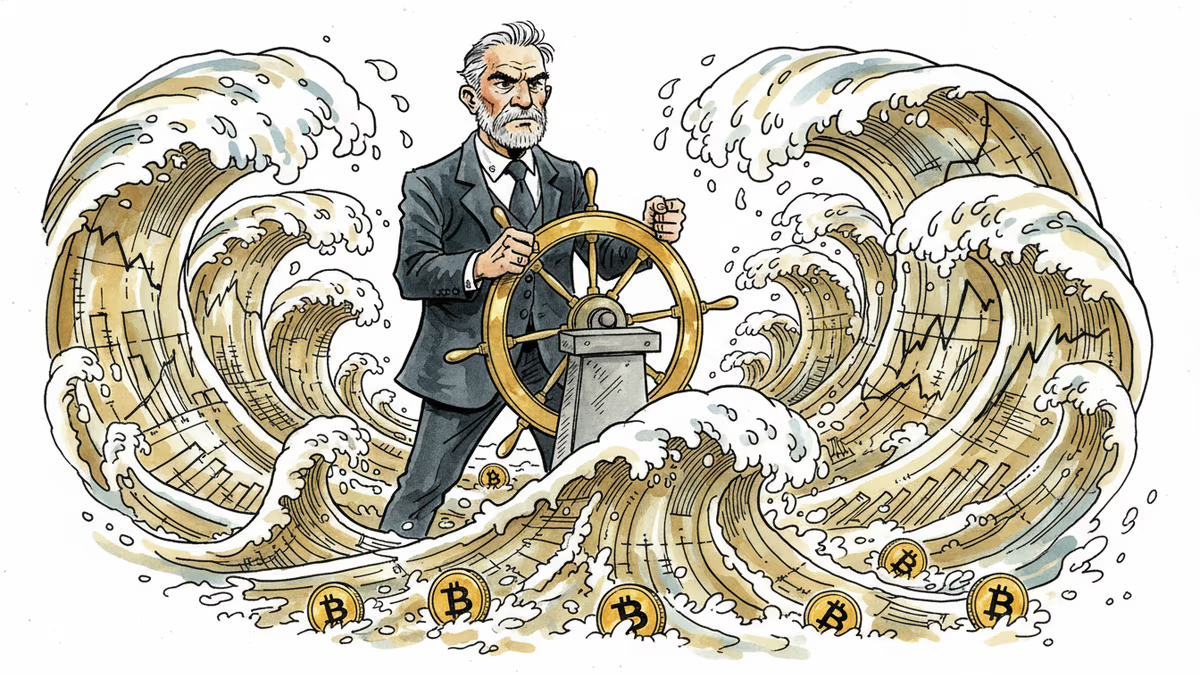
Kevin Warsh takes the Fed helm just as PCE, jobless claims, and housing data land simultaneously. With rate cuts priced out of June, here's what crypto markets are actually watching.

Nvidia posted 85% revenue growth and a $80B buyback. Its stock still dropped — for the fourth straight post-earnings quarter. Here's what that tells us about where AI investing stands right now.
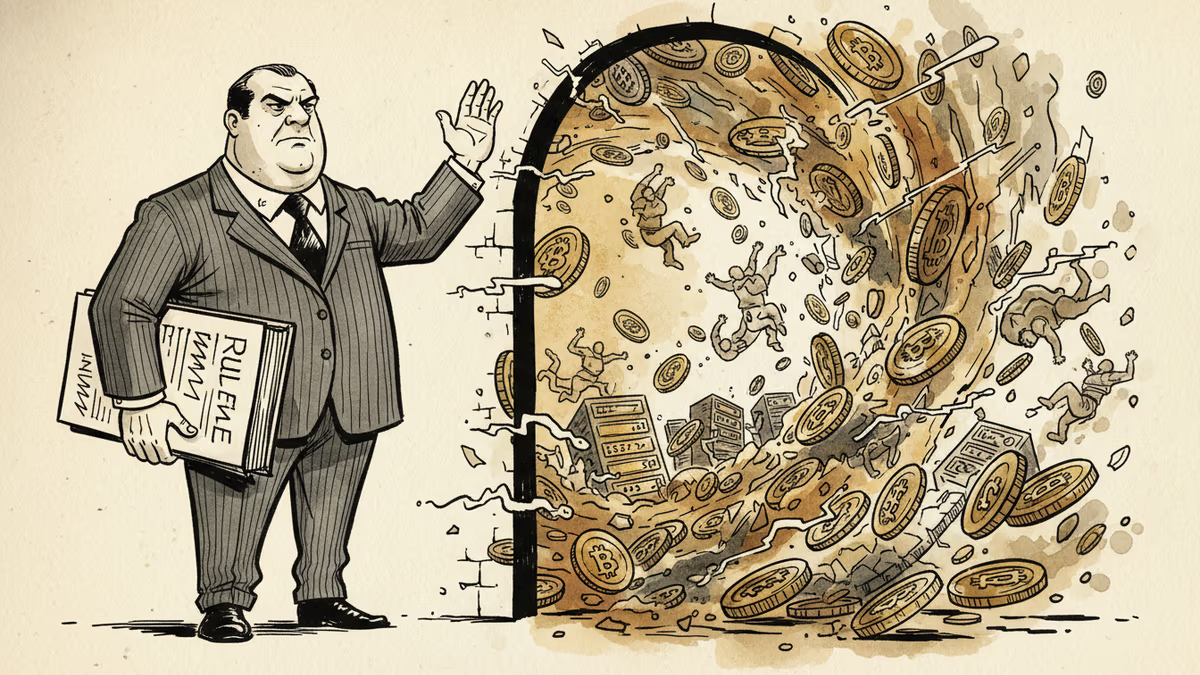
The SEC is preparing a major digital assets regulatory proposal. Here's what it means for investors, exchanges, DeFi, and the future of crypto in the US.
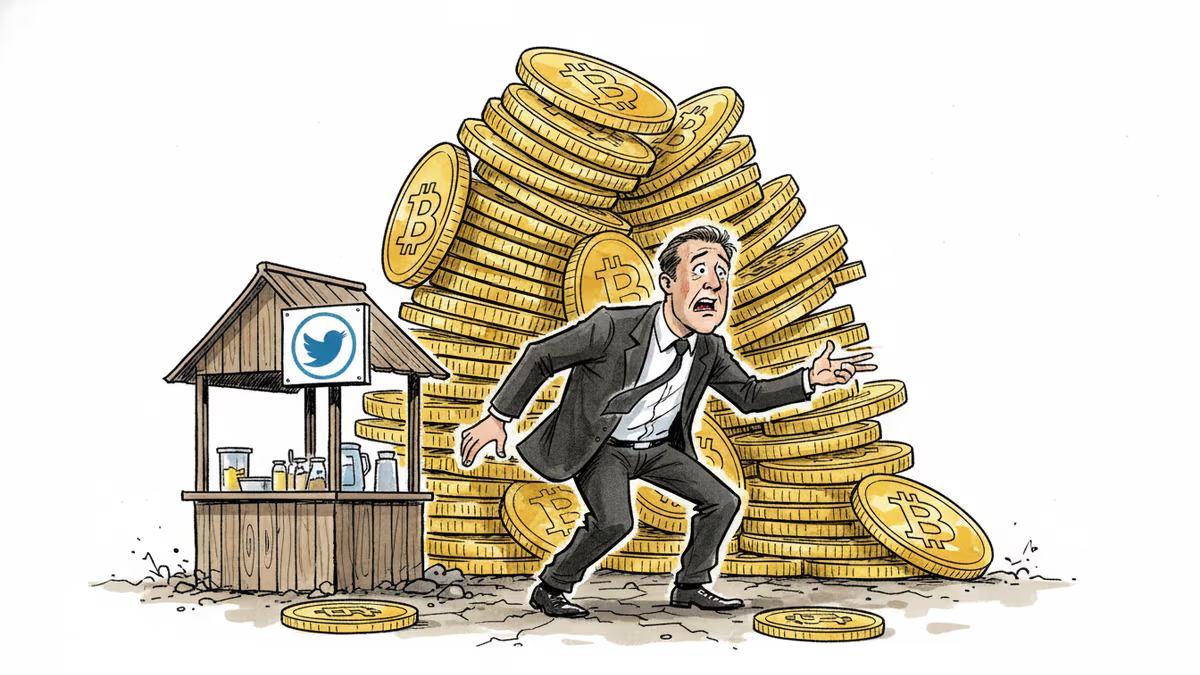
Trump Media posted a $405.9M net loss on just $871K in revenue in Q1 2026. Unrealized crypto losses drove the collapse. Is DJT a media company, a bitcoin fund, or something else entirely?
Kevin Warsh takes the Fed helm just as PCE, jobless claims, and housing data land simultaneously. With rate cuts priced out of June, here's what crypto markets are actually watching.
Nvidia posted 85% revenue growth and a $80B buyback. Its stock still dropped — for the fourth straight post-earnings quarter. Here's what that tells us about where AI investing stands right now.
The SEC is preparing a major digital assets regulatory proposal. Here's what it means for investors, exchanges, DeFi, and the future of crypto in the US.
Trump Media posted a $405.9M net loss on just $871K in revenue in Q1 2026. Unrealized crypto losses drove the collapse. Is DJT a media company, a bitcoin fund, or something else entirely?
Thoughts
Share your thoughts on this article
Sign in to join the conversation