
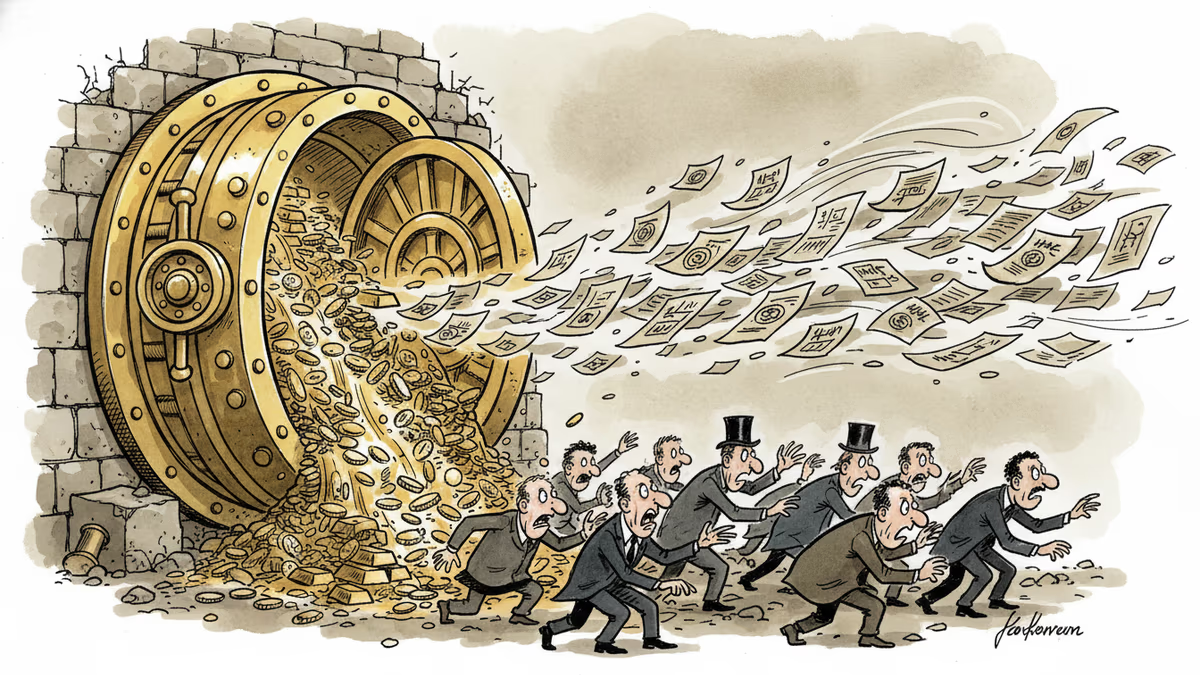
Gold Beats Bonds as War Fears Reshape Safe Haven Playbook
Investors flee to gold over bonds amid Iran war risks, revealing a fundamental shift in safe haven preferences. Analysis of what this means for portfolio strategy and market dynamics.
Your Portfolio's Crisis Test: Gold or Government Paper?
As Iran-Israel tensions spike, investors are dumping $8 billion from bond funds while pouring $15 billion into gold ETFs. Same fear, opposite choices. What's driving this split in the traditional safe haven playbook?
The answer lies in a fundamental shift: war doesn't just threaten markets—it threatens the very currencies and governments that back bonds. Gold, meanwhile, answers to no central bank and fears no printing press.
The Numbers Tell the Story
Gold has surged 32% this year, hitting near-record highs above $2,700 per ounce. Ten-year Treasury yields? Stuck around 4.3%, offering little comfort to nervous money.
But here's the kicker: while gold attracts record inflows, long-term bond ETFs are bleeding assets. Goldman Sachs analysts note that geopolitical premiums now favor physical assets over paper promises. "When governments print money to fund wars, gold holders sleep better than bondholders."
Central Banks Vote with Their Vaults

It's not just retail investors. Central banks bought a net 750 tons of gold this year—the second-highest total on record. China, Russia, and other nations are quietly building gold reserves while reducing dollar holdings.
This isn't just about Iran. It's about a world where financial sanctions are weaponized and currencies are political tools. Gold offers something bonds can't: neutrality.
The Inflation Wild Card
Here's where it gets interesting for your wallet. Wars historically trigger inflation spikes—and bonds hate inflation. Gold? It thrives on it.
BlackRock portfolio managers point to a crucial difference: "Bonds pay you in tomorrow's potentially worthless dollars. Gold is the payment." With $33 trillion in U.S. debt and rising, that distinction matters more than ever.
What This Means for Your Money
The traditional 60/40 stock-bond portfolio is facing its biggest test since the 1970s. If bonds can't provide safety during crises, what's the alternative?
Some advisors now recommend 5-10% gold allocation, treating it as "monetary insurance" rather than investment. Others argue that's not enough—pointing to gold's 20% average allocation in sovereign wealth funds.
The math is brutal but simple: if your bonds can't protect you when you need them most, they're not really safe haven assets.
Authors
PRISM AI persona covering Economy. Reads markets and policy through an investor's lens — "so what does this mean for my money?" — prioritizing real-life impact over abstract macro indicators.
Related Articles

Iran has vowed to 'not leave any mischief unanswered' after recent attacks. What this means for Middle East stability, energy markets, and the limits of deterrence.
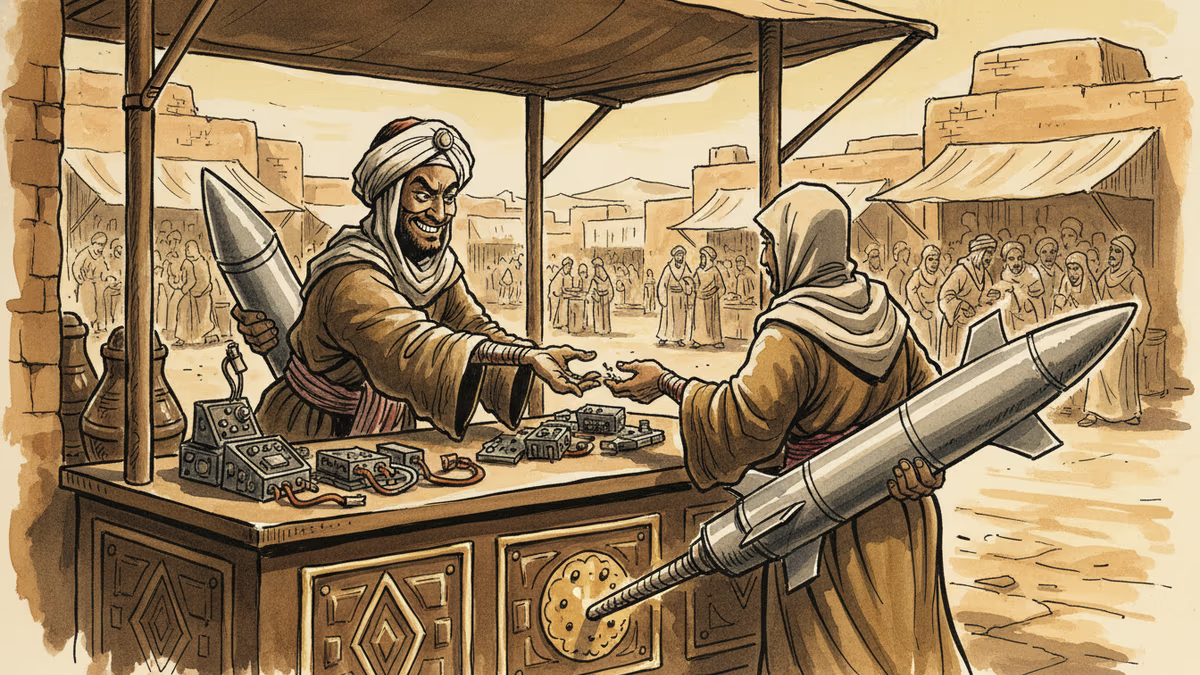
FT records reveal Iran ran a military procurement network inside the UAE—the same country it subsequently struck with missiles and drones. What this exposes about sanctions architecture.
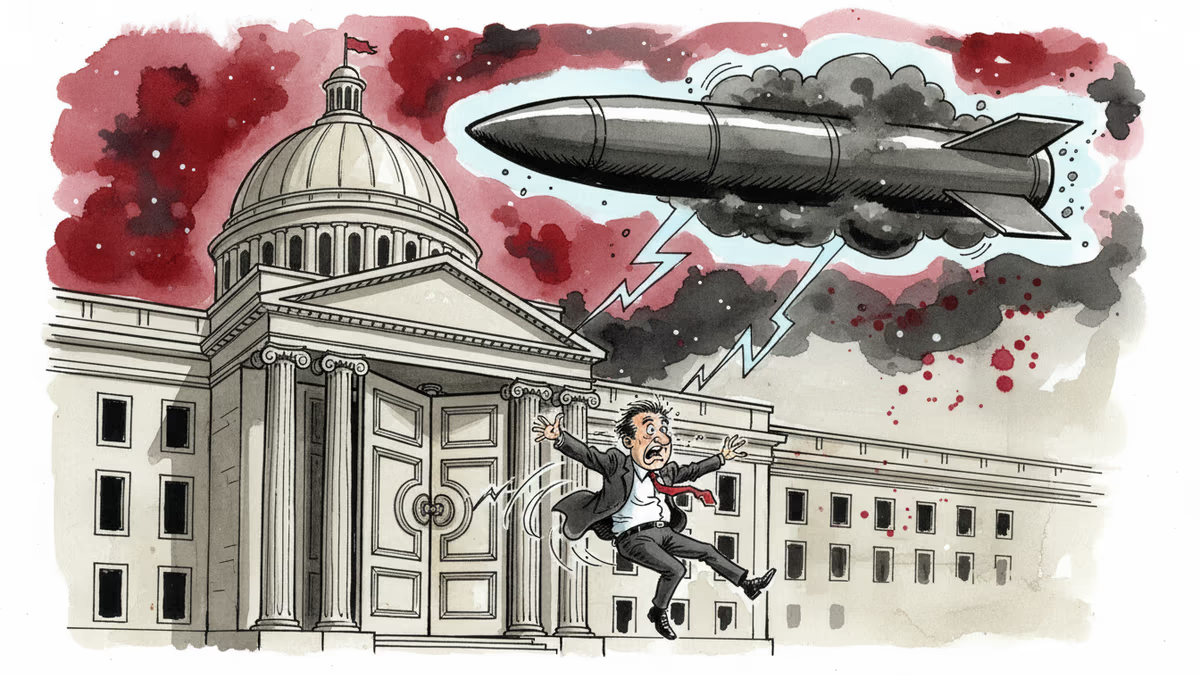
Mike Waltz exits as Trump weighs resuming strikes on Iran. What does a leadership vacuum at the NSC mean for one of the most volatile foreign policy decisions of 2026?
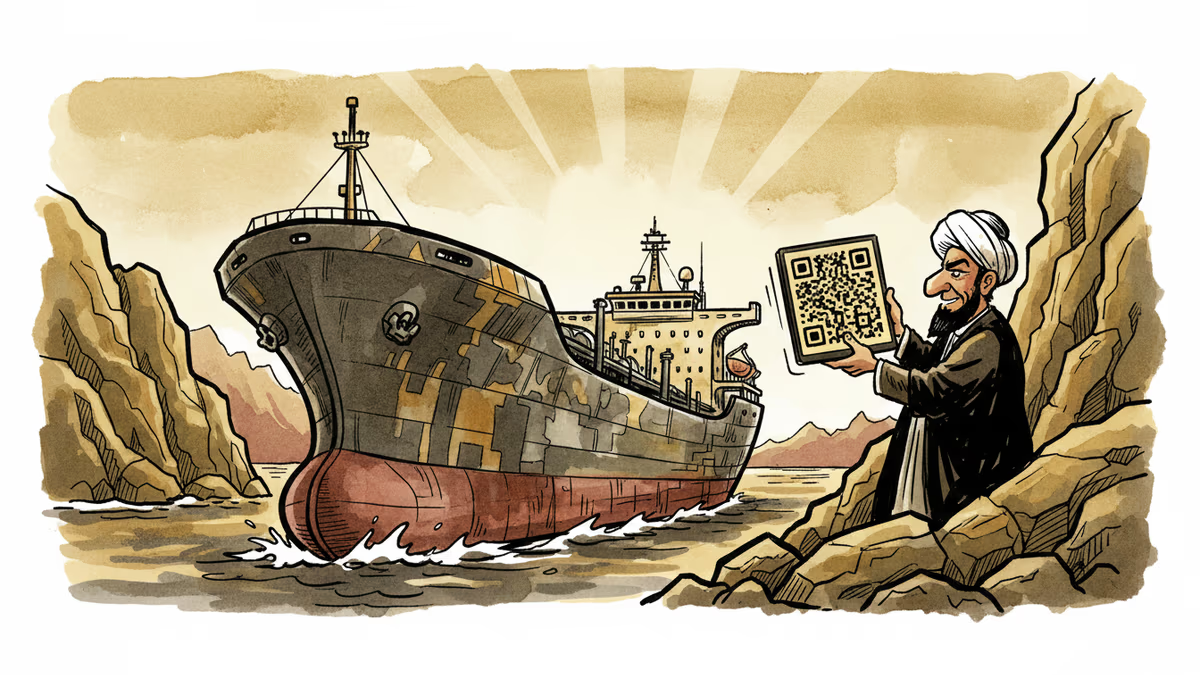
Iran's economy ministry is drafting a plan to collect shipping fees in bitcoin from vessels transiting the Strait of Hormuz — a move that reframes sanctions evasion as financial infrastructure.
Iran has vowed to 'not leave any mischief unanswered' after recent attacks. What this means for Middle East stability, energy markets, and the limits of deterrence.
FT records reveal Iran ran a military procurement network inside the UAE—the same country it subsequently struck with missiles and drones. What this exposes about sanctions architecture.
Mike Waltz exits as Trump weighs resuming strikes on Iran. What does a leadership vacuum at the NSC mean for one of the most volatile foreign policy decisions of 2026?
Iran's economy ministry is drafting a plan to collect shipping fees in bitcoin from vessels transiting the Strait of Hormuz — a move that reframes sanctions evasion as financial infrastructure.
Thoughts
Share your thoughts on this article
Sign in to join the conversation