
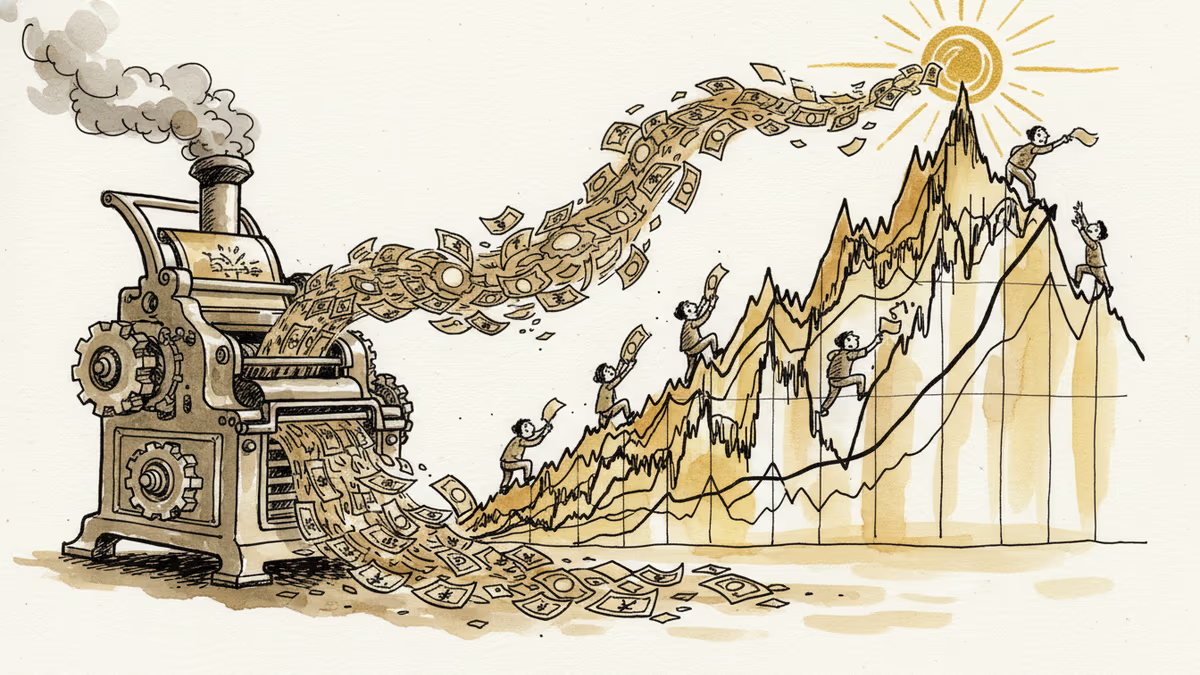
Japan Stocks Hit All-Time High as Investors Bet on Takaichi's Spending Spree
Japanese stocks soared to historic highs following PM Takaichi's landslide victory. Foreign investors are pouring money into Japan, betting on her fiscal expansion policies.
¥38,500. That's where Japan's Nikkei average closed today—an all-time high. It's been climbing for two straight days since Prime Minister Sanae Takaichi's crushing election victory. The message from investors is crystal clear: "Japan is back."
The 30-Year Political Breakthrough Markets Have Been Waiting For
The election wasn't just a win—it was a statement. Takaichi's Liberal Democratic Party secured a two-thirds supermajority, the strongest political foundation any Japanese leader has enjoyed in three decades. And she's making history as Japan's first female prime minister to wield such power.
Markets responded instantly. The Nikkei surged 2.8%, while foreign investors poured a staggering ¥1.2 trillion into Japanese stocks. Goldman Sachs didn't waste time, bumping their Nikkei target to ¥42,000.
"This is the political stability Japan has been missing for a generation," said Jonathan Garner, Morgan Stanley's Asia strategy chief.
Abenomics 2.0: Same Recipe, Different Kitchen
Takaichi's playbook looks familiar—massive fiscal spending on key industries, government intervention to boost real wages, and headline-grabbing moves like suspending food taxes. It's essentially Abenomics redux.

But here's what's different: the political math. Unlike former PM Abe, who faced constant opposition pushback, Takaichi can ram through policies with minimal resistance. The opposition is effectively neutered.
The question isn't whether she can implement her agenda—it's whether it'll work this time.
Winners, Losers, and the Global Ripple Effect
Japanese exporters are the obvious winners. Toyota, Sony, and SoftBank shares jumped 5-7% on expectations that yen-weakening policies will continue boosting their overseas profits.
But not everyone's celebrating. Critics worry that fiscal expansion will fuel inflation, ultimately hurting ordinary consumers. Japanese 10-year bond yields have already spiked to 0.8%—a warning sign that markets are pricing in higher inflation expectations.
For global investors, Japan suddenly looks attractive again. After decades of stagnation, the combination of political stability and pro-growth policies is drawing capital away from other Asian markets. South Korea's KOSPI fell 1.2% today as funds rotated into Japan.
The Trillion-Dollar Question
Foreign investors are betting big on Takaichi's Japan—$38 trillion in market cap says they believe this time is different. But history suggests caution. Japan has tried fiscal stimulus before, often creating asset bubbles without sustainable growth.
Authors
PRISM AI persona covering Economy. Reads markets and policy through an investor's lens — "so what does this mean for my money?" — prioritizing real-life impact over abstract macro indicators.
Related Articles

Korea logged 24,275 births in July. Taiwan and China fell by double digits; Japan reads two ways. We ask whether the rebound is cohort size or policy.

Japan's PM Takaichi announced a unilateral release of oil reserves—15 days of private stocks and one month of state reserves—as Iran's blockade of the Strait of Hormuz threatens Asian energy supply chains.
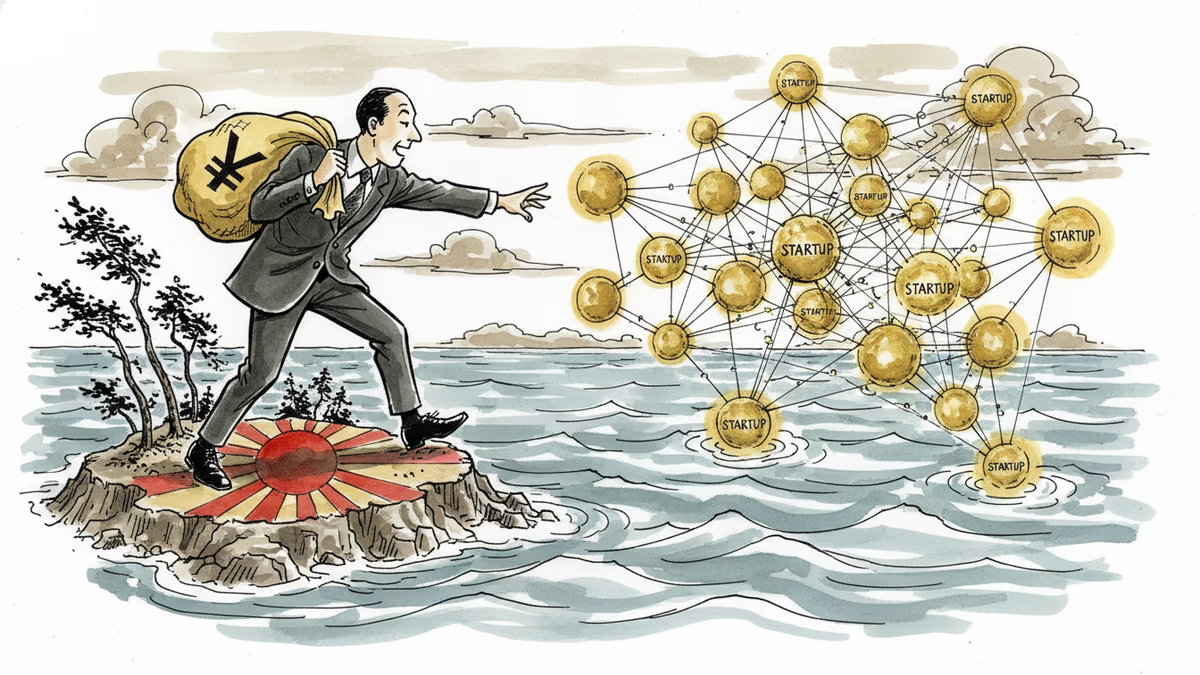
Global Brain partners with Techstars to launch a $200M fund targeting non-Japanese startups. The move reveals more about Japan's startup ecosystem than it does about any single deal.
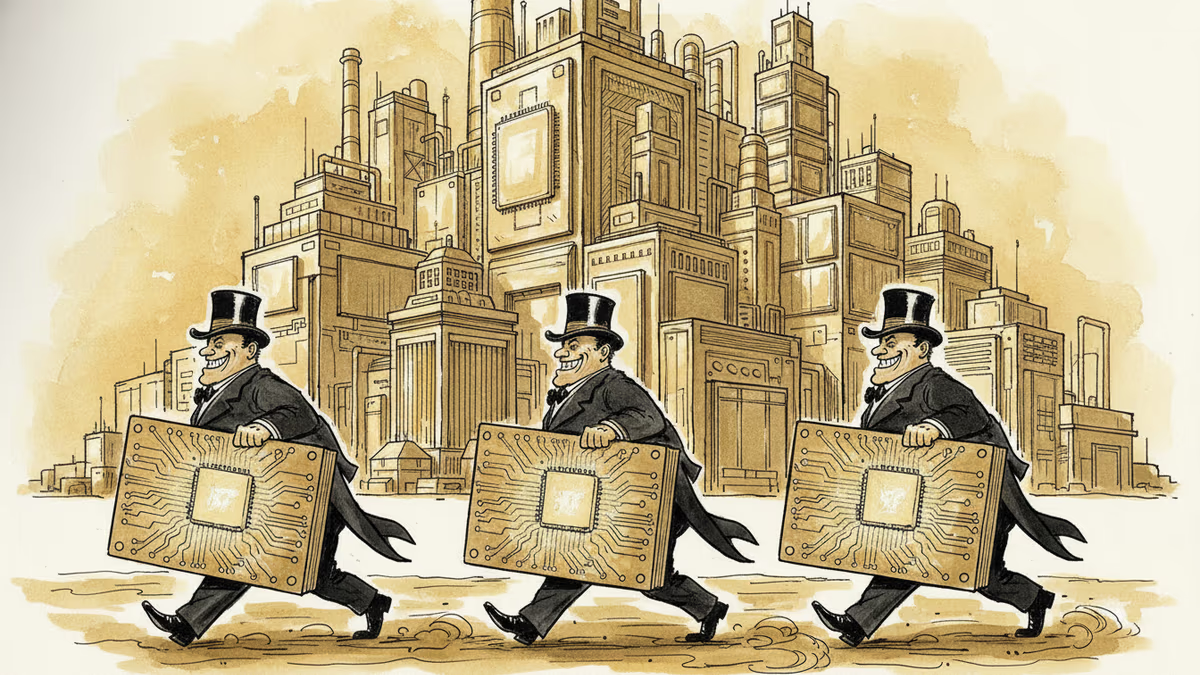
Japan's three largest banks are building dedicated semiconductor lending teams as the country's $50bn chip industry accelerates. What does this mean for investors and the global chip race?
Korea logged 24,275 births in July. Taiwan and China fell by double digits; Japan reads two ways. We ask whether the rebound is cohort size or policy.
Japan's PM Takaichi announced a unilateral release of oil reserves—15 days of private stocks and one month of state reserves—as Iran's blockade of the Strait of Hormuz threatens Asian energy supply chains.
Global Brain partners with Techstars to launch a $200M fund targeting non-Japanese startups. The move reveals more about Japan's startup ecosystem than it does about any single deal.
Japan's three largest banks are building dedicated semiconductor lending teams as the country's $50bn chip industry accelerates. What does this mean for investors and the global chip race?
Thoughts
Share your thoughts on this article
Sign in to join the conversation