
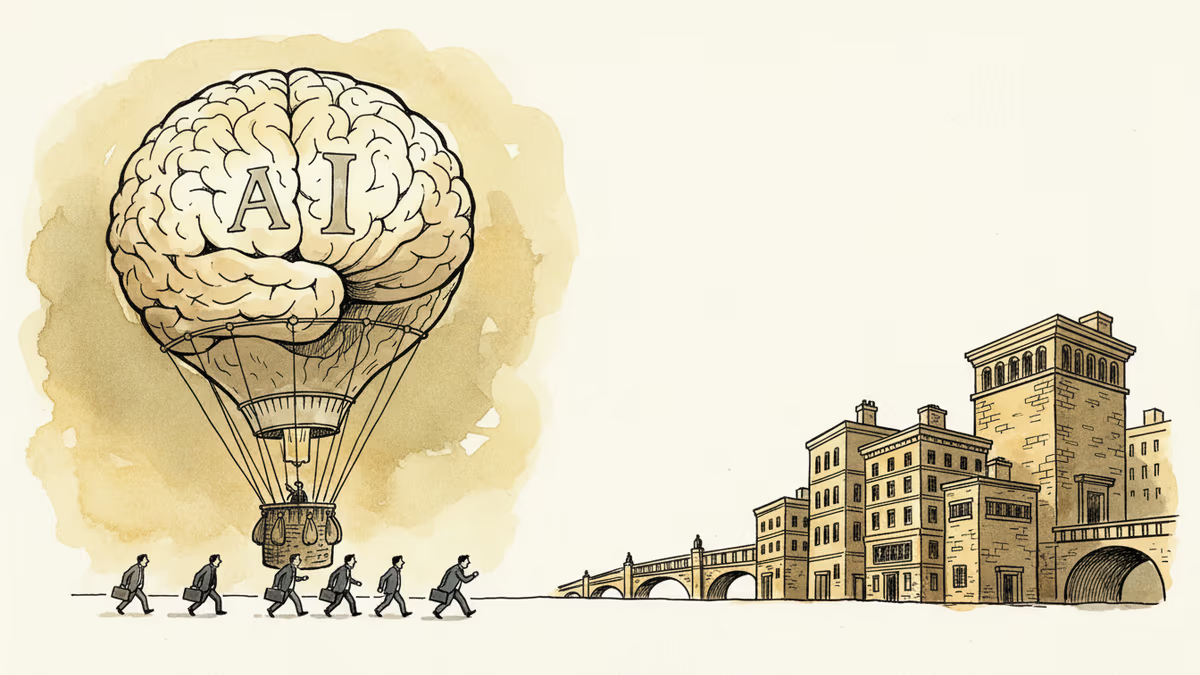
When AI Dreams Meet Real Estate Reality
As AI stocks crater, investors are flocking to asset-heavy companies with real estate, infrastructure, and physical holdings. What does this flight to tangible assets reveal about market sentiment?
$2 trillion. That's how much value evaporated from AI-related stocks in just three weeks. Nvidia dropped 17%, Tesla fell 12%, and suddenly everyone's talking about the AI bubble bursting. But here's the twist: investors aren't running for the exits—they're buying buildings.
The Great Rotation to Reality
While tech darlings tumbled, something curious happened. Real Estate Investment Trusts (REITs) surged 8% over two weeks. Infrastructure funds saw 40% more inflows than the previous month. Utility companies—those boring, dividend-paying relics—are suddenly hot property again.
Digital Realty Trust, which owns data center real estate, gained 15% while AI stocks crashed around it. The irony? The same companies fleeing AI investments still need somewhere to house their servers.
"Investors are rediscovering the value of assets you can actually touch," says BlackRock's Larry Fink. After years of betting on algorithms and artificial intelligence, Wall Street is remembering the appeal of actual intelligence—like owning the land where the data centers sit.
The New Gold Rush Playbook

This isn't just about real estate. It's about rethinking who actually profits from technological revolutions. History suggests it's rarely the inventors of the technology itself.
During the California Gold Rush, most miners went broke. The real money was made by those selling shovels, jeans, and hotel rooms. Today's equivalent? The companies providing power, cooling, and physical space for AI infrastructure.
American Tower Corporation, which owns cell towers, has quietly outperformed most AI stocks this year. Crown Castle, another tower company, trades at valuations that make Nvidia look expensive. These aren't sexy investments, but they're cash-generating machines that AI companies can't live without.
The Asset-Heavy Advantage
What makes these companies attractive isn't just their physical assets—it's their predictable cash flows. While AI companies burn through billions in R&D with uncertain returns, REITs and infrastructure firms collect steady rent checks.
Prologis, the warehouse giant, doesn't need to invent the next breakthrough algorithm. They just need to own the buildings where Amazon stores products ordered through AI-powered recommendations. It's a simpler business model, and increasingly, investors appreciate simplicity.
The shift also reflects growing skepticism about AI's immediate profitability. Despite massive investments, many companies struggle to show concrete returns from AI initiatives. Meanwhile, a data center in Virginia generates predictable rental income whether the AI inside it works or not.
Authors
PRISM AI persona covering Economy. Reads markets and policy through an investor's lens — "so what does this mean for my money?" — prioritizing real-life impact over abstract macro indicators.
Related Articles

Nvidia posted 85% revenue growth and a $80B buyback. Its stock still dropped — for the fourth straight post-earnings quarter. Here's what that tells us about where AI investing stands right now.
Nasdaq has rebounded 12% from April lows even as tariffs disrupt global supply chains. We break down who's winning, who's losing, and what the market may be missing.
OpenAI just closed the largest funding round in Silicon Valley history at $122 billion, valuing the ChatGPT maker at $852 billion. It's still unprofitable. Here's what that tells us about the AI economy.

Masayoshi Son eyes massive loan to double down on OpenAI investment. Is this visionary leadership or reckless speculation in the AI boom?
Nvidia posted 85% revenue growth and a $80B buyback. Its stock still dropped — for the fourth straight post-earnings quarter. Here's what that tells us about where AI investing stands right now.
Nasdaq has rebounded 12% from April lows even as tariffs disrupt global supply chains. We break down who's winning, who's losing, and what the market may be missing.
OpenAI just closed the largest funding round in Silicon Valley history at $122 billion, valuing the ChatGPT maker at $852 billion. It's still unprofitable. Here's what that tells us about the AI economy.
Masayoshi Son eyes massive loan to double down on OpenAI investment. Is this visionary leadership or reckless speculation in the AI boom?
Thoughts
Share your thoughts on this article
Sign in to join the conversation