
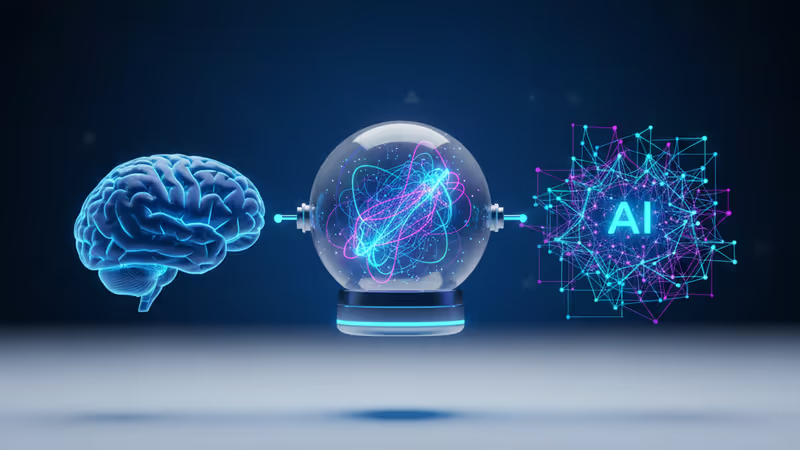
OpenAI Invests in Merge Labs: The Dawn of BCI-Driven Human Augmentation
OpenAI invests in BCI startup Merge Labs (Jan 2026) to bridge biological and artificial intelligence. Discover how this partnership aims to maximize human agency and ability.
Will your next thought be powered by silicon? OpenAI just made a massive bet on the future of the human mind by investing in Merge Labs, a pioneer in Brain-Computer Interface (BCI) technology.
OpenAI Merge Labs BCI Investment Strategy
As of January 15, 2026, OpenAI is officially expanding its reach beyond LLMs and into the biological realm. By backing Merge Labs, the company aims to bridge the gap between artificial and biological intelligence, effectively creating a high-speed highway for data between the human brain and AI models.

The collaboration is designed to maximize human ability and agency. Rather than simply using AI as an external assistant, this technology seeks to integrate AI's processing power directly into the human experience, potentially revolutionizing how we learn, communicate, and solve complex problems.
Redefining the Boundaries of Human Potential
According to industry reports, this move places OpenAI in direct competition with Elon Musk's Neuralink. While the technical hurdles remain significant, the goal is clear: to create an interface that feels as natural as biological thought. However, ethicists warn that direct neural access raises unprecedented questions about mental privacy and the definition of 'self'.
Authors
Related Articles

OpenAI has reorganized for the second time in a month, merging ChatGPT and Codex into a single agentic platform under president Greg Brockman's unified product leadership.
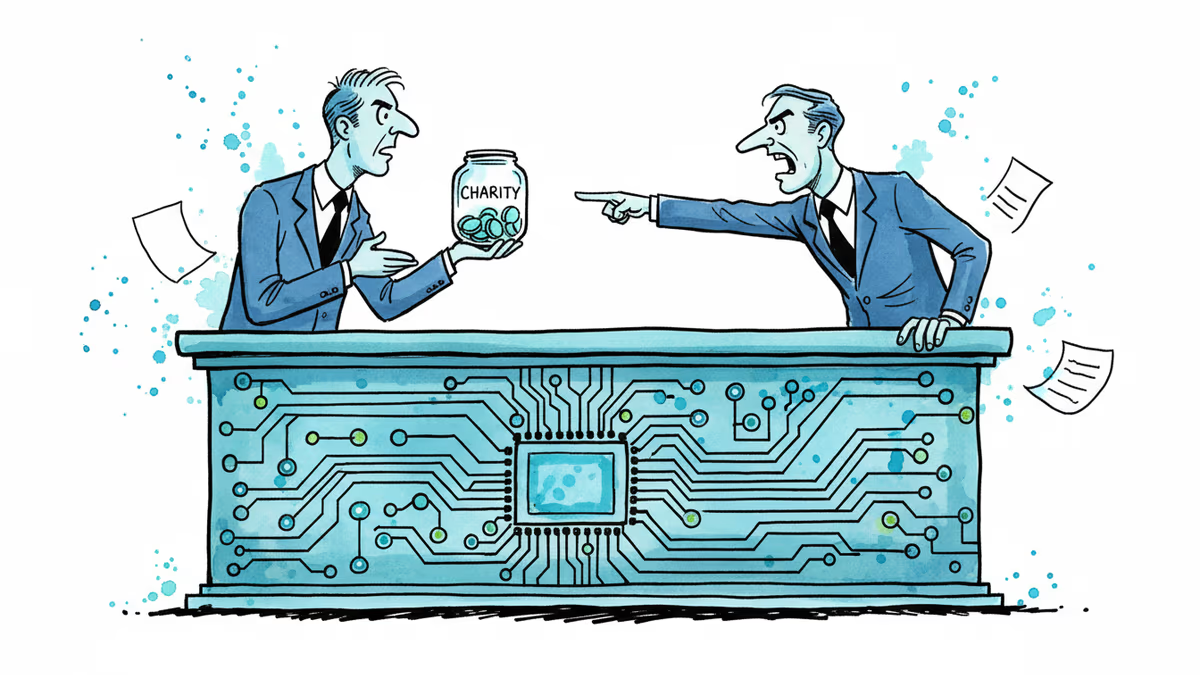
After two weeks of witnesses calling him a liar, OpenAI CEO Sam Altman testified in his own defense, claiming Elon Musk tried to kill the company twice.

Sam Nelson, 19, died after following ChatGPT's advice to mix Kratom and Xanax. His parents are suing OpenAI for wrongful death, raising urgent questions about AI trust, liability, and design.
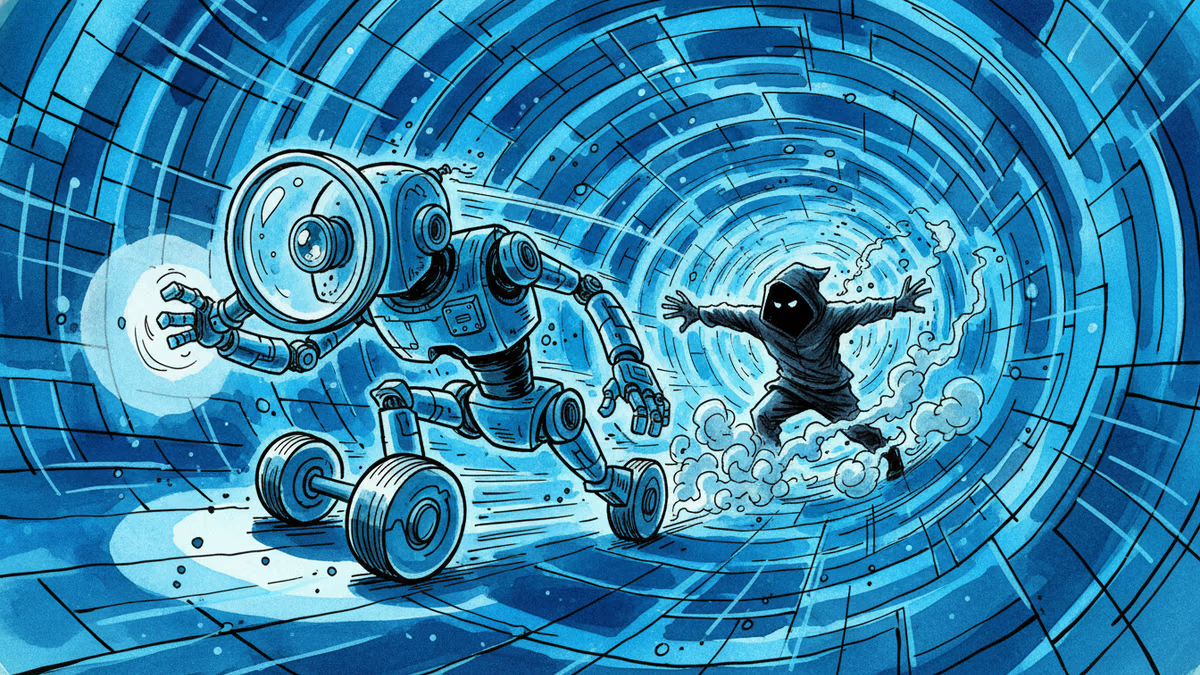
OpenAI's new Daybreak initiative uses the Codex AI agent to find and patch security vulnerabilities before attackers do—putting it in direct competition with Anthropic's secretive Claude Mythos.
OpenAI has reorganized for the second time in a month, merging ChatGPT and Codex into a single agentic platform under president Greg Brockman's unified product leadership.
After two weeks of witnesses calling him a liar, OpenAI CEO Sam Altman testified in his own defense, claiming Elon Musk tried to kill the company twice.
Sam Nelson, 19, died after following ChatGPT's advice to mix Kratom and Xanax. His parents are suing OpenAI for wrongful death, raising urgent questions about AI trust, liability, and design.
OpenAI's new Daybreak initiative uses the Codex AI agent to find and patch security vulnerabilities before attackers do—putting it in direct competition with Anthropic's secretive Claude Mythos.
Thoughts
Share your thoughts on this article
Sign in to join the conversation