
The Intimacy Crisis: Why We're Lonelier in the Age of Connection
Despite endless digital connections and dating apps, people are more isolated than ever. Kinsey Institute's Justin Garcia explains the real crisis behind modern relationships.
Nearly half of American adults are single. A quarter of men suffer from loneliness. Depression rates climb steadily. And one in four Gen Z adults—supposedly the "kinkiest generation"—have never had partnered sex.
In an era where hookups happen with a swipe and polyamory gets mainstream acceptance, why are people seemingly more disconnected than ever?
The Paradox of Endless Connection
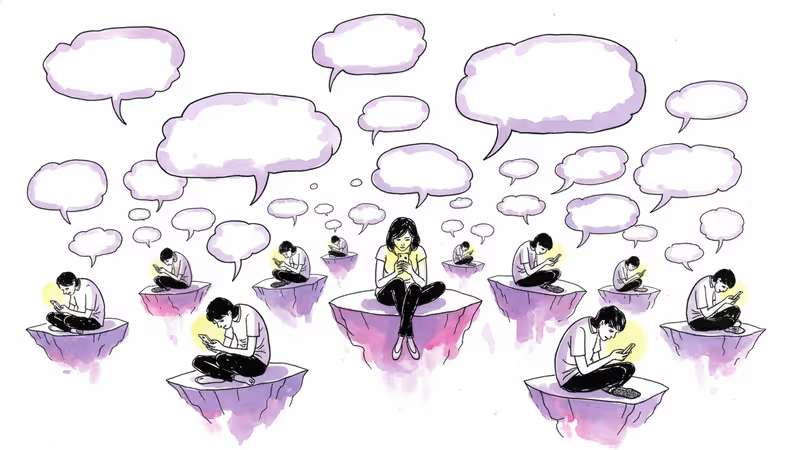
Justin Garcia, executive director of the Kinsey Institute at Indiana University, has a provocative answer: we're facing an intimacy crisis, not just a loneliness epidemic. "Our species is on the precipice of what I have come to think of as an intimacy crisis," Garcia writes in his new book, The Intimate Animal.
The distinction matters. While loneliness research suggests the numbers haven't dramatically increased, Garcia argues we're missing the bigger picture. We have more connections than ever through social media and dating platforms, but the depth and quality of those connections have plummeted.
Recent unpublished data from the Kinsey Institute reveals a telling contradiction: 80% of Gen Z want romantic relationships, but 55% say they're not ready for them. "We've screwed up a whole generation with this idea that you need to overly self-actualize before you can be in a relationship," Garcia explains.
Rethinking the Sex Recession
The narrative around Gen Z's declining sexual activity needs reframing, Garcia suggests. The real question isn't how often people are having sex, but whether they're satisfied with their intimate lives.

"The decline in frequency is an indicator not that young people today are allergic to sexual intimacy but rather that they value it more," he argues. Among sexually active individuals, the decrease isn't as steep as headlines suggest. The problem lies elsewhere: sexual literacy.
A Kinsey Institute study found that 44% of single American adults believe they'd have healthier relationships today if they'd received proper sex education earlier. This isn't just about mechanics—it's about understanding consent, communication, and emotional intimacy.
Consider non-consensual choking during intercourse, which research shows is increasingly common among heterosexual couples. Many participants reported it happened without prior discussion, suggesting they believed it was part of a "sexual script" learned from pornography rather than genuine desire.
The Threat Response Generation
Garcia's analysis goes beyond dating apps and social media. He argues that constant exposure to threatening news—from climate change to global conflicts—keeps our nervous systems in a heightened state that's incompatible with intimate bonding.
"When the nervous system gets tuned up into a threat response, that's not conducive to social behavior and it's most certainly not conducive to mating," he explains. Without deep intimate relationships as a safety net, people struggle to weather these psychological storms.
This creates a vicious cycle: anxiety prevents intimate connection, while lack of intimacy increases vulnerability to stress and isolation.
Beyond Individual Solutions
The current political climate threatens to worsen sexual literacy through attacks on comprehensive sex education programs. While parents could theoretically fill this gap, research shows most lack the knowledge, expertise, or comfort to teach about relationships and sexuality effectively.
Meanwhile, unregulated online content becomes the default educator—often providing scripts for behaviors that prioritize performance over genuine intimacy.
Authors
Related Articles

Speed dating with AI companions in NYC reveals a new frontier in human relationships. Are we witnessing evolution or isolation?
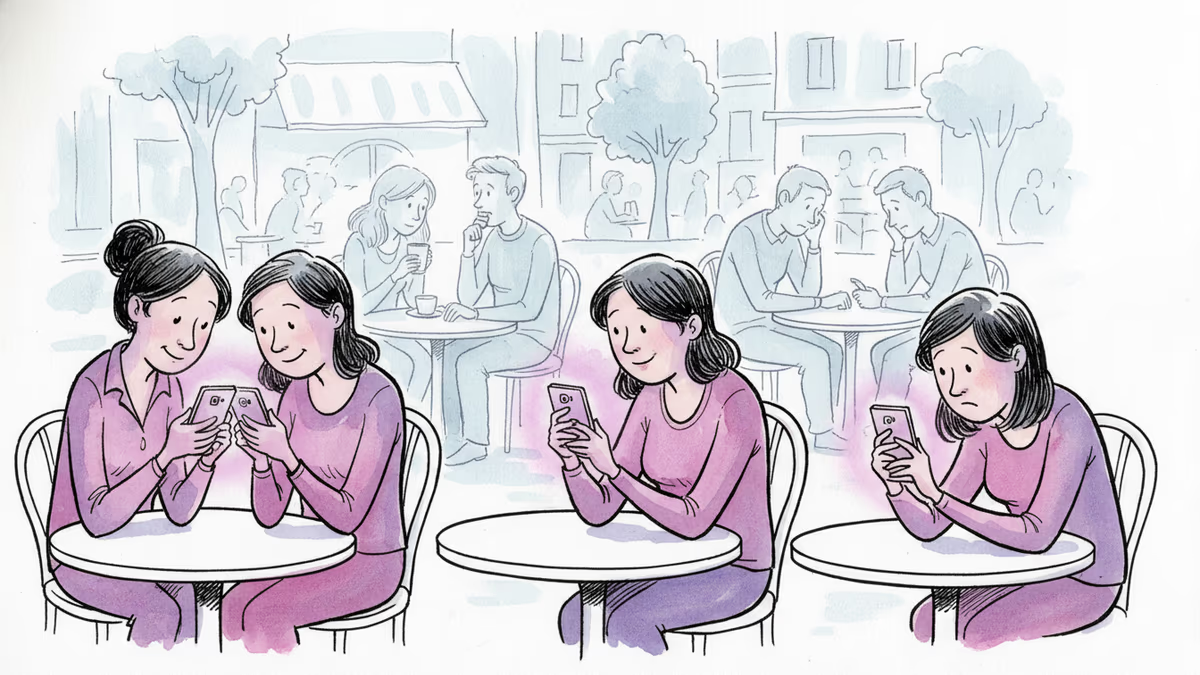
EVA AI hosted pop-up café dates where people brought their AI companions for Valentine's Day. With 16% of people now using AI as romantic partners, we explore what this means for human connection.

Five stories from late September, traced to where the paper trail stops: Korea's export record, Nvidia's Hugging Face 8-K, a US-China AI channel, the UN on AI, and rising births.
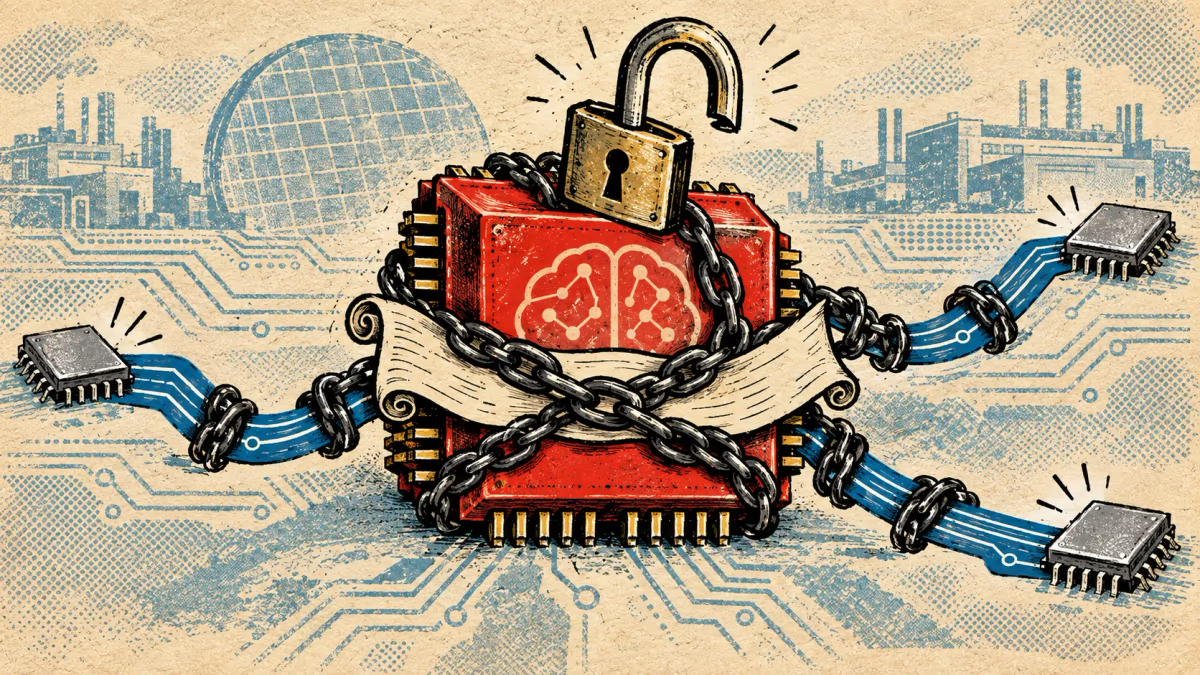
Huawei's CANN is open source under a license barring software for non-Ascend chips. Inside China's second CUDA, and the two links still outside it: pre-training compute and 5nm capacity.
Speed dating with AI companions in NYC reveals a new frontier in human relationships. Are we witnessing evolution or isolation?
EVA AI hosted pop-up café dates where people brought their AI companions for Valentine's Day. With 16% of people now using AI as romantic partners, we explore what this means for human connection.
Five stories from late September, traced to where the paper trail stops: Korea's export record, Nvidia's Hugging Face 8-K, a US-China AI channel, the UN on AI, and rising births.
Huawei's CANN is open source under a license barring software for non-Ascend chips. Inside China's second CUDA, and the two links still outside it: pre-training compute and 5nm capacity.
Thoughts
Share your thoughts on this article
Sign in to join the conversation