
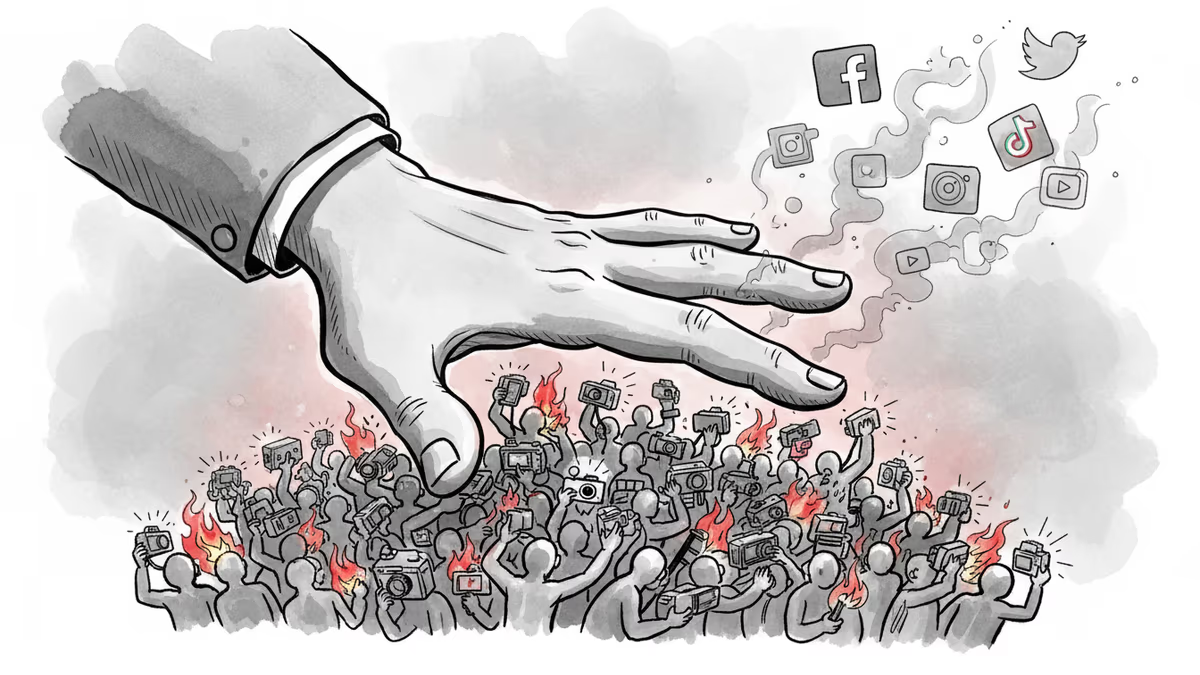
When 220 Dead Journalists Can't Stop the Silence
Gaza and Iran's media blackouts reveal how truth dies in the digital age. An analysis of modern information warfare tactics and their global implications.
220 Journalists Dead, but You Might Never Know
Plestia Alaqad stands in a press vest and helmet amid Gaza's rubble, speaking to a camera between airstrikes. Millions know her only as an image on a screen. She's one of many carrying an impossible burden.
Since October 2023, Israel has barred international journalists from Gaza, leaving Palestinian reporters to shoulder nearly the entire weight of witnessing and reporting. With 72,045 Palestinians killed according to local authorities and over 220 journalists dead, the strategy is clear: kill the messengers, control the message.
"Killing journalists means killing and silencing the truth," Alaqad says. But this tactic works on multiple levels—not just reducing coverage, but turning journalists into threats. "This sends a message to people that all journalists are dangerous. Don't talk to journalists. Stay away from journalists."
The transformation was stark. Early on, people welcomed journalists, offered food, expressed gratitude. "After a couple of months, when they'd seen journalists getting targeted, Palestinians started treating journalists differently," she recalls.
When Protection Becomes a Target
Alaqad's mother begged her daughter to remove her press vest and helmet—symbols meant to signify neutrality and protection that instead made her a target. "It's supposed to protect, but on the contrary, it actually puts risk on your life and even on your beloved ones."
Reporting in Gaza meant working in a landscape where time itself was unstable. Plans rarely extended beyond daylight. Conversations ended abruptly. Addresses became memorials overnight. "The only certainty in Gaza is uncertainty," she says.
She recalls planning to return to interview families, only to find the next day that everyone she'd spoken with had been killed in airstrikes.

90 Million People Cut Off from the World
On January 8, 2026, Iran imposed a near-total communications blackout affecting 90 million people amid mass protests. "There was near total shutdown of all forms of communication: internet, Wi-Fi, phone connections, phone calls," says Jonathan Dagher from Reporters Without Borders. "Even the tools journalists were already used to bypassing restrictions—those tools were down."
Protesters rely on illegally operating Starlink terminals to share videos globally, but the lack of coverage makes it impossible to verify death tolls from the government crackdown. Estimates range wildly from 3,000 to 30,000 dead.
Iranian Foreign Minister Abbas Araghchi justified the blackout by claiming they "confronted terrorist operations and realized orders were coming from outside the country." But without images and testimony, even large-scale violence can remain unverified, contested, or ignored.
The Digital Paradox: Powerful Yet Precarious
Social media helped Palestinian journalists reach millions, fundamentally shifting global opinion. "I believe everyone now knows how powerful social media is," Alaqad says. "We've seen that firsthand in the genocide happening in Gaza."
But digital reporting is both powerful and precarious. Accounts disappear, posts are removed, videos vanish. What's available today may be gone tomorrow. "We lose the voices on the ground, and we lose the truth."
Dagher notes that social media tools "are not outside political control. These are still tools in the hands of powerful people with political and financial interests." Yet it's better than nothing. "At the end of the day, the power of the people is far more powerful than any algorithm or censorship," Alaqad believes.
The Cost of Amplification
Now studying at the American University of Beirut on the Shireen Abu Akleh Memorial Scholarship—named for the Palestinian journalist killed by Israeli forces in 2022—Alaqad reflects on the price of visibility. "It showed millions of people around the world what's happening in Gaza, but at what cost? Being in Gaza could cost you your life, especially as a journalist."
She's careful about her current role: "When I was in Gaza, I had access, reporting firsthand what I was seeing. But right now, not being physically there, I always make sure to talk to people and amplify their voices, not speak over them."
Authors
Related Articles
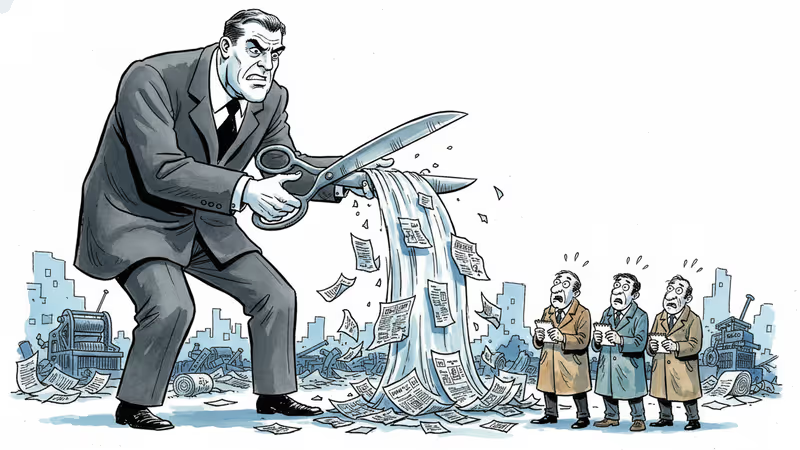
Amazon founder Jeff Bezos's Washington Post slashed its tech coverage team by half in massive layoffs affecting 300+ staff. A look at how tech billionaires are controlling media coverage of themselves.
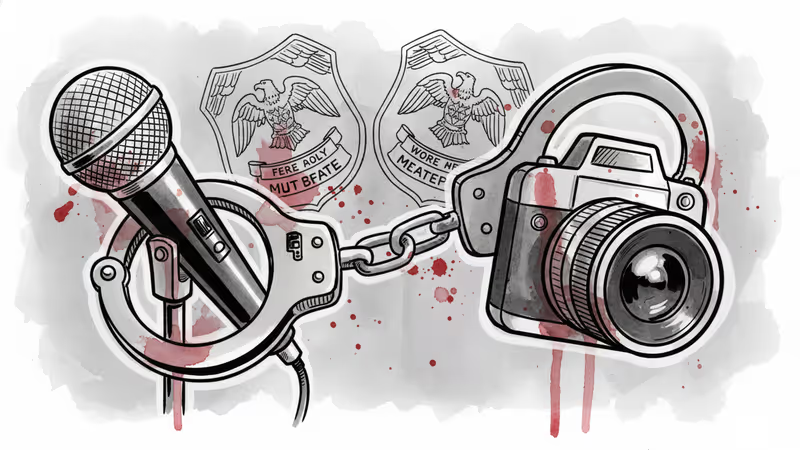
Don Lemon and Georgia Fort were arrested by federal agents while covering anti-ICE protests, raising concerns about press freedom under the Trump administration. Where do we draw the line between journalism and law enforcement?

Within minutes of Alex Pretti's killing by ICE agents, the Trump administration launched a coordinated smear campaign labeling the US citizen a 'terrorist'—revealing how instant narrative control now trumps fact-checking in digital democracy.

A new report in Science warns that AI swarms disinformation 2026 is becoming a reality, allowing one person to command thousands of AI agents to manipulate elections.
Amazon founder Jeff Bezos's Washington Post slashed its tech coverage team by half in massive layoffs affecting 300+ staff. A look at how tech billionaires are controlling media coverage of themselves.
Don Lemon and Georgia Fort were arrested by federal agents while covering anti-ICE protests, raising concerns about press freedom under the Trump administration. Where do we draw the line between journalism and law enforcement?
Within minutes of Alex Pretti's killing by ICE agents, the Trump administration launched a coordinated smear campaign labeling the US citizen a 'terrorist'—revealing how instant narrative control now trumps fact-checking in digital democracy.
A new report in Science warns that AI swarms disinformation 2026 is becoming a reality, allowing one person to command thousands of AI agents to manipulate elections.
Thoughts
Share your thoughts on this article
Sign in to join the conversation