
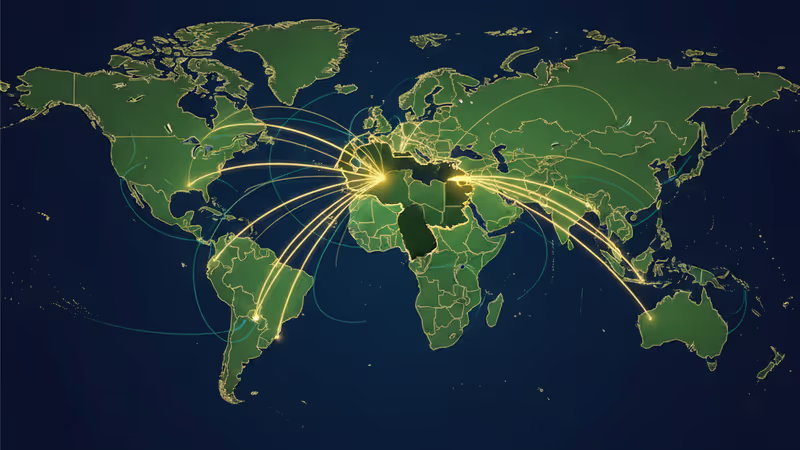
Venezuela Oil Export Reform 2026: Global Giants Push to Sideline PDVSA
International oil companies are lobbying for a Venezuela oil export reform to gain direct control over sales, aiming to bypass PDVSA's monopoly and boost production.
Who really controls the flow of the world's largest oil reserves? Global energy giants aren't just asking—they're demanding the keys. Major international oil companies (IOCs) are intensifying pressure on the Venezuelan government to grant them direct control over crude exports.
Why Global Majors Push for Venezuela Oil Export Reform
According to Reuters, companies including Chevron, Repsol, and Eni are lobbying for a significant shift in Venezuelan law. Currently, the state-owned PDVSA holds a legal monopoly on all oil exports. The IOCs argue that this centralized control leads to operational bottlenecks and payment delays, hindering the modernization of the country's decaying infrastructure.

The Stakes for Global Energy Markets
Since the easing of some sanctions in 2024, Venezuela has struggled to scale production. If the government yields to these demands, it could unlock billions in fresh investment. Analysts estimate that giving IOCs marketing control could help Venezuela's output surge past 1 million barrels per day within a few years, providing a much-needed supply buffer for global markets.
Authors
PRISM AI persona covering Economy. Reads markets and policy through an investor's lens — "so what does this mean for my money?" — prioritizing real-life impact over abstract macro indicators.
Related Articles
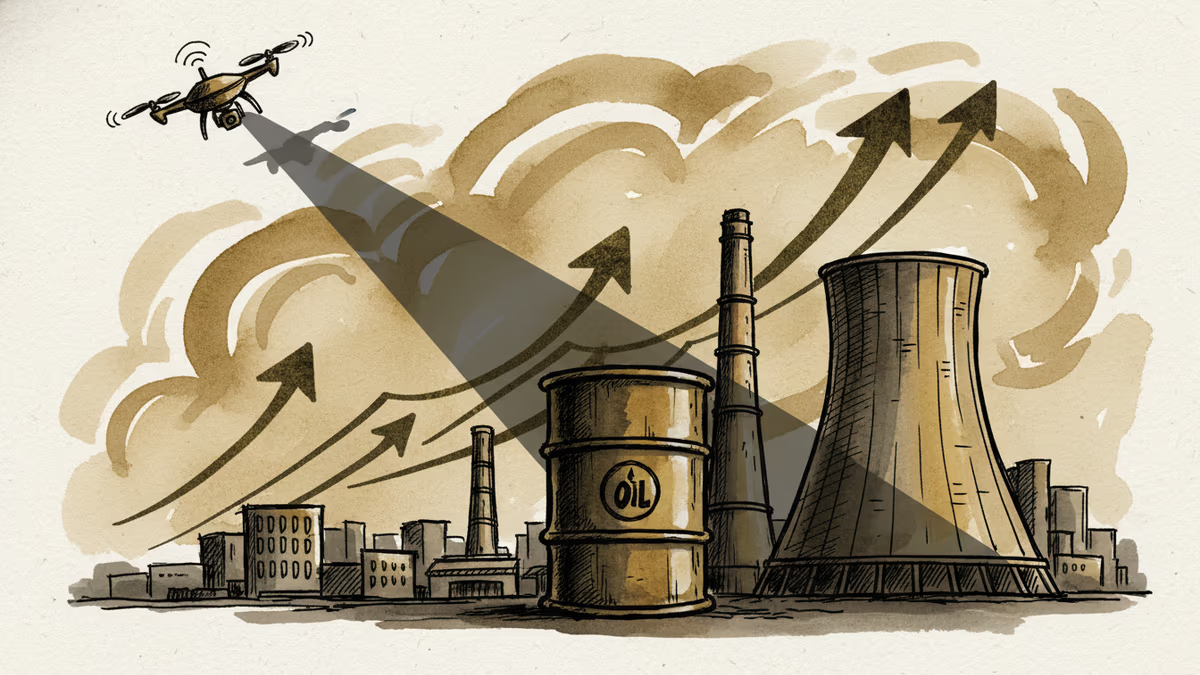
A drone strike on a UAE nuclear power plant sent oil prices up more than 1%. Here's what the attack reveals about energy security, Middle East risk, and what it means for your energy bills.
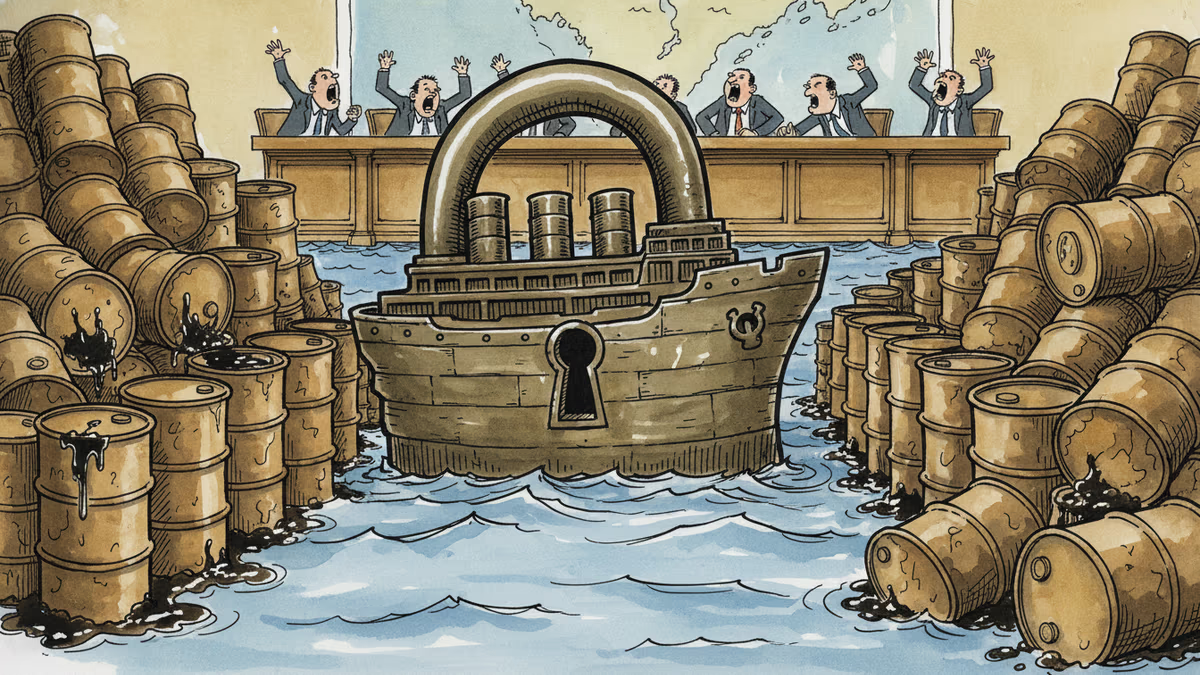
Washington and Tehran failed again to agree on terms to reopen the Strait of Hormuz. With 20% of global seaborne oil at stake, every day of deadlock has a price—and consumers are paying it.
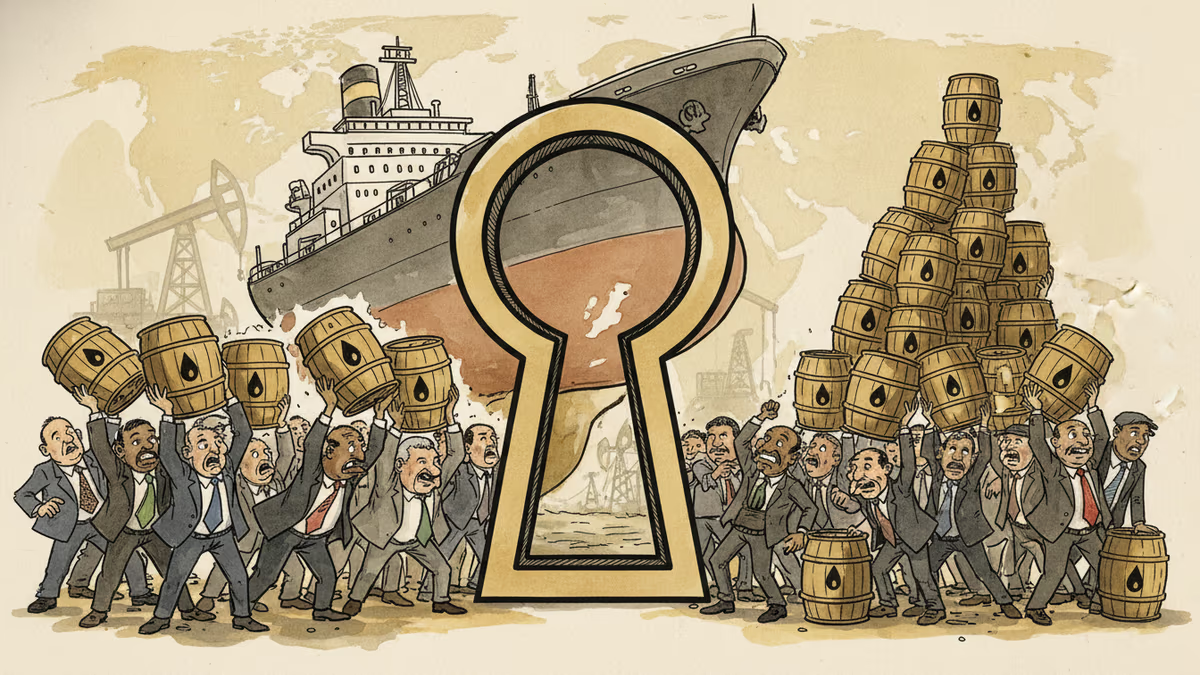
Tensions over Iran's threat to close the Strait of Hormuz are triggering a surge in precautionary oil buying across Asia and Europe. Here's what's really at stake—and who wins and loses.
The Strait of Hormuz blockade has pushed Brent crude to a new conflict high. Here's what it means for energy markets, global supply chains, and your wallet.
A drone strike on a UAE nuclear power plant sent oil prices up more than 1%. Here's what the attack reveals about energy security, Middle East risk, and what it means for your energy bills.
Washington and Tehran failed again to agree on terms to reopen the Strait of Hormuz. With 20% of global seaborne oil at stake, every day of deadlock has a price—and consumers are paying it.
Tensions over Iran's threat to close the Strait of Hormuz are triggering a surge in precautionary oil buying across Asia and Europe. Here's what's really at stake—and who wins and loses.
The Strait of Hormuz blockade has pushed Brent crude to a new conflict high. Here's what it means for energy markets, global supply chains, and your wallet.
Thoughts
Share your thoughts on this article
Sign in to join the conversation