

Why a 10-Year-Old Android Device Still Gets Updates
The Nvidia Shield Android TV from 2015 continues receiving updates in 2026. While Samsung and Google promise 7 years of support, what does this small set-top box reveal about sustainable tech?
Imagine buying a device in 2015 and still receiving software updates in 2026. That's exactly what Nvidia Shield Android TV owners are experiencing right now.
The Android Update Paradox
It took Android device makers an embarrassingly long time to commit to long-term support. Samsung and Google only recently promised seven years of updates for their flagship devices. A decade ago, even the most expensive Android phones were lucky to receive more than one or two major updates.
Yet here's the Nvidia Shield Android TV, launched in 2015, still going strong with regular updates. According to Andrew Bell, Nvidia's senior VP of hardware engineering who's been with the company for 25 years, supporting these devices has been "a labor of love." The team has never given up on the Shield, even when support seemed to be waning.
Gaming DNA, Broader Vision
The Shield's longevity stems from Nvidia's gaming roots. "Pretty much everybody who worked at Nvidia in the early days really wanted to make a game console," Bell recalls. That gaming focus birthed the Shield, but the device evolved beyond its original vision.
Built on Android TV, this small black box became a Swiss Army knife for the living room—streaming content, playing games, controlling smart home devices. It wasn't just another gadget; it became the central hub many didn't know they needed.

Small Market, Big Statement
The Shield Android TV never achieved mainstream success like Galaxy phones or iPhones. It's a niche product with a dedicated but limited user base. So why does Nvidia continue supporting a nine-year-old device?
The answer lies in Nvidia's business model. Unlike smartphone manufacturers who need to sell new hardware for revenue, Nvidia makes money from GPUs and AI chips. The Shield serves as a showcase of technical prowess and builds brand loyalty—a long-term investment rather than a quick profit grab.
The Sustainability Question
This approach challenges the tech industry's throwaway culture. While consumers are pressured to upgrade phones every few years, the Shield proves that devices can remain relevant and functional for nearly a decade with proper software support.
Consider the environmental impact: fewer devices in landfills, reduced electronic waste, and less pressure on consumers to constantly upgrade. The Shield's longevity offers a glimpse of what sustainable tech could look like.
Market Implications
Nvidia's commitment to the Shield raises uncomfortable questions for other manufacturers. If a small set-top box can receive nine years of updates, why can't flagship smartphones? The answer often comes down to business incentives rather than technical limitations.
Companies like Apple have moved toward longer support cycles, partly due to regulatory pressure and consumer demand. But the Shield's example suggests that even longer support periods are technically feasible—it's a matter of corporate will and business model alignment.
Authors
Related Articles

Nvidia shipped roughly a billion RISC-V cores in 2024, then announced it would run CUDA on the open standard. We break down how royalty-free instruction sets and open software stacks are trying to route around CUDA's lock-in. Part 2 of the Semiconductor Sovereignty series.
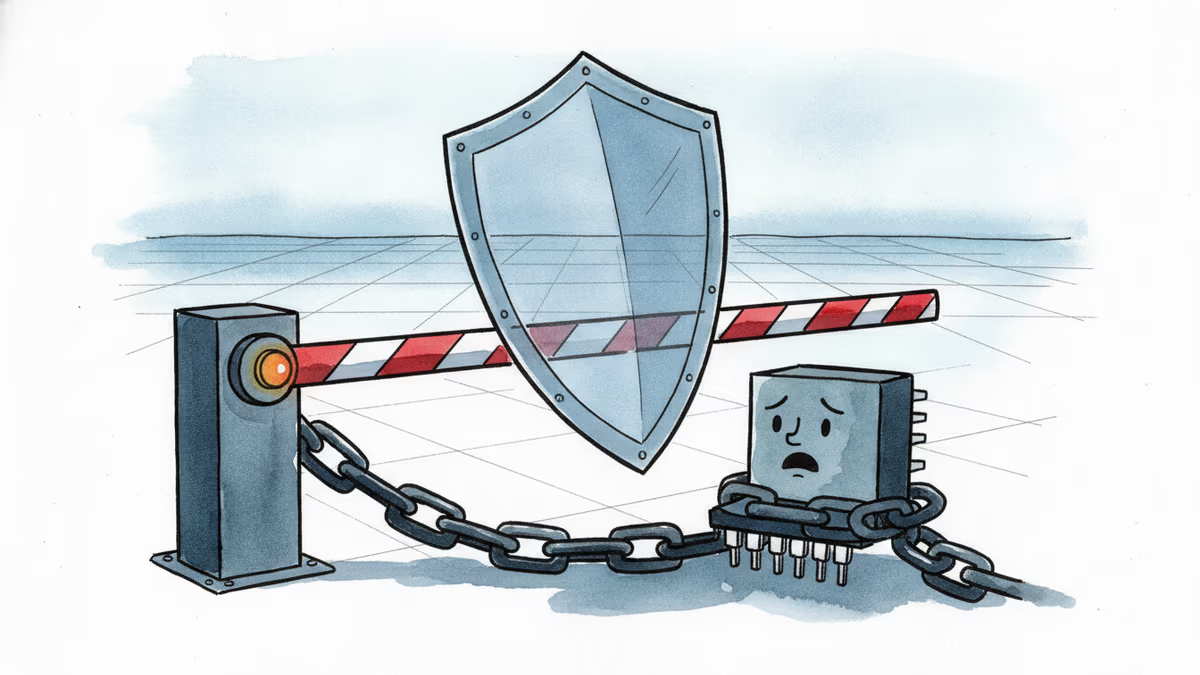
US AI-chip export controls split into three layers in the first half of 2026 — January easing, a May crackdown on circumvention, and a pending bill. Nvidia erased China from its guidance and still posted a record $81.6 billion quarter. A look at the export policy that both shields and cages it.
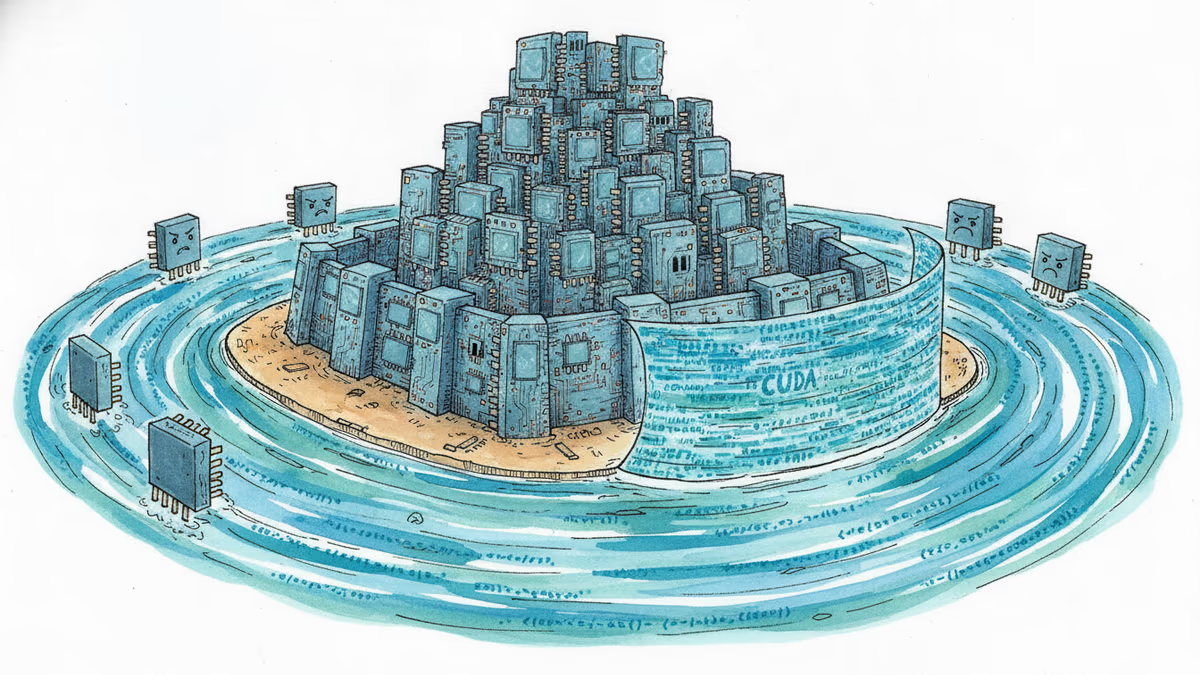
AMD's MI325X matches or beats Nvidia on memory and bandwidth — yet Nvidia's 86-92% share holds. The real moat is CUDA, 20 years in the making. Part 1 of 4.

Snowflake's new $6 billion AWS contract is about more than cloud spending. It signals a shift in AI infrastructure—away from Nvidia GPUs and toward cheaper, homegrown chips for the agent era.
Nvidia shipped roughly a billion RISC-V cores in 2024, then announced it would run CUDA on the open standard. We break down how royalty-free instruction sets and open software stacks are trying to route around CUDA's lock-in. Part 2 of the Semiconductor Sovereignty series.
US AI-chip export controls split into three layers in the first half of 2026 — January easing, a May crackdown on circumvention, and a pending bill. Nvidia erased China from its guidance and still posted a record $81.6 billion quarter. A look at the export policy that both shields and cages it.
AMD's MI325X matches or beats Nvidia on memory and bandwidth — yet Nvidia's 86-92% share holds. The real moat is CUDA, 20 years in the making. Part 1 of 4.
Snowflake's new $6 billion AWS contract is about more than cloud spending. It signals a shift in AI infrastructure—away from Nvidia GPUs and toward cheaper, homegrown chips for the agent era.
Thoughts
Share your thoughts on this article
Sign in to join the conversation