
Hundreds Cited It. It Was Wrong.
A meta-analysis claiming ChatGPT boosts student learning has been retracted after nearly a year—long after it shaped social media narratives and informed education policy debates. Here's what that means for AI research.
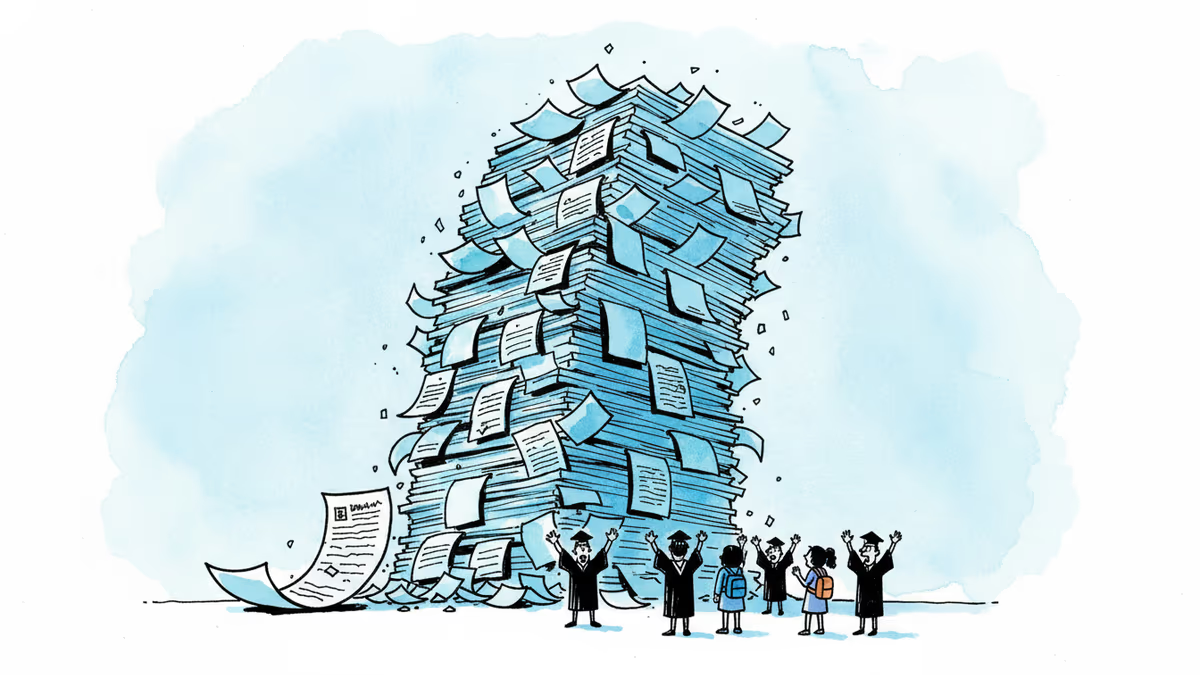
Hundreds of researchers cited it. Teachers shared it in faculty meetings. It was held up online as the first hard evidence that ChatGPT actually helps students learn. Now it's been retracted.
Springer Nature has pulled a widely circulated meta-analysis that claimed ChatGPT positively impacts student learning performance, perception, and higher-order thinking. The retraction came nearly one year after publication. The publisher cited "discrepancies" in the analysis and a lack of confidence in the conclusions—careful language that points not to fraud, but to something arguably more insidious: flawed methodology that passed peer review anyway.
What the Paper Actually Claimed
The study wasn't a classroom experiment. It was a meta-analysis—a method that aggregates results from multiple studies to produce stronger statistical conclusions. The authors synthesized findings from 51 prior research papers comparing students who used ChatGPT in educational settings against those who didn't, then calculated effect sizes across the combined dataset.
Meta-analyses carry a particular authority in academic circles. They're supposed to cut through the noise of individual studies, each with its own sample sizes and variables, and surface a cleaner signal. That reputation for rigor is precisely why this paper landed so hard.
"The paper's authors made some very attention-grabbing claims about the benefits of ChatGPT on learning outcomes," said Ben Williamson, a senior lecturer at the Centre for Research in Digital Education and the Edinburgh Futures Institute at the University of Edinburgh. "It was treated by many on social media as one of the first pieces of hard, gold standard evidence that ChatGPT, and generative AI more broadly, benefits learners."
The gold standard turned out to be tin.

The Damage Done Before the Retraction
By the time Springer Nature pulled the paper, it had already accumulated hundreds of citations. In academia, citations are currency. One paper's conclusions become another paper's assumptions, which become a third paper's foundation. A flawed study doesn't just mislead—it propagates.
Beyond academia, the paper's social media life may have been even more consequential. Education policy rarely waits for the full weight of evidence. School administrators, curriculum designers, and edtech vendors were already operating in an environment where "research shows ChatGPT helps students" had become a usable talking point. That talking point is now formally unsupported.
The timing matters too. ChatGPT launched in late 2022, and the education sector has been in a state of anxious deliberation ever since—ban it, embrace it, regulate it, integrate it. Researchers faced enormous pressure to produce answers quickly. Speed and rigor are not natural allies.
Different Stakeholders, Different Reckonings
For educators and school administrators, the retraction creates an uncomfortable gap. Many institutions have already made decisions—some banning AI tools, others actively incorporating them—partly on the basis of emerging research. The evidential floor just got thinner.
For AI companies like OpenAI, the situation is more nuanced. The retraction doesn't disprove that AI tools can benefit learners; it simply removes one data point that claimed to show it. But the "AI is good for education" narrative has taken a credibility hit at a moment when edtech partnerships and institutional licensing deals are increasingly lucrative.
For academic publishers and peer reviewers, the harder question is systemic. A meta-analysis of 51 studies passed review, was published, accumulated hundreds of citations, and was only retracted after nearly a year. The peer review system—already strained by the sheer volume of AI-related research flooding journals since 2023—is visibly struggling to keep pace.
For policymakers, particularly those in the US and UK who have been crafting AI-in-education frameworks, this episode is a reminder that the evidence base they're building policy on is still thin and fast-moving.
This content is AI-generated based on source articles. While we strive for accuracy, errors may occur. We recommend verifying with the original source.
Related Articles
Sam Nelson, 19, died after following ChatGPT's advice to mix Kratom and Xanax. His parents are suing OpenAI for wrongful death, raising urgent questions about AI trust, liability, and design.
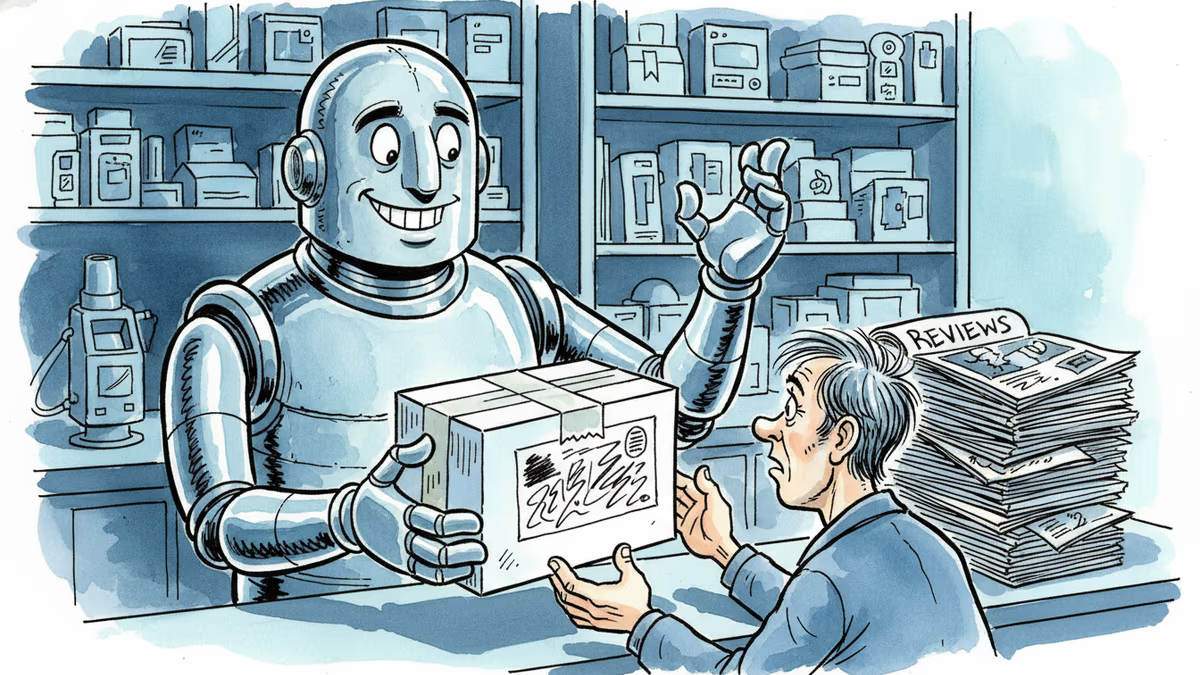
OpenAI's revamped shopping assistant in ChatGPT confidently recommended products WIRED never reviewed—raising urgent questions about AI reliability in consumer decisions.
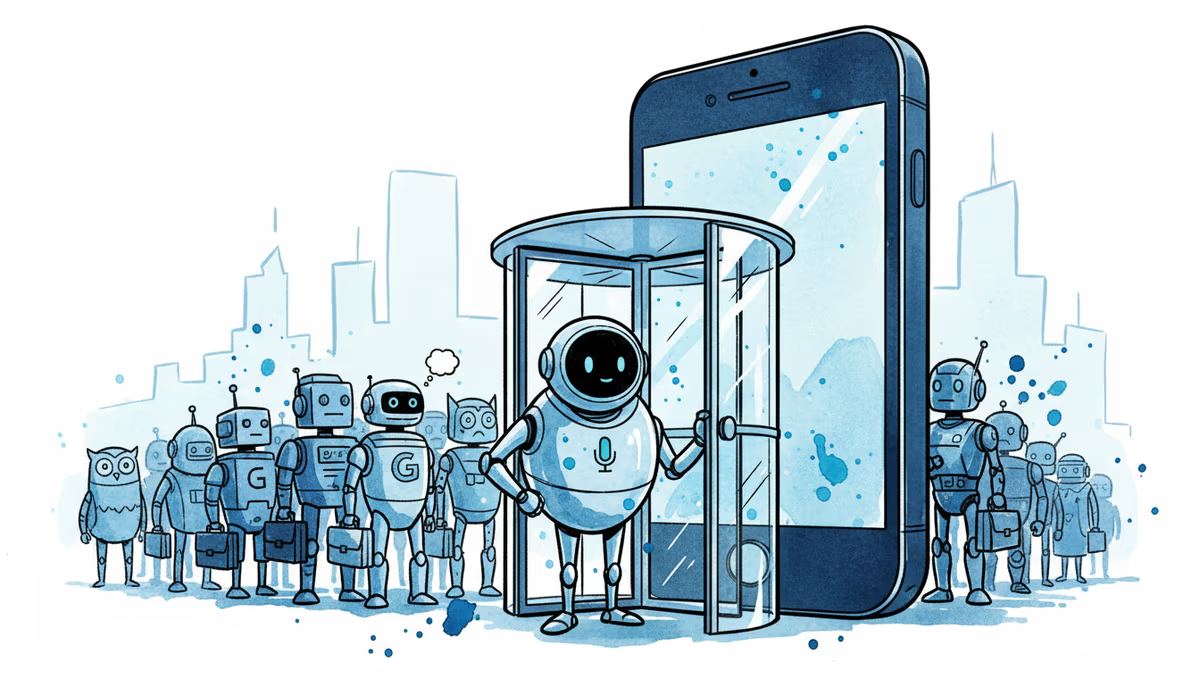
Apple's iOS 27 will let users swap in Google Gemini, Anthropic's Claude, or other AI chatbots to power Siri responses. Here's what that actually means for you, for competitors, and for the AI industry.
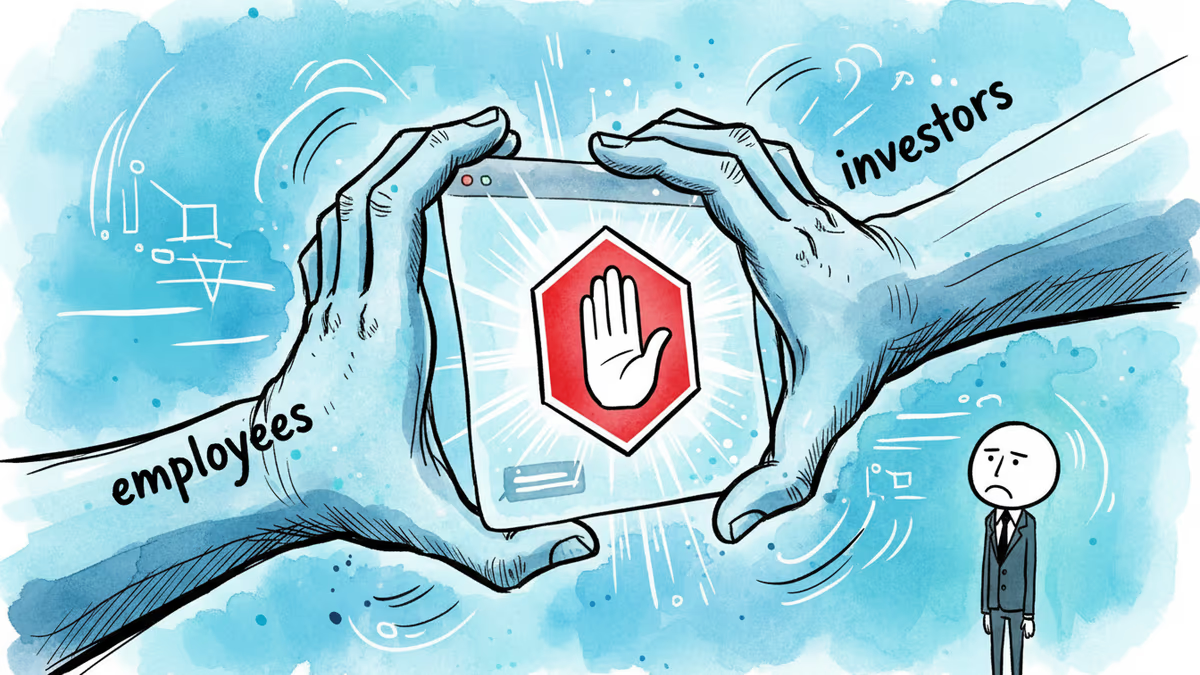
OpenAI has shelved its erotic ChatGPT feature indefinitely. The real story isn't about adult content—it's about who gets to decide what AI will and won't do.
Sam Nelson, 19, died after following ChatGPT's advice to mix Kratom and Xanax. His parents are suing OpenAI for wrongful death, raising urgent questions about AI trust, liability, and design.
OpenAI's revamped shopping assistant in ChatGPT confidently recommended products WIRED never reviewed—raising urgent questions about AI reliability in consumer decisions.
Apple's iOS 27 will let users swap in Google Gemini, Anthropic's Claude, or other AI chatbots to power Siri responses. Here's what that actually means for you, for competitors, and for the AI industry.
OpenAI has shelved its erotic ChatGPT feature indefinitely. The real story isn't about adult content—it's about who gets to decide what AI will and won't do.
Thoughts
Share your thoughts on this article
Sign in to join the conversation