
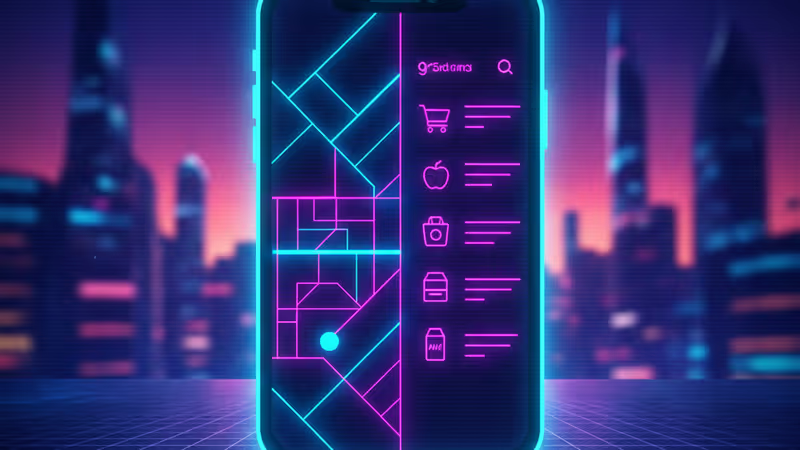
inDrive Super App Strategy 2026: Ads and Grocery Push for Growth
inDrive accelerates its super app strategy for 2026 by launching ads in 20 markets and expanding grocery delivery in Pakistan to diversify revenue streams.
It's the world's second most-downloaded mobility app, and it's coming for more than just your fare. inDrive is aggressively pivoting toward a "super app" model, rolling out advertising across 20 global markets and scaling its grocery delivery business.
Executing the inDrive Super App Strategy 2026
According to TechCrunch, the Mountain View-based firm is deepening its push beyond transport to counter tightening margins in emerging markets. The company has surpassed 360 million downloads, giving it a massive audience for its new advertising vertical. While rivaling giants like Uber, inDrive is leveraging its peer-to-peer negotiation model to sustain growth in price-sensitive regions.
- Ad rollout markets: Mexico, Colombia, Pakistan, Kazakhstan, Egypt, and Morocco.
- Ad formats: Primarily in-app placements during booking and transit through 2026.
- Revenue shift: Ride-hailing now accounts for 85% of revenue, down from 95% a few years ago.

Pakistan as the Frontier for Quick Commerce
Pakistan has emerged as the focal point for inDrive’s capital deployment. Through a partnership with Krave Mart, inDrive is offering delivery of over 7,500 products in as little as 20 minutes. The service provides free delivery on orders above PKR 499 (about $2), aiming to capture the fragmented and informal retail market in major cities like Karachi.
Ideally, we want to continue and double down on [investments] as we see performance.
Authors
Related Articles
Zomato parent Eternal appoints Albinder Dhindsa as the new CEO in 2026. Founder Deepinder Goyal shifts to Vice Chairman to focus on high-risk longevity and health tech ventures.
Samsung Electronics' union branch revealed that 84% of survey respondents oppose the government's roughly $290 billion (₩400 trillion) semiconductor megaproject in Gwangju. Government, management, the union and shareholders are all reading the same national project in sharply different ways.
Nvidia shipped roughly a billion RISC-V cores in 2024, then announced it would run CUDA on the open standard. We break down how royalty-free instruction sets and open software stacks are trying to route around CUDA's lock-in. Part 2 of the Semiconductor Sovereignty series.
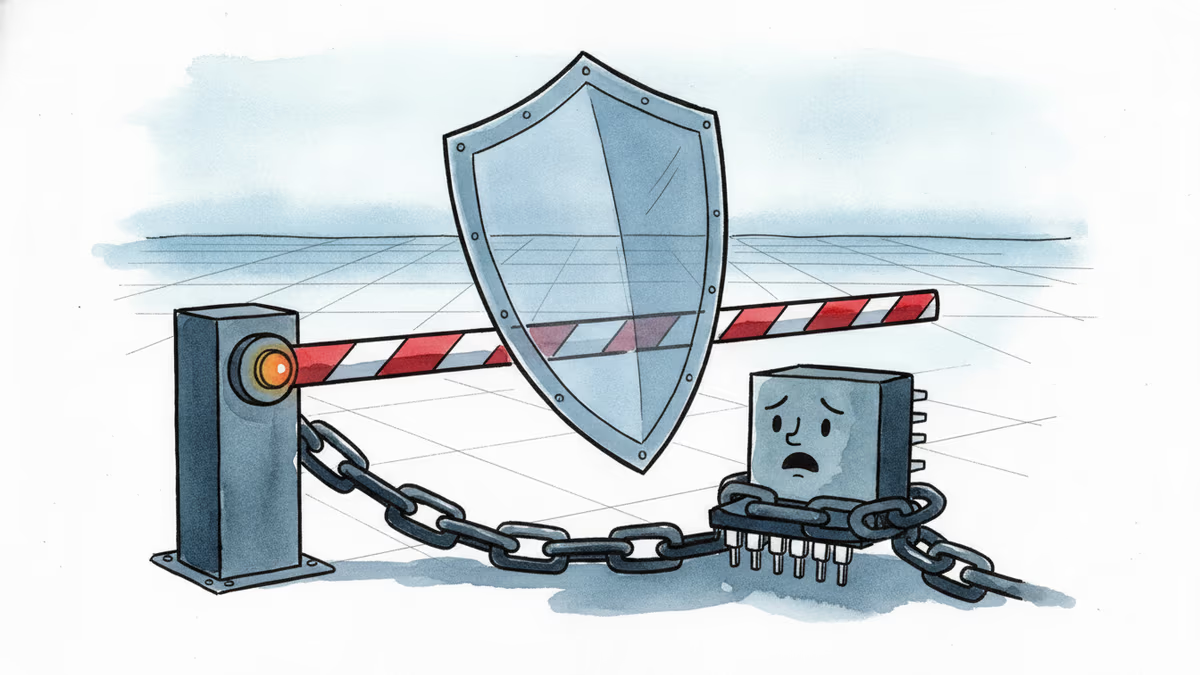
US AI-chip export controls split into three layers in the first half of 2026 — January easing, a May crackdown on circumvention, and a pending bill. Nvidia erased China from its guidance and still posted a record $81.6 billion quarter. A look at the export policy that both shields and cages it.
Zomato parent Eternal appoints Albinder Dhindsa as the new CEO in 2026. Founder Deepinder Goyal shifts to Vice Chairman to focus on high-risk longevity and health tech ventures.
Samsung Electronics' union branch revealed that 84% of survey respondents oppose the government's roughly $290 billion (₩400 trillion) semiconductor megaproject in Gwangju. Government, management, the union and shareholders are all reading the same national project in sharply different ways.
Nvidia shipped roughly a billion RISC-V cores in 2024, then announced it would run CUDA on the open standard. We break down how royalty-free instruction sets and open software stacks are trying to route around CUDA's lock-in. Part 2 of the Semiconductor Sovereignty series.
US AI-chip export controls split into three layers in the first half of 2026 — January easing, a May crackdown on circumvention, and a pending bill. Nvidia erased China from its guidance and still posted a record $81.6 billion quarter. A look at the export policy that both shields and cages it.
Thoughts
Share your thoughts on this article
Sign in to join the conversation