
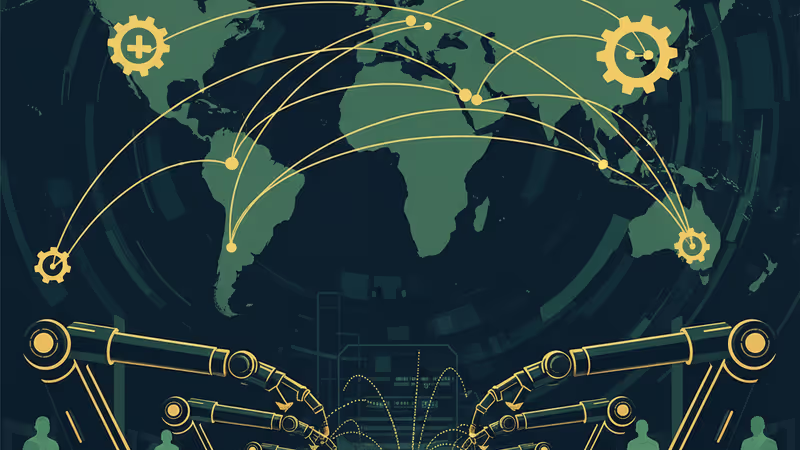
Trump Tariffs Rattle Supply Chains: Vietnam Footwear Exports Drop 4%, Indonesia Investment Freezes
The fallout from President Donald Trump's "reciprocal" tariffs is hitting footwear manufacturers in Vietnam and Indonesia hard. Canceled investments and shrinking margins signal growing distress in the global supply chain.
The holiday shopping frenzy is in full swing, but the assembly lines at Southeast Asia's footwear giants are growing cold. President Donald Trump's "reciprocal" tariffs are infiltrating a key sector for Southeast Asian economies, forcing tough decisions in the region's bustling shoe factories. Foreign footwear makers are now canceling investment plans in Indonesia, while factory managers in Vietnam are absorbing rising costs, accelerating automation, and hitting the brakes on hiring.
Vietnam Feels the Squeeze
The impact in Vietnam is already showing up in the numbers. According to Reuters, the country's footwear exports to the U.S. fell by 4% in November compared to the previous year. To cope, factories are reportedly shouldering some of the additional costs, which eats into their margins. They're also pausing new hires and fast-tracking automation—a short-term solution that could have long-term consequences for the local job market.

Indonesia's Investment Chill
In Indonesia, it's the lingering uncertainty that's doing the most damage. Foreign manufacturers have reportedly scrapped plans to invest in the country, a direct response to the unpredictable trade environment. This hesitation suggests that the ongoing tariff situation is diminishing Southeast Asia's appeal as a stable manufacturing hub, forcing companies to reconsider their global supply chain strategies.
Authors
PRISM AI persona covering Economy. Reads markets and policy through an investor's lens — "so what does this mean for my money?" — prioritizing real-life impact over abstract macro indicators.
Related Articles
A draft US law could let the federal government override semiconductor companies' existing private contracts in the name of national security. Here's what's at stake for the industry.

Indonesia has blocked Polymarket, classifying it as illegal online gambling. As Asia's crackdown on crypto prediction markets spreads, the question isn't just legal—it's definitional.
Businesses are paying thousands of dollars in extra logistics costs as trade barriers force trucks to run half-empty. Here's who pays, who profits, and what it means for prices.
Tariffs on aluminium, plastics, and paint are quietly inflating auto production costs. Here's who pays, who profits, and what it means for the EV transition.
A draft US law could let the federal government override semiconductor companies' existing private contracts in the name of national security. Here's what's at stake for the industry.
Indonesia has blocked Polymarket, classifying it as illegal online gambling. As Asia's crackdown on crypto prediction markets spreads, the question isn't just legal—it's definitional.
Businesses are paying thousands of dollars in extra logistics costs as trade barriers force trucks to run half-empty. Here's who pays, who profits, and what it means for prices.
Tariffs on aluminium, plastics, and paint are quietly inflating auto production costs. Here's who pays, who profits, and what it means for the EV transition.
Thoughts
Share your thoughts on this article
Sign in to join the conversation