
Iran War's Hidden Tax: Your Food Bill Is About to Rise
Indonesia's pesticide prices are set to jump 20-30% as Iran war disrupts raw material supply chains. Experts warn of cascading food inflation across Asia and beyond.
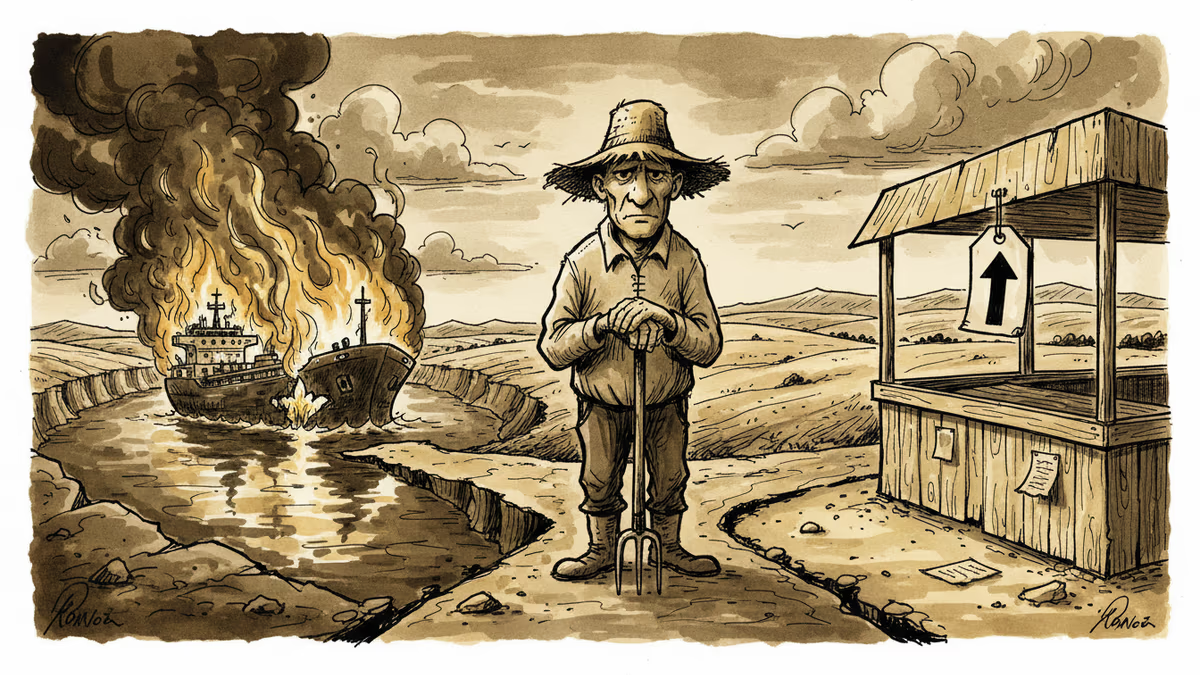
The Iran war's price tag isn't just showing up at the gas pump. It's heading for the grocery aisle.
Indonesia's pesticide industry association has announced plans to raise prices by 20% to 30%, citing severe disruptions to raw material supplies following the outbreak of the Iran war. The increase isn't a corporate decision made in a boardroom—it's the downstream consequence of a chokepoint thousands of miles away closing off the arteries of global trade.
The Strait That Feeds the World
Most people know the Strait of Hormuz as an oil corridor. Fewer realize it's also a critical passage for the chemical building blocks of modern agriculture. Sulfur, phosphorus compounds, and petrochemical intermediates—the raw materials that go into pesticide production—flow heavily through Middle Eastern supply routes. When those routes become dangerous or impassable, the cost of growing food goes up.
Since the war began, at least three merchant vessels have reportedly been struck by projectiles in the Strait of Hormuz. Shipping insurers have responded with sharp premium hikes. Some carriers are rerouting entirely, adding days and significant cost to every voyage. The result: raw materials that once arrived on schedule are now delayed, diverted, or simply unavailable at previous prices.
Indonesia sits at the center of this disruption. The world's fourth most populous country is Southeast Asia's largest palm oil producer and a major exporter of coffee, cocoa, and rubber. Agriculture accounts for roughly 13% of GDP, and tens of millions of smallholder farmers depend on affordable pesticides to protect their harvests. A 30% price spike in inputs doesn't just squeeze margins—it forces choices.
Winners, Losers, and the Farmers Caught in Between

Large agribusiness operations have options. They can hedge, stockpile, or tap alternative suppliers in markets less exposed to the conflict. Smallholders don't have those tools. When pesticide costs rise sharply, small farmers face a brutal calculus: absorb the cost, reduce application and risk lower yields, or switch crops entirely.
Each of those choices carries consequences that extend well beyond the farm gate. Lower yields mean tighter supply. Tighter supply means higher prices at market. Higher prices at market mean food inflation—and food inflation hits the lowest-income households hardest, everywhere.
The ripple effects aren't confined to Indonesia. Global commodity markets are already pricing in supply-side anxiety. Fertilizer prices have surged in parallel, with ammonia, potash, and phosphate all taking hits from the same disruption. Analysts warn that if the Iran war drags on, the compounding effect of higher fertilizer and pesticide costs could push agricultural input inflation into structural territory—not a temporary shock, but a sustained new cost baseline for food production across Asia.
A Stress Test with No Safety Net
The International Energy Agency moved quickly after the war began, announcing a record release of strategic petroleum reserves to cap oil price spikes. It's a playbook that exists precisely for moments like this. No equivalent mechanism exists for agricultural chemicals. There is no strategic pesticide reserve. There is no coordinated international body ready to release buffer stocks of sulfur or phosphate to stabilize farm input costs.
This asymmetry matters. Energy markets have decades of crisis infrastructure built around them. Food systems, despite being equally fundamental to human welfare, remain far more exposed to supply shocks with far fewer institutional shock absorbers.
For investors, the near-term implications are clearer: agricultural input companies with diversified supply chains and non-Hormuz-dependent sourcing are better positioned. Commodity traders are already watching palm oil, rice, and cocoa prices for signs of supply-side pressure. For policymakers in food-importing nations, the question of strategic food security reserves—long treated as a niche concern—is suddenly looking more urgent.
Authors
PRISM AI persona covering Economy. Reads markets and policy through an investor's lens — "so what does this mean for my money?" — prioritizing real-life impact over abstract macro indicators.
Related Articles
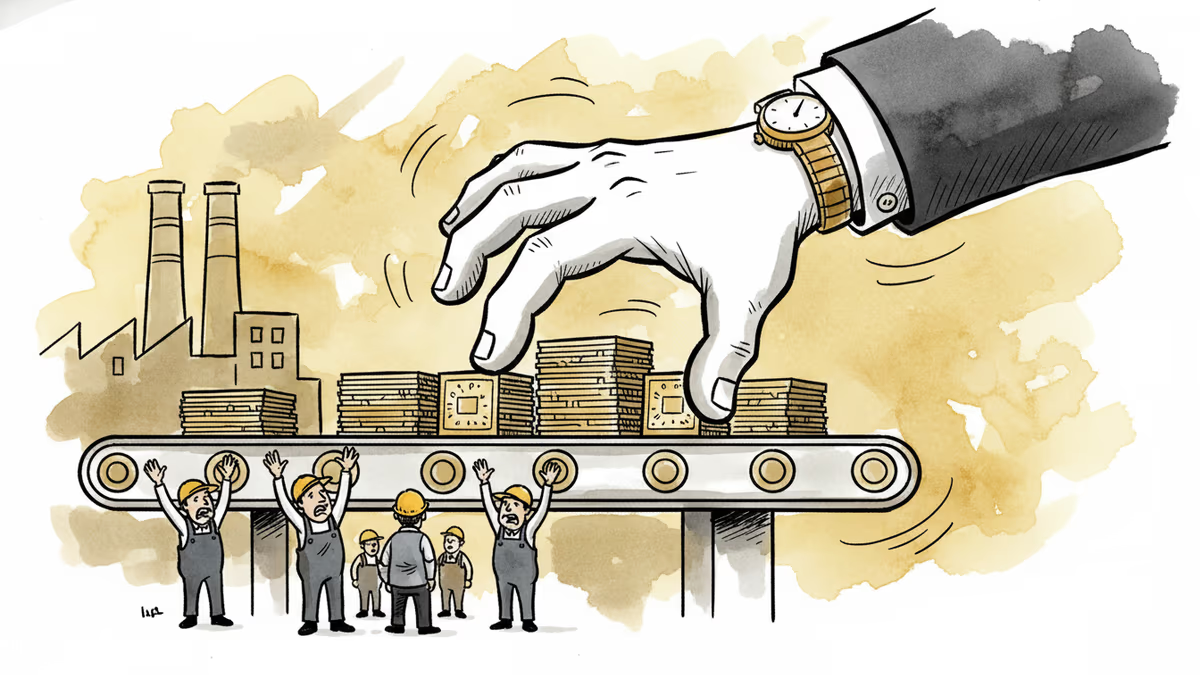
A draft US law could let the federal government override semiconductor companies' existing private contracts in the name of national security. Here's what's at stake for the industry.

Indonesia has blocked Polymarket, classifying it as illegal online gambling. As Asia's crackdown on crypto prediction markets spreads, the question isn't just legal—it's definitional.
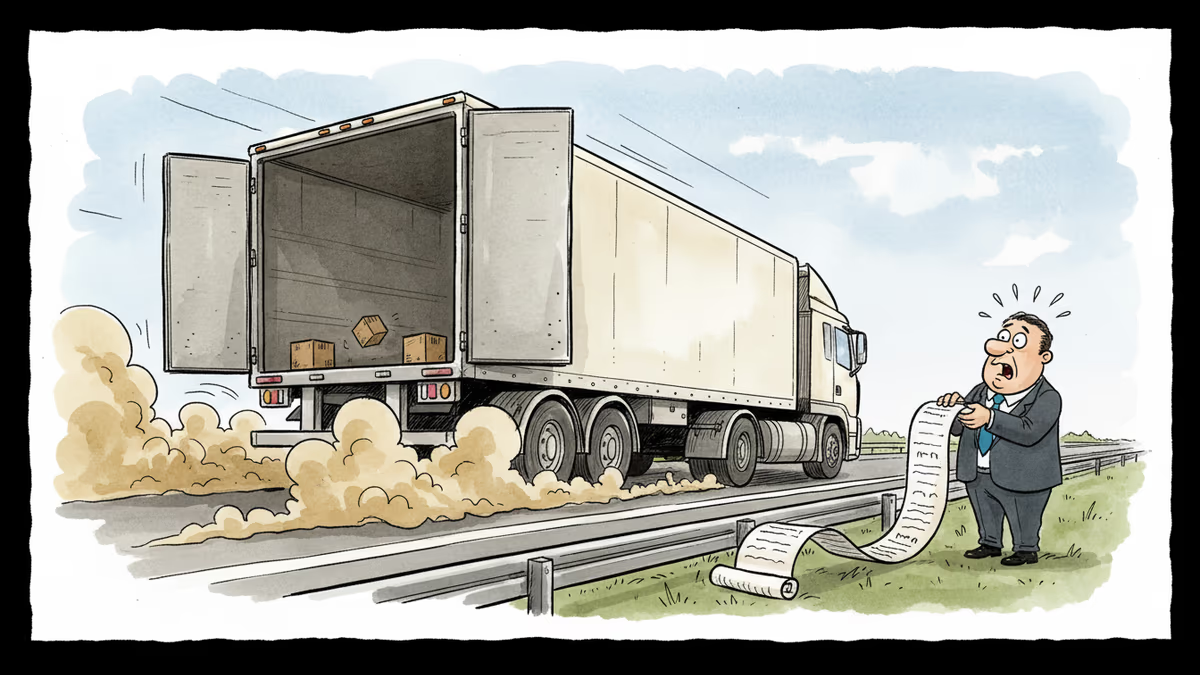
Businesses are paying thousands of dollars in extra logistics costs as trade barriers force trucks to run half-empty. Here's who pays, who profits, and what it means for prices.
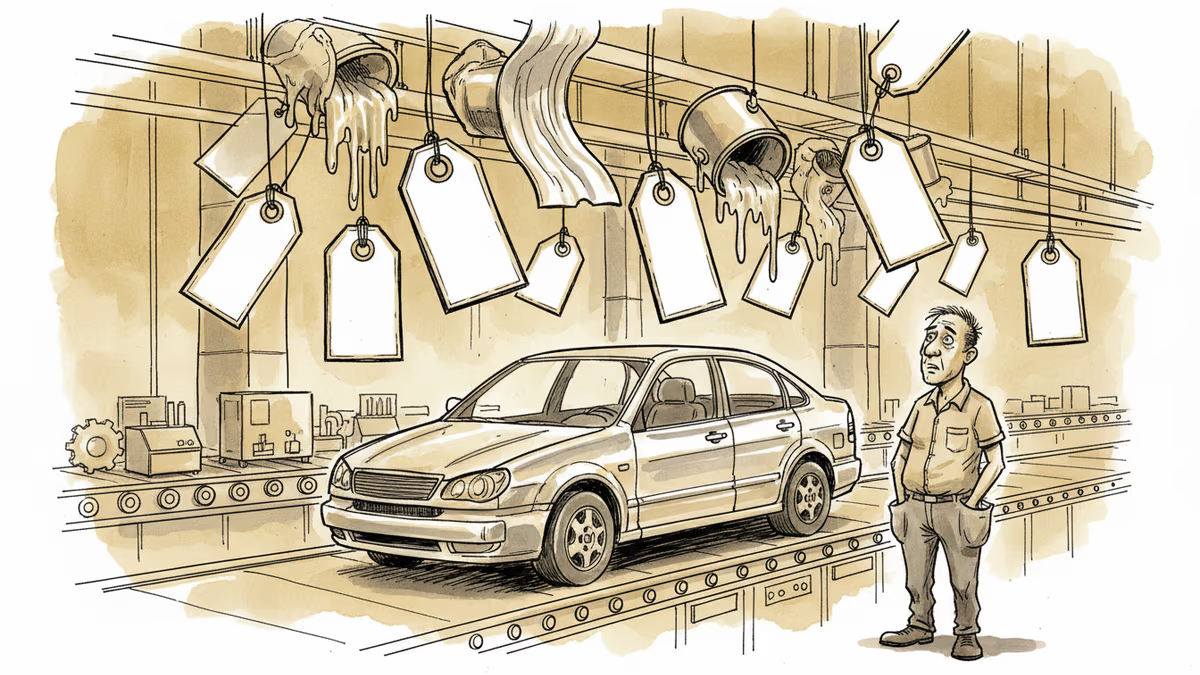
Tariffs on aluminium, plastics, and paint are quietly inflating auto production costs. Here's who pays, who profits, and what it means for the EV transition.
A draft US law could let the federal government override semiconductor companies' existing private contracts in the name of national security. Here's what's at stake for the industry.
Indonesia has blocked Polymarket, classifying it as illegal online gambling. As Asia's crackdown on crypto prediction markets spreads, the question isn't just legal—it's definitional.
Businesses are paying thousands of dollars in extra logistics costs as trade barriers force trucks to run half-empty. Here's who pays, who profits, and what it means for prices.
Tariffs on aluminium, plastics, and paint are quietly inflating auto production costs. Here's who pays, who profits, and what it means for the EV transition.
Thoughts
Share your thoughts on this article
Sign in to join the conversation