
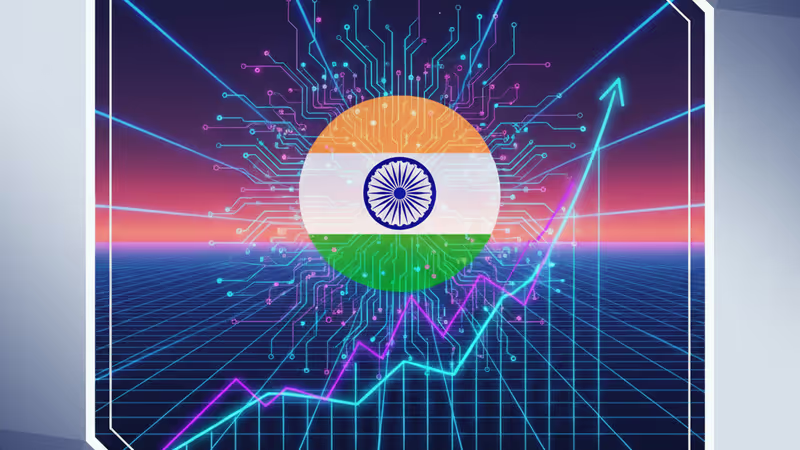
India’s $11B Startup Reality Check: Why It's Not Chasing the U.S. AI Bubble
India's startup ecosystem raised $11B in 2025, diverging from the U.S. AI craze to focus on manufacturing, deep-tech, and application-led AI models.
While the U.S. went all-in on generative AI, India played it smart by focusing on application and manufacturing. India’s startup ecosystem raised nearly $11 billion in 2025, but the landscape has fundamentally shifted. According to Tracxn, the number of funding rounds plummeted by 39% to 1,518 deals, signaling a new era of extreme investor selectivity.
A Sharp Divergence in AI Strategy
The disparity between the world's top two startup hubs couldn't be clearer. AI startups in India raised $643 million across 100 deals—a modest 4.1% increase. In contrast, U.S. AI funding surged past $121 billion, a staggering 141% jump dominated by massive late-stage checks for foundational models.
We don’t yet have an AI-first company in India with $50–$100 million in annual revenue. India lacks large foundational model companies and will focus instead on application-led AI and deep-tech where we have a 'right to win'.
Manufacturing and Consumer Scale

Investors are increasingly reallocating capital toward sectors where India faces less global competition. Advanced manufacturing startups have increased nearly tenfold over the last five years. Lightspeed partner Rahul Taneja noted that urban demand for quick commerce and household services continues to outperform capital-intensive Silicon Valley models due to India's unique population density and labor costs.
Government Catalysts and Exit Resilience
The Indian government’s $12 billion R&D and Innovation scheme has begun catalyzing private capital into areas like quantum computing and space tech. A notable example is the government co-leading a $32 million round for QpiAI, reducing the regulatory uncertainty that often haunts long-cycle tech bets.
Crucially, the exit market is maturing. 42 tech companies went public in India in 2025, up from 36 the previous year. This 17% increase, fueled largely by domestic retail and institutional investors, has disproven fears that Indian startups are solely dependent on volatile foreign capital for liquidity.
Authors
Related Articles
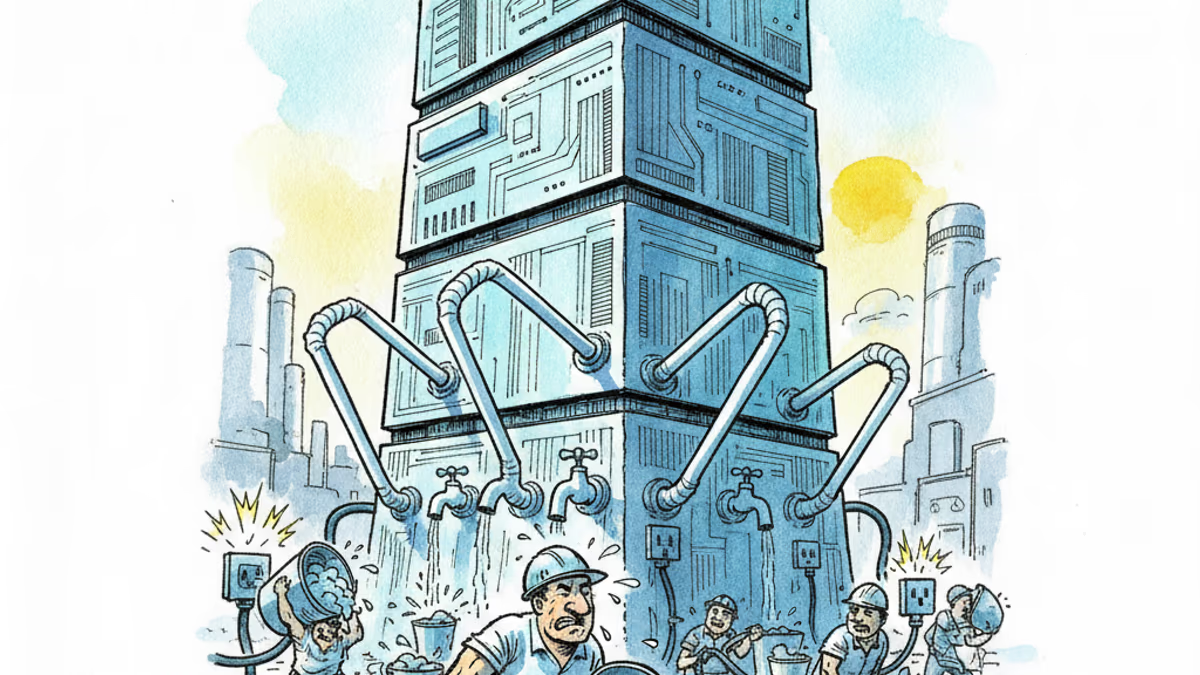
Samsung and SK unveiled a chip and AI investment package worth thousands of trillions of won on June 29. The headline number swings wildly by outlet, but the real contest isn't capital — it's water and power.

Lucra Sports CEO Dylan Robbins landed Cathie Wood's ARK Invest as a Series B lead without building AI. The story behind his unconventional fundraising playbook.
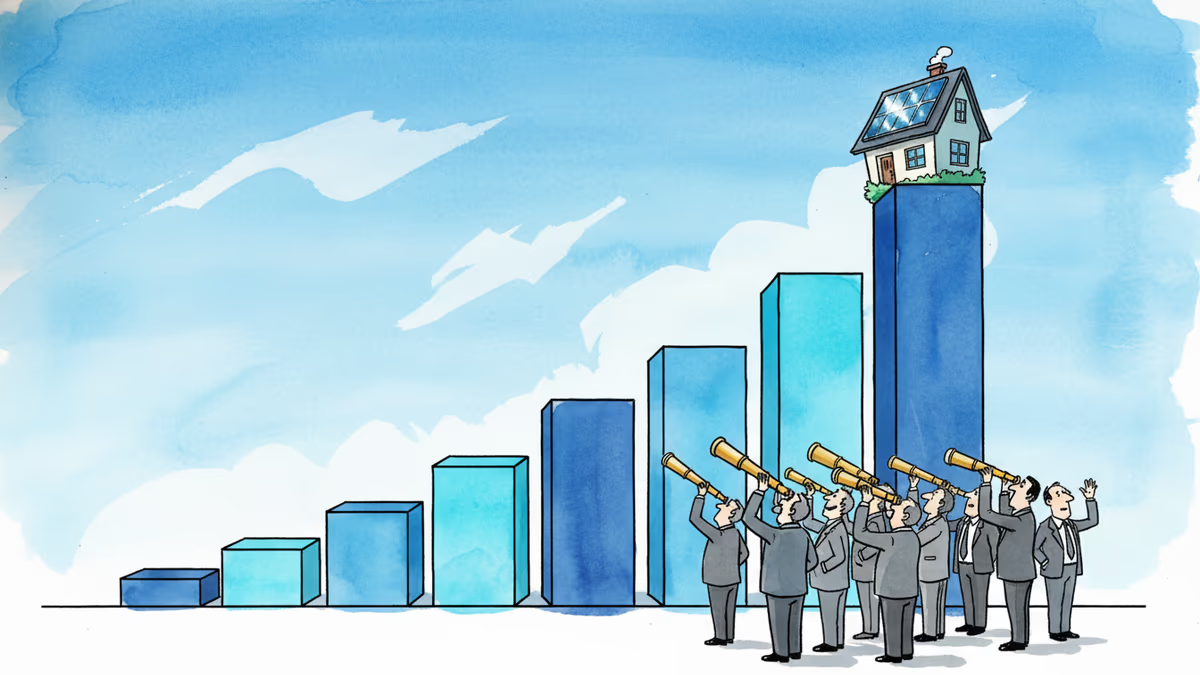
SolarSquare is raising $55-60M at a $450-500M valuation, more than doubling its worth in 18 months. Here's what's driving investor conviction in India's residential solar market.
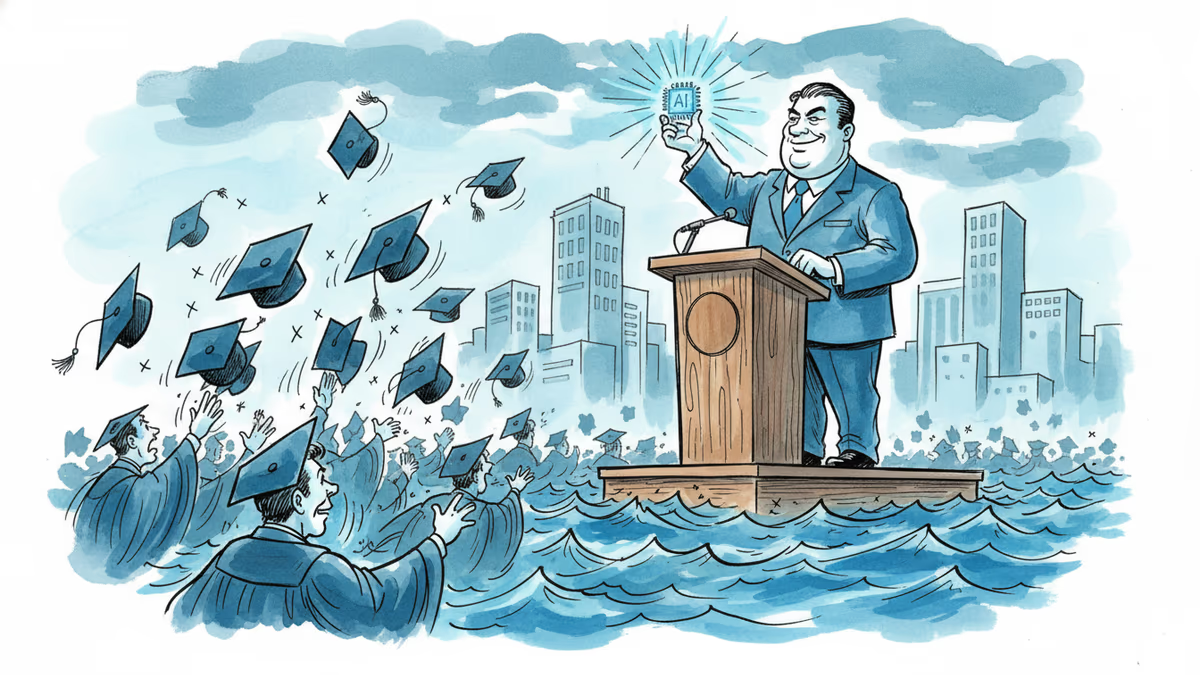
Viral videos show 2026 graduates jeering executives who praise AI at commencement ceremonies. It's not just rudeness — it's a signal about who pays for technological optimism.
Samsung and SK unveiled a chip and AI investment package worth thousands of trillions of won on June 29. The headline number swings wildly by outlet, but the real contest isn't capital — it's water and power.
Lucra Sports CEO Dylan Robbins landed Cathie Wood's ARK Invest as a Series B lead without building AI. The story behind his unconventional fundraising playbook.
SolarSquare is raising $55-60M at a $450-500M valuation, more than doubling its worth in 18 months. Here's what's driving investor conviction in India's residential solar market.
Viral videos show 2026 graduates jeering executives who praise AI at commencement ceremonies. It's not just rudeness — it's a signal about who pays for technological optimism.
Thoughts
Share your thoughts on this article
Sign in to join the conversation