

India Quick Commerce 10-Minute Delivery Safety Faces Crackdown as Labor Ministry Steps In
India's Labor Ministry urges Blinkit, Swiggy Instamart, and Zepto to drop 10-minute delivery promises. New labor laws and worker safety concerns are reshaping the gig economy.
Speed shouldn't come at the cost of lives. Bloomberg reports that India's Labor Ministry has pressured the country's booming quick-commerce giants to abandon their aggressive '10-minute delivery' promises to ensure the safety of millions of gig workers.
The Crisis of India Quick Commerce 10-Minute Delivery Safety
Labor Minister Mansukh Mandaviya met with executives from Blinkit, Instamart, and Zepto to address the mounting risks faced by delivery personnel. While these companies have deployed 'dark stores' across neighborhoods to achieve lightning-fast speeds, the pressure on riders has triggered nationwide unrest.
| Metric | Status & Projections |
|---|---|
| Gig Workers (2020-21) | 7.7 million |
| Projected Workers (2029-30) | 23.5 million |
| NYE Protest Participation | 200,000+ workers |
| Mandatory Social Security Contribution | 1% to 2% of annual revenue |

New Labor Laws and Social Security Funds
Just a month ago, India granted legal status to gig workers under new labor statutes. Aggregators must now contribute between 1% and 2% of their revenue to a government-managed social security fund. This legislative shift follows massive protests on New Year’s Eve, where workers demanded better wages and the removal of automated penalty systems.
Authors
Related Articles

Zomato parent Eternal appoints Albinder Dhindsa as the new CEO in 2026. Founder Deepinder Goyal shifts to Vice Chairman to focus on high-risk longevity and health tech ventures.
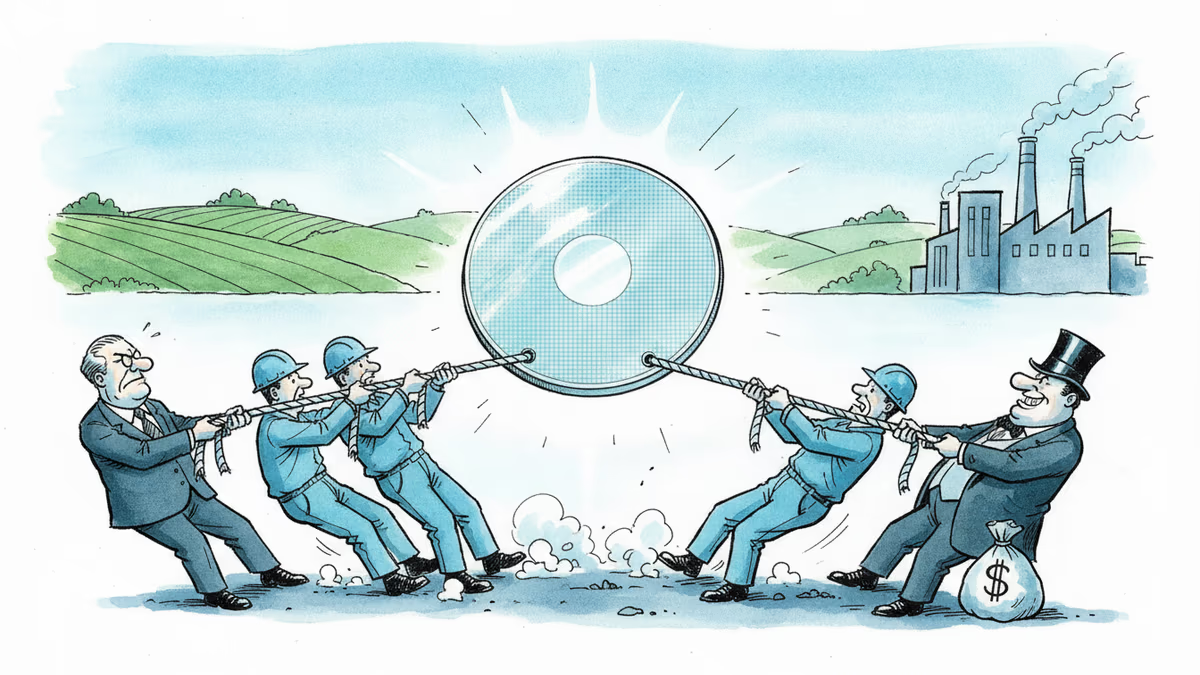
Samsung Electronics' union branch revealed that 84% of survey respondents oppose the government's roughly $290 billion (₩400 trillion) semiconductor megaproject in Gwangju. Government, management, the union and shareholders are all reading the same national project in sharply different ways.
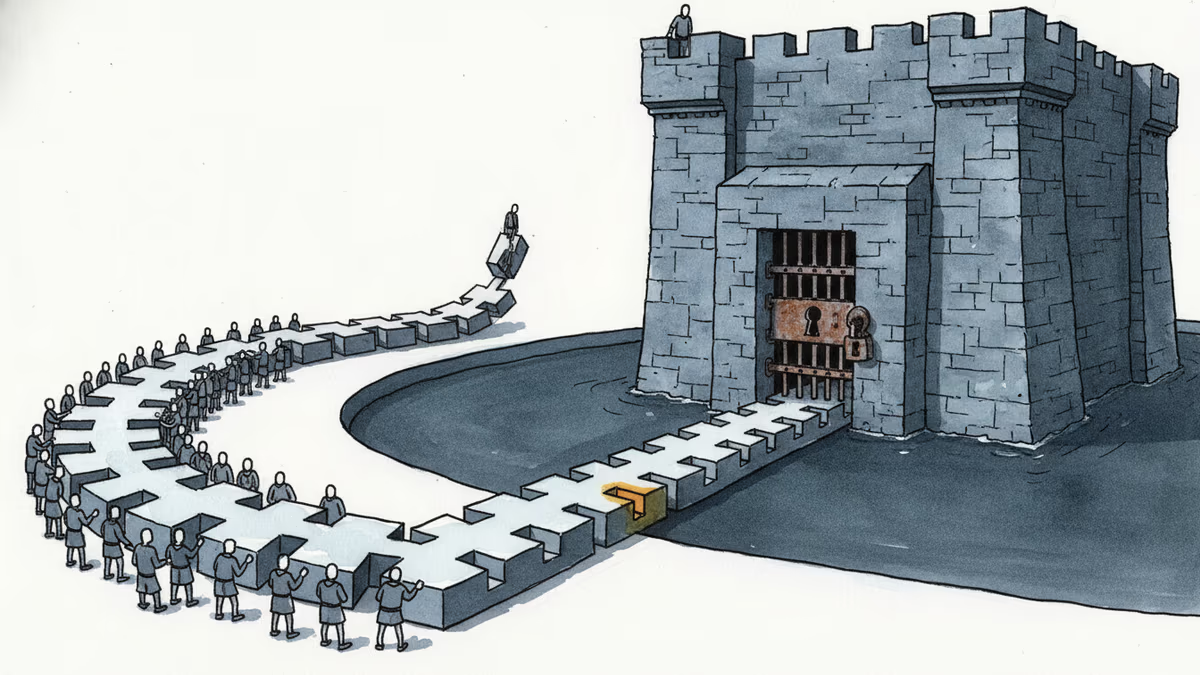
Nvidia shipped roughly a billion RISC-V cores in 2024, then announced it would run CUDA on the open standard. We break down how royalty-free instruction sets and open software stacks are trying to route around CUDA's lock-in. Part 2 of the Semiconductor Sovereignty series.
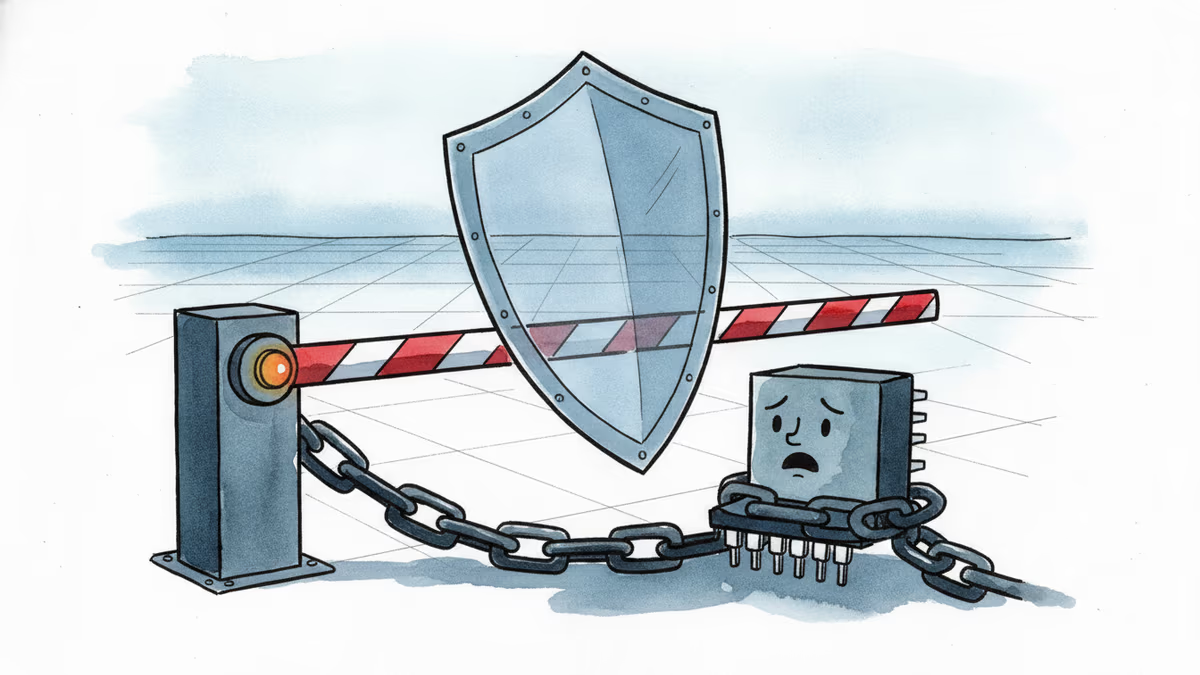
US AI-chip export controls split into three layers in the first half of 2026 — January easing, a May crackdown on circumvention, and a pending bill. Nvidia erased China from its guidance and still posted a record $81.6 billion quarter. A look at the export policy that both shields and cages it.
Zomato parent Eternal appoints Albinder Dhindsa as the new CEO in 2026. Founder Deepinder Goyal shifts to Vice Chairman to focus on high-risk longevity and health tech ventures.
Samsung Electronics' union branch revealed that 84% of survey respondents oppose the government's roughly $290 billion (₩400 trillion) semiconductor megaproject in Gwangju. Government, management, the union and shareholders are all reading the same national project in sharply different ways.
Nvidia shipped roughly a billion RISC-V cores in 2024, then announced it would run CUDA on the open standard. We break down how royalty-free instruction sets and open software stacks are trying to route around CUDA's lock-in. Part 2 of the Semiconductor Sovereignty series.
US AI-chip export controls split into three layers in the first half of 2026 — January easing, a May crackdown on circumvention, and a pending bill. Nvidia erased China from its guidance and still posted a record $81.6 billion quarter. A look at the export policy that both shields and cages it.
Thoughts
Share your thoughts on this article
Sign in to join the conversation