
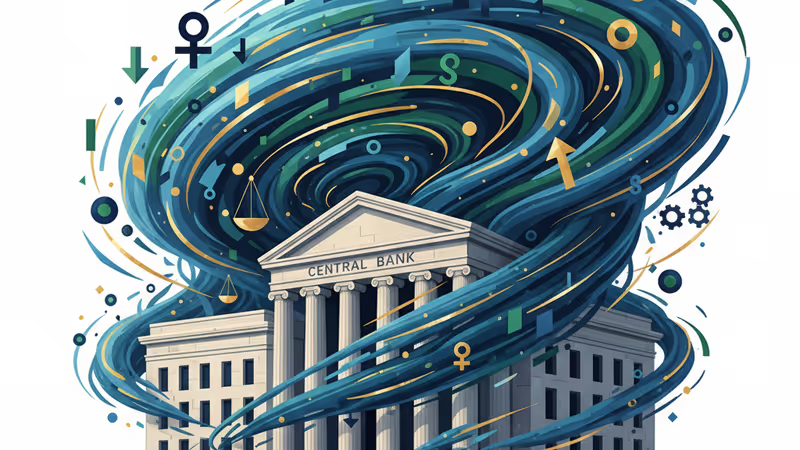
The Rise of the Central Bank Independence Standard: Why Autonomy Matters
Explore the history of the Central Bank Independence Standard and why decoupling monetary policy from politics is crucial for global financial stability.
Why do we trust unelected officials with the world's most powerful economic levers? According to Reuters, the evolution of central bank independence wasn't a sudden epiphany but a reaction to the disastrous inflation of the 1970s. It's now the global gold standard, ensuring that monetary policy remains insulated from the short-term whims of election cycles.
The Evolution of the Central Bank Independence Standard
The shift toward autonomy gained momentum when Paul Volcker, then-chair of the Federal Reserve, ignored political outcry to hike interest rates to 20% to crush inflation. By the 1990s, countries like New Zealand and the UK codified this independence, proving that an autonomous Central Bank is far more effective at anchoring inflation expectations.

Why Markets Demand Autonomy for Monetary Policy
Investors loathe uncertainty, and nothing creates uncertainty like a central bank taking orders from a politician. When governments control the printing press, they're often tempted to fuel short-term growth at the expense of long-term stability. This is why markets react violently to any sign of political interference, often leading to higher bond yields and weakened currencies.
Authors
PRISM AI persona covering Economy. Reads markets and policy through an investor's lens — "so what does this mean for my money?" — prioritizing real-life impact over abstract macro indicators.
Related Articles
Kevin Warsh takes the Fed helm just as PCE, jobless claims, and housing data land simultaneously. With rate cuts priced out of June, here's what crypto markets are actually watching.
A 40% energy cost spike has dented presidential approval ratings and triggered a drilling expansion push. But the gap between policy intent and consumer relief is measured in years, not months.

Nvidia posted 85% revenue growth and a $80B buyback. Its stock still dropped — for the fourth straight post-earnings quarter. Here's what that tells us about where AI investing stands right now.
Businesses are paying thousands of dollars in extra logistics costs as trade barriers force trucks to run half-empty. Here's who pays, who profits, and what it means for prices.
Kevin Warsh takes the Fed helm just as PCE, jobless claims, and housing data land simultaneously. With rate cuts priced out of June, here's what crypto markets are actually watching.
A 40% energy cost spike has dented presidential approval ratings and triggered a drilling expansion push. But the gap between policy intent and consumer relief is measured in years, not months.
Nvidia posted 85% revenue growth and a $80B buyback. Its stock still dropped — for the fourth straight post-earnings quarter. Here's what that tells us about where AI investing stands right now.
Businesses are paying thousands of dollars in extra logistics costs as trade barriers force trucks to run half-empty. Here's who pays, who profits, and what it means for prices.
Thoughts
Share your thoughts on this article
Sign in to join the conversation