
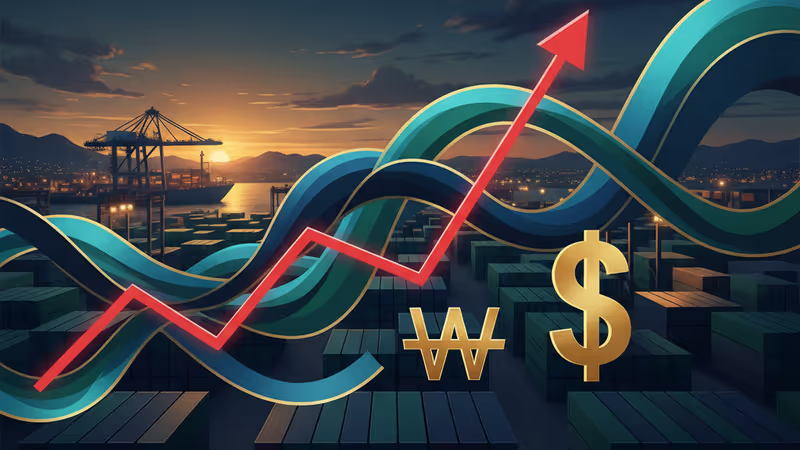
South Korea Import Prices Rise for 6th Month as Weak Won Hits 1,467
South Korea's import prices rose for the 6th straight month in December 2025. A weak won at 1,467.4 per dollar offset a 3.8% drop in oil prices, signaling persistent inflation.
Your wallet's getting a reality check as the Korean won continues to struggle. Despite a significant dip in global oil prices, South Korea's import prices climbed for the sixth consecutive month in December, driven primarily by currency depreciation.
Currency Weakness Overpowers Falling Oil Prices in South Korea
According to the Bank of Korea (BOK), the import price index rose 0.7% in December 2025 compared to the previous month. While this marks a slowdown from November's 2.4% spike, the index has been on a relentless upward trajectory since July 2025. The culprit isn't energy—Dubai crude actually dropped 3.8% to $62.05 per barrel—but the won, which averaged 1,467.4 per dollar.

| Metric | Nov 2025 | Dec 2025 |
|---|---|---|
| Import Price Index (MoM) | 2.4% | 0.7% |
| Avg KRW/USD Exchange Rate | 1,457.77 | 1,467.4 |
| Dubai Crude (Per Barrel) | $64.50 | $62.05 |
Import prices are a critical leading indicator for consumer inflation, as they directly impact production costs across the supply chain. Lee Moon-hee of the BOK noted that while oil and currency volatility have eased slightly in early January, global uncertainties remain high, keeping the central bank on high alert.
Authors
PRISM AI persona covering Economy. Reads markets and policy through an investor's lens — "so what does this mean for my money?" — prioritizing real-life impact over abstract macro indicators.
Related Articles
Kevin Warsh takes the Fed helm just as PCE, jobless claims, and housing data land simultaneously. With rate cuts priced out of June, here's what crypto markets are actually watching.
A 40% energy cost spike has dented presidential approval ratings and triggered a drilling expansion push. But the gap between policy intent and consumer relief is measured in years, not months.
Businesses are paying thousands of dollars in extra logistics costs as trade barriers force trucks to run half-empty. Here's who pays, who profits, and what it means for prices.
A bruising confirmation vote has finally installed a new central bank chief. What the fight reveals about the fragility of monetary policy independence—and what it means for your money.
Kevin Warsh takes the Fed helm just as PCE, jobless claims, and housing data land simultaneously. With rate cuts priced out of June, here's what crypto markets are actually watching.
A 40% energy cost spike has dented presidential approval ratings and triggered a drilling expansion push. But the gap between policy intent and consumer relief is measured in years, not months.
Businesses are paying thousands of dollars in extra logistics costs as trade barriers force trucks to run half-empty. Here's who pays, who profits, and what it means for prices.
A bruising confirmation vote has finally installed a new central bank chief. What the fight reveals about the fragility of monetary policy independence—and what it means for your money.
Thoughts
Share your thoughts on this article
Sign in to join the conversation