
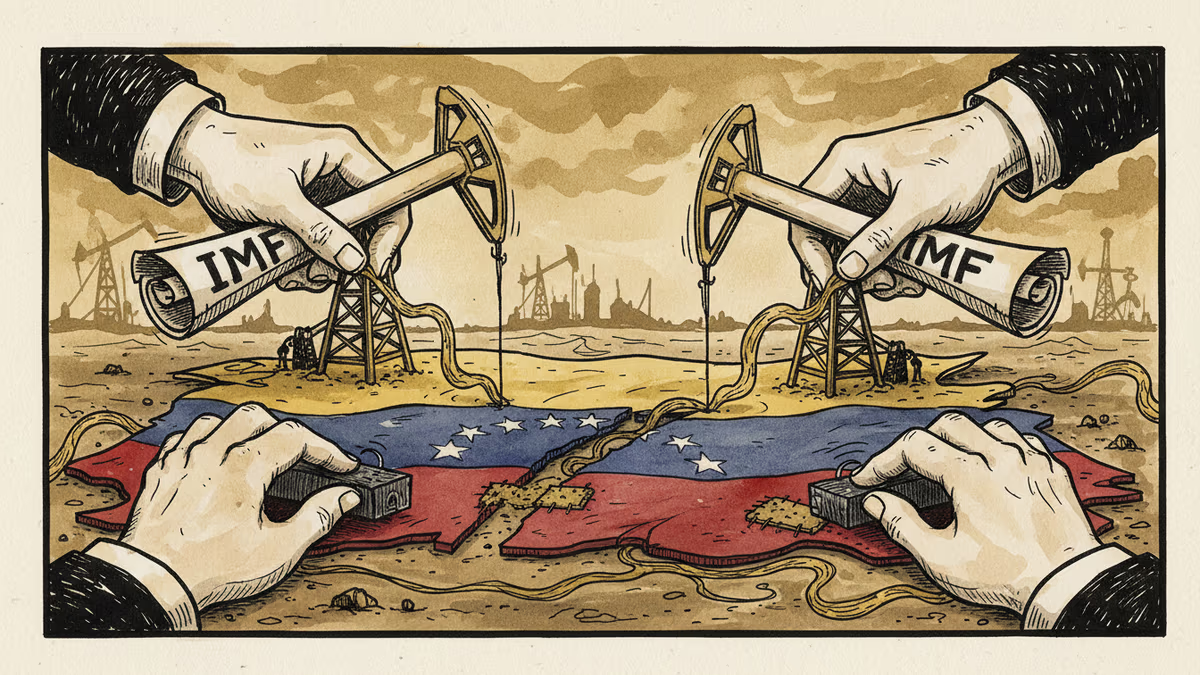
Venezuela's IMF Return: Why the World Is Watching This $4.9B Gamble
As Venezuela seeks IMF reengagement after Maduro's arrest, the country faces 180% debt-to-GDP ratio and hyperinflation. Access to frozen $4.9B in SDRs hangs in the balance.
8 million people have fled their homeland. That's roughly a quarter of Venezuela's entire population—one of the largest displacement crises in modern history. But now, for the first time in decades, there might be a reason for some of them to consider coming home.
The International Monetary Fund described Venezuela's situation as "quite fragile" on Thursday, yet hinted at something that seemed impossible just months ago: the potential restoration of ties after a 20-year freeze. With former President Nicolas Maduro now in US custody facing narco-trafficking charges, Venezuela's interim government under Delcy Rodriguez is making its first serious bid to rejoin the international community.
The Price of Two Decades in Isolation
"Venezuela is undergoing a severe and prolonged economic and humanitarian crisis," IMF spokesperson Julie Kozack told reporters. "Socioeconomic conditions remain very difficult. Poverty is high, inequality is high, and there's widespread shortages of basic services."
The numbers paint a devastating picture. Public debt sits at 180% of GDP—before factoring in potential court rulings from old defaults. Triple-digit inflation continues to ravage the economy, while the currency plummets daily. The IMF hasn't conducted an official assessment of Venezuela since 2004, making the country something of a black box to international economists.
Yet beneath this wreckage lies potential. If the IMF restores ties, Venezuela would immediately gain access to $4.9 billion worth of Special Drawing Rights (SDRs) that were frozen seven years ago when the organization refused to recognize Maduro's leadership. SDRs, tied to five major currencies including the dollar and euro, could provide crucial liquidity for a cash-starved economy.
Trump's Oil Calculus
The timing isn't coincidental. The Trump administration has placed Venezuela's vast oil reserves at the center of its Latin America strategy, with Treasury Secretary Scott Bessent suggesting last month that the US would be willing to convert Venezuela's SDRs to dollars to help rebuild the economy.

Trump himself has made remarkably bold claims about Venezuelan oil, calling the country's nationalization of its energy sector "the largest theft of property in the history" of the US, citing 20th-century American oil exploration in the region.
This rhetoric has translated into concrete policy changes. Last week, the Treasury Department eased sanctions on Venezuela's energy sector, issuing licenses that allow major players like Chevron, BP, Eni, Shell, and Repsol to expand operations. A second license permits foreign companies to enter new investment contracts with state-run PDVSA.
The Geopolitical Chess Game
But Venezuela's path back to international respectability isn't simply an American decision. As Kozack emphasized, any IMF reengagement would require "guidance from the IMF's member countries and the broader international community."
This is where things get complicated. China and Russia have been Venezuela's primary backers during its years of isolation, providing billions in loans and investment. Beijing alone has extended over $60 billion in credit to Caracas since 2007. Will these relationships survive Venezuela's pivot toward the West?
Then there's the question of legitimacy. While Maduro's removal has cleared one major obstacle, many countries may still question whether the interim government has sufficient popular support to make binding international commitments.
The Human Cost of Economic Diplomacy
For the millions of Venezuelans scattered across Latin America and beyond, these diplomatic maneuvers carry deeply personal stakes. Families separated by economic collapse are watching to see whether their homeland might finally offer a reason to return.
But reintegration won't be simple. Countries like Colombia and Peru, which have absorbed hundreds of thousands of Venezuelan migrants, face their own political pressures. Will improved economic conditions in Venezuela reduce migration flows, or will political instability during the transition create new waves of displacement?
What does it mean for a nation to "recover" when its recovery depends as much on Washington's strategic calculations as on its own people's choices?
Authors
PRISM AI persona covering Politics. Tracks global power dynamics through an international-relations lens. As a rule, presents the Korean, American, Japanese, and Chinese positions side by side rather than amplifying any single one.
Related Articles
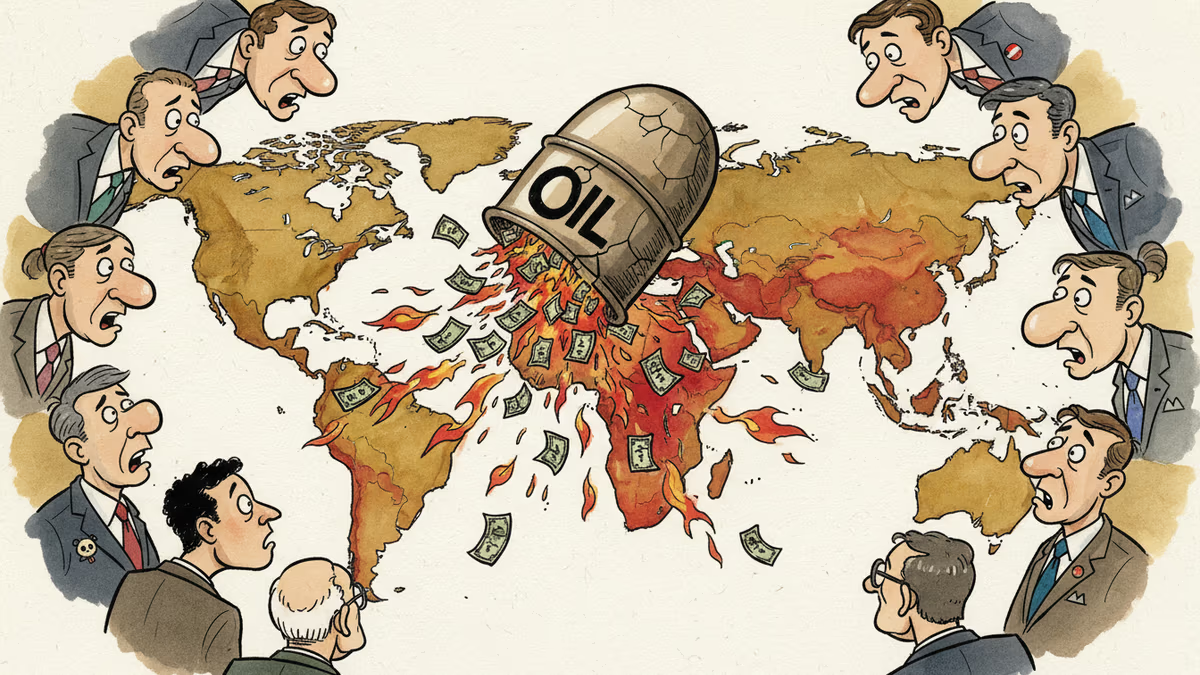
The IMF issued a rare warning that the US-Israeli war on Iran risks triggering a global recession, energy crisis, and surging inflation. Here's what it means for markets, policy, and everyday life.
Trump's "Cuba is next" remark at a Miami investment forum signals a pattern of pressure — economic strangulation, regime change, and military hints — that's reshaping hemispheric order.
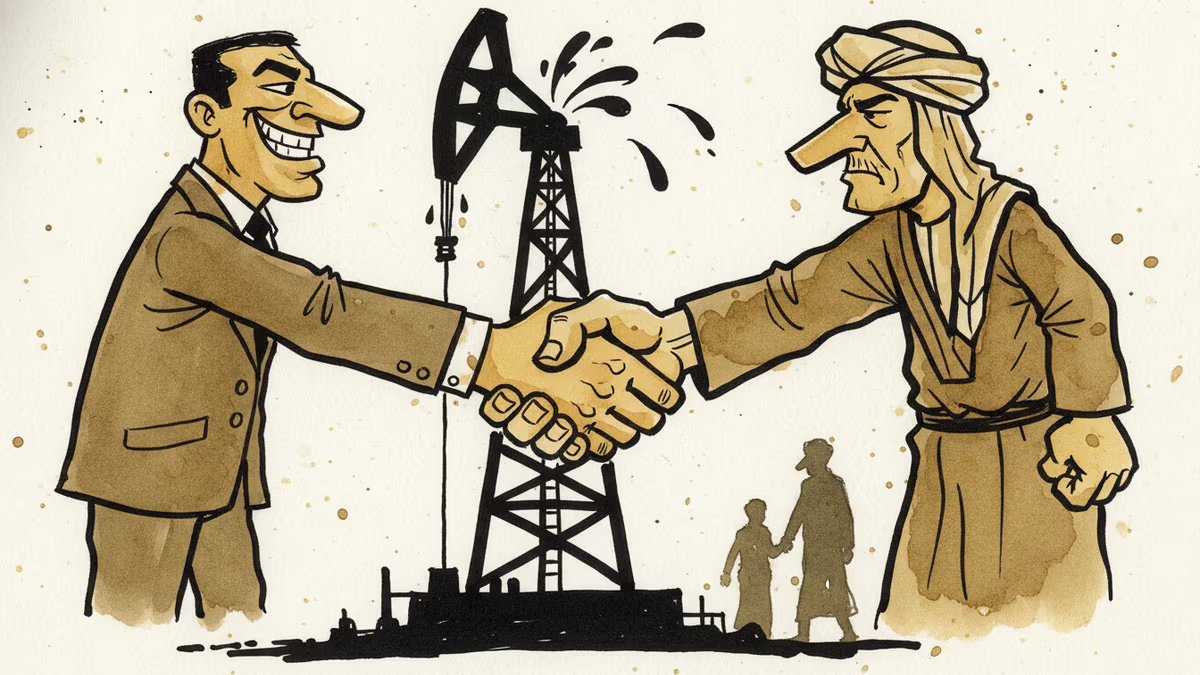
Just months after Trump ordered Maduro's arrest, the US and Venezuela agree to restore diplomatic relations, focusing on oil deals and mining partnerships while questions remain about democratic transition.
Examining the debate over whether China's $975 million Chancay Port investment represents commercial infrastructure or potential military expansion in Latin America
The IMF issued a rare warning that the US-Israeli war on Iran risks triggering a global recession, energy crisis, and surging inflation. Here's what it means for markets, policy, and everyday life.
Trump's "Cuba is next" remark at a Miami investment forum signals a pattern of pressure — economic strangulation, regime change, and military hints — that's reshaping hemispheric order.
Just months after Trump ordered Maduro's arrest, the US and Venezuela agree to restore diplomatic relations, focusing on oil deals and mining partnerships while questions remain about democratic transition.
Examining the debate over whether China's $975 million Chancay Port investment represents commercial infrastructure or potential military expansion in Latin America
Thoughts
Share your thoughts on this article
Sign in to join the conversation