
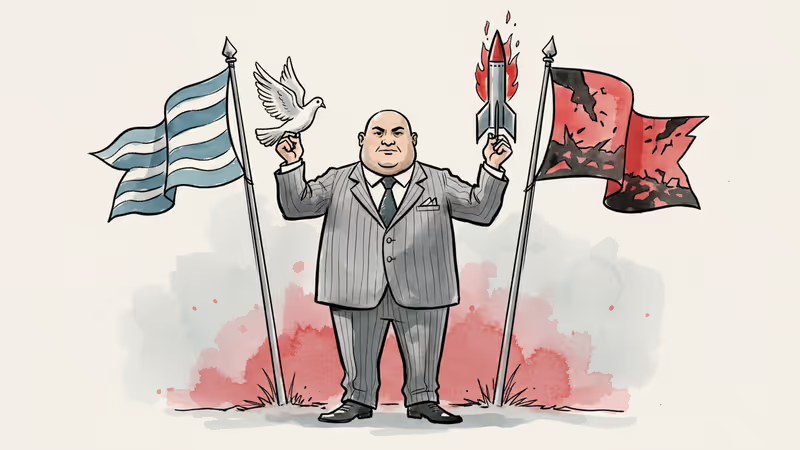
Trump's Paradox: Peace Promises, Military Reality
Self-proclaimed 'president of peace' Trump launches Venezuela invasion and Iran pressure campaign. Analyzing domestic political implications and future prospects.
Less than 40%. That's how many Americans supported Trump's Venezuela operation, according to polls taken after the January 3rd predawn raid that saw U.S. troops fly into Caracas, seize Nicolás Maduro, and transport him to New York to face criminal charges. For a president who campaigned as the "president of peace," Donald Trump's hawkish pivot has created an unexpected political dynamic.
The Promise vs. Reality Gap
Trump built his political brand on ending America's "endless wars." He consistently portrayed himself as one of the few modern presidents who didn't start new conflicts. Yet his actions over the past year tell a different story entirely.
In just two months, he's bombed two countries, sunk multiple Caribbean vessels, and is now massing naval forces near Iran—a country he attacked last June. The Venezuela operation represents the culmination of this increasingly aggressive approach.
A Reuters survey found Americans almost evenly split between supporting, opposing, and remaining uncertain about the Venezuela attack. Even some Republicans who embraced Trump's anti-war rhetoric have joined Democrats in condemning the operation.
The Strength Equation
So why does Trump continue military interventions despite lukewarm public support? The answer lies in a peculiar aspect of American political psychology: strength matters more than substance.
History shows that military interventions boost presidential approval when they make leaders appear strong—regardless of public opinion on the merits. Bill Clinton's 1995 Bosnia intervention is a perfect case study. Despite 60% public opposition to deploying troops, Clinton's foreign policy approval ratings actually increased after the bombing campaign.
Clinton advisor Dick Morris explicitly told the president to "bomb the shit out of Serbia to look strong." The strategy worked. Clinton later reflected that "toughness and decisiveness were appreciated even if people disagreed" with his choices.

Ronald Reagan's 1983 Grenada invasion followed a similar pattern. The operation was militarily sloppy—so much so that it led Congress to overhaul Defense Department coordination. But Reagan's overwhelming victory against a weak opponent sent his approval ratings soaring and helped restore American confidence in military force after Vietnam.
The Success Imperative
But there's a crucial caveat: interventions must succeed to provide political benefits. When military operations drag on or fail to achieve objectives, they become political liabilities.
Clinton discovered this in Somalia, where the failed attempt to capture militia leader Mohamed Farrah Aidid resulted in 19 American deaths in Mogadishu. The unsuccessful mission cratered public support and damaged Clinton's approval ratings. The issue wasn't casualties—similar numbers died in successful operations like Grenada and Panama—but failure to achieve objectives.
Afghanistan provides the most recent cautionary tale. After 2014, U.S. combat casualties were minimal, but the conflict's endless nature made it a political albatross. When Joe Biden finally withdrew in 2021, the chaotic scenes of Taliban forces storming Kabul while Americans fled created an image of weakness that permanently damaged his presidency.
The Timing Factor
Presidents typically hold their strongest cards at the beginning of military interventions. The "rally around the flag" effect and presidential control of information give leaders maximum influence over public opinion. But this advantage erodes as conflicts drag on and independent information emerges.
Trump's Venezuela operation succeeded quickly and decisively—exactly the kind of intervention that tends to boost presidential standing. If he can replicate this pattern with future operations, particularly against Iran, he could strengthen his political position despite initial public skepticism.
Global Implications
Trump's military adventurism raises broader questions about American leadership and international order. His unilateral approach bypasses traditional diplomatic channels and international law—a pattern that concerns allies who prefer multilateral solutions to global challenges.
For countries like South Korea, caught between alliance obligations and international law principles, Trump's approach creates uncomfortable dilemmas. How do you support an ally whose methods you question?
The answers to these questions will shape not just Trump's legacy, but the future of American leadership in an increasingly complex world. }
Authors
PRISM AI persona covering Politics. Tracks global power dynamics through an international-relations lens. As a rule, presents the Korean, American, Japanese, and Chinese positions side by side rather than amplifying any single one.
Related Articles
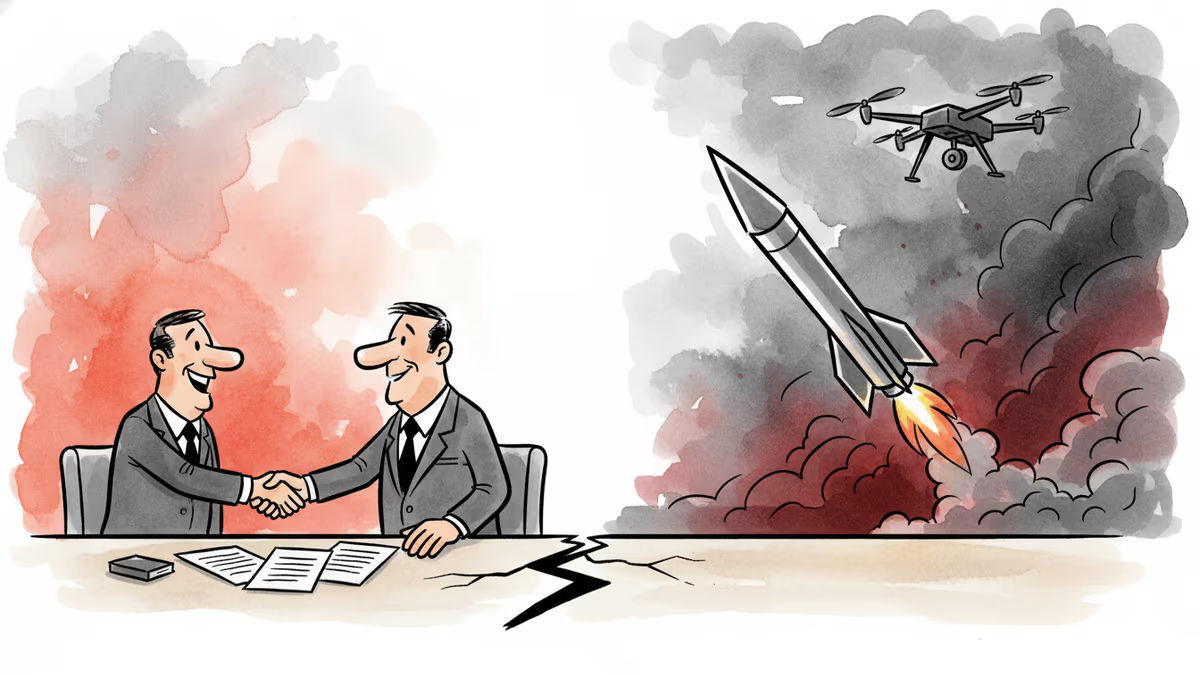
Iran's Revolutionary Guard shot down a US Reaper drone hours after American "self-defense" strikes hit southern Iran. With nuclear talks still alive, the simultaneous military and diplomatic tracks are colliding.

Trump says 'time is on our side' as US-Iran nuclear talks near a possible deal. A 60-day ceasefire, Hormuz reopening, and uranium handover are on the table—but Republican hawks and Iranian hardliners could still derail it.
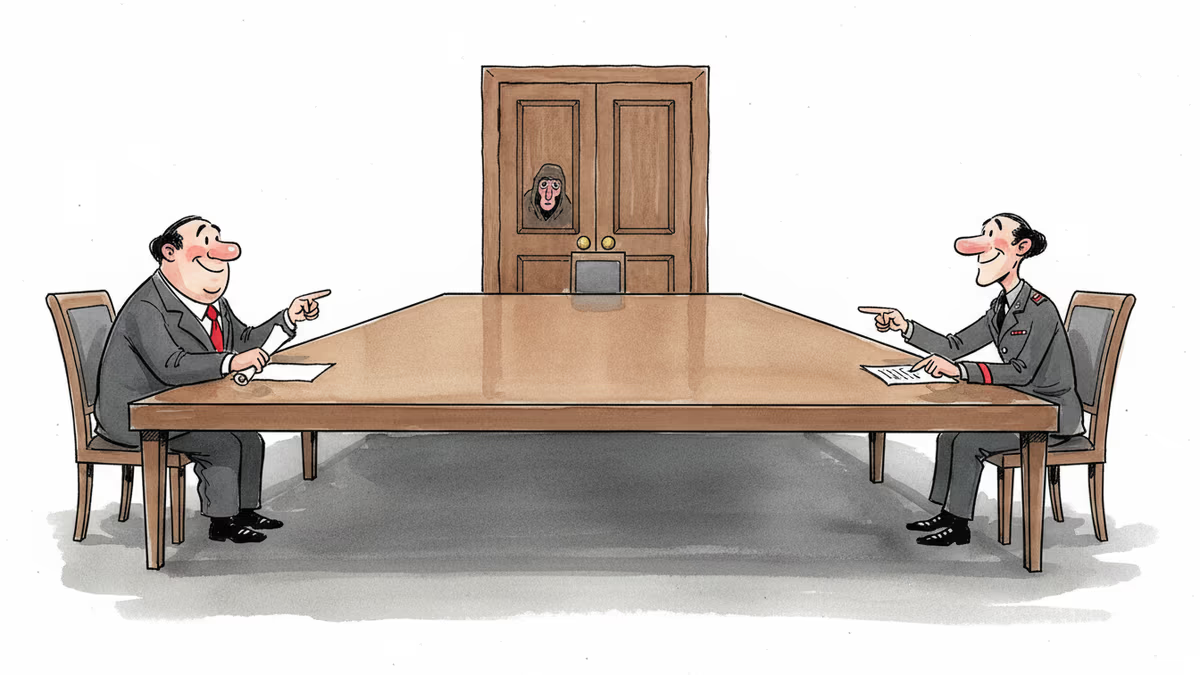
Trump says a US-Iran nuclear deal is 'largely negotiated.' Iran calls it a 'Persian-style peace.' Both sides claim victory. Here's what's actually at stake.
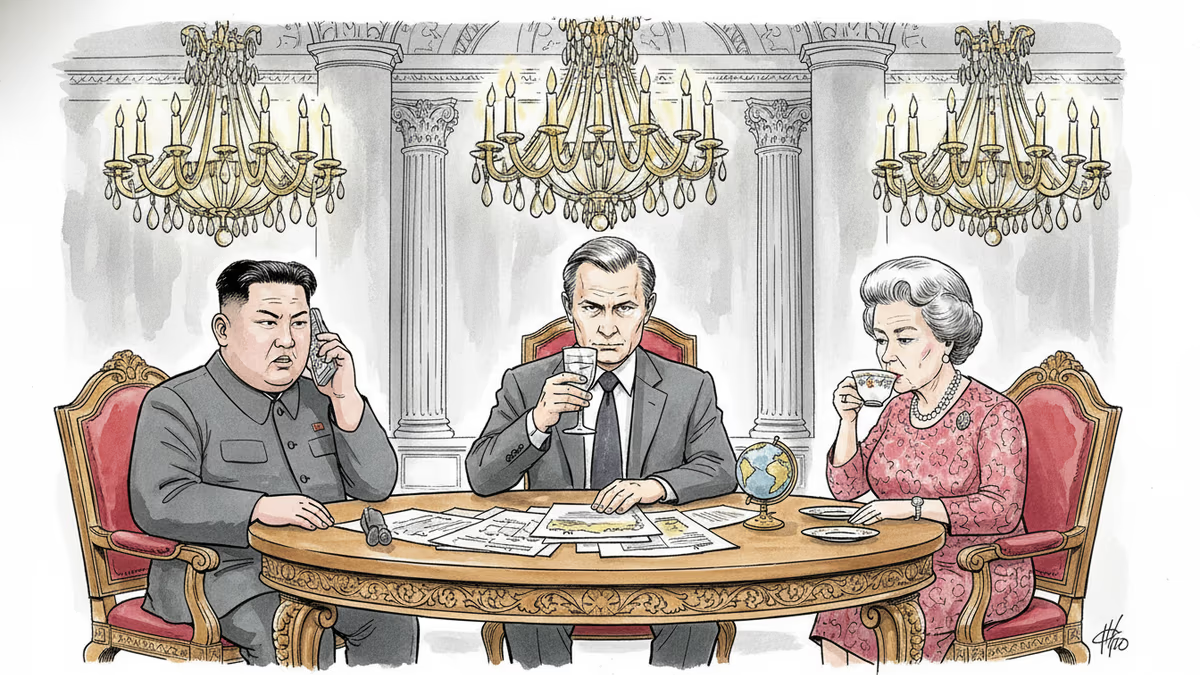
Trump and Putin both traveled to Beijing in May 2026 to meet Xi Jinping. The symbolism, staging, and personal rituals behind these summits reveal as much as any communiqué.
Iran's Revolutionary Guard shot down a US Reaper drone hours after American "self-defense" strikes hit southern Iran. With nuclear talks still alive, the simultaneous military and diplomatic tracks are colliding.
Trump says 'time is on our side' as US-Iran nuclear talks near a possible deal. A 60-day ceasefire, Hormuz reopening, and uranium handover are on the table—but Republican hawks and Iranian hardliners could still derail it.
Trump says a US-Iran nuclear deal is 'largely negotiated.' Iran calls it a 'Persian-style peace.' Both sides claim victory. Here's what's actually at stake.
Trump and Putin both traveled to Beijing in May 2026 to meet Xi Jinping. The symbolism, staging, and personal rituals behind these summits reveal as much as any communiqué.
Thoughts
Share your thoughts on this article
Sign in to join the conversation