

Ilya Lichtenstein Early Release 2026: Bitfinex Hacker Credits Trump's First Step Act
Bitfinex hacker Ilya Lichtenstein has been released early from his 5-year prison sentence, crediting Donald Trump's First Step Act. Read more on his plans for a cybersecurity career.
Sentenced to five years, but out in just one. Ilya Lichtenstein, the hacker behind the multi-billion dollar Bitfinex heist, is officially a free man. According to a post on his X account, Lichtenstein confirmed his early release on January 2, 2026, sparking intense debate across the crypto and legal sectors.
Ilya Lichtenstein Early Release and the First Step Act
Lichtenstein didn't mince words when attributing his freedom. He explicitly thanked Donald Trump, stating that the First Step Act—a bipartisan criminal justice reform bill signed by the former president—was the catalyst for his early departure from prison. "I remain committed to making a positive impact in cybersecurity as soon as I can," he noted in his public statement.

The hacker's original sentence followed his November 2024 conviction for the 2016 Bitfinex breach, where he and his wife, Heather Morgan, laundered over 119,000 Bitcoin. At the time of the government's major seizure, the assets were valued at a staggering $4.5 billion, marking it as one of the largest financial recoveries in U.S. history.
A Controversial New Chapter
The release has drawn sharp criticism from those who believe the scale of his crime warrants the full five-year term. However, the First Step Act allows for sentence reductions based on earned time credits and rehabilitation programs. Lichtenstein has addressed his "haters" directly, claiming he looks forward to proving his worth through legitimate security work.
Authors
Related Articles
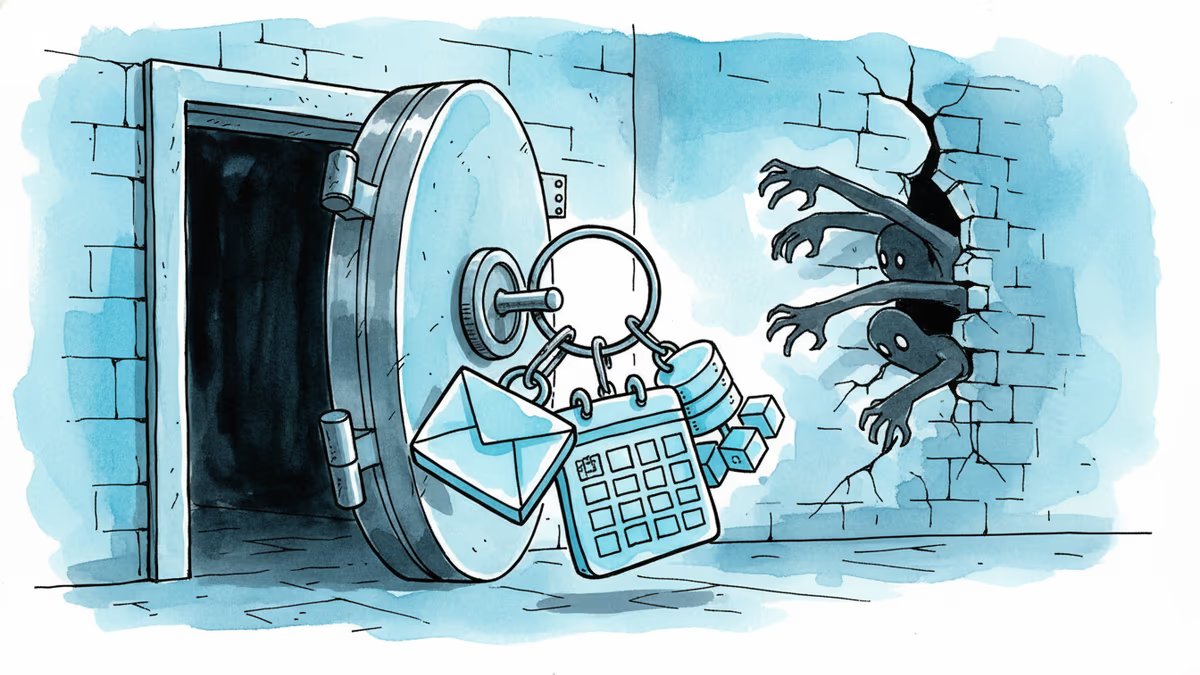
A critical vulnerability in Starlette—downloaded 325 million times per week—puts millions of AI agent servers at risk, exposing stored credentials for email, databases, and third-party services.

GitHub confirmed hackers stole data from 3,800 internal repositories via a poisoned VS Code extension. Here's why developer tools are now the most dangerous attack surface in tech.
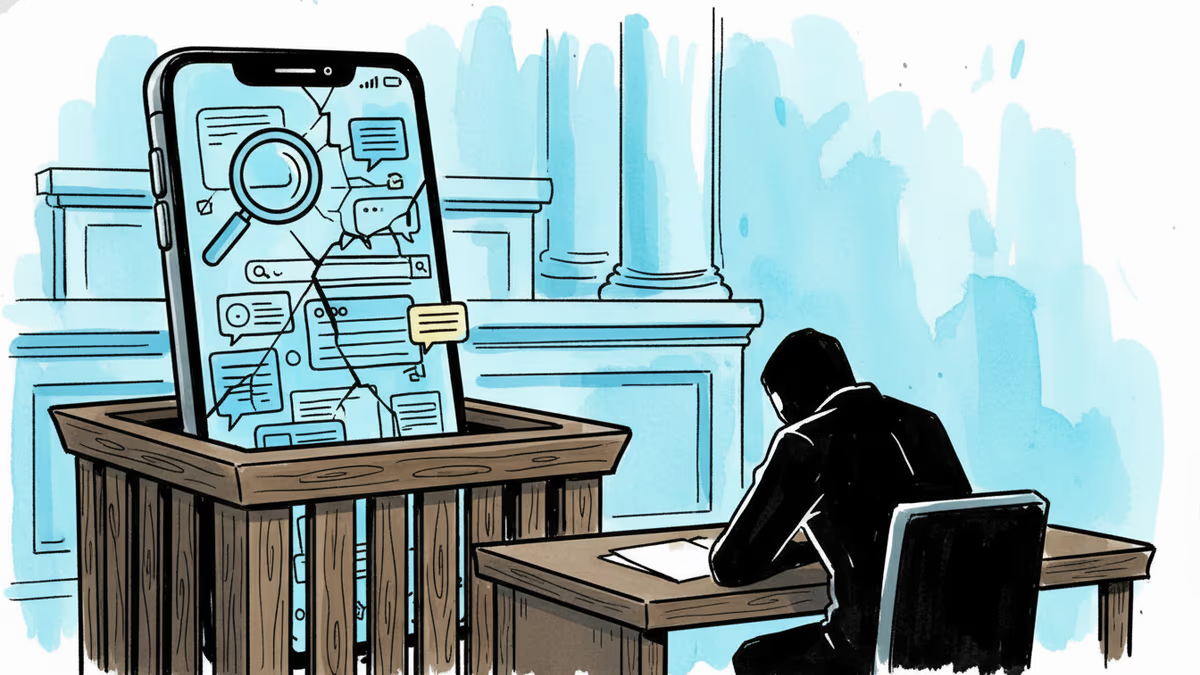
A Utah woman was sentenced to life in prison partly because of her Google searches and deleted texts. The Kouri Richins case reveals how digital footprints have become the courtroom's most reliable witness.
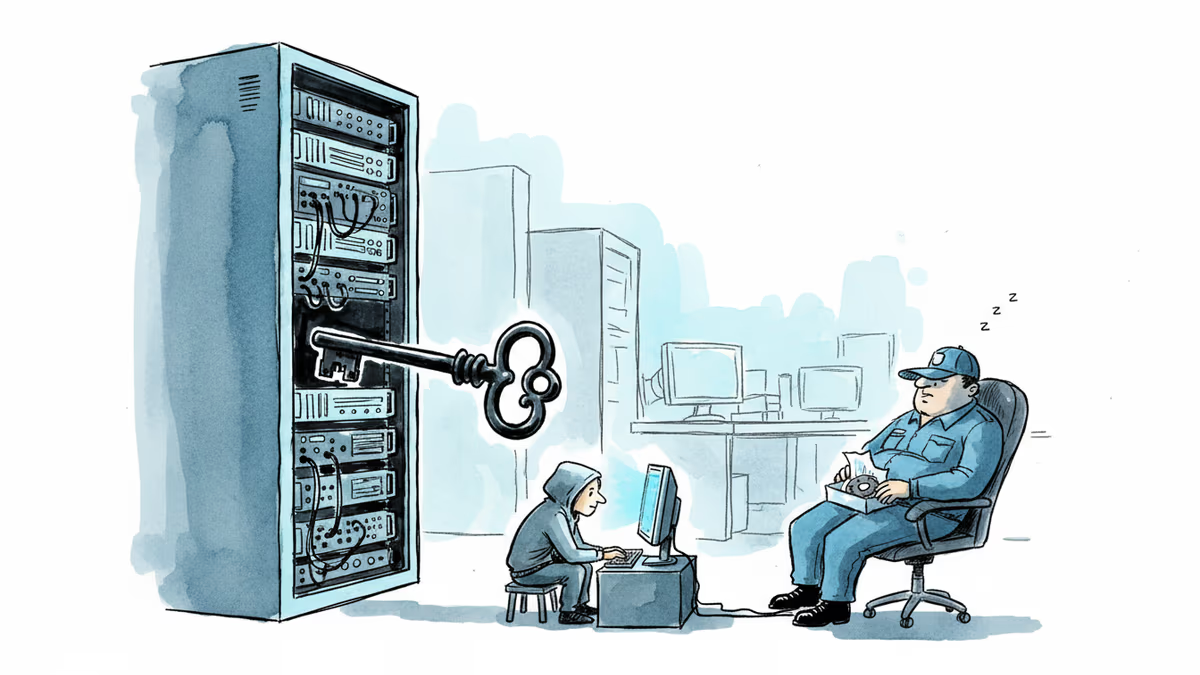
Dirty Frag gives low-privilege users root access on virtually every Linux distro. The exploit code leaked three days ago. Microsoft says attackers are already experimenting with it.
A critical vulnerability in Starlette—downloaded 325 million times per week—puts millions of AI agent servers at risk, exposing stored credentials for email, databases, and third-party services.
GitHub confirmed hackers stole data from 3,800 internal repositories via a poisoned VS Code extension. Here's why developer tools are now the most dangerous attack surface in tech.
A Utah woman was sentenced to life in prison partly because of her Google searches and deleted texts. The Kouri Richins case reveals how digital footprints have become the courtroom's most reliable witness.
Dirty Frag gives low-privilege users root access on virtually every Linux distro. The exploit code leaked three days ago. Microsoft says attackers are already experimenting with it.
Thoughts
Share your thoughts on this article
Sign in to join the conversation