
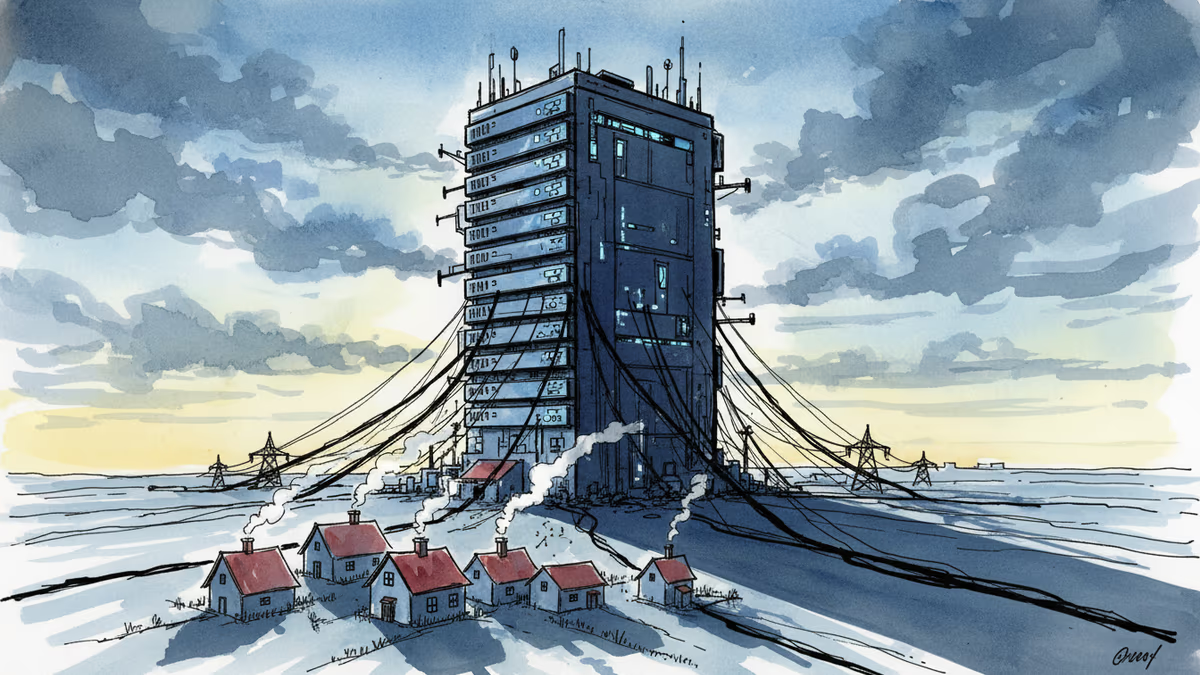
When AI's Giant Footprint Lands in Your Backyard
Meta's massive data center construction in rural Louisiana reveals the hidden costs of AI infrastructure and growing tensions between tech progress and community impact
The $800 Million Question Nobody Asked
Donna Collins has watched five generations of her family call this patch of North Louisiana home. Now, just 20 miles away, Meta is building its largest data center—a facility that will consume as much electricity as a small city. "It's all I've ever known as a home," she says, gazing across farmland that's about to become ground zero for AI's infrastructure reality check.
The recent cold snap that knocked out power for hundreds of thousands wasn't just bad weather. It was a preview of what happens when aging electrical grids meet the voracious appetite of artificial intelligence.
The Power Struggle Behind Every ChatGPT Query
Here's what Meta doesn't advertise: every AI interaction you have requires roughly 10 times the energy of a Google search. Multiply that by billions of daily queries, and you get data centers that rival small nations in power consumption.
The math is stark. This single facility will draw enough electricity to power 150,000 homes. Meanwhile, the local grid already struggles during peak demand. "We're getting all the burden with none of the benefits," says a local resident who asked not to be named.
Meta's response? They've invested in renewable energy credits and promise the facility will be "carbon neutral." But those solar panels are hundreds of miles away, while the strain on Collins' community is immediate and tangible.

Two Very Different Definitions of Progress
From Silicon Valley's perspective, this makes perfect sense. Cheap land, tax incentives, and political support create an ideal environment for expansion. Local officials tout 300 new jobs and millions in tax revenue.
But walk through the affected neighborhoods, and you'll hear a different story. Construction noise starts at dawn. Truck traffic has tripled. Property taxes are rising as land values shift. And those promised jobs? Most require advanced technical degrees that few locals possess.
"They keep saying it's economic development," Collins notes. "But development for who?"
The Geography of Digital Inequality
This isn't just a Louisiana story—it's the new geography of digital inequality. AI's benefits flow to urban centers and tech hubs, while its infrastructure costs get exported to rural communities with less political power.
Similar battles are playing out across the country. Amazon, Google, and Microsoft are all racing to build massive facilities in small towns that offer cheap land and electricity. The pattern is consistent: tech companies get their infrastructure, local governments get tax revenue, and residents get the externalities.
The irony is profound. Rural America, often left behind by the digital revolution, now finds itself hosting the physical infrastructure that powers everyone else's AI experience.
Authors
Related Articles
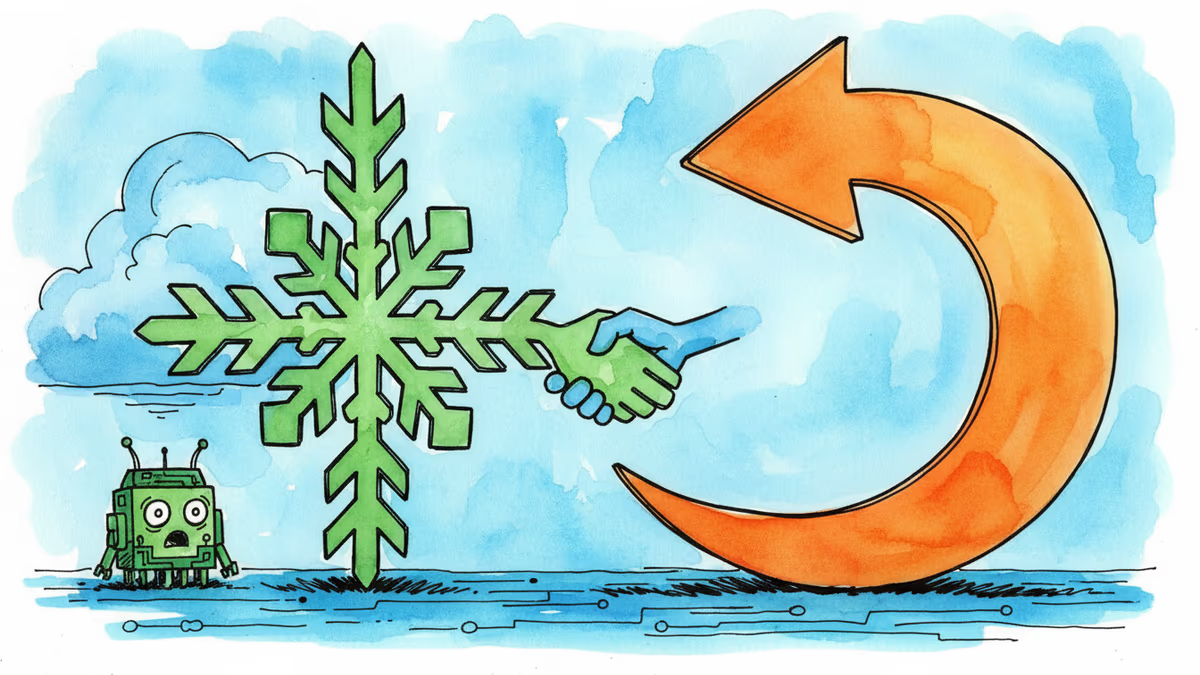
Snowflake's new $6 billion AWS contract is about more than cloud spending. It signals a shift in AI infrastructure—away from Nvidia GPUs and toward cheaper, homegrown chips for the agent era.
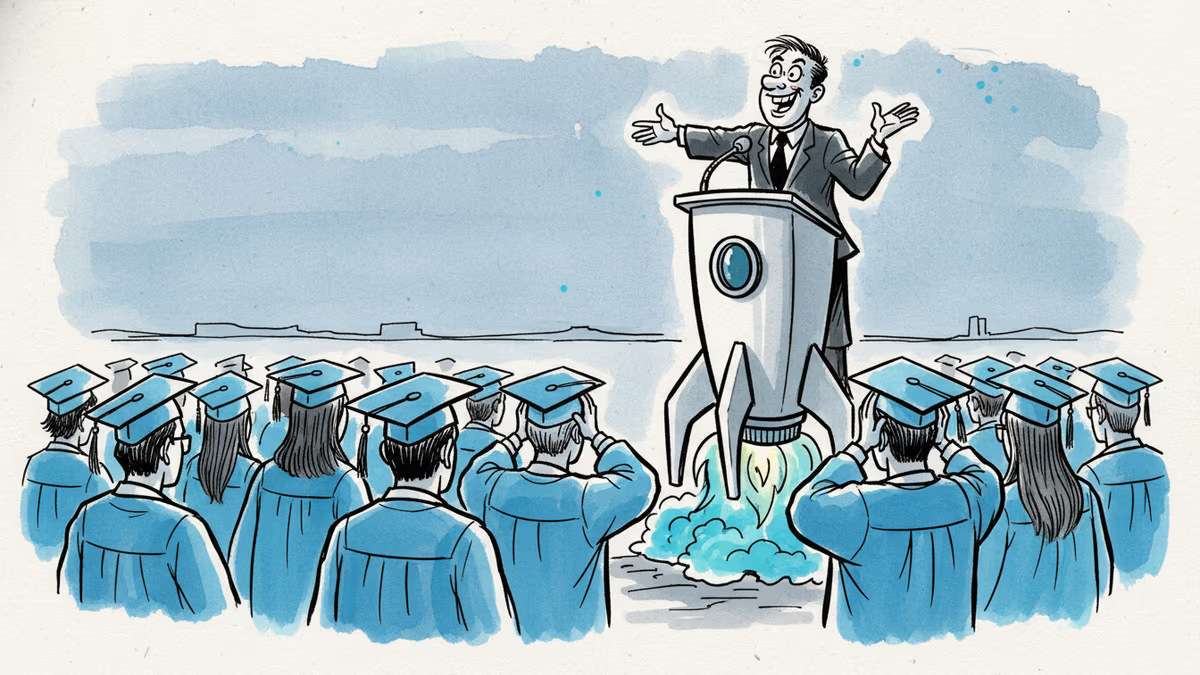
Two commencement speakers learned the hard way that AI enthusiasm doesn't land well with today's graduates. The backlash reveals a widening gap between tech optimism and Gen Z's economic reality.
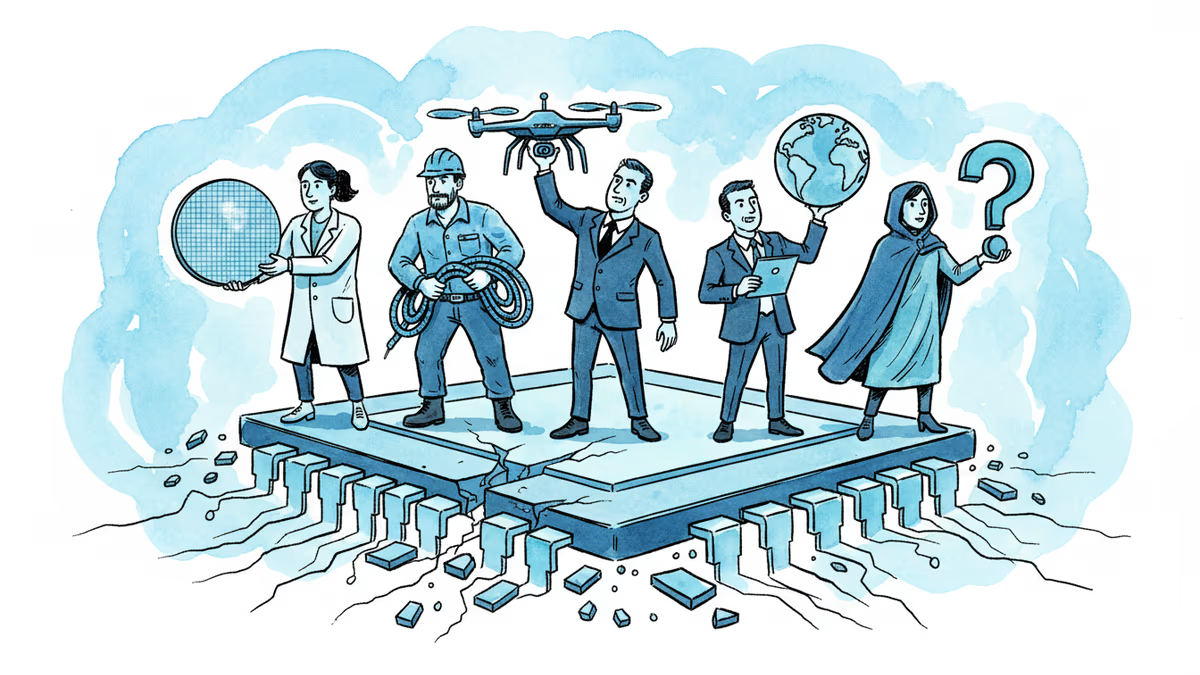
At Milken 2026, five AI insiders—from the CEO of ASML to a quantum physicist challenging LLMs—laid out the physical, energy, and geopolitical limits the AI boom is running into.
Palantir co-founder Peter Thiel and other Silicon Valley investors have poured $140 million into Panthalassa, a startup building wave-powered floating AI data centers in the open ocean. Here's what that actually means.
Snowflake's new $6 billion AWS contract is about more than cloud spending. It signals a shift in AI infrastructure—away from Nvidia GPUs and toward cheaper, homegrown chips for the agent era.
Two commencement speakers learned the hard way that AI enthusiasm doesn't land well with today's graduates. The backlash reveals a widening gap between tech optimism and Gen Z's economic reality.
At Milken 2026, five AI insiders—from the CEO of ASML to a quantum physicist challenging LLMs—laid out the physical, energy, and geopolitical limits the AI boom is running into.
Palantir co-founder Peter Thiel and other Silicon Valley investors have poured $140 million into Panthalassa, a startup building wave-powered floating AI data centers in the open ocean. Here's what that actually means.
Thoughts
Share your thoughts on this article
Sign in to join the conversation