
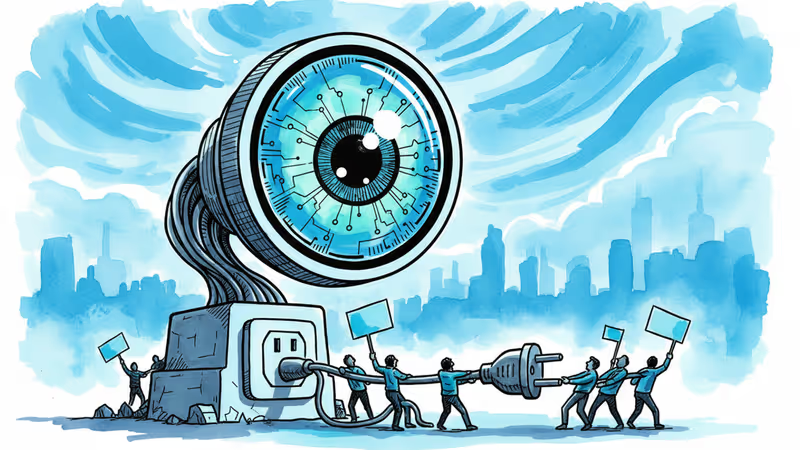
Senate Democrats Target ICE Facial Recognition with Sweeping Ban
New bill would prohibit ICE and CBP from using facial recognition technology, delete existing data, and allow citizens to sue for damages. The privacy vs security debate intensifies.
A handful of Senate Democrats just dropped a legislative bombshell that could reshape how the federal government watches us. The "ICE Out of Our Faces Act" would ban Immigration and Customs Enforcement (ICE) and Customs and Border Protection (CBP) from using facial recognition technology entirely—and that's just the beginning.
More Than Just a Ban
This isn't your typical tech regulation. The bill makes it "unlawful for any covered immigration officer" to acquire, possess, access, or use biometric surveillance systems. That includes facial recognition, voice recognition, and any other technology that can identify people based on their biological characteristics.
But here's where it gets interesting: the bill has teeth. All existing data collected through these systems would have to be deleted. The government couldn't use information from biometric surveillance in court cases or investigations. And if they violate the ban? Citizens could sue for financial damages, while state attorneys general could bring lawsuits on behalf of their residents.
The Privacy-Security Tightrope
The timing isn't coincidental. Facial recognition technology has become ubiquitous in law enforcement, with ICE and CBP using it to identify suspects, track movement patterns, and process asylum seekers. Proponents argue it's essential for border security and public safety in an era of sophisticated threats.
Critics paint a different picture. They point to studies showing higher error rates for people of color and women, potentially leading to wrongful detention or deportation. Civil liberties groups argue that mass biometric surveillance creates a digital panopticon where everyone is a potential suspect.

The technology's accuracy has improved dramatically, but so has its scope. What started as a tool for identifying known criminals has evolved into a system capable of tracking anyone, anywhere, anytime. The question isn't whether the technology works—it's whether we want to live in a world where it's everywhere.
Political Reality Check
Let's be honest about the odds. With Republicans controlling key committees and generally favoring law enforcement tools, this bill faces an uphill battle. Even if it gains traction, expect fierce pushback from border security hawks who'll argue it handicaps agents fighting drug trafficking and terrorism.
The real impact might be symbolic—forcing a long-overdue conversation about the boundaries of government surveillance. Similar debates are happening globally, from the EU's AI regulations to China's social credit system. The U.S. finds itself caught between authoritarian efficiency and democratic accountability.
Beyond the Beltway
This isn't just a Washington story. Major tech companies like Amazon, Microsoft, and Google have already stepped back from facial recognition partnerships with law enforcement, citing ethical concerns. If federal agencies can't use the technology, it could accelerate this corporate retreat and reshape the entire surveillance industry.
For everyday Americans, the implications are personal. Your face is already in countless databases—driver's licenses, passport photos, social media uploads. The question is who gets to use that information and under what circumstances.
The "ICE Out of Our Faces Act" might not become law, but it's already succeeded in one crucial way: making us confront what kind of surveillance state we're willing to accept.
Authors
Related Articles

Chicago's 45,000-camera surveillance network nabbed a mass shooter in 90 minutes. But at what cost to privacy and civil liberties?
The Department of Homeland Security is consolidating biometric technologies into a unified system, raising concerns about political surveillance and civil liberties as the tech spreads beyond borders.

After Super Bowl ad backlash and AI surveillance features, Ring's founder explains himself. But the real issue isn't the ads—it's the technology itself.
CBP contracts with Clearview AI for facial recognition access to billions of internet-scraped images, raising concerns about routine surveillance infrastructure and civil liberties
Chicago's 45,000-camera surveillance network nabbed a mass shooter in 90 minutes. But at what cost to privacy and civil liberties?
The Department of Homeland Security is consolidating biometric technologies into a unified system, raising concerns about political surveillance and civil liberties as the tech spreads beyond borders.
After Super Bowl ad backlash and AI surveillance features, Ring's founder explains himself. But the real issue isn't the ads—it's the technology itself.
CBP contracts with Clearview AI for facial recognition access to billions of internet-scraped images, raising concerns about routine surveillance infrastructure and civil liberties
Thoughts
Share your thoughts on this article
Sign in to join the conversation