
When Courts Collapse - The Unintended Consequence of Trump's Immigration Crackdown
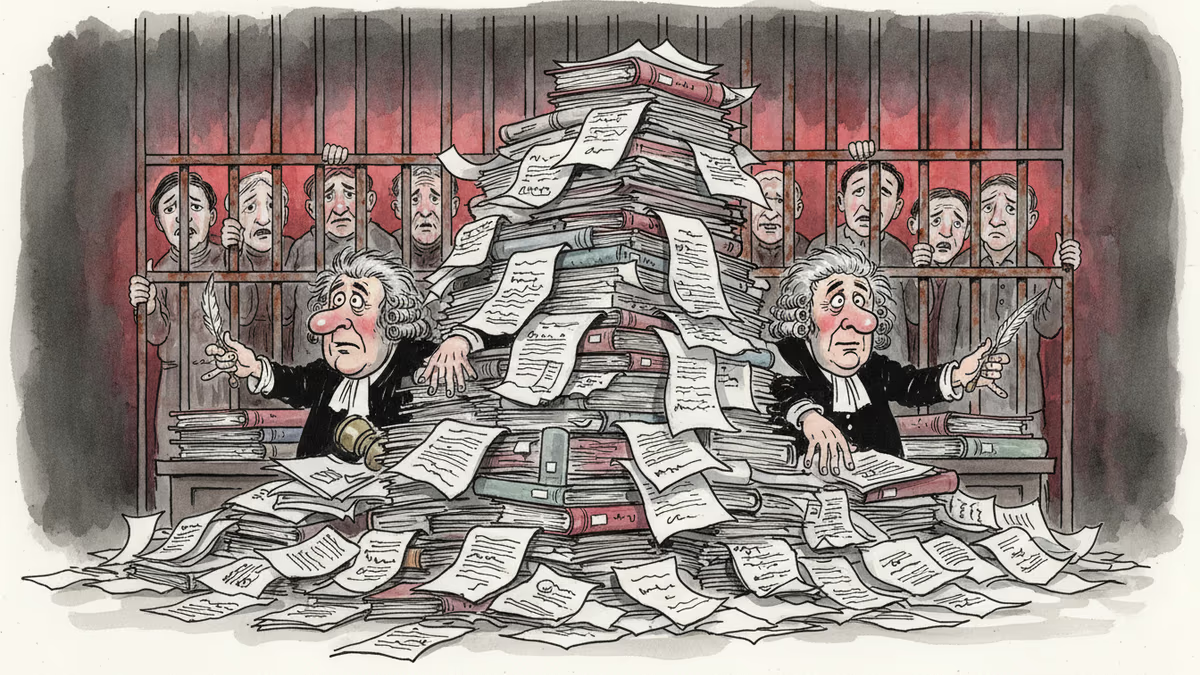
Trump's mass immigration raids have triggered an avalanche of court cases, overwhelming the federal judiciary and leaving prosecutors begging judges for relief. A system in breakdown.
"Hold Me in Contempt So I Can Finally Rest"
Julie Le, a federal prosecutor in Minnesota, made an extraordinary plea to a judge on February 3rd: charge her with contempt of court. Not because she'd done something wrong, but because she desperately needed to sleep.
Le was drowning in 88 cases - all stemming from Trump's Operation Metro Surge, which has arrested 4,000 people since December. The result? Minnesota's federal court received nearly as many habeas corpus petitions as the entire United States processed in a typical year.
"I've never said the word habeas so many times in my life," says Graham Ojala-Barbour, an immigration attorney with over a decade of experience. "When I go to sleep, my dreams are about habeas petitions."
Le was reportedly fired after telling the judge, "This job sucks."
The Numbers Don't Lie
The scale is unprecedented. In January alone, 584 of 618 cases filed in Minnesota district court were habeas petitions for immigration detainees. Compare that to 618 petitions filed across the entire federal system in a typical year.
Texas Western District saw 774 petitions in January. Middle District of Georgia: 186. Nationwide, over 18,000 habeas cases have been filed since January 2025, according to ProPublica.
The human cost is staggering. Currently, over 70,000 people are in immigration detention - nearly five times the 15,000 held at the end of the Biden administration.

The Legal Landscape Has Shifted
The Trump administration hasn't just increased arrests - it's fundamentally changed who gets detained. For decades, undocumented immigrants who'd been living in the US for years typically received bond hearings before immigration judges. Those judges weighed criminal history, flight risk, and community ties before deciding on release.
Not anymore. The administration's new interpretation of immigration law has eliminated bond hearings for vast categories of people. As Sarah Wilson, a former Justice Department attorney, explains: "Filing a habeas petition really has become the only avenue for restoring that right to a bond hearing."
The Fifth Circuit's February 6th ruling supporting this interpretation complicates matters further, since most detainees are held in Texas facilities where this ruling applies.
When the System Breaks Down
The overwhelmed prosecutors aren't just struggling with paperwork - they're failing to enforce court orders. People remain detained even after judges order their release. Court records show the government has let at least one release order "slip through the cracks."
Judge Jerry Blackwell put it bluntly: "When court orders are not followed, it's not just the Court's authority that's at issue. It is the rights of individuals in custody and the integrity of the constitutional system itself."
Ana Voss, who defended the government in nearly all Minnesota habeas cases, has left her position. Before December, most of her cases involved social security and disability lawsuits. By January, 584 of her 618 cases were immigration habeas petitions.
The Human Reality
Behind the statistics are real people. Court filings describe detainees packed into cells so full they couldn't sit down, then flown to detention centers thousands of miles from home. Some shared cells with COVID-positive individuals. Others faced repeated pressure to self-deport.
Le's own experience illustrates the chaos. She volunteered to help with habeas cases but received no proper training. She worked a month without an employee badge, couldn't access her work email, and was assigned cases before being admitted to practice law in Minnesota.
The answer may determine not just immigration policy, but the integrity of American justice itself.
Authors
Related Articles

Palantir has become the tech backbone of Trump's immigration enforcement. Former employees are calling it a 'descent into fascism.' What happens when the people who build surveillance tools start asking uncomfortable questions?
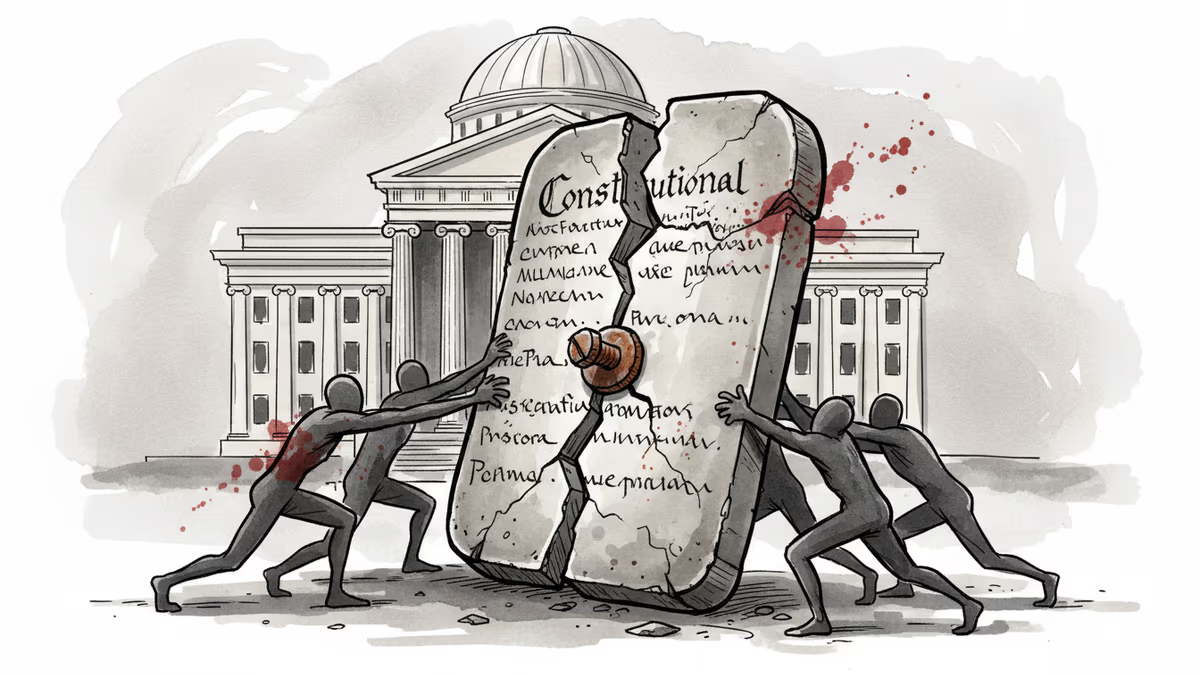
The Supreme Court heard arguments over Trump's birthright citizenship order. The justices seemed skeptical—but the fact that this case made it to the highest court signals something bigger.
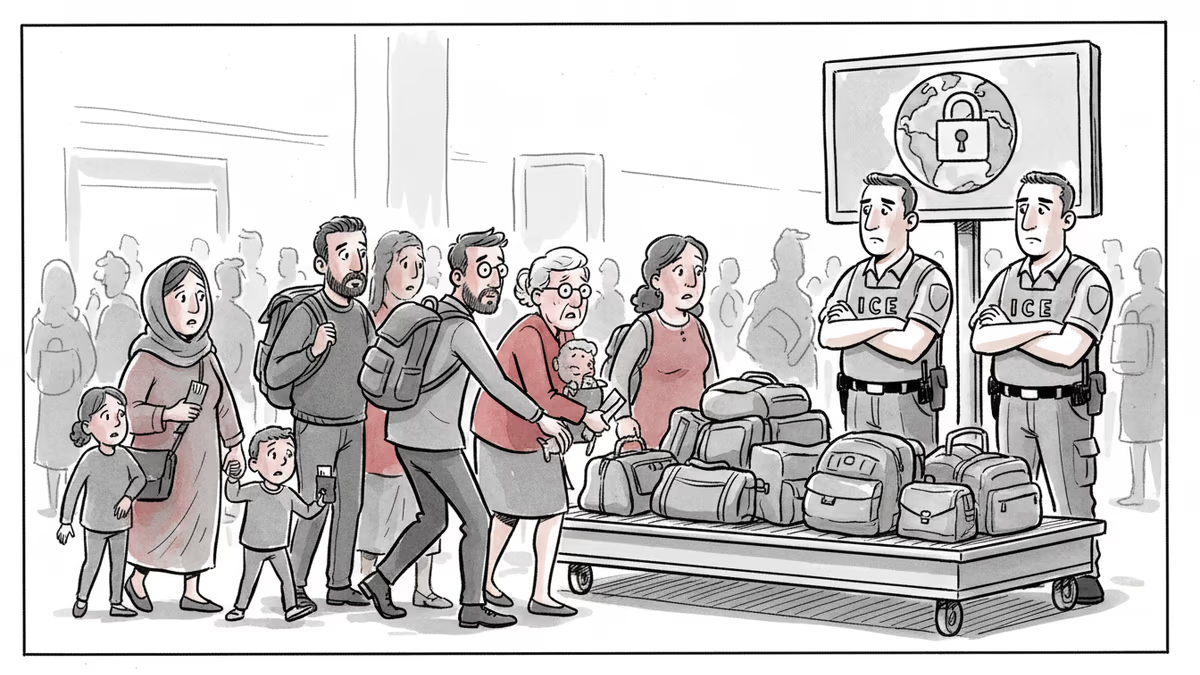
ICE agents have been deployed to 14 US airports, officially to fill TSA staffing gaps during the government shutdown. But the line between security assistance and immigration enforcement is blurring fast.

Trump abruptly replaced DHS Secretary Kristi Noem after a tenure marked by record custody deaths and controversial enforcement tactics. What this means for immigration policy ahead.
Palantir has become the tech backbone of Trump's immigration enforcement. Former employees are calling it a 'descent into fascism.' What happens when the people who build surveillance tools start asking uncomfortable questions?
The Supreme Court heard arguments over Trump's birthright citizenship order. The justices seemed skeptical—but the fact that this case made it to the highest court signals something bigger.
ICE agents have been deployed to 14 US airports, officially to fill TSA staffing gaps during the government shutdown. But the line between security assistance and immigration enforcement is blurring fast.
Trump abruptly replaced DHS Secretary Kristi Noem after a tenure marked by record custody deaths and controversial enforcement tactics. What this means for immigration policy ahead.
Thoughts
Share your thoughts on this article
Sign in to join the conversation