

The $1 Billion Question: What Palantir's DHS Deal Really Means
Palantir secured a $1 billion contract with DHS, bypassing competitive bidding. As internal tensions rise over immigration enforcement, what does this deal signal for surveillance technology?
$1 Billion Moved on a Friday Night
Palantir just locked in a $1 billion blanket purchase agreement with the Department of Homeland Security. But this isn't your typical software deal. It's a fast-track to surveillance expansion that bypasses the messiness of competitive bidding.
The five-year agreement lets DHS agencies like Customs and Border Protection and Immigration and Customs Enforcement skip the usual procurement dance. Need more Palantir software? Just buy it. Up to $1 billion worth.
When Slack Channels Become Battlegrounds
Inside Palantir, things got heated. After Minneapolis nurse Alex Pretti was shot and killed in January, employees flooded company Slack channels demanding answers: How exactly does our tech power immigration enforcement?
CEO Alex Karp recorded a video response. Nearly an hour of conversation with privacy director Courtney Bowman, yet he dodged every direct question. His solution? "Sign NDAs for more details."
CTO Akash Jain acknowledged the tension in Friday's announcement email: "I recognize this comes at a time of increased concern, both externally and internally, around our existing work with ICE."
The Surveillance Machine Expands

Palantir's immigration work has exploded over the past year. Last April, ICE paid $30 million for "ImmigrationOS"—a system providing "near real-time visibility" on immigrants self-deporting from the US.
Then came ELITE (Enhanced Leads Identification & Targeting for Enforcement), which creates maps of potential deportation targets by pulling data from DHS and Health and Human Services.
The new contract opens doors across DHS: Secret Service, FEMA, TSA, and the Cybersecurity and Infrastructure Security Agency. That's a lot of acronyms with access to a lot of data.
The Constitutional Tightrope
Jain argues Palantir's tools actually strengthen citizen protections through "strict controls and auditing capabilities" that support Fourth Amendment compliance. Critics see it differently—a massive surveillance dragnet that could ultimately erode civil liberties.
It's the classic tech company defense: We build tools, not policies. But when those tools can track, map, and target people at unprecedented scale, the line between technology and policy blurs.
"Committed Hobbits" Wanted
In a move that's either tone-deaf or strategically brilliant, Jain ended his email by recruiting employees to work on the DHS expansion: "There will be a massive need for committed hobbits to turn this momentum into mission outcomes."
(Yes, Palantir employees are called hobbits, after the Lord of the Rings characters. The company's named after the seeing-stones from Tolkien's universe. Subtle, they are not.)
Authors
Related Articles

Palantir has become the tech backbone of Trump's immigration enforcement. Former employees are calling it a 'descent into fascism.' What happens when the people who build surveillance tools start asking uncomfortable questions?
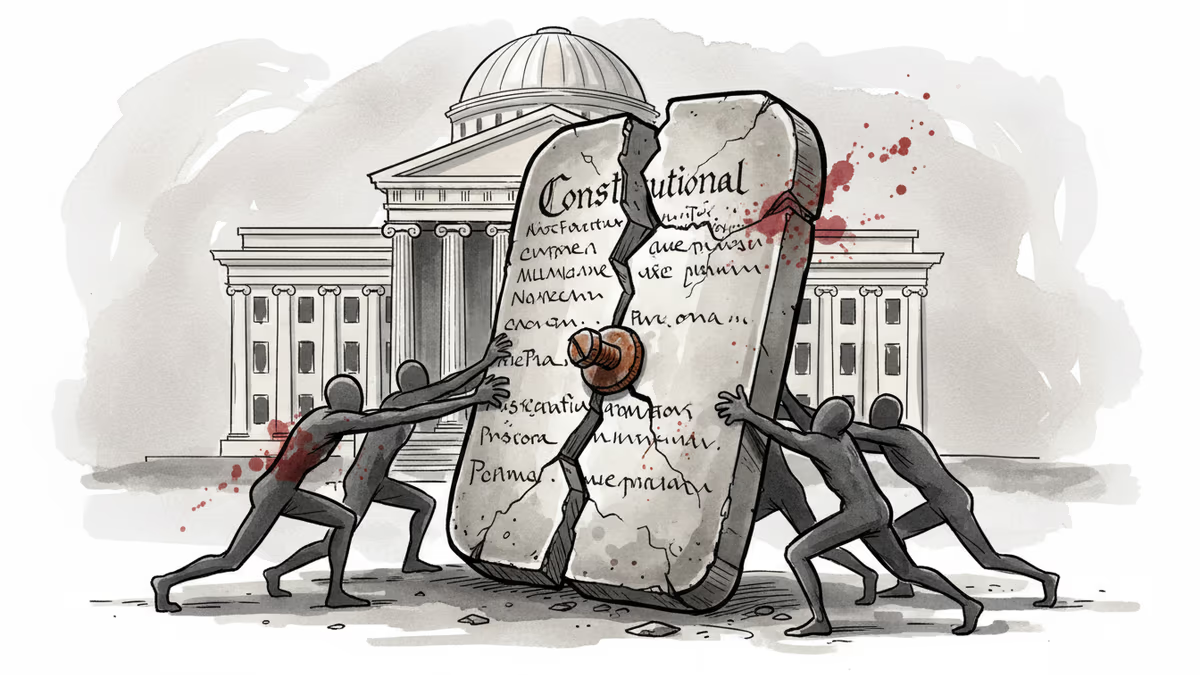
The Supreme Court heard arguments over Trump's birthright citizenship order. The justices seemed skeptical—but the fact that this case made it to the highest court signals something bigger.

ICE agents have been deployed to 14 US airports, officially to fill TSA staffing gaps during the government shutdown. But the line between security assistance and immigration enforcement is blurring fast.
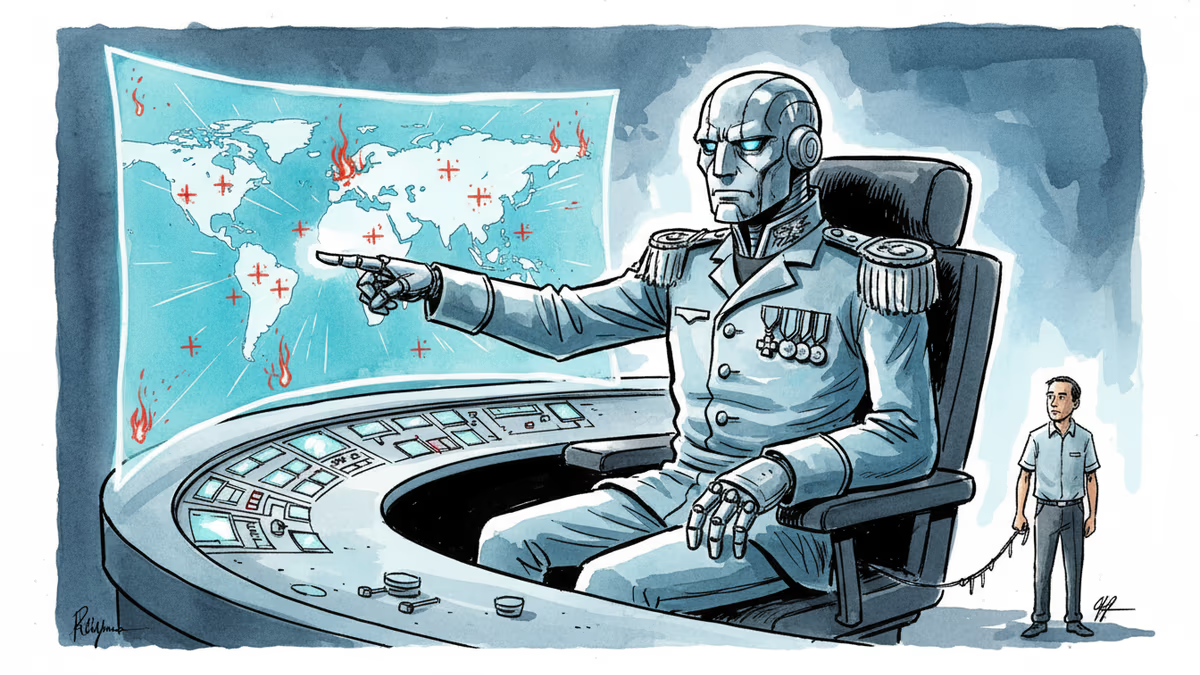
Anthropic's Claude AI is embedded in US military operations—from the capture of Maduro to the Iran war. A Pentagon dispute is exposing what "responsible AI" actually means in wartime.
Palantir has become the tech backbone of Trump's immigration enforcement. Former employees are calling it a 'descent into fascism.' What happens when the people who build surveillance tools start asking uncomfortable questions?
The Supreme Court heard arguments over Trump's birthright citizenship order. The justices seemed skeptical—but the fact that this case made it to the highest court signals something bigger.
ICE agents have been deployed to 14 US airports, officially to fill TSA staffing gaps during the government shutdown. But the line between security assistance and immigration enforcement is blurring fast.
Anthropic's Claude AI is embedded in US military operations—from the capture of Maduro to the Iran war. A Pentagon dispute is exposing what "responsible AI" actually means in wartime.
Thoughts
Share your thoughts on this article
Sign in to join the conversation