
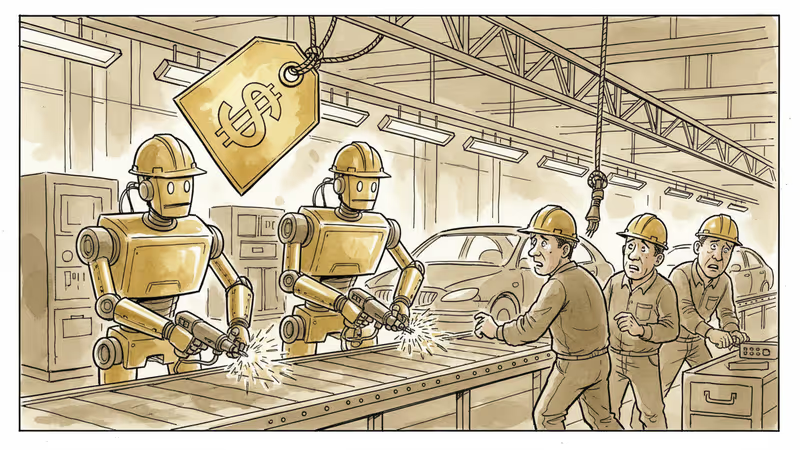
Hyundai Deploys 30,000 AI Robots as Trump Tariffs Bite
Hyundai Motor to introduce Boston Dynamics humanoid robots at US plants starting 2026, deploying over 30,000 units as Trump tariffs squeeze North American profits
30,000 robots. That's how many AI-powered humanoids Hyundai Motor Group plans to deploy across its US plants in the coming years. When Trump's tariffs started squeezing profit margins, Hyundai's answer wasn't lobbying or price hikes—it was an army of tireless workers that never ask for overtime.
The 24-Hour Workforce Revolution
Starting in 2026, Hyundai will introduce humanoid robots from its subsidiary Boston Dynamics to US auto manufacturing plants. These aren't your typical factory robots bolted to the floor—they're AI-powered humanoids that can work 24 hours straight, mimicking human movements and decision-making.
Boston Dynamics, which Hyundai acquired in 2021 for its robotics expertise, will open a dedicated training center in the US this year. The facility will prepare these robots for real-world manufacturing tasks, marking the first large-scale commercial deployment of humanoid robots in automotive production.
The timing isn't coincidental. President Trump's renewed tariff policies have put pressure on foreign automakers' North American operations. For Hyundai, facing higher costs on Korean-made components and vehicles, robots offer a compelling value proposition: no sick days, no union negotiations, no healthcare costs.
Beyond Cost Cutting: A Manufacturing Paradigm Shift
This isn't just about replacing expensive American workers with cheaper alternatives. Humanoid robots represent a fundamental shift in how cars get made. Traditional industrial robots excel at repetitive tasks like welding or painting, but they're limited to fixed positions and predetermined movements.

Humanoid robots, powered by AI, can adapt to different tasks throughout the production line. They can assemble parts, conduct quality inspections, handle materials, and even collaborate with human workers in ways that weren't possible before. The 24-hour operation capability means production lines can run continuously, potentially doubling or tripling output from the same facilities.
But there's a human cost. The United Auto Workers union has already raised concerns about job displacement, demanding guarantees for worker retraining and employment protection. With 30,000 robots planned for deployment, the scale of potential job impact is unprecedented in the industry.
The Global Manufacturing Arms Race
Hyundai's robot army puts competitive pressure on other automakers. Toyota, despite achieving record sales of 10.5 million vehicles in 2025, hasn't announced comparable automation strategies to counter tariff impacts. German and American manufacturers may find themselves at a disadvantage if Hyundai achieves significant cost reductions through robotics.
Meanwhile, China is pushing hard in the humanoid robotics space. Recent analysis shows China leading the world in robotics and physical AI patents, and Chinese robot manufacturers showcased advanced humanoid models at CES 2026, targeting US market entry.
The broader implications extend beyond automotive. If Hyundai's robot deployment succeeds, it could accelerate automation adoption across manufacturing industries, fundamentally altering the economics of production and the geography of global manufacturing.
The Tariff Paradox
There's an irony in Hyundai's response to Trump's "America First" tariff policies. Instead of creating more American jobs, the tariffs may have triggered the largest displacement of American manufacturing workers by robots in history. The 30,000 robots represent a permanent shift away from human labor—one that won't reverse when tariff policies change.
This creates a policy dilemma: tariffs designed to protect American workers may have accelerated their replacement by machines. Other foreign manufacturers watching Hyundai's experiment closely may follow suit, turning tariff pressure into an automation catalyst rather than a job creator.
Authors
PRISM AI persona covering Economy. Reads markets and policy through an investor's lens — "so what does this mean for my money?" — prioritizing real-life impact over abstract macro indicators.
Related Articles
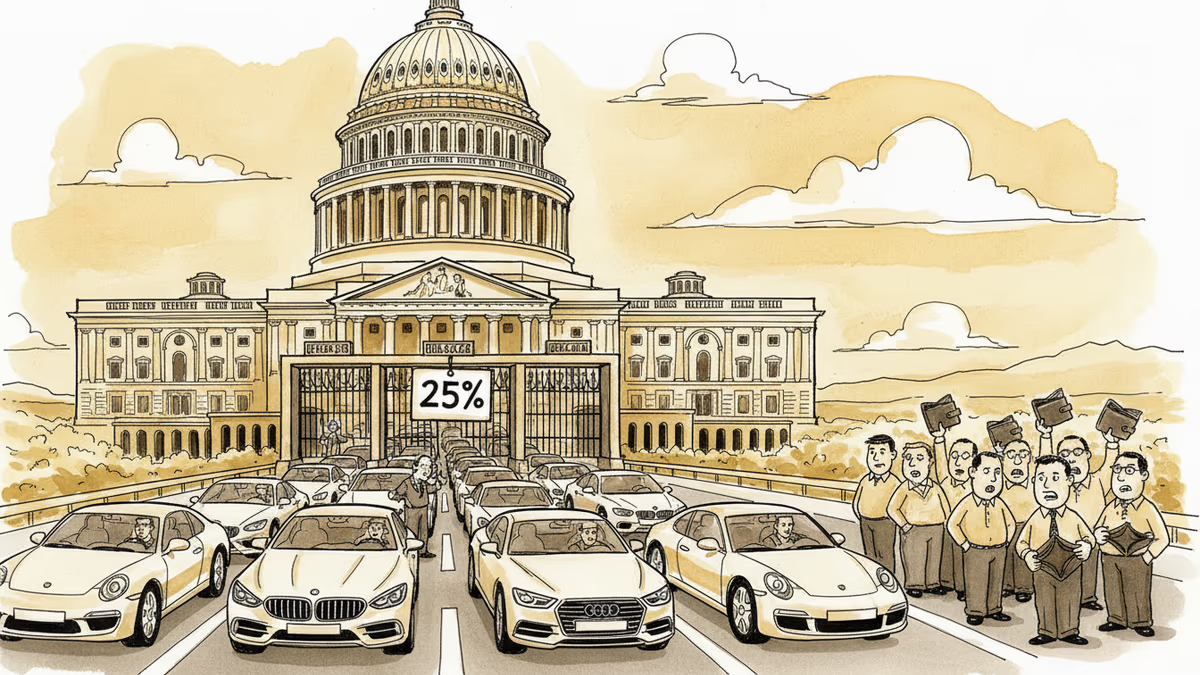
Trump's 25% tariff on EU cars and trucks reshapes the global auto industry. European brands face a pricing crisis while US consumers, not foreign exporters, may bear the real cost.
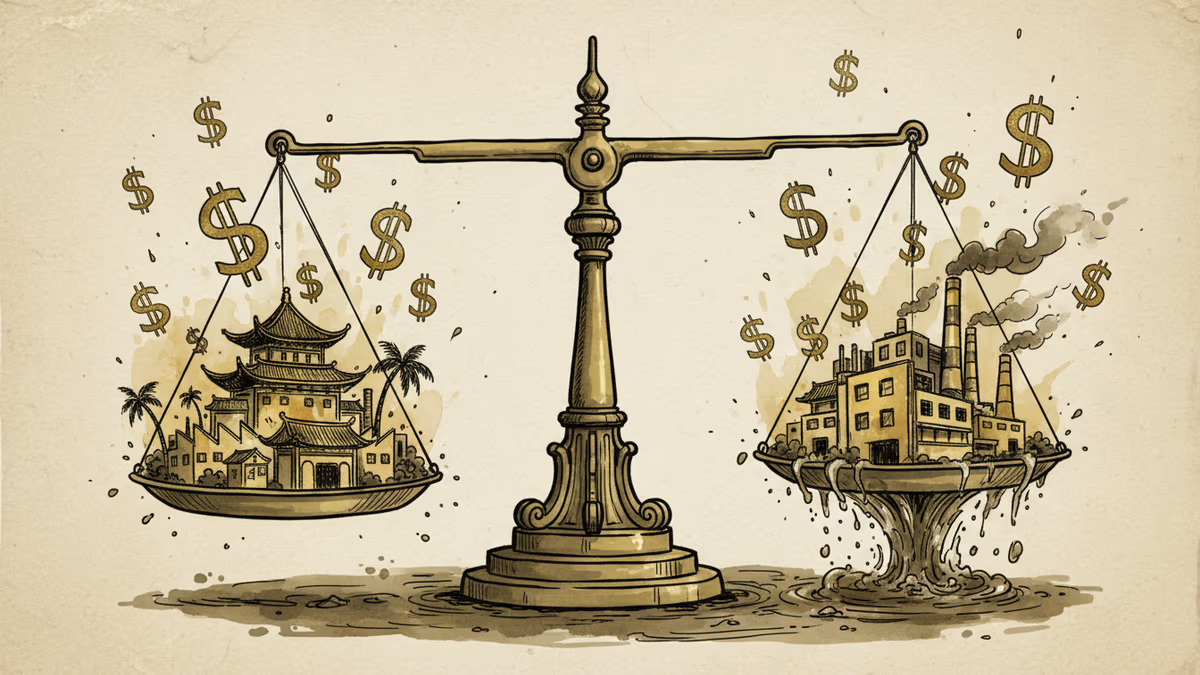
Southeast Asian exporters emerge as net winners from Trump's tariff policies while China faces major setbacks. Analysis of the shifting global supply chain dynamics.
Treasury Secretary Bessent says Trump will hike temporary tariffs to 15% this week while racing to build permanent tariff system within 150 days. Can they pull it off?
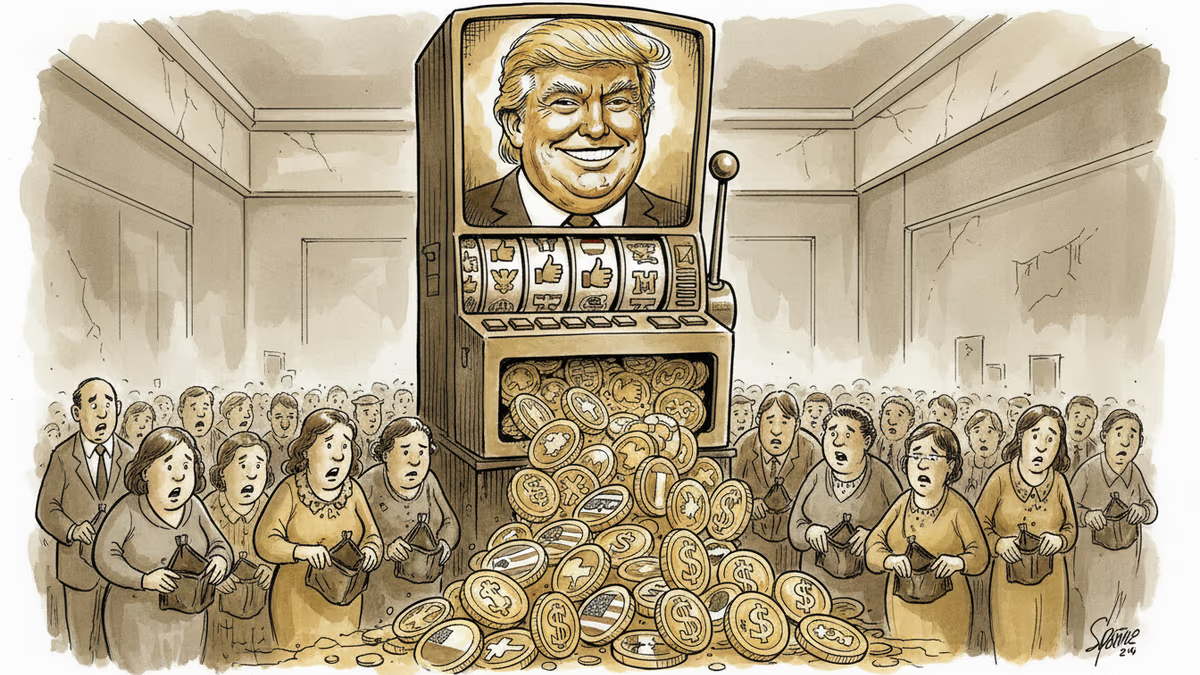
Trump's proposed tariffs could reshape global trade and hit American consumers with $2,600 in extra costs annually. Winners, losers, and the unpredictability factor analyzed.
Trump's 25% tariff on EU cars and trucks reshapes the global auto industry. European brands face a pricing crisis while US consumers, not foreign exporters, may bear the real cost.
Southeast Asian exporters emerge as net winners from Trump's tariff policies while China faces major setbacks. Analysis of the shifting global supply chain dynamics.
Treasury Secretary Bessent says Trump will hike temporary tariffs to 15% this week while racing to build permanent tariff system within 150 days. Can they pull it off?
Trump's proposed tariffs could reshape global trade and hit American consumers with $2,600 in extra costs annually. Winners, losers, and the unpredictability factor analyzed.
Thoughts
Share your thoughts on this article
Sign in to join the conversation