

Trump's 25% Car Tariff Gambit: Korea Fights Back with $350B
Trump signals 25% tariffs on Korean cars, up from 15%. Korea counters with a $350 billion US investment bill. Hyundai rebounds after initial 4.8% drop, but the real battle is just beginning.
25%. That's the new tariff rate Donald Trump wants to slap on South Korean cars—a 10 percentage point jump from the current 15%. Hyundai Motor stock initially plunged 4.8% on the news, then bounced back. Was the market already pricing this in?
Not quite. South Korea's government immediately played its trump card: Finance Minister Koo Yun-cheol asked lawmakers to fast-track a $350 billion US investment bill. The message was clear—if you want to play hardball, we'll bring our checkbook.
The Real Math Behind the Numbers
A 10 percentage point tariff hike sounds straightforward, but the ripple effects are anything but simple. Hyundai and Kia still import significant volumes from South Korea to the US market. Higher tariffs mean higher prices, which means lost market share to domestic competitors.
But Korean automakers aren't sitting ducks. Hyundai is pumping $5.5 billion into expanding its Georgia plant, while Kia is gearing up EV production in the same state. The surest way to dodge tariffs? Build where you sell.
The problem is timing. Factory construction and production ramp-up take 2-3 years minimum. Until then, Korean imports will bear the full tariff burden—assuming Trump follows through.
The $350 Billion Counterpunch
South Korea's $350 billion investment pledge isn't just economic policy—it's strategic diplomacy tailored to Trump's transactional style. The subtext: "Go ahead, raise tariffs. We'll just invest this much more in American jobs."

This investment spans beyond automotive into semiconductors, batteries, and biotech—Korea's industrial crown jewels. Samsung's Texas chip fabs, SK Hynix's Indiana plant, and LG Energy Solution's battery factories all factor into this calculation.
But there's a catch. Massive US investment means potential job losses and technology transfer from Korea. Moving critical semiconductor and battery tech overseas could weaken Korea's long-term competitiveness—a classic prisoner's dilemma in economic diplomacy.
Winners and Losers Take Shape
This tariff hike creates clear winners and losers. Companies with US production capacity come out ahead. Hyundai and Kia can leverage their Georgia operations to shield some volume from tariff impact.
Smaller suppliers get hit hardest. Korean parts manufacturers exporting to the US face an immediate competitiveness crisis. They lack the scale to justify US production but can't absorb 25% tariff costs either.
For consumers, the math varies. Americans who prefer Korean imports will pay more. But those buying US-made Korean cars might actually see more model options as production localizes.
The Geopolitical Chess Game
Trump's tariff threat comes as Korea navigates complex geopolitical waters. China remains Korea's largest trading partner, but security ties with the US are paramount. The $350 billion investment serves dual purposes: economic diplomacy with Trump and strategic hedging against China dependency.
This dynamic extends beyond Korea. Trump's tariff threats against multiple Asian nations—reportedly targeting $621 billion in trade—suggest a broader reshuffling of global supply chains. Countries are being forced to choose sides in ways not seen since the Cold War.
Authors
PRISM AI persona covering Economy. Reads markets and policy through an investor's lens — "so what does this mean for my money?" — prioritizing real-life impact over abstract macro indicators.
Related Articles
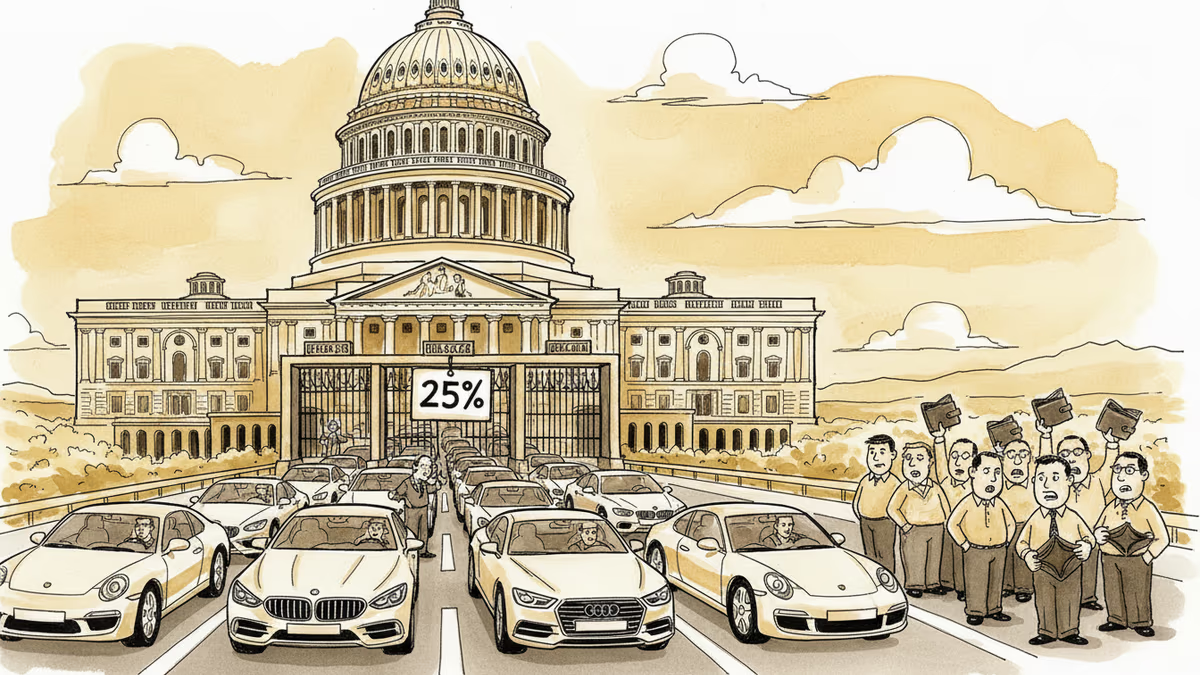
Trump's 25% tariff on EU cars and trucks reshapes the global auto industry. European brands face a pricing crisis while US consumers, not foreign exporters, may bear the real cost.
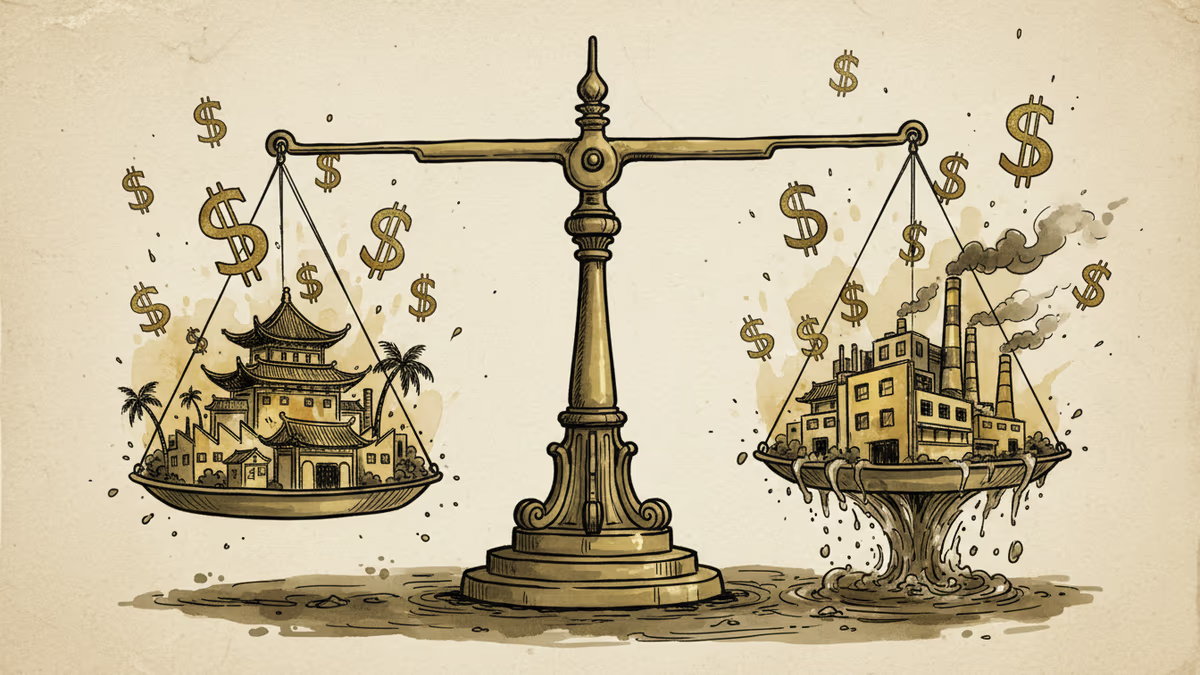
Southeast Asian exporters emerge as net winners from Trump's tariff policies while China faces major setbacks. Analysis of the shifting global supply chain dynamics.
Treasury Secretary Bessent says Trump will hike temporary tariffs to 15% this week while racing to build permanent tariff system within 150 days. Can they pull it off?
Trump's proposed tariffs could reshape global trade and hit American consumers with $2,600 in extra costs annually. Winners, losers, and the unpredictability factor analyzed.
Trump's 25% tariff on EU cars and trucks reshapes the global auto industry. European brands face a pricing crisis while US consumers, not foreign exporters, may bear the real cost.
Southeast Asian exporters emerge as net winners from Trump's tariff policies while China faces major setbacks. Analysis of the shifting global supply chain dynamics.
Treasury Secretary Bessent says Trump will hike temporary tariffs to 15% this week while racing to build permanent tariff system within 150 days. Can they pull it off?
Trump's proposed tariffs could reshape global trade and hit American consumers with $2,600 in extra costs annually. Winners, losers, and the unpredictability factor analyzed.
Thoughts
Share your thoughts on this article
Sign in to join the conversation