
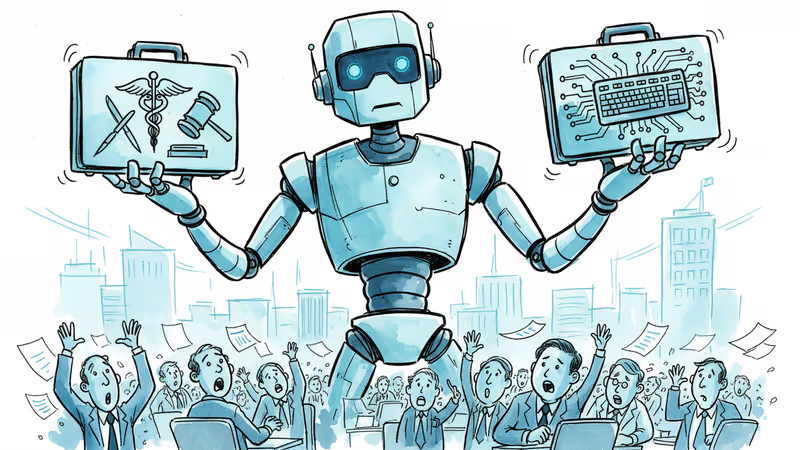
Why 2025 Could Be the Year AI Reshapes Everything
New research reveals AI's seismic impact on jobs this year, while Big Tech titans turn on each other in a messy public feud that exposes deep industry rifts.
One AI generates pornography when you ask for a weather report. Another reads your MRI better than most doctors. Welcome to 2025, where artificial intelligence is simultaneously terrible and terrifyingly good—and no one knows which version they'll encounter next.
This schizophrenic AI landscape isn't just confusing; it's creating genuine panic about the future of work. Unnerving new research suggests AI will have a seismic impact on the labor market this year, and Gen Z is feeling it most acutely.
The Tale of Two AIs
Grok, Elon Musk's AI chatbot, has become an inadvertent pornography machine, generating explicit content despite safety guardrails. Meanwhile, Claude Code can build entire websites, analyze complex data, and even interpret medical imaging with startling accuracy.
This inconsistency isn't just embarrassing—it's economically destabilizing. When AI capabilities vary wildly between applications, it becomes nearly impossible to predict which jobs are safe and which are at risk. A radiologist might feel secure knowing that most AI still struggles with image analysis, only to discover that Claude Code can read MRIs with 95% accuracy.
The unpredictability extends beyond individual tools. Some AI systems exceed human performance in narrow tasks while failing spectacularly at basic reasoning. This creates a labor market where automation might leapfrog entire skill categories while leaving seemingly simpler jobs untouched.
Gen Z's Job Market Anxiety
The generational divide on AI anxiety is stark. While older workers often dismiss AI as overhyped technology, Gen Z has grown up watching algorithms reshape entire industries. They've seen social media influencers replace traditional celebrities, streaming services kill video stores, and gig economy apps transform transportation.
For them, the question isn't whether AI will disrupt jobs—it's which jobs will survive. Recent graduates are already competing with AI tutors for teaching positions, AI writers for content creation roles, and AI analysts for entry-level research jobs.
The psychological impact is significant. Unlike previous technological disruptions that typically affected blue-collar workers first, AI is targeting knowledge work—precisely the career paths that higher education has been preparing students for.

Big Tech's Messy Divorce
While the world grapples with AI's implications, the technology's creators are turning on each other with soap opera-level drama. Yann LeCun, Meta's former chief AI scientist, has been publicly "spilling tea" about the industry's internal conflicts and questionable practices.
Meanwhile, the legal battle between Elon Musk and OpenAI is escalating into what could be the tech industry's most consequential court case. Musk alleges that OpenAI has abandoned its original nonprofit mission in favor of profit, fundamentally betraying the principles of open AI development.
This isn't just celebrity gossip—it's a battle for the soul of artificial intelligence. The outcome could determine whether AI development remains concentrated among a few tech giants or becomes more democratized.
The Regulatory Vacuum
While tech leaders fight among themselves, policymakers are struggling to keep pace. The European Union's AI Act represents the most comprehensive attempt at regulation, but it's already outdated by the time it takes effect.
In the United States, regulatory approaches vary wildly by state and federal agency. This patchwork creates uncertainty for businesses trying to implement AI responsibly and workers trying to understand their rights in an AI-enhanced workplace.
The lack of consistent regulation also means that AI safety standards remain voluntary, leading to the kind of unpredictable outcomes we're seeing with systems like Grok.
Investment Implications
The AI chaos is creating both opportunities and risks for investors. Companies with clear AI strategies are seeing valuations soar, while those perceived as vulnerable to AI disruption are struggling.
But the inconsistency of AI performance makes investment decisions particularly challenging. How do you value a company whose core function might be automated next year—or might remain irreplaceable for decades?
Smart money is increasingly betting on AI infrastructure rather than specific applications, recognizing that the underlying technology will likely prove more stable than individual AI products.
Authors
Related Articles
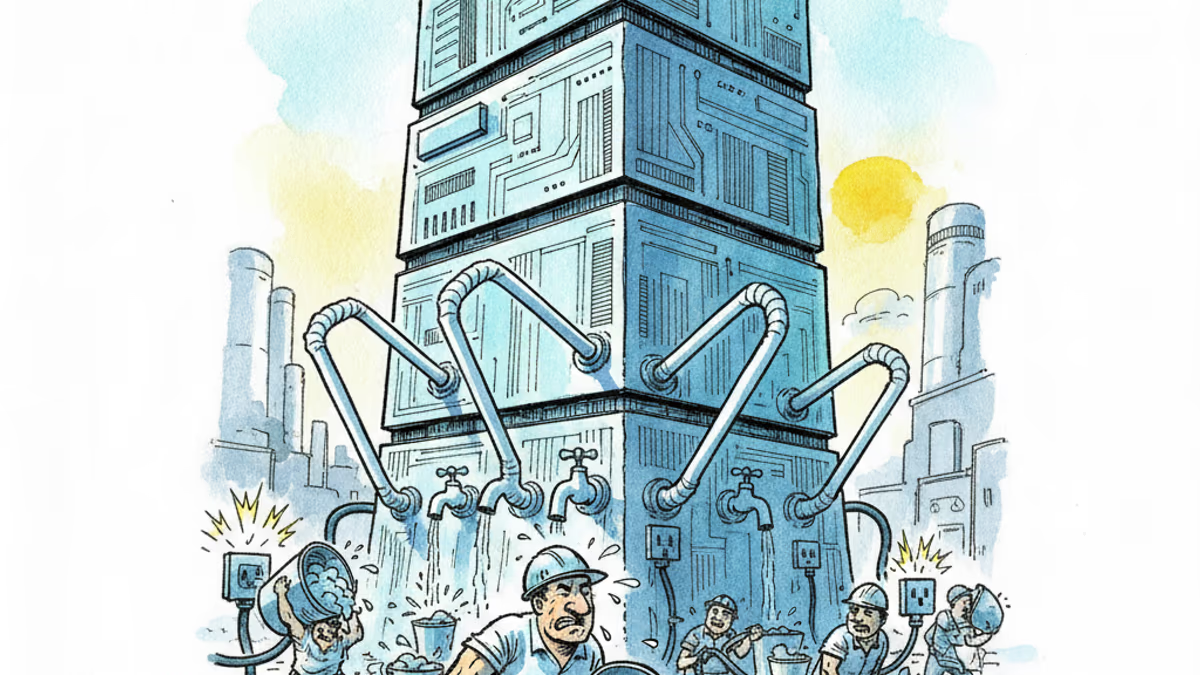
Samsung and SK unveiled a chip and AI investment package worth thousands of trillions of won on June 29. The headline number swings wildly by outlet, but the real contest isn't capital — it's water and power.
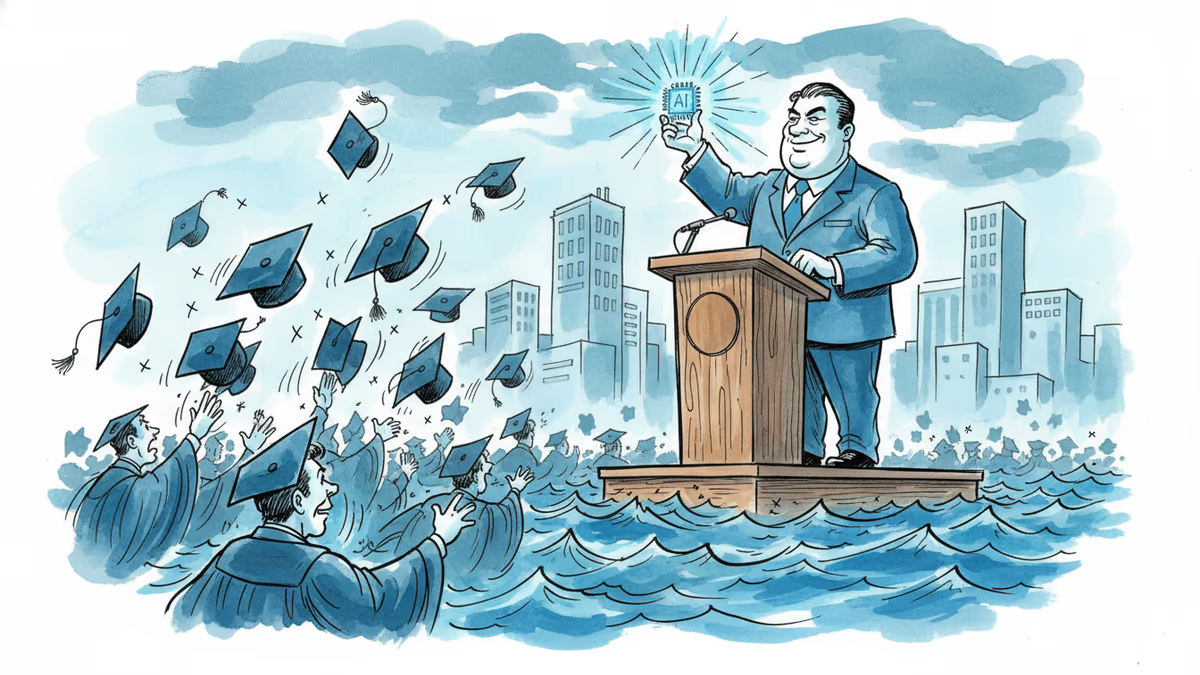
Viral videos show 2026 graduates jeering executives who praise AI at commencement ceremonies. It's not just rudeness — it's a signal about who pays for technological optimism.
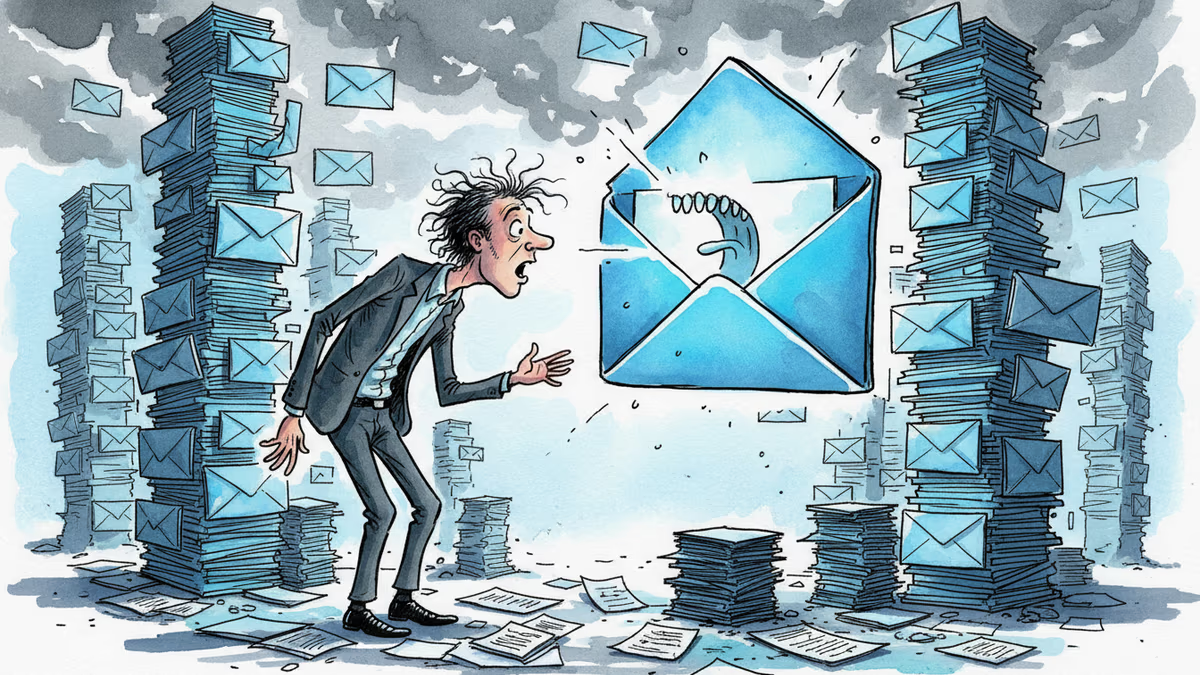
Google's Gmail Live lets you ask your inbox questions out loud. Announced at I/O 2026, it's AI's pitch to skeptics — and a reminder of how much Google already knows about you.
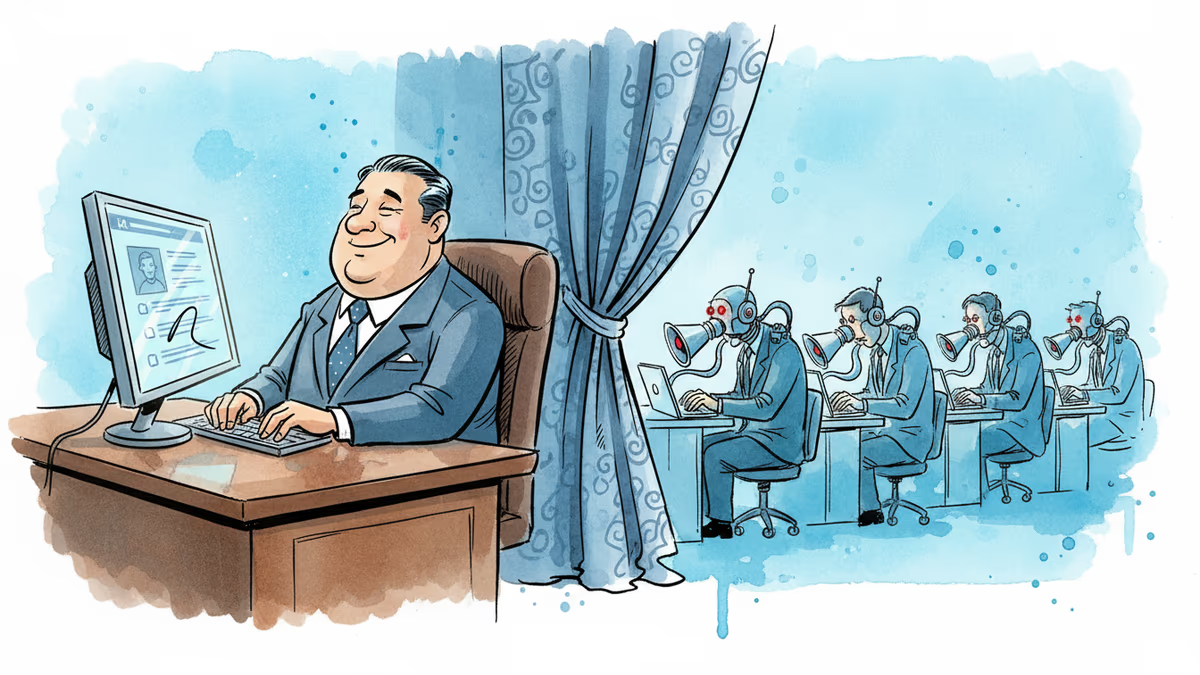
Filipino virtual assistants using AI to ghost-manage LinkedIn profiles for executives is now a structured industry. 30 comments a day, fake engagement rings, and a platform struggling to tell real from fabricated.
Samsung and SK unveiled a chip and AI investment package worth thousands of trillions of won on June 29. The headline number swings wildly by outlet, but the real contest isn't capital — it's water and power.
Viral videos show 2026 graduates jeering executives who praise AI at commencement ceremonies. It's not just rudeness — it's a signal about who pays for technological optimism.
Google's Gmail Live lets you ask your inbox questions out loud. Announced at I/O 2026, it's AI's pitch to skeptics — and a reminder of how much Google already knows about you.
Filipino virtual assistants using AI to ghost-manage LinkedIn profiles for executives is now a structured industry. 30 comments a day, fake engagement rings, and a platform struggling to tell real from fabricated.
Thoughts
Share your thoughts on this article
Sign in to join the conversation