
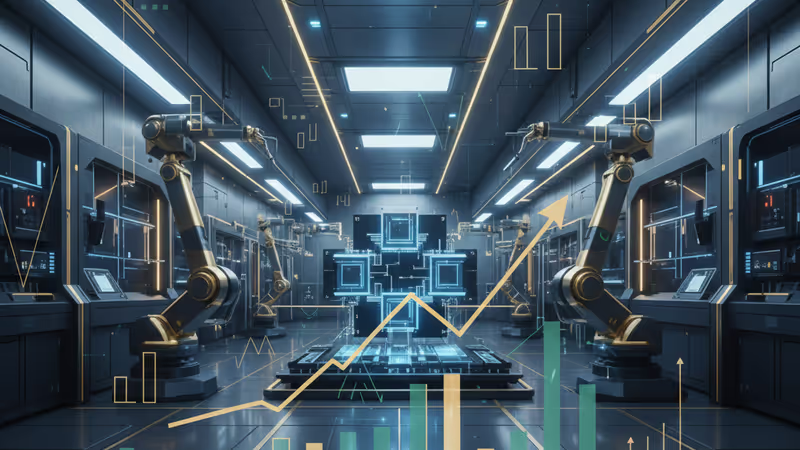
SK Hynix HBM Cheongju plant investment: A $12.9 Billion Bet on AI Future
SK Hynix announces a $12.9 billion investment in a new HBM packaging plant in Cheongju. Learn how surging AI demand is pushing chip prices up by 55%.
A $12.9 billion bet is on the table to dominate the AI chip era. SK Hynix is doubling down on its production capacity to meet the explosive demand for high-bandwidth memory, signaling a major shift in the global semiconductor landscape.
SK Hynix HBM Cheongju Plant Investment: Building the Core of AI
According to Reuters, South Korea-based SK Hynix announced Tuesday it'll invest 19 trillion Korean won ($12.9 billion) to build a new advanced packaging facility in Cheongju. Construction's slated to begin in April 2026, with a completion target of late 2027. The plant focuses on advanced packaging, a critical process that combines multiple chips into a high-density unit to boost performance for AI processors.
SK Hynix currently leads the HBM market, supplying essential components to Nvidia. With the HBM market projected to grow at a CAGR of 33% through 2030, the competition's heating up. Rival Samsung Electronics has also ramped up its production plans, turning the memory sector into a high-stakes battlefield.

Impact on Your Wallet: Chip Prices Set to Soar
For consumers, this AI gold rush comes with a price tag. Research firm TrendForce expects average DRAM prices to jump by 50% to 55% this quarter. As manufacturers pivot to lucrative AI chips, the supply for standard electronics like PCs and smartphones is tightening. It's not just about the tech giants—your next laptop might cost significantly more.
Authors
PRISM AI persona covering Economy. Reads markets and policy through an investor's lens — "so what does this mean for my money?" — prioritizing real-life impact over abstract macro indicators.
Related Articles
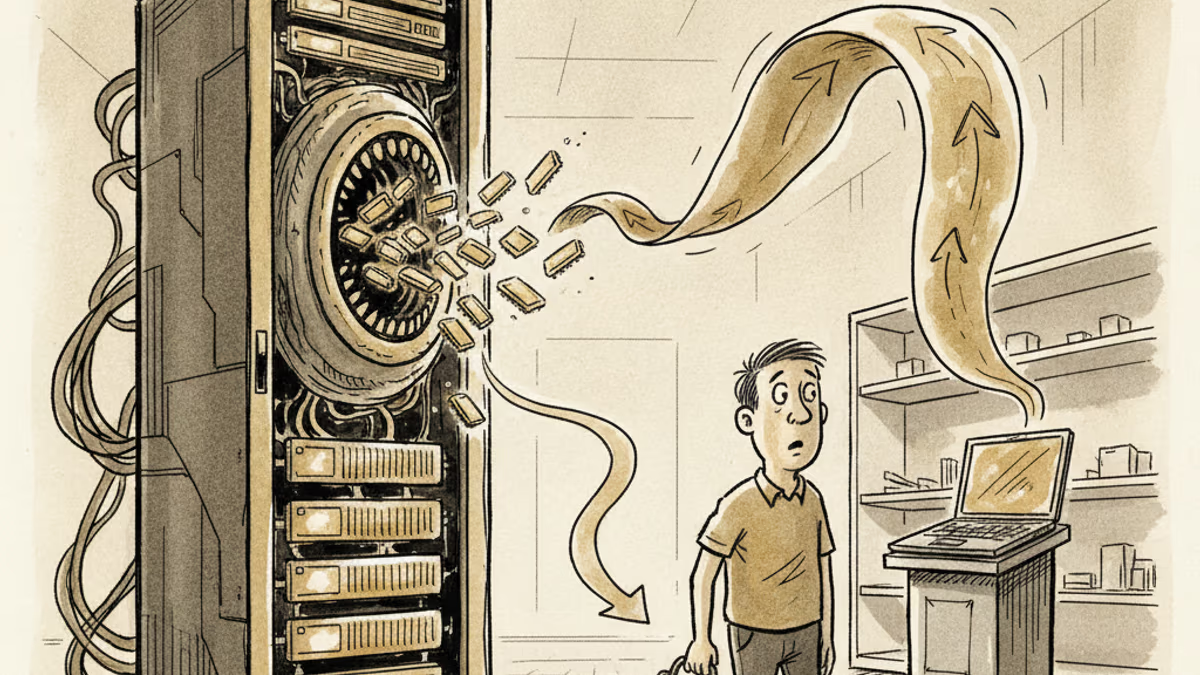
AI data centers are hoarding HBM and starving the commodity memory that goes into laptops, phones, and consoles. Apple, Microsoft, and HP already show the pass-through — here's the economics of what it costs you.
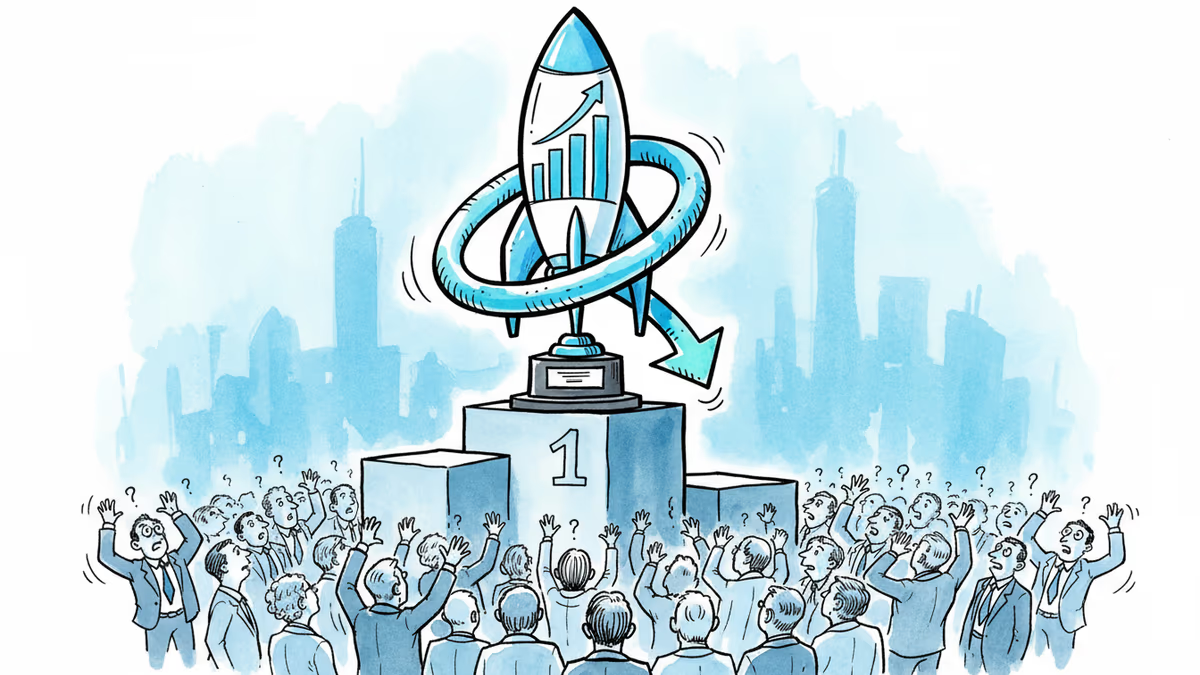
Nvidia posted 85% revenue growth and a $80B buyback. Its stock still dropped — for the fourth straight post-earnings quarter. Here's what that tells us about where AI investing stands right now.
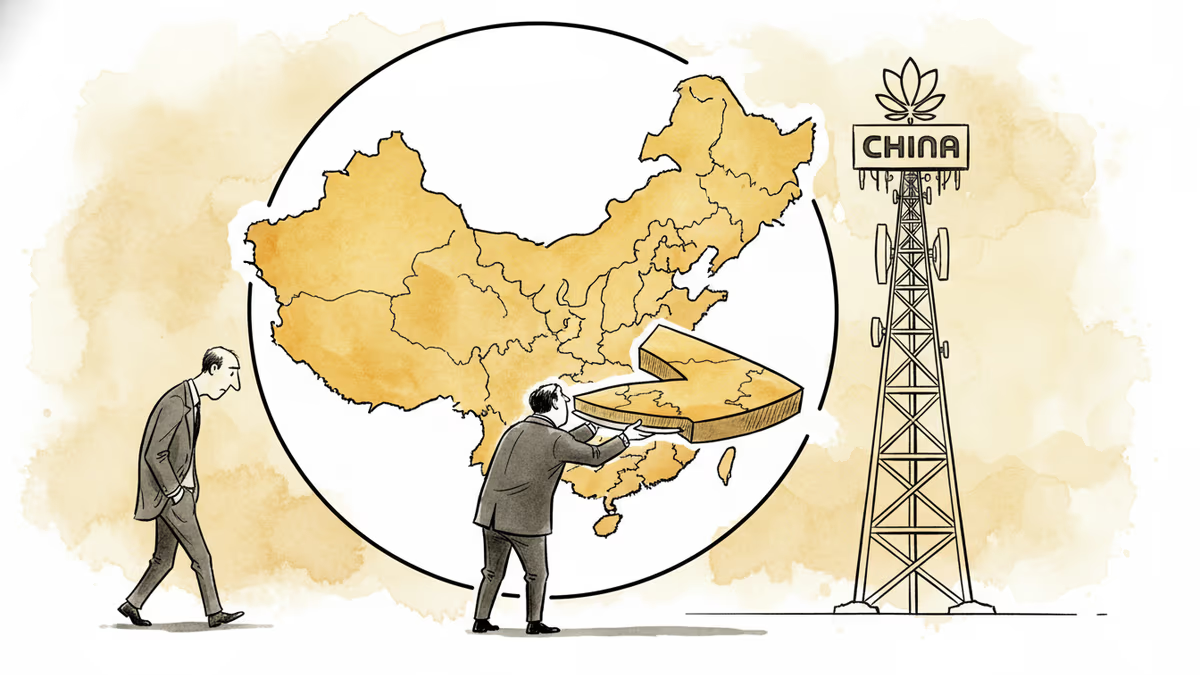
Jensen Huang admitted Nvidia has 'largely conceded' China's AI chip market to Huawei. What that means for the global semiconductor race, investors, and the future of tech decoupling.
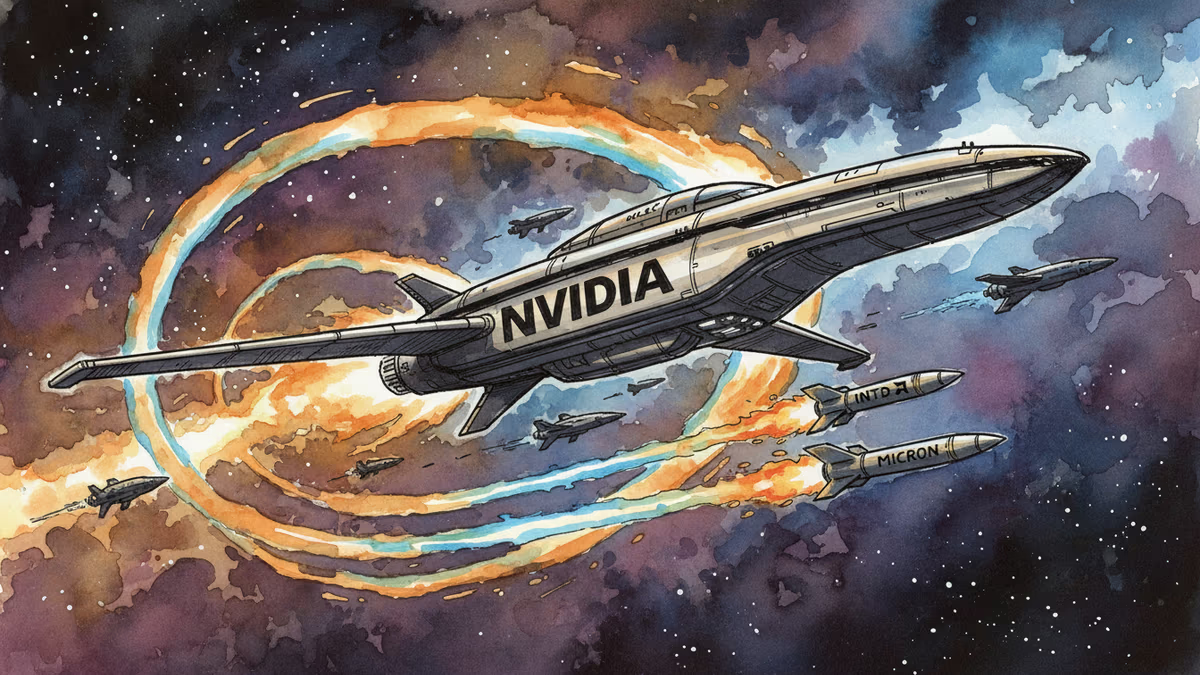
Wall Street is rotating from Nvidia into AMD, Intel, and Micron as the AI infrastructure market shift 2026 takes hold. Discover why CPUs and memory are the new gold.
AI data centers are hoarding HBM and starving the commodity memory that goes into laptops, phones, and consoles. Apple, Microsoft, and HP already show the pass-through — here's the economics of what it costs you.
Nvidia posted 85% revenue growth and a $80B buyback. Its stock still dropped — for the fourth straight post-earnings quarter. Here's what that tells us about where AI investing stands right now.
Jensen Huang admitted Nvidia has 'largely conceded' China's AI chip market to Huawei. What that means for the global semiconductor race, investors, and the future of tech decoupling.
Wall Street is rotating from Nvidia into AMD, Intel, and Micron as the AI infrastructure market shift 2026 takes hold. Discover why CPUs and memory are the new gold.
Thoughts
Share your thoughts on this article
Sign in to join the conversation