

The 33-Year Hunt: How an Old Virus Created a Google Tech Hub in Spain
VirusTotal founder Bernardo Quintero spent decades searching for the anonymous creator of a 1992 virus that launched his career. The bittersweet resolution reveals a story of unintended consequences that transformed a Spanish city into a tech hub.
One harmless computer virus, a 33-year-old mystery, and the secret origin story of a Google tech hub. After decades of wondering, Bernardo Quintero, the founder of VirusTotal, finally set out to find the anonymous programmer whose malware accidentally launched his career. The bittersweet resolution he uncovered reveals a powerful story of unintended consequences that reshaped a city.
A Decades-Long Digital Ghost Hunt
The story begins in 1992. A young Quintero, then a university student, was tasked by a teacher to analyze a mostly harmless, 2610-byte program called Virus Málaga that had infected computers at Málaga’s Polytechnic School. “That challenge in my first year at university sparked a deep interest in computer viruses and security,” Quintero told TechCrunch, “and without it my path might have been very different.” This pivotal moment led him to found VirusTotal, a startup Google would acquire in 2012.
Moved by nostalgia and gratitude, Quintero launched a public search earlier in 2025. He asked Spanish media for help and dove back into the virus’s code, hoping to find clues his 18-year-old self had missed.
Clues in the Code and a Bittersweet Twist

Quintero's search yielded a key clue within the code: the string “KIKESOYYO,” which translates to “I am Kike.” The breakthrough came from a direct message from a former classmate of the creator. The tipster identified the programmer as Antonio Astorga and confirmed a crucial detail Quintero had never made public: the virus's hidden payload was a message condemning the Basque terrorist group ETA.
But the tip came with tragic news: Astorga had passed away. Quintero was devastated, believing he'd never solve the mystery of “Kike.” The final piece of the puzzle, however, came from Astorga's sister. She revealed his full name was Antonio Enrique Astorga, and his family had always known him by the nickname Kike.
The Legacy of a Virus
Though Quintero could never thank him in person, Astorga's legacy lived on. He had become a computing teacher at a secondary school, which later named its IT classroom in his memory. In a meaningful twist, one of Astorga’s sons, Sergio, is a recent software engineering graduate with an interest in cybersecurity and quantum computing.
“Being able to close that circle now, and to see new generations building on it, is deeply meaningful to me,” Quintero said in a LinkedIn post. The virus, created out of a young programmer's curiosity, didn't just alter one man's career. It set in motion a chain of events that led to Google’s Safety Engineering Center (GSEC) taking root in Málaga, transforming the city into a true cybersecurity talent hub.
Authors
Related Articles
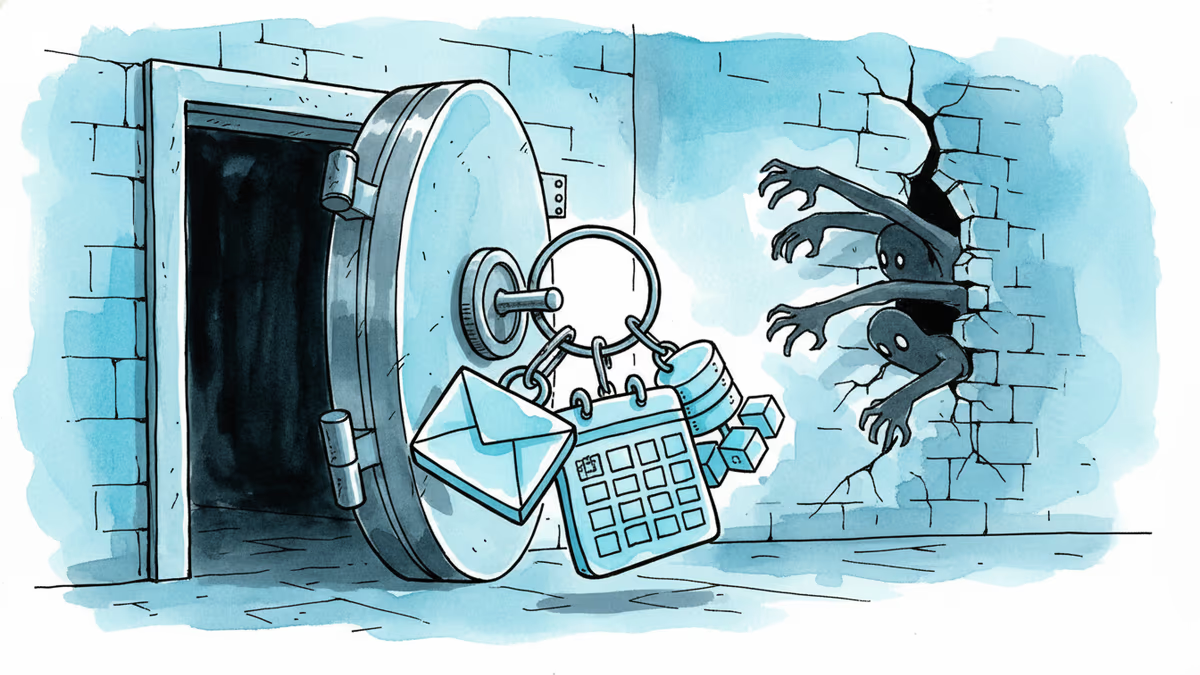
A critical vulnerability in Starlette—downloaded 325 million times per week—puts millions of AI agent servers at risk, exposing stored credentials for email, databases, and third-party services.
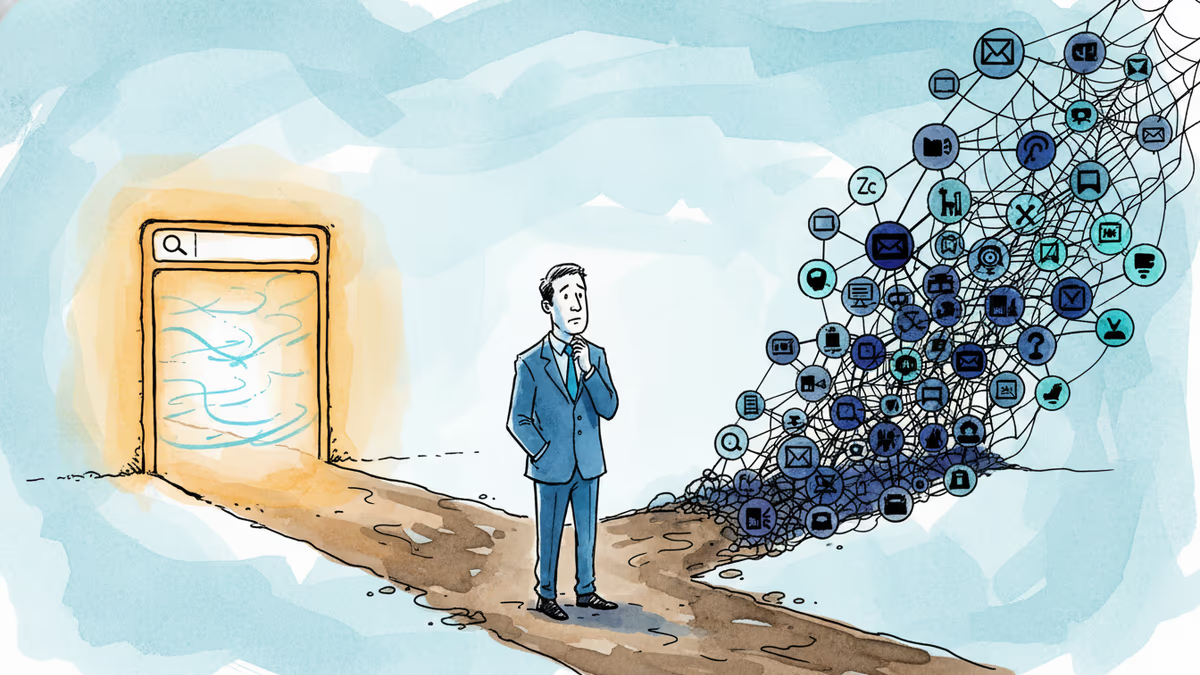
In a post-Google I/O interview, Sundar Pichai acknowledged flawed search results, real AI anxiety, and an AGI timeline that makes the label irrelevant. Here's what he said — and what it means.
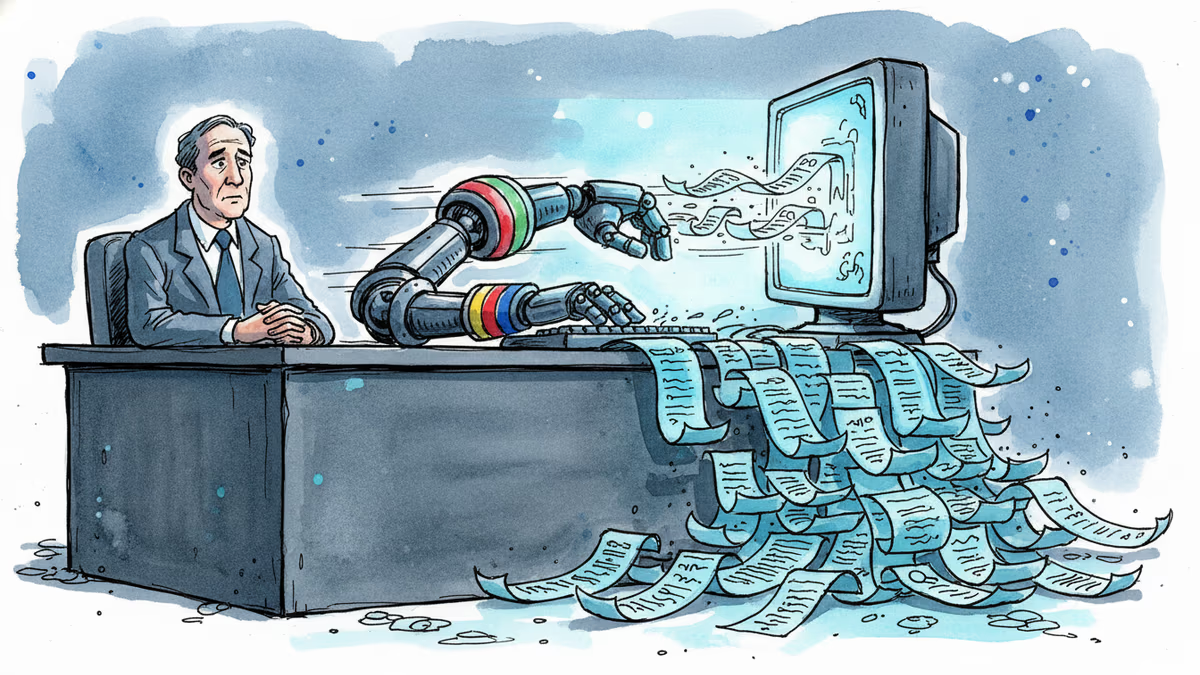
Google is building AI agents that search the web proactively, without user prompting. That's not just a product update — it's a fundamental shift in who controls the information you receive.

GitHub confirmed hackers stole data from 3,800 internal repositories via a poisoned VS Code extension. Here's why developer tools are now the most dangerous attack surface in tech.
A critical vulnerability in Starlette—downloaded 325 million times per week—puts millions of AI agent servers at risk, exposing stored credentials for email, databases, and third-party services.
In a post-Google I/O interview, Sundar Pichai acknowledged flawed search results, real AI anxiety, and an AGI timeline that makes the label irrelevant. Here's what he said — and what it means.
Google is building AI agents that search the web proactively, without user prompting. That's not just a product update — it's a fundamental shift in who controls the information you receive.
GitHub confirmed hackers stole data from 3,800 internal repositories via a poisoned VS Code extension. Here's why developer tools are now the most dangerous attack surface in tech.
Thoughts
Share your thoughts on this article
Sign in to join the conversation