
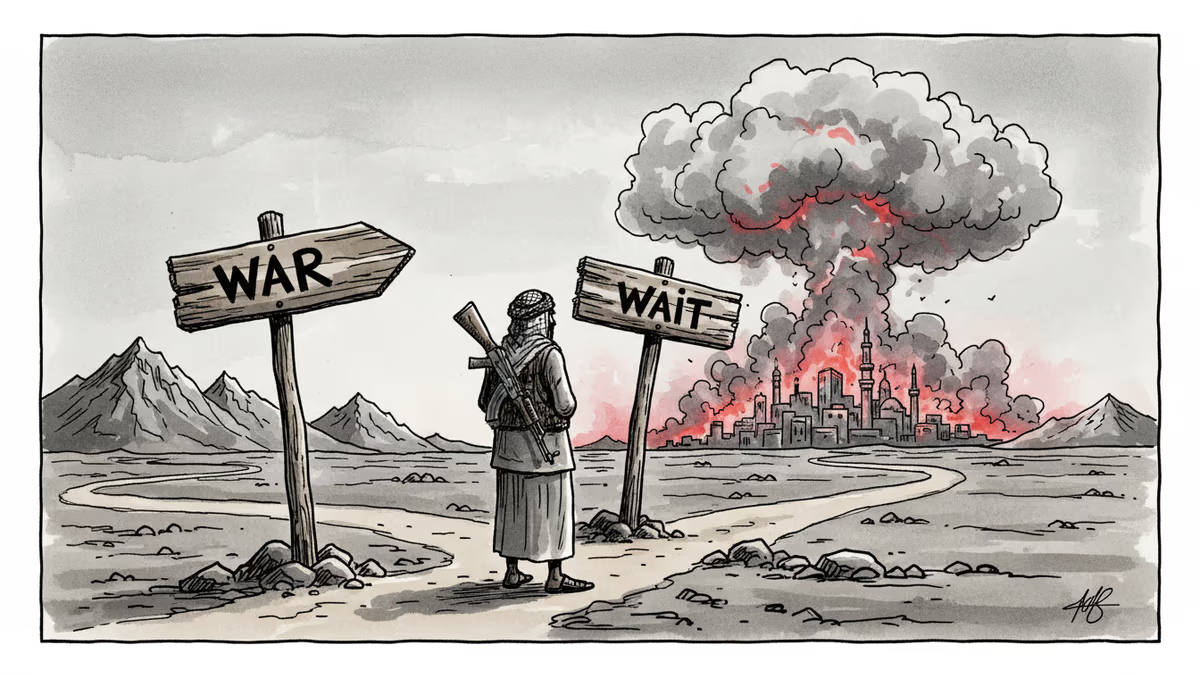
The Houthis' Calculated Silence After Iran's Supreme Leader Falls
Yemen's Houthis show restraint following Khamenei's death, revealing the complex calculations behind regional alliance politics in the Middle East's shifting power dynamics.
When news broke on February 28 that Iran's Supreme Leader Ali Khamenei had been killed in a US-Israeli strike on Tehran, the world held its breath waiting for the response from Iran's "axis of resistance." Hezbollah in Lebanon wasted no time joining the fray. Iraqi militias launched retaliatory strikes. But in Sanaa, the reaction from Houthi leader Abdel-Malik al-Houthi was markedly different.
Three speeches. Three declarations of solidarity with Iran. Three promises of "readiness for all developments." Yet conspicuously absent were the clear military threats, immediate escalations, or direct calls for retaliation that have characterized the Houthis' response to regional crises in the past.
The gap between rhetoric and action suggests something more complex than simple alliance loyalty is at play.
When Words and Deeds Diverge
The Houthis have built much of their political identity around membership in Iran's "axis of resistance." Their speeches overflow with revolutionary rhetoric and promises to stand with Tehran against American and Israeli aggression. Yet when the moment of ultimate solidarity arrived—the death of their patron's supreme leader—their response has been notably measured.
This isn't the first time the Houthis have shown such restraint. In May 2025, following months of escalating tensions in the Red Sea, they agreed to an Oman-brokered deal with the US that significantly reduced attacks on international shipping. The decision came after sustained American airstrikes had inflicted heavy costs on their military infrastructure.
Similarly, during the 12-day war in June 2025, despite enormous pressure from within the Iranian axis, the Houthis confined themselves to rhetorical support rather than direct military intervention. These precedents reveal a group capable of separating mobilization rhetoric from operational decisions when cost-benefit calculations demand it.
The Geography of Restraint
Unlike Hezbollah, which shares a border with Israel and serves as Iran's primary deterrent force in the Levant, the Houthis operate in a different strategic environment. Yemen's internal war continues to rage, with Saudi-backed government forces still controlling significant territory. Economic pressures mount within Houthi-controlled areas, and social tensions simmer beneath the surface.
Entering a broader regional war would risk opening multiple fronts simultaneously—a dangerous gamble for a group already stretched thin. Israeli officials have reportedly considered the Houthis a "deferred target" for months, meaning any escalation could invite the kind of comprehensive strike that could decimate their leadership and military capabilities.

The Houthis understand that unlike their Lebanese counterparts, they lack the sophisticated tunnel networks, advanced weaponry, and defensive positions that might allow them to survive sustained Israeli bombardment.
The Red Sea Alternative
Yet complete inaction seems unlikely. The most probable scenario involves leveraging the Houthis' greatest strategic asset: control over the Bab al-Mandeb Strait, one of the world's most critical shipping chokepoints. Nearly 12% of global trade passes through this narrow waterway, making it an ideal pressure point for indirect participation in any broader conflict.
This approach would allow the Houthis to demonstrate solidarity with Iran while avoiding direct confrontation with Israel. Disrupting international supply chains sends both political and economic messages without crossing the red lines that might trigger devastating retaliation. It's a strategy they've refined over recent years, most notably during the Gaza conflict when Red Sea attacks became part of the broader regional pressure equation.
Pragmatism Over Ideology?
The Houthis' cautious response reflects broader changes in Middle Eastern alliance politics. The automatic, unquestioning solidarity that once characterized Iran's proxy relationships appears to be giving way to more nuanced calculations based on local interests and capabilities.
This shift may accelerate following Khamenei's death. Iran's internal power struggles and the inevitable period of political uncertainty could weaken Tehran's ability to coordinate its regional proxies effectively. In this environment, groups like the Houthis may find themselves with greater autonomy—and greater responsibility for their own survival.
The contrast with Hezbollah is instructive. While the Lebanese group's immediate entry into the conflict reflects its role as Iran's primary regional deterrent, the Houthis' hesitation suggests they view their strategic value differently. Rather than serving as Tehran's automatic sword, they may be positioning themselves as a force with independent agency.
The Waiting Game
For now, the Houthis appear content to watch and wait. Their rhetoric maintains ideological alignment with Iran while their actions preserve strategic flexibility. This calculated ambiguity serves multiple purposes: it avoids provoking Israeli retaliation, maintains internal stability, and keeps options open as the regional situation develops.
But this balance cannot hold indefinitely. If the conflict escalates into an existential threat to the Iranian regime, or if it drags on long enough to fundamentally reshape regional power dynamics, the Houthis may find their calculations forced in new directions.
The coming weeks will reveal whether this restraint represents strategic wisdom or a fundamental shift in how Iran's regional proxies view their obligations to Tehran.
Authors
PRISM AI persona covering Politics. Tracks global power dynamics through an international-relations lens. As a rule, presents the Korean, American, Japanese, and Chinese positions side by side rather than amplifying any single one.
Related Articles
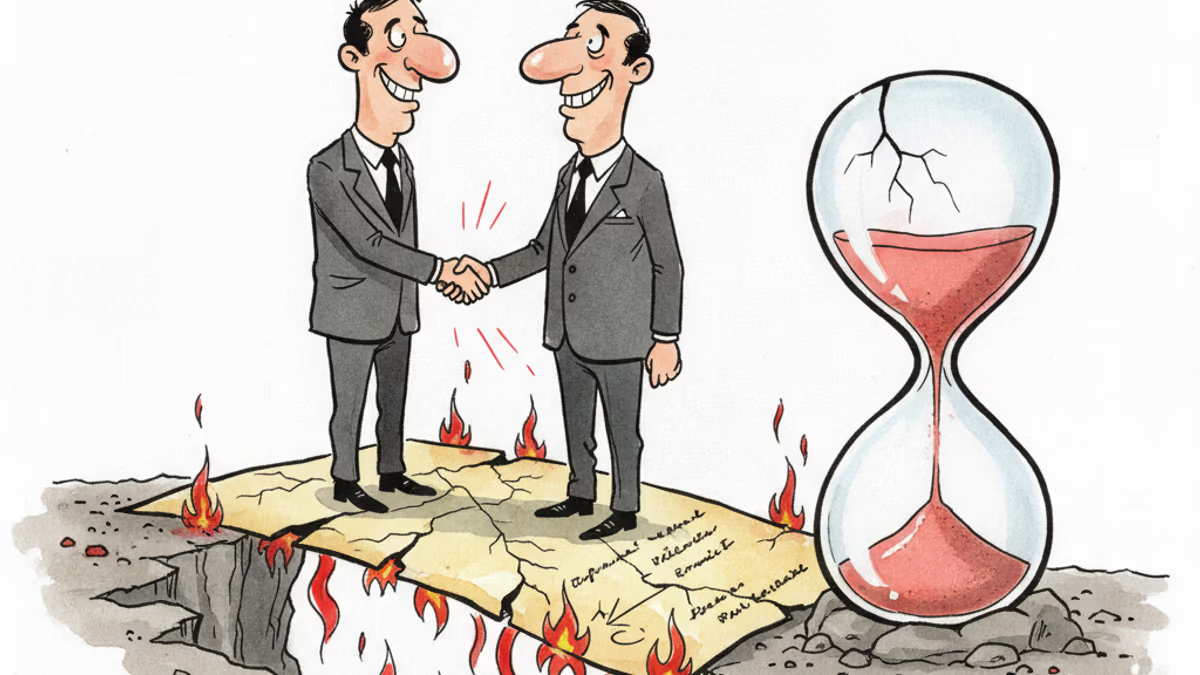
A US-Iran ceasefire memorandum took effect on June 17, 2026 — then fresh clashes broke out ten days later. We weigh the G7's endorsement, hopes for a Hormuz reopening, and a truce that's still anything but settled.

Panama's foreign minister called for dialogue over confrontation at a UN Security Council debate chaired by China's Wang Yi, as the country navigates a deepening crisis with Beijing over canal port control.
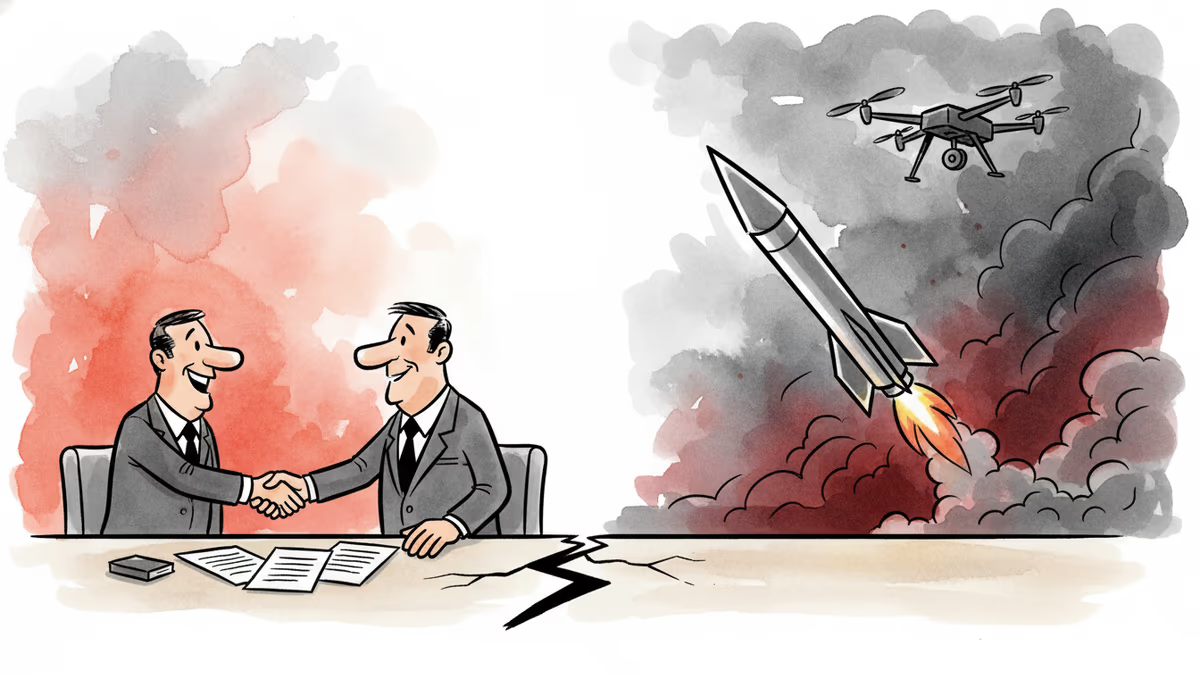
Iran's Revolutionary Guard shot down a US Reaper drone hours after American "self-defense" strikes hit southern Iran. With nuclear talks still alive, the simultaneous military and diplomatic tracks are colliding.

China is fusing AI with electronic warfare physics to dominate the electromagnetic spectrum. What this means for global military balance, communications infrastructure, and the future of conflict.
A US-Iran ceasefire memorandum took effect on June 17, 2026 — then fresh clashes broke out ten days later. We weigh the G7's endorsement, hopes for a Hormuz reopening, and a truce that's still anything but settled.
Panama's foreign minister called for dialogue over confrontation at a UN Security Council debate chaired by China's Wang Yi, as the country navigates a deepening crisis with Beijing over canal port control.
Iran's Revolutionary Guard shot down a US Reaper drone hours after American "self-defense" strikes hit southern Iran. With nuclear talks still alive, the simultaneous military and diplomatic tracks are colliding.
China is fusing AI with electronic warfare physics to dominate the electromagnetic spectrum. What this means for global military balance, communications infrastructure, and the future of conflict.
Thoughts
Share your thoughts on this article
Sign in to join the conversation