
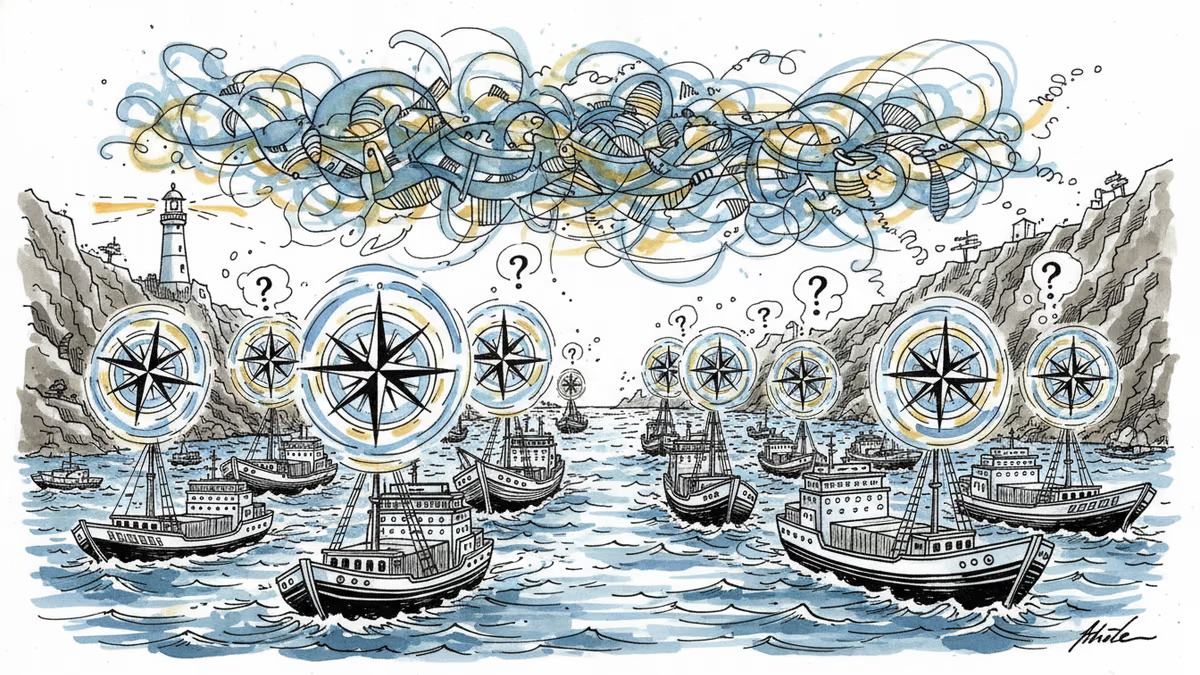
Hormuz Strait Paralyzed as GPS Jamming Hits 1,100+ Ships
Shipping through vital Hormuz Strait nearly halted after US-Israel strikes on Iran. Over 1,100 vessels hit by GPS jamming, appearing at nuclear plants on maps. Critical risk to global energy supply.
21 Million Barrels a Day Just Got Stuck
The Strait of Hormuz—through which 21% of global petroleum flows—has become a maritime ghost town. Since the US and Israel struck Iran on February 28, shipping through this narrow but vital chokepoint has nearly ground to a halt. The reason isn't just military strikes. It's something far more insidious: electronic warfare.
Over 1,100 ships operating across the Gulf region have had their GPS or automatic identification systems disrupted, according to maritime intelligence firm Windward. Some vessels are appearing on maps as if they're sitting inland—at airports, even inside a nuclear power plant.
This isn't your typical navigation glitch. It's the new face of modern conflict.
When Your Ship Thinks It's at a Nuclear Plant
"We're seeing GPS jamming way above baseline levels," says Ami Daniel, CEO of Windward. "It's becoming very dangerous to go in and out."
The electronic interference comes in two flavors: jamming and spoofing. Jamming overwhelms satellite signals so positioning data simply vanishes. Spoofing is craftier—it creates false signals that make ships appear somewhere they're not.
The results are surreal and dangerous. Ships show up on tracking systems at the Barakah Nuclear Power Plant, circling in impossible patterns off UAE waters, or appearing to sail through Iranian deserts. Windward has identified 21 new interference clusters since the strikes began.
For ship captains, this creates a nightmare scenario. Without reliable positioning, vessels risk collisions, running aground, or worse—catastrophic oil spills in one of the world's most environmentally sensitive waterways.

The $3 Trillion Question
The Strait of Hormuz handles about $3 trillion worth of energy trade annually. When ships can't navigate safely, that entire flow gets disrupted. The Joint Maritime Information Center has declared the situation "critical," warning that physical and electronic attacks are "almost certain."
Three tankers have already been damaged. Commercial flights across the Middle East are grounded. Hundreds of aircraft experienced GPS interference before airlines canceled routes entirely.
But here's what makes this different from previous Middle East conflicts: the invisible nature of the threat. You can see missiles and naval blockades. GPS jamming is silent, pervasive, and harder to defend against.
The New Rules of Invisible Warfare
Electronic interference has surged since the wars in Ukraine and Gaza, but the scale around Hormuz is unprecedented. The technology targets the same GPS systems that guide everything from your smartphone to cruise missiles.
In war zones, jamming disrupts drone and missile navigation. But in civilian shipping lanes, it creates chaos on a different scale. "The bigger the radius of attacks, the bigger the jamming, and the more risk there is," Daniel warns.
This represents a fundamental shift in how conflicts are fought. Why sink ships when you can make them lose their way? Why destroy infrastructure when you can make it unreliable?
Beyond Oil: The Ripple Effects
The implications stretch far beyond energy markets. Global supply chains that rely on predictable shipping schedules are scrambling to adapt. Insurance rates for Gulf shipping are spiking. Alternative routes around Africa add weeks and massive costs to deliveries.
For consumers, this translates to higher prices for everything from gasoline to consumer goods. For governments, it's a stark reminder of how vulnerable critical infrastructure has become in an age of electronic warfare.
Authors
Related Articles
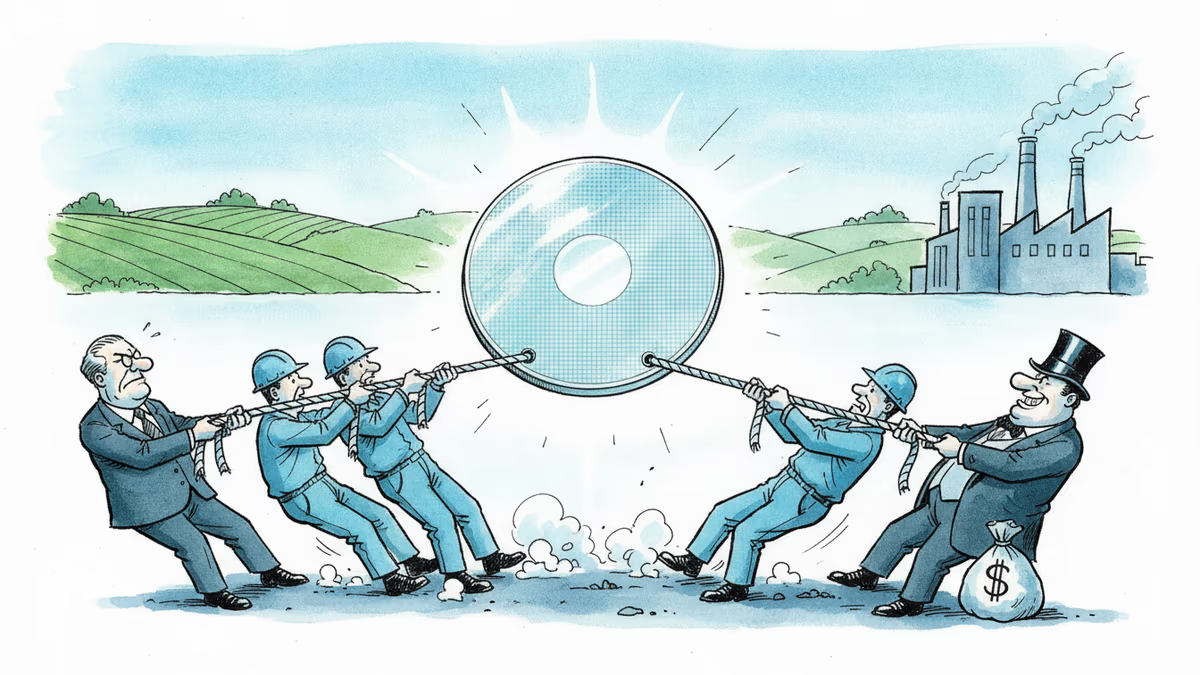
Samsung Electronics' union branch revealed that 84% of survey respondents oppose the government's roughly $290 billion (₩400 trillion) semiconductor megaproject in Gwangju. Government, management, the union and shareholders are all reading the same national project in sharply different ways.
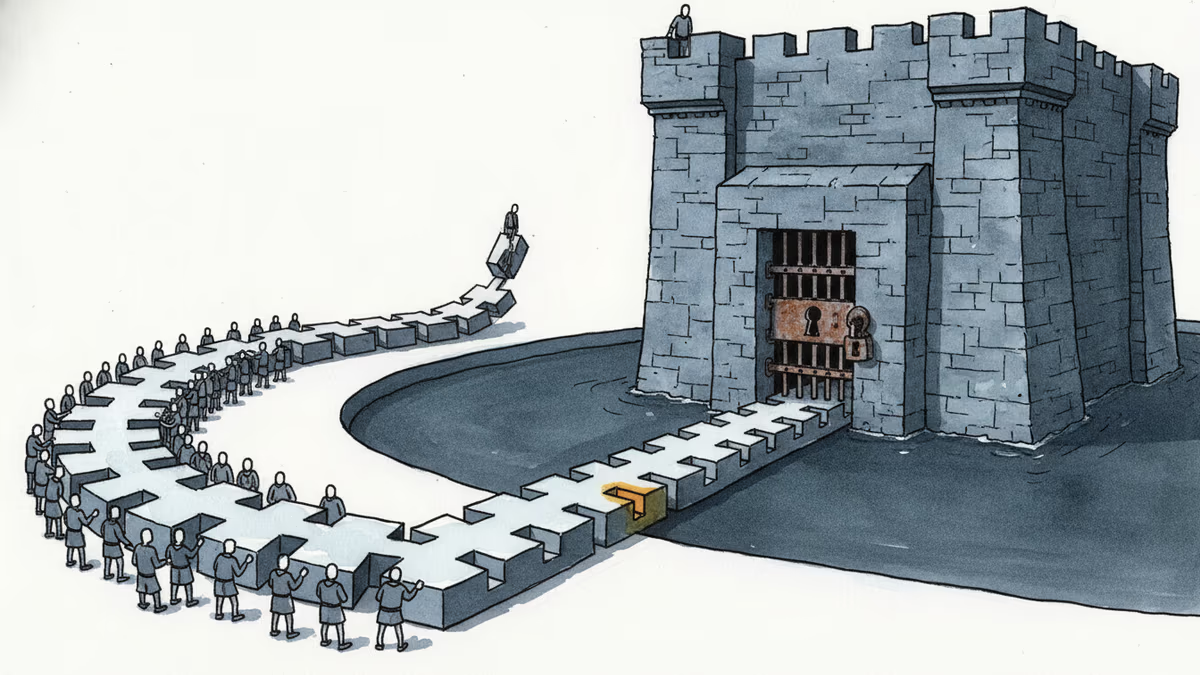
Nvidia shipped roughly a billion RISC-V cores in 2024, then announced it would run CUDA on the open standard. We break down how royalty-free instruction sets and open software stacks are trying to route around CUDA's lock-in. Part 2 of the Semiconductor Sovereignty series.
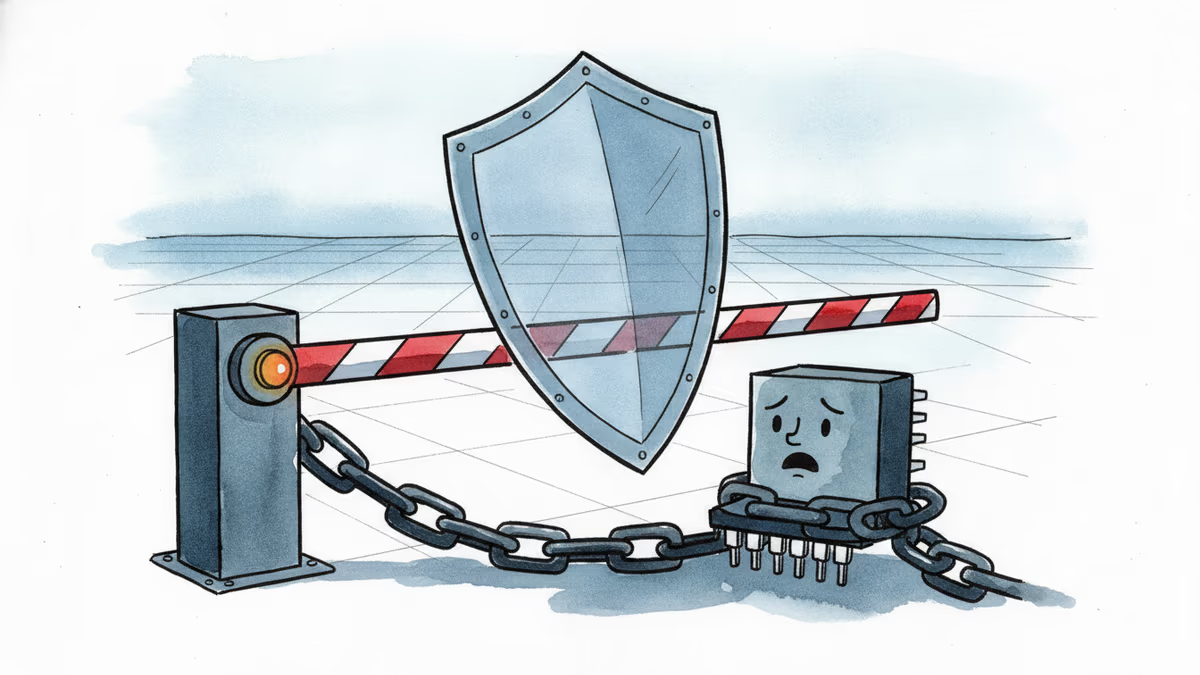
US AI-chip export controls split into three layers in the first half of 2026 — January easing, a May crackdown on circumvention, and a pending bill. Nvidia erased China from its guidance and still posted a record $81.6 billion quarter. A look at the export policy that both shields and cages it.
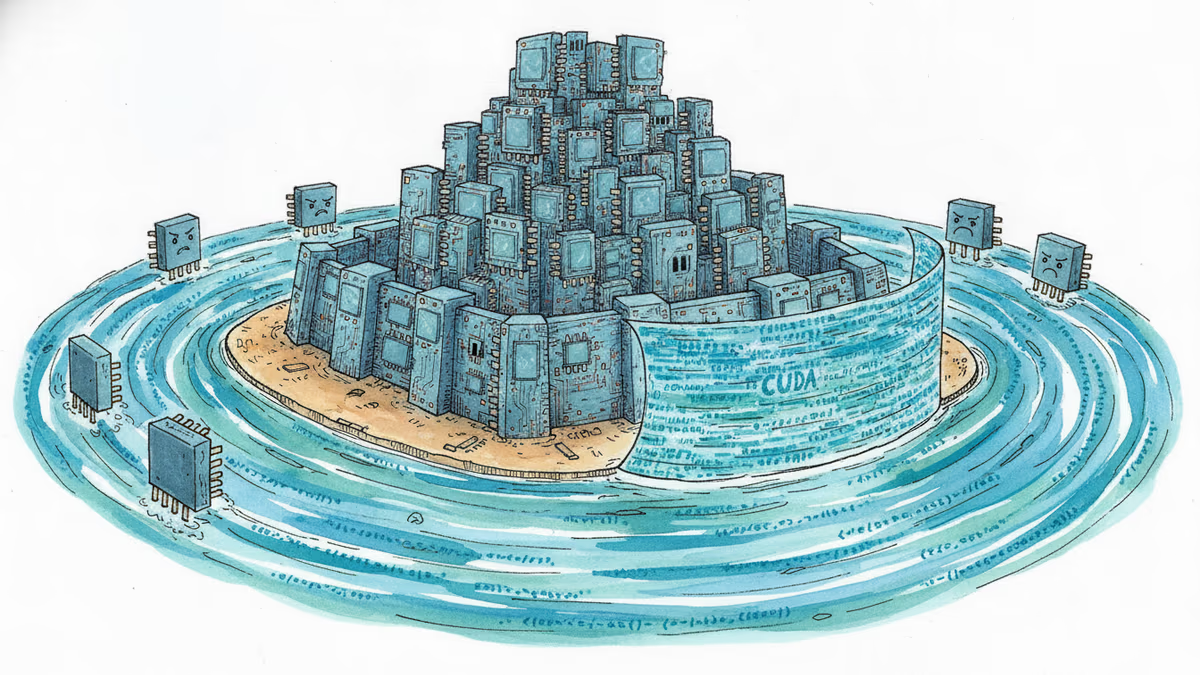
AMD's MI325X matches or beats Nvidia on memory and bandwidth — yet Nvidia's 86-92% share holds. The real moat is CUDA, 20 years in the making. Part 1 of 4.
Samsung Electronics' union branch revealed that 84% of survey respondents oppose the government's roughly $290 billion (₩400 trillion) semiconductor megaproject in Gwangju. Government, management, the union and shareholders are all reading the same national project in sharply different ways.
Nvidia shipped roughly a billion RISC-V cores in 2024, then announced it would run CUDA on the open standard. We break down how royalty-free instruction sets and open software stacks are trying to route around CUDA's lock-in. Part 2 of the Semiconductor Sovereignty series.
US AI-chip export controls split into three layers in the first half of 2026 — January easing, a May crackdown on circumvention, and a pending bill. Nvidia erased China from its guidance and still posted a record $81.6 billion quarter. A look at the export policy that both shields and cages it.
AMD's MI325X matches or beats Nvidia on memory and bandwidth — yet Nvidia's 86-92% share holds. The real moat is CUDA, 20 years in the making. Part 1 of 4.
Thoughts
Share your thoughts on this article
Sign in to join the conversation