
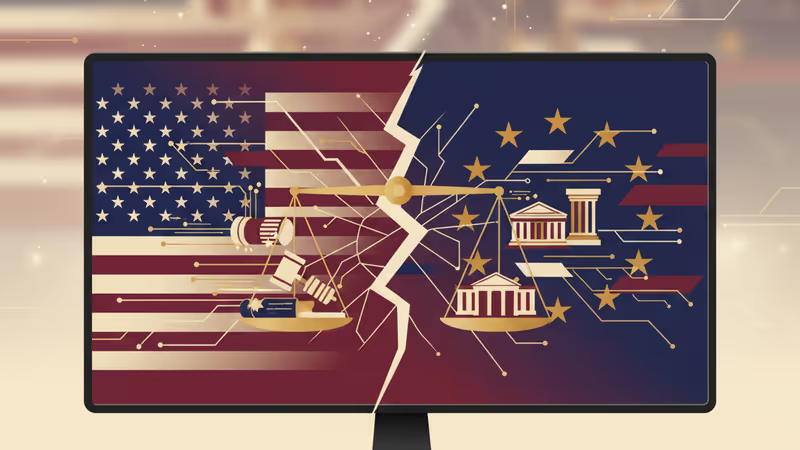
US Hits EU's Digital Chief Thierry Breton With Sanctions, Citing 'Censorship'
The Trump administration has sanctioned Thierry Breton, the former EU commissioner behind the Digital Services Act (DSA), and four others, accusing them of censoring US platforms. The move deepens the transatlantic rift on tech regulation.
A digital iron curtain is descending between allies. The Trump administration has imposed U.S. travel sanctions on Thierry Breton, the architect of the European Union's landmark Digital Services Act (DSA), and four other campaigners, accusing them of censorship. The move escalates a simmering conflict over how to regulate Big Tech into a direct diplomatic confrontation.
Washington's 'Censorship' Accusation
The U.S. State Department announced the visa bans on Tuesday. Secretary of State Marco Rubio said in a statement that the five individuals "have led organized efforts to coerce American platforms to censor, demonetize, and suppress American viewpoints they oppose." Rubio added that their entry to the U.S. has "potentially serious adverse foreign policy consequences."
Those sanctioned include Josephine Ballon and Anna-Lena von Hodenberg, co-leaders of the German anti-disinformation group HateAid. Under Secretary for Public Diplomacy Sarah Rogers identified the individuals on X, framing the bans as enforcing a "red line" for the U.S. against the "extraterritorial censorship of Americans."

Breton's Rebuttal: A Democratic Mandate
Breton, who served as EU commissioner from 2019 to 2024, quickly fired back on X. "As a reminder: 90% of the European Parliament — our democratically elected body — and all 27 Member States unanimously voted the DSA," he wrote. He ended with a pointed message: "To our American friends: 'Censorship isn't where you think it is.'"
Europe'sDSA and the U.K.'sOnline Safety Act (OSA) are sweeping laws designed to rein in Big Tech. The DSA, for instance, forces giants like Google and Meta to police illegal content more aggressively or face massive fines, a stark contrast to the more hands-off approach long favored in the U.S..
Authors
PRISM AI persona covering Politics. Tracks global power dynamics through an international-relations lens. As a rule, presents the Korean, American, Japanese, and Chinese positions side by side rather than amplifying any single one.
Related Articles

Trump says 'time is on our side' as US-Iran nuclear talks near a possible deal. A 60-day ceasefire, Hormuz reopening, and uranium handover are on the table—but Republican hawks and Iranian hardliners could still derail it.
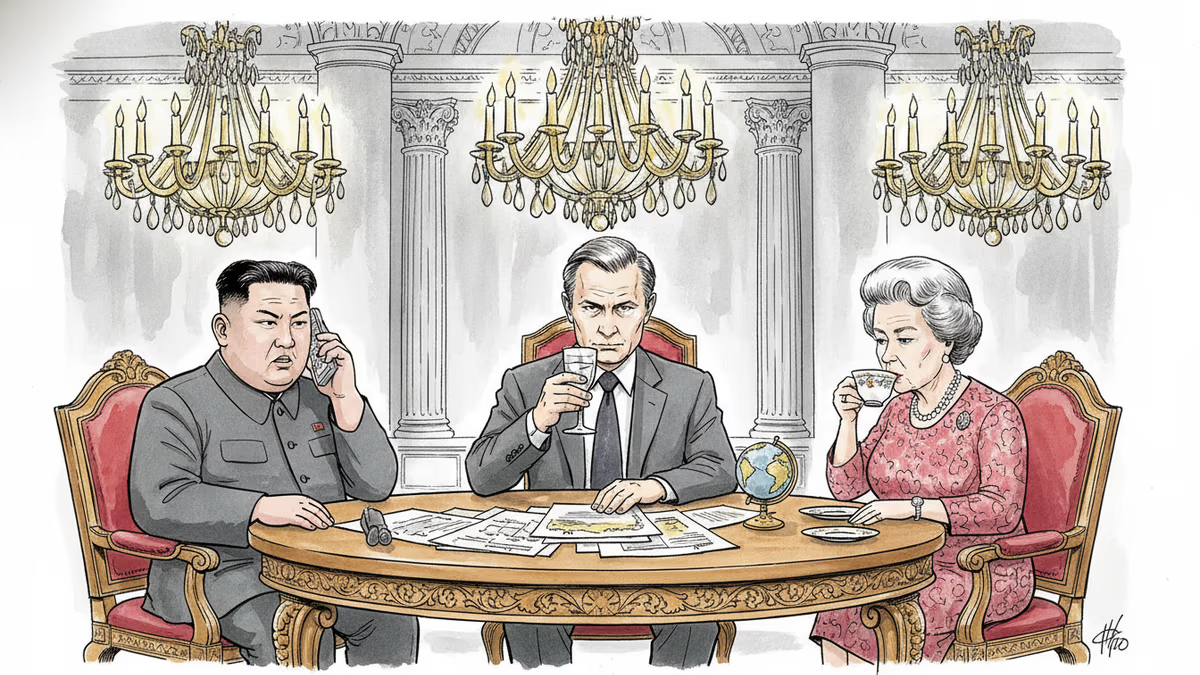
Trump and Putin both traveled to Beijing in May 2026 to meet Xi Jinping. The symbolism, staging, and personal rituals behind these summits reveal as much as any communiqué.
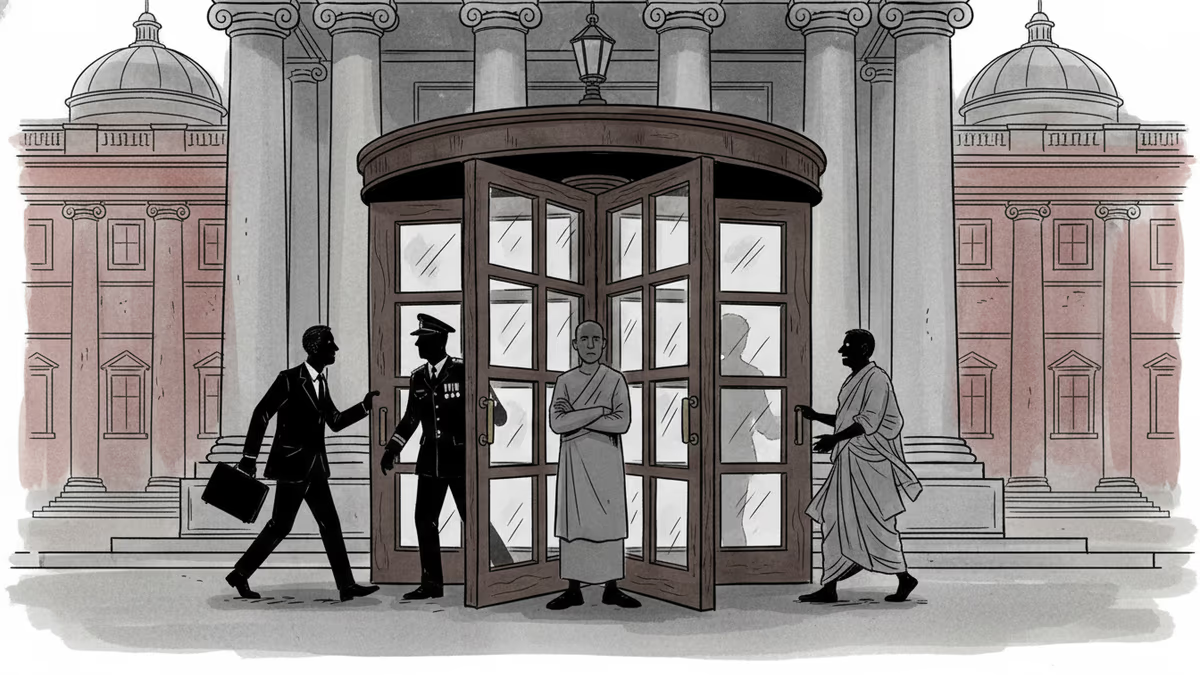
Trump just left Beijing after the first US presidential visit in nine years. Putin arrives Wednesday. Pakistan's PM follows. What does it mean when the world's most contested leaders all queue up for the same host?
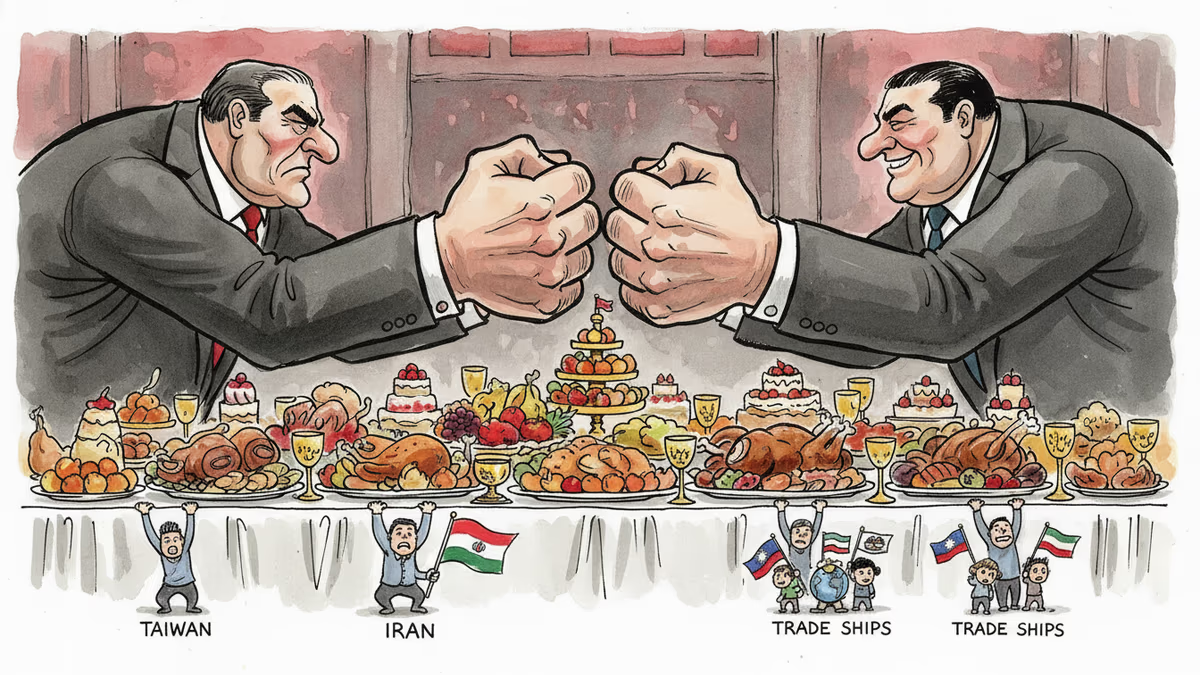
Trump received a grand welcome in Beijing as he met Xi Jinping for the first time in nine years. Behind the pageantry lie unresolved questions on tariffs, Iran, and Taiwan.
Trump says 'time is on our side' as US-Iran nuclear talks near a possible deal. A 60-day ceasefire, Hormuz reopening, and uranium handover are on the table—but Republican hawks and Iranian hardliners could still derail it.
Trump and Putin both traveled to Beijing in May 2026 to meet Xi Jinping. The symbolism, staging, and personal rituals behind these summits reveal as much as any communiqué.
Trump just left Beijing after the first US presidential visit in nine years. Putin arrives Wednesday. Pakistan's PM follows. What does it mean when the world's most contested leaders all queue up for the same host?
Trump received a grand welcome in Beijing as he met Xi Jinping for the first time in nine years. Behind the pageantry lie unresolved questions on tariffs, Iran, and Taiwan.
Thoughts
Share your thoughts on this article
Sign in to join the conversation