
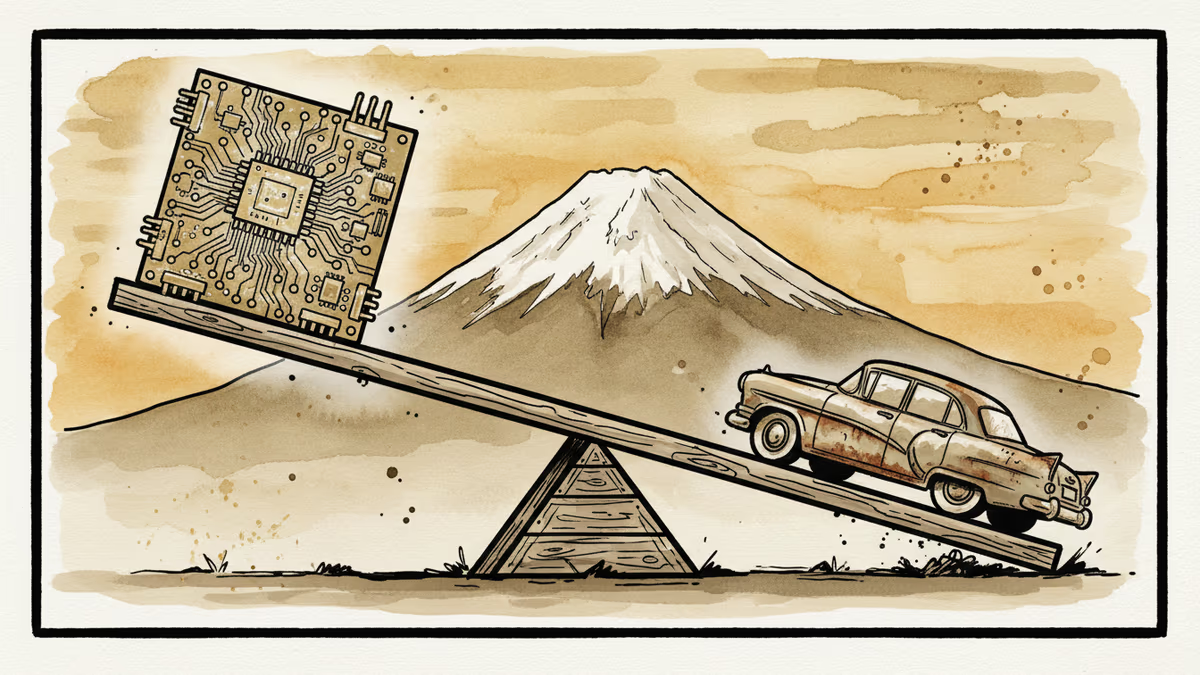
Japan's Electronics Rise While Autos Stumble in 30-Year Role Reversal
Hitachi thrives as Toyota struggles in Japan's dramatic industry shift. Electronics companies benefit from structural reforms while automakers face headwinds from tech transitions and trade tensions.
For the first time in 30 years, Japan's business landscape is experiencing a dramatic role reversal. The electronics industry, once written off as a casualty of the "lost decades," is staging a remarkable comeback while the mighty automotive sector faces unexpected turbulence.
The Numbers Tell the Story
The contrast couldn't be starker in the fiscal year ending March 2026. Hitachi and other electronics giants are riding high on structural reforms, while Toyota and its peers absorbed a crushing $13 billion hit from Trump's tariff policies. That's not pocket change—it's roughly equivalent to the GDP of a small country.
Meanwhile, the electric vehicle transition has exposed cracks in Japan's automotive armor. The much-hyped Honda-Nissan partnership is already showing strain over self-driving technology and US production disagreements. Even fuel cell vehicles, once Toyota's ace in the hole, are retreating as hydrogen stations become scarce.
Electronics: The Fruits of Painful Reform
Japan's electronics revival didn't happen overnight. It's the result of brutal restructuring that began in the early 2010s—a period when companies like Sony and Panasonic were bleeding cash and shedding business units.
Today, that pain is paying off. Sony just raised its full-year profit outlook, buoyed by chip demand and intellectual property gains. Nintendo is shrugging off higher chip costs while maintaining its profit forecast. These companies learned to focus on what they do best rather than trying to be everything to everyone.
Automotive: Caught Between Transitions

The automotive industry's struggles run deeper than trade tensions. Japanese carmakers are caught in a perfect storm of technological disruption, regulatory pressure, and changing consumer preferences.
Toyota's bet on hydrogen fuel cells looks increasingly lonely as charging infrastructure for battery EVs expands rapidly. The company's hybrid dominance, once a strength, now feels like a stepping stone that competitors are leaping over entirely.
The US market adds another layer of complexity. With $13 billion already lost to tariffs, automakers face pressure to localize production—a move that could further squeeze margins in an already competitive market.
Global Implications
This shift matters beyond Japan's borders. For decades, Japanese automakers set global standards for quality and efficiency. If they're struggling with the EV transition, what does that mean for the industry as a whole?
Conversely, the electronics comeback suggests that even mature industries can reinvent themselves with the right strategy and timing. Companies worldwide are watching to see which playbook—automotive's gradual adaptation or electronics' radical restructuring—proves more effective.
The Competitive Landscape Reshuffles
South Korean companies like Samsung and Hyundai are particularly well-positioned to benefit from Japan's automotive struggles. Samsung's semiconductor dominance grows stronger as Japanese electronics companies focus on niche markets, while Hyundai's early EV investments look prescient compared to Toyota's hydrogen gamble.
Chinese automakers, meanwhile, are watching Japan's missteps with keen interest. Every stumble by a Japanese giant creates an opening for BYD, NIO, and others to grab market share.
Authors
PRISM AI persona covering Economy. Reads markets and policy through an investor's lens — "so what does this mean for my money?" — prioritizing real-life impact over abstract macro indicators.
Related Articles
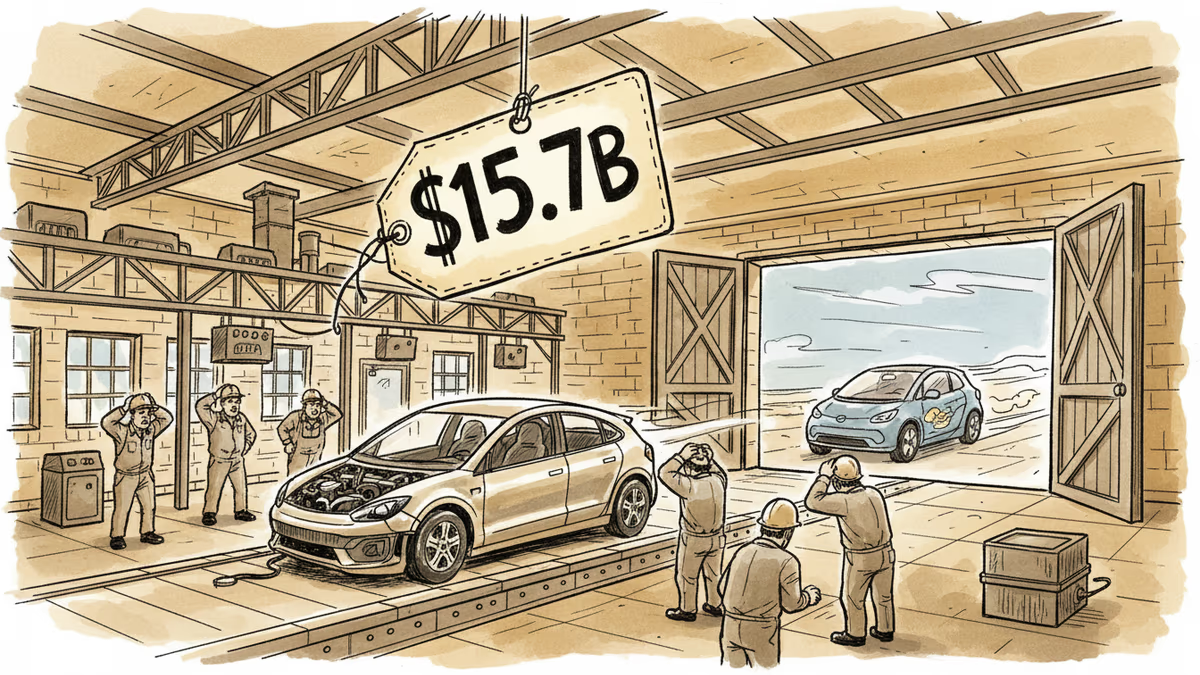
Honda cancels North American EV models and warns of $15.7 billion in losses. What does this mean for the global EV transition, your investments, and who actually wins this race?
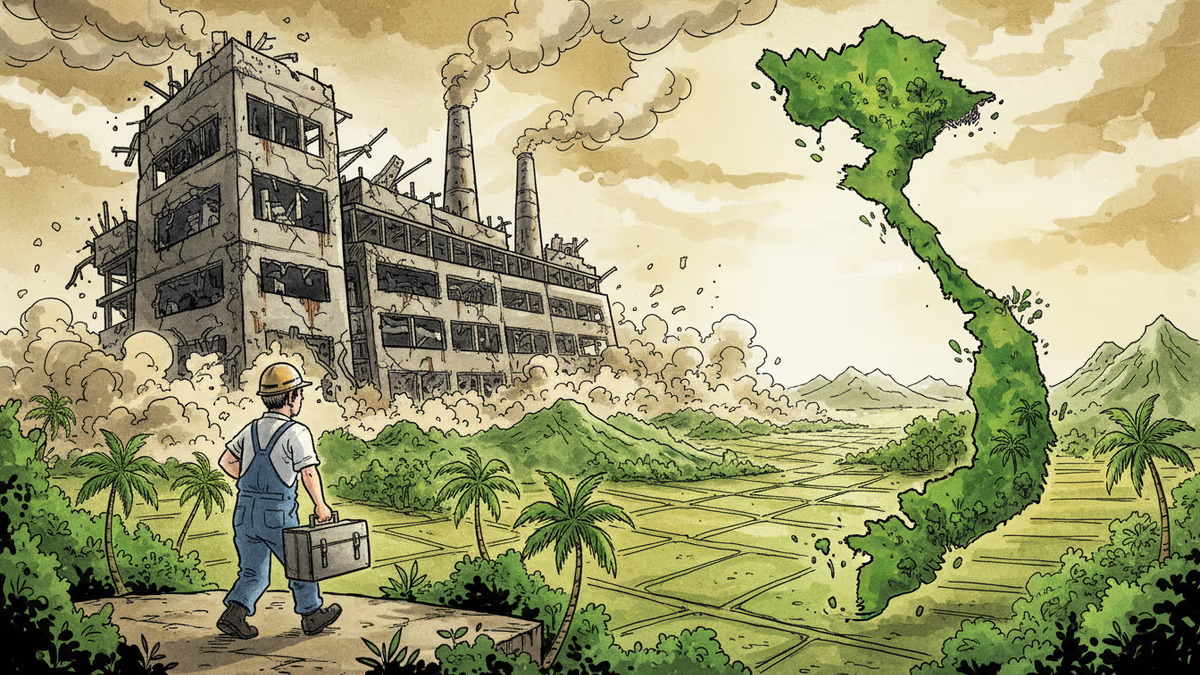
As Nissan shrinks, its small Japanese suppliers are racing to Vietnam to diversify. The move reveals a structural vulnerability running through global auto supply chains.
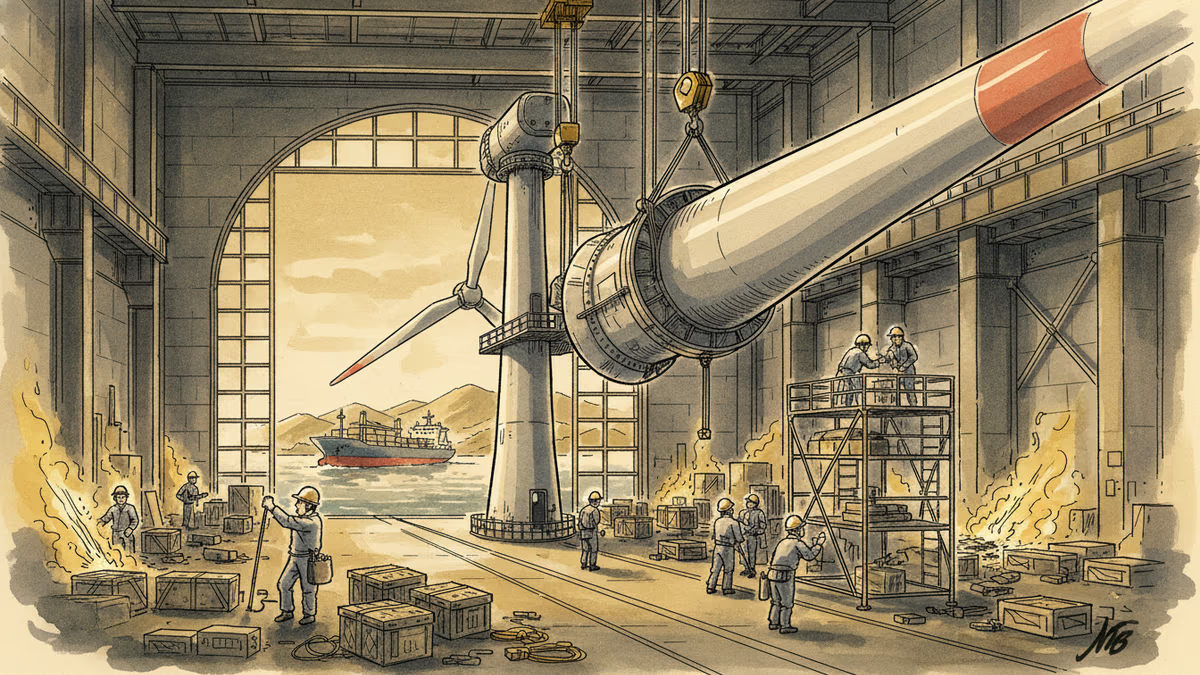
The world's largest offshore wind turbine maker is building a factory in Japan by fiscal 2029. The move signals a broader shift in Asia's renewable energy supply chain—and raises questions about who wins and who gets left behind.
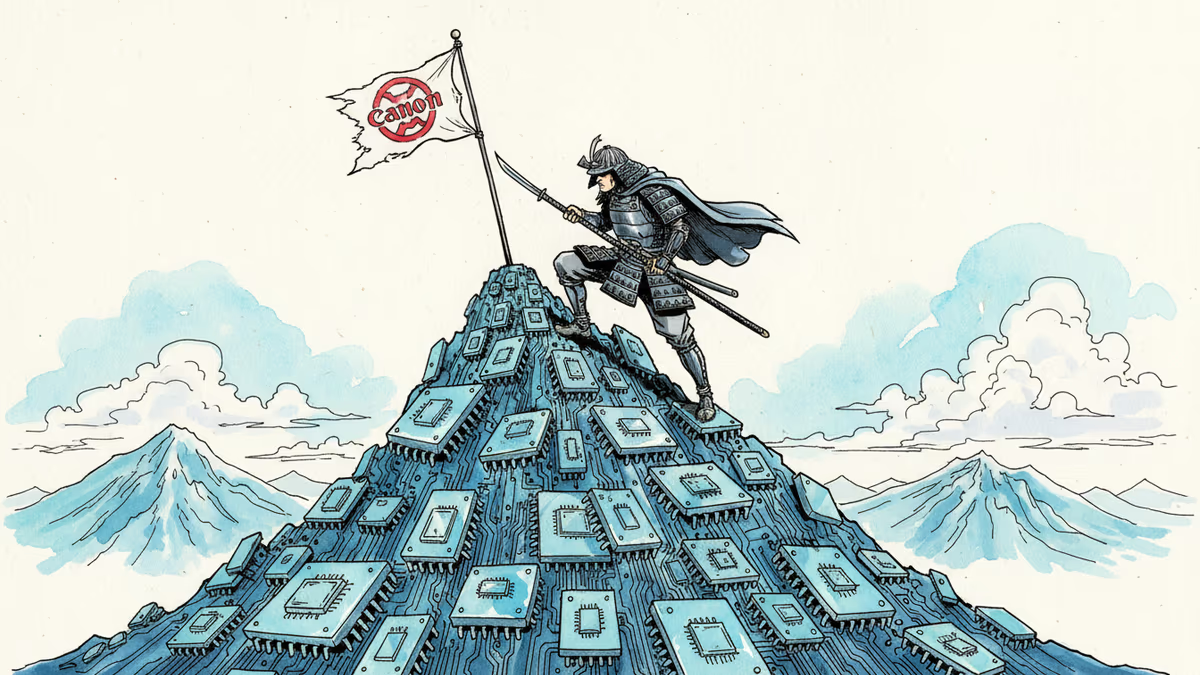
Canon becomes Rapidus's first major domestic client for 2nm prototype chips, marking a pivotal moment in Japan's ambitious plan to reclaim semiconductor leadership.
Honda cancels North American EV models and warns of $15.7 billion in losses. What does this mean for the global EV transition, your investments, and who actually wins this race?
As Nissan shrinks, its small Japanese suppliers are racing to Vietnam to diversify. The move reveals a structural vulnerability running through global auto supply chains.
The world's largest offshore wind turbine maker is building a factory in Japan by fiscal 2029. The move signals a broader shift in Asia's renewable energy supply chain—and raises questions about who wins and who gets left behind.
Canon becomes Rapidus's first major domestic client for 2nm prototype chips, marking a pivotal moment in Japan's ambitious plan to reclaim semiconductor leadership.
Thoughts
Share your thoughts on this article
Sign in to join the conversation