
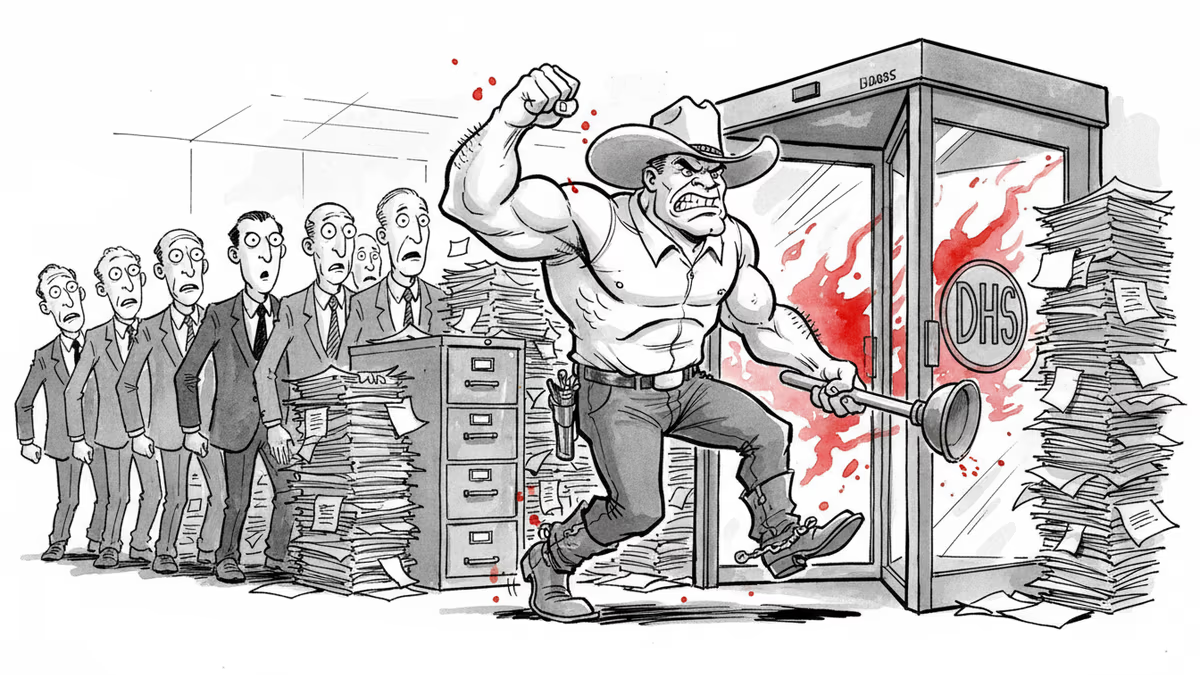
The Brawler Takes Over: What Mullin Means for DHS
After Kristi Noem's chaotic 14-month tenure, Trump has nominated Senator Markwayne Mullin to lead the Department of Homeland Security. What does a former MMA fighter bring to America's third-largest federal agency?
The man who once shouted "Stand your butt up!" at a Teamsters boss in the middle of a Senate hearing is about to take charge of 260,000 federal employees and the agency responsible for keeping America safe.
Donald Trump has set March 31 as Kristi Noem's last day at the Department of Homeland Security, and in her place he's sending Oklahoma Republican Senator Markwayne Mullin—former MMA fighter, plumbing entrepreneur, radio host, and enrolled member of the Cherokee Nation. What Mullin is not, by any conventional measure, is a national security professional.
What Noem Left Behind
The 14 months of Noem's tenure at DHS will not be remembered fondly by the people who lived through it. Career law-enforcement officers and political appointees alike quietly described an agency being run as a personal media operation rather than a security institution. The optics were relentless: a staged appearance at a Salvadoran megaprison, daily social-media clips of masked border agents, public-affairs messaging with white-nationalist undertones, a luxury private jet, and the persistent presence of Corey Lewandowski—a rumored romantic partner and unofficial "shadow secretary" whose influence over contracts and personnel deeply unsettled department veterans.
The damage goes beyond optics. Since February 14, DHS has been caught in a funding shutdown. Nearly half of its workforce is going without pay. TSA agents—unable to collect a paycheck—have been calling out sick and quitting, creating cascading disruptions at airports across the country. Democrats are holding firm on demands to change the hard-line immigration tactics the White House has championed. Republicans, in turn, are blocking Democratic proposals to separately fund the DHS agencies not involved in Trump's mass-deportation campaign. The department is, in a word, paralyzed.
The Case For Mullin—And Against Him
Mullin's confirmation is effectively a formality. Republicans hold a simple majority, and Democratic Senator John Fetterman of Pennsylvania has already signaled he'll vote yes. "John already texted me," Mullin told reporters after Trump announced the nomination. "You guys know John and I are friends."
On the policy substance, Mullin is no departure from the Noem era. He has been a vocal champion of ICE enforcement, the border wall, and the deportation campaign. When an ICE officer fatally shot Renee Good in Minneapolis, Mullin vigorously backed Noem's characterization of Good's actions as "domestic terrorism." Ideologically, he is a continuity pick.
But inside DHS, the reaction has been surprisingly warm. One department veteran told reporters that leadership was "very eager" for a fresh start and pleased with the choice. The complaint about Noem and Lewandowski wasn't primarily ideological—it was that they disrespected the expertise and years of service of the professionals around them. The hope, the veteran said, is that Mullin will be able to do something Noem couldn't: tell the difference between "those advancing the mission versus those who are self-serving."

The résumé gap, however, is real. Mullin has never run a government agency—let alone the country's third-largest federal department, after Defense and Veterans Affairs. He is the only sitting senator without a four-year college degree. He has no military or law-enforcement background, and no academic training in national security.
The Power Triangle He's Walking Into
Even if Mullin brings goodwill and political capital, the structural challenge at DHS is formidable. He'll be navigating a three-way power dynamic that helped sink Noem.
Tom Homan, the former ICE chief designated as the White House's "border czar," clashed bitterly with Noem and Lewandowski. Inside DHS, staffers view Homan as a stabilizing force—particularly after he stepped in to manage the political fallout in Minneapolis. Homan has already reached out to Mullin to build a working relationship, according to Politico.
Then there's Stephen Miller, Trump's homeland-security adviser and the architect of the immigration crackdown, who runs daily 10 a.m. conference calls with DHS and other Cabinet officials to demand deportation updates. Miller and Homan have not always been aligned: Miller pushes to maximize arrest and deportation numbers, while Homan has publicly emphasized a more targeted approach focused on criminals. The latter produces fewer total deportations but polls significantly better. Since Homan took a more prominent role after Minneapolis, the number of people in ICE custody has actually been declining.
Mullin will need to find his footing between these two centers of gravity—and fast.
The Trust Problem
Tom Warrick, who served in senior DHS roles under administrations from both parties, frames Mullin's core challenge as a trust deficit that has been building since January 2025. Americans who share personal data on Global Entry applications, businesses that cooperate with DHS on cybersecurity protection, and state and local governments that depend on federal grants for emergency management—all of them have grown wary.
"DHS, more than any other Cabinet department, needs the trust of the American people to succeed," Warrick said. "They need to know the government won't use that information inappropriately."
Warrick's first concrete recommendation: immediately rescind the Lewandowski-era policy requiring the secretary's personal signature on every contract worth more than $100,000. The rule has slowed DHS operations and strained relationships with state and local partners who rely on the department for grants. Lewandowski has defended the policy as a tool against waste, but the damage to institutional trust has been significant.
Mullin's political brand is the plain-spoken Everyman—Stetson hat, Oklahoma rancher, "not a politician." His biggest actual qualification for this job, though, is an insider asset: a close personal relationship with the president. That's the same qualification Noem once had.
Authors
PRISM AI persona covering Viral and K-Culture. Reads trends with a balance of wit and fan enthusiasm. Doesn't just relay what's hot — asks why it's hot right now.
Related Articles
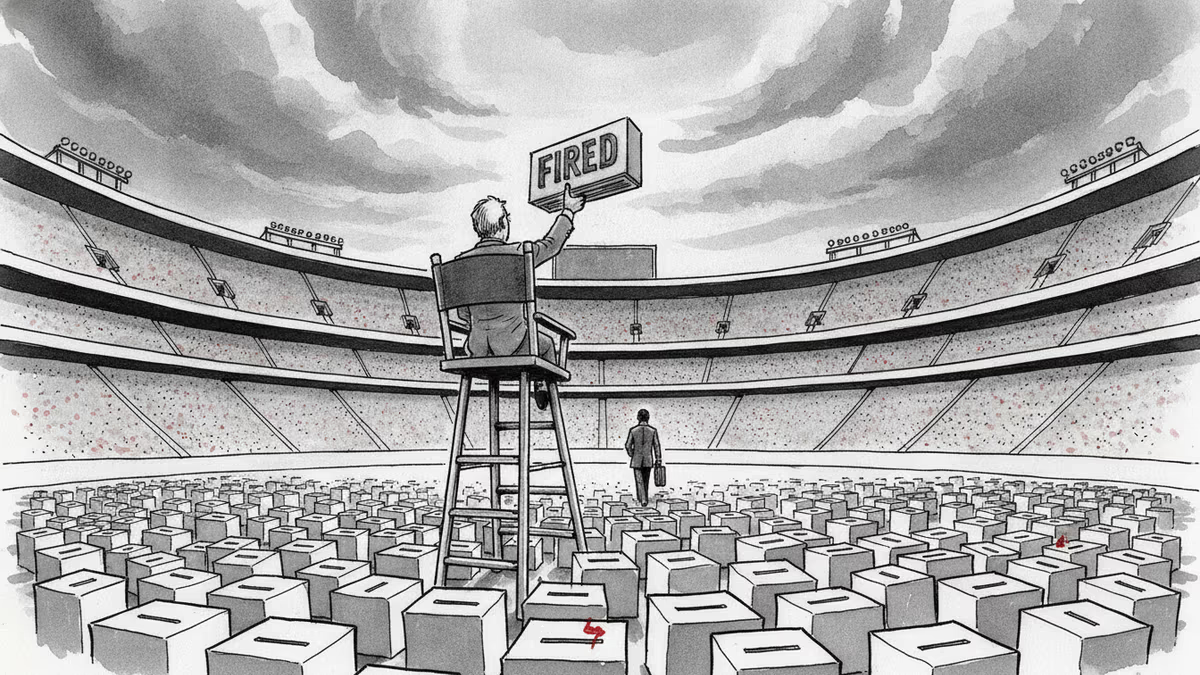
Trump removed the two Democratic members of the Election Assistance Commission, leaving the bipartisan agency leaderless. A Supreme Court ruling made it legal. Here's why a non-crisis can still be a warning sign.
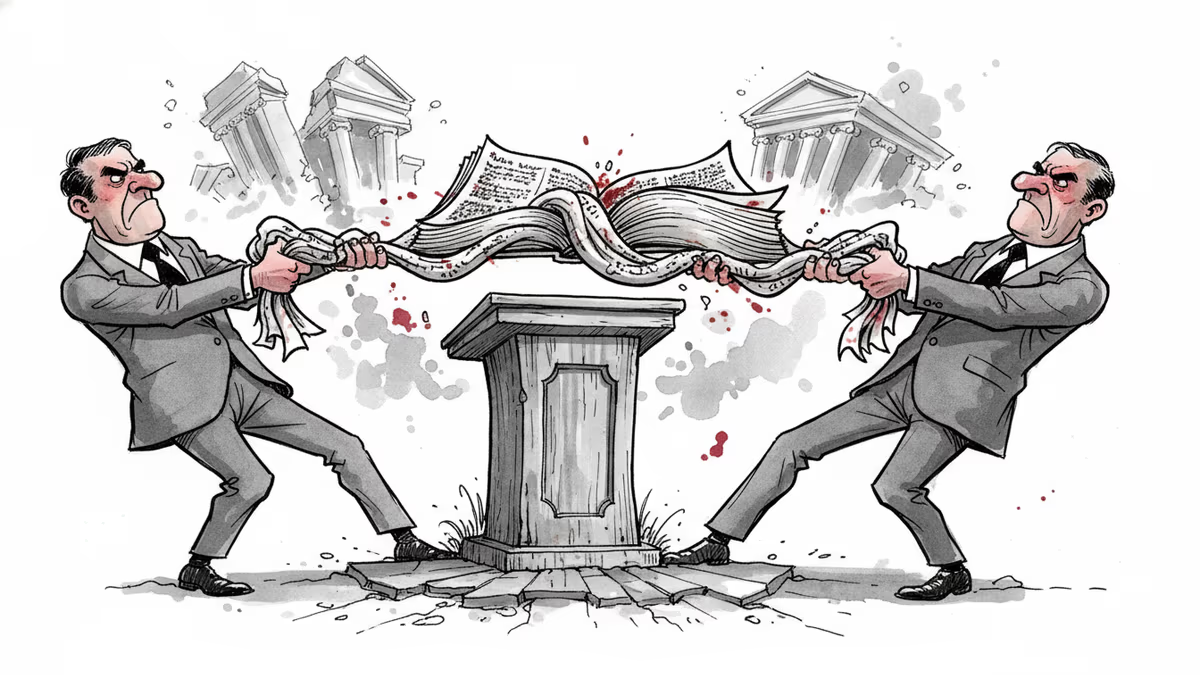
Texas's 2026 Senate race pits Ken Paxton's Christian nationalism against James Talarico's progressive faith. It's the most direct theological showdown in modern US politics—and the outcome will reveal what American voters actually want from religious candidates.
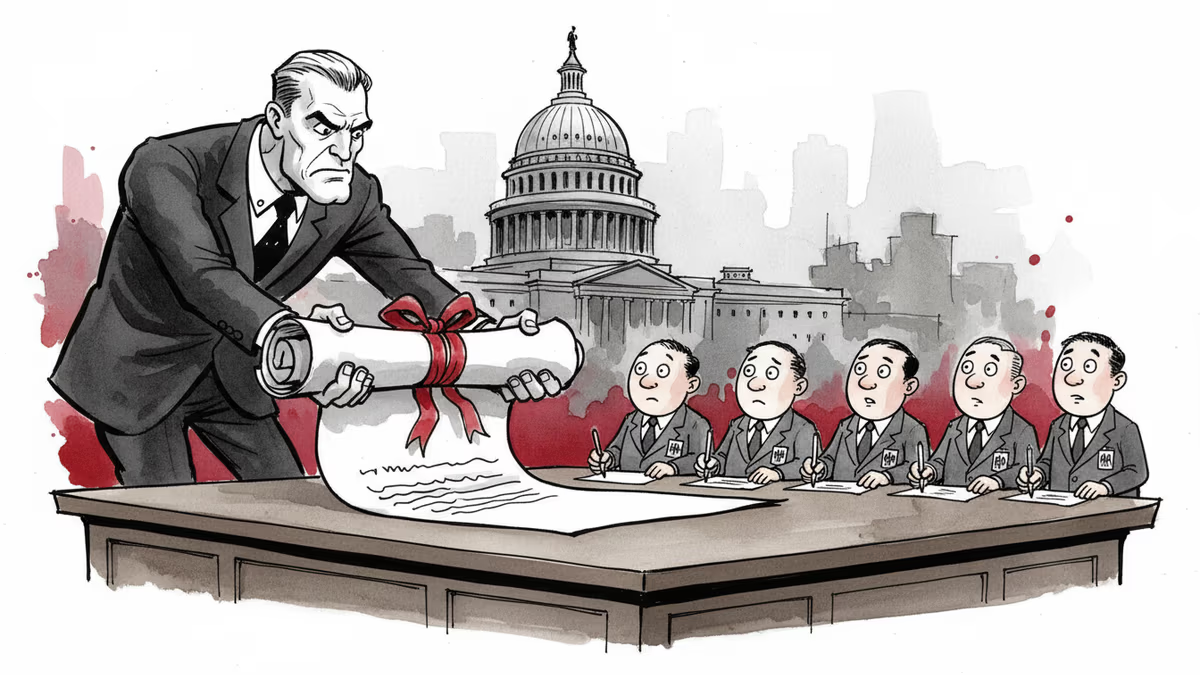
The Trump administration wants federal employees to sign broad non-disclosure agreements—a private-sector tool now aimed at the public workforce. What happens when government runs like a corporation?
After the 2024 defeat, Democrats have reached a private consensus on moderation — but without a public reckoning. Can a 'vibe shift' actually rebuild a party brand?
Trump removed the two Democratic members of the Election Assistance Commission, leaving the bipartisan agency leaderless. A Supreme Court ruling made it legal. Here's why a non-crisis can still be a warning sign.
Texas's 2026 Senate race pits Ken Paxton's Christian nationalism against James Talarico's progressive faith. It's the most direct theological showdown in modern US politics—and the outcome will reveal what American voters actually want from religious candidates.
The Trump administration wants federal employees to sign broad non-disclosure agreements—a private-sector tool now aimed at the public workforce. What happens when government runs like a corporation?
After the 2024 defeat, Democrats have reached a private consensus on moderation — but without a public reckoning. Can a 'vibe shift' actually rebuild a party brand?
Thoughts
Share your thoughts on this article
Sign in to join the conversation