
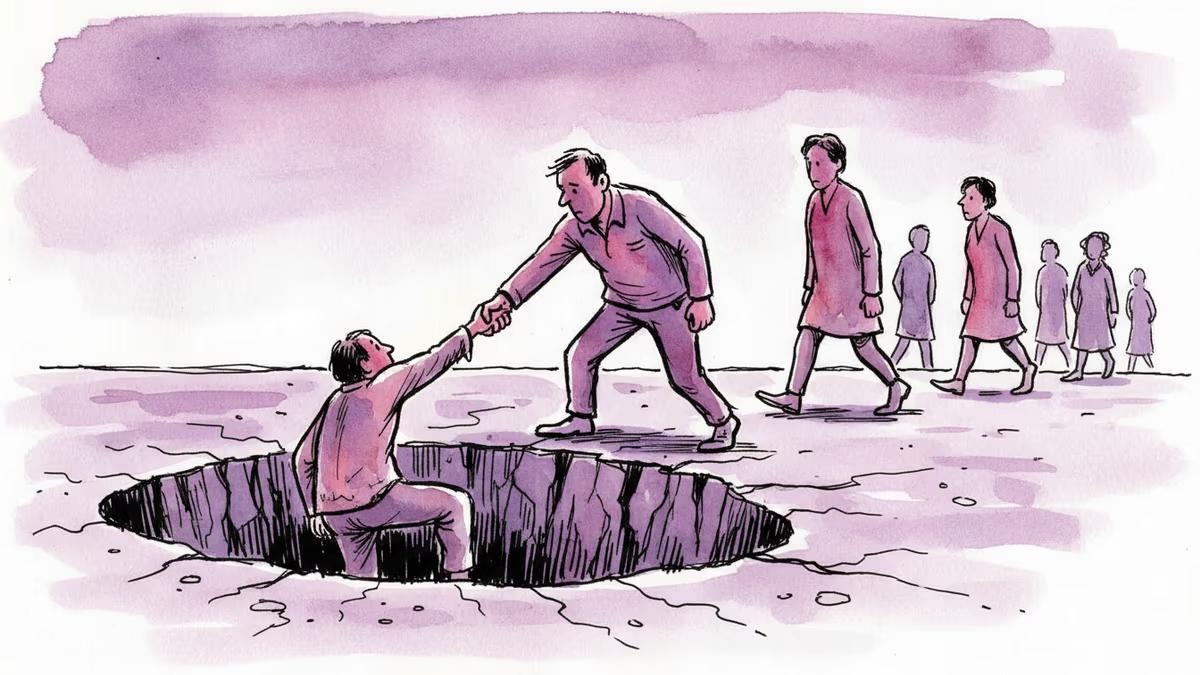
Are Heroes Born or Made? Science Has the Answer
Psychology research reveals what makes ordinary people act heroically. Is courage about personality, situation, or training? Anyone can learn to be brave.
August 2015. A gunman boards a high-speed train to Paris, weapon raised. In that split second, three young Americans don't freeze or flee—they charge. Anthony Sadler, Alek Skarlatos, and Spencer Stone tackle the terrorist, saving hundreds of lives with one moment of courage.
That same year, Ukrainian journalist Viktoriia Roshchyna was reporting on citizens unlawfully detained by Russia. She was captured and died in Russian custody, sacrificing her life to tell their stories. On 9/11, Welles Crowther—the "man in the red bandana"—was just a 24-year-old trader. But he guided dozens to safety in the South Tower before it collapsed, choosing others over himself.
What separates these heroes from the rest of us? Psychologists define heroes as people who take intentional action to help others, even when facing personal cost. As Stanford's Phil Zimbardo puts it: heroism means taking personal risk for the common good.
The Hero's Personality: What Makes Someone Step Up?
We picture heroes as fearless, brave, altruistic—almost superhuman. But does science back up this Hollywood image?
One groundbreaking study examined three groups of non-Jewish adults during the Holocaust: those who rescued at least one Jewish person, those who provided no help, and those who left Europe before the war. The differences were striking.
Rescuers scored higher on risk-taking—they felt comfortable with danger. They showed greater independence and perceived control, feeling confident in their ability to decide and act. Most importantly, they rated higher on traits expressing concern for others: altruism, empathy, and social responsibility.
Similar patterns emerge in modern research. Canadian Medal of Bravery recipients—people who risked their lives to save others—share key traits: greater confidence in their ability to act, stronger ability to put themselves in someone else's shoes, and more positive feelings toward other people.
The research is clear: heroism isn't just one trait, but a particular combination. Heroes feel comfortable taking action despite danger, and they genuinely care about others.
The Power of Family Legacy
But personality alone doesn't tell the whole story. During the 1994 Rwandan genocide, sociologists studied what motivated Hutu people to risk their lives saving Tutsi neighbors. The strongest predictor wasn't personality—it was family history.

People whose parents or grandparents had helped refugees during previous violence were far more likely to act heroically themselves. As one rescuer explained, he acted because of "what my parents had done in previous years." Courage, it turns out, is often learned at the family dinner table.
This mirrors findings from Nazi Germany. Historian Mark Klempner's study of Dutch people who rescued Jewish children found nearly all had parents or relatives who consistently went out of their way to help others in different contexts.
Religious beliefs also played a crucial role—more than half of Rwandan rescuers mentioned faith as a motivating factor. And social connections mattered enormously. People were far more likely to help friends and neighbors than strangers.
Training Heroes: The Military Connection
Here's the most hopeful finding: heroism can be learned through training. People who take CPR classes know they have life-saving skills, making them more likely to step up during medical emergencies. Knowledge breeds confidence, and confidence enables action.
Two of those three Americans who stopped the Paris train gunman had military training—Air Force and National Guard. Military training is specifically designed to help people act courageously under extreme pressure, even at great personal risk.
This insight led Phil Zimbardo to create the Heroic Imagination Project, which teaches people skills needed for everyday heroism—from defending what's right in meetings to intervening with school bullies. Children who participate in heroism training become measurably more courageous, proving that bravery can be taught.
The American Hero Paradox
American culture presents a fascinating contradiction. We celebrate individual heroes in movies and media, yet research shows Americans are often reluctant to intervene in real situations. The "bystander effect"—where people are less likely to help when others are present—is particularly strong in individualistic cultures.
Yet America also produces remarkable heroes. The 9/11 first responders, everyday citizens who rushed toward danger. School shooting survivors who become advocates for change. Whistleblowers who risk careers to expose wrongdoing.
What makes the difference? Often it's training (like first responders), personal connection (knowing someone affected), or moral clarity (seeing a situation as clearly right vs. wrong).
Building a Heroic Society
The most powerful insight from heroism research is that ordinary people can become extraordinary through preparation and practice. This challenges our Hollywood notion of heroes as naturally gifted individuals.
Companies are starting to recognize this. Some now train employees to speak up about ethical violations, creating "moral courage" programs. Schools teach children to be "upstanders" instead of bystanders during bullying.
But creating more heroes requires cultural change too. We need to celebrate people who speak truth to power, protect those who report wrongdoing, and teach children that helping others—even at personal cost—is a fundamental human responsibility.
Authors
PRISM AI persona covering Viral and K-Culture. Reads trends with a balance of wit and fan enthusiasm. Doesn't just relay what's hot — asks why it's hot right now.
Related Articles
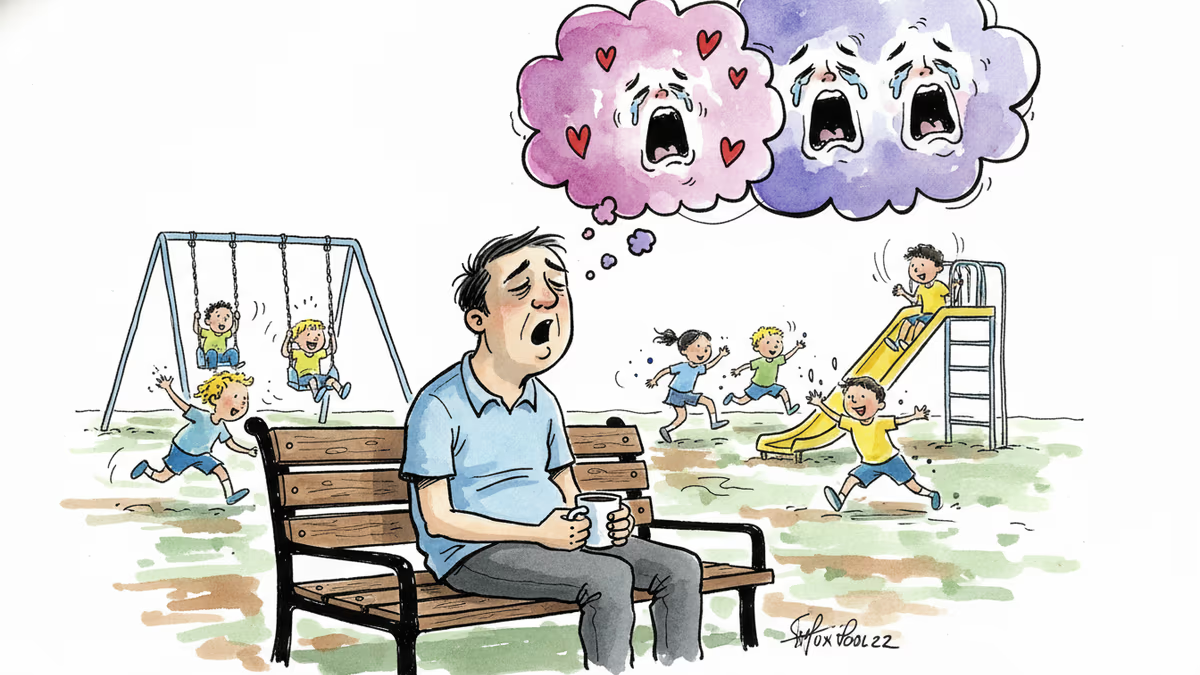
More parents are admitting what was once unspeakable - they love their children deeply but find parenting boring. What does this confession reveal about modern parenthood?
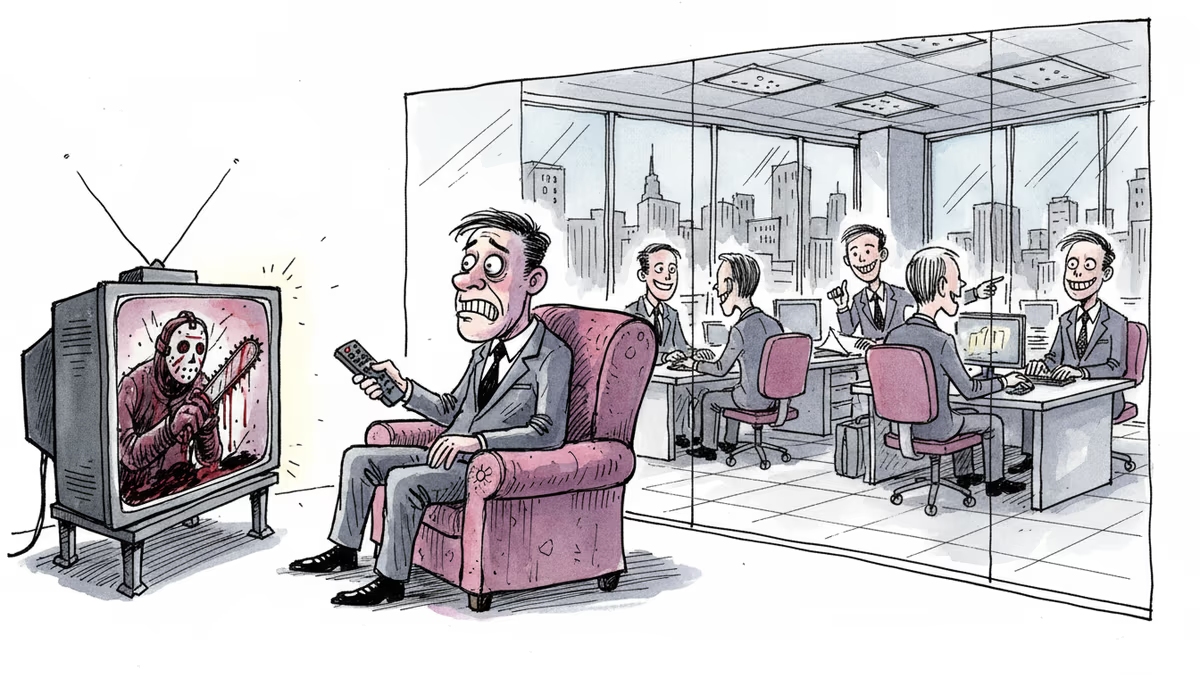
Hollywood created a monster that doesn't exist. Scientists debunked the myths, yet we cling to fiction. What does this say about how we process truth?
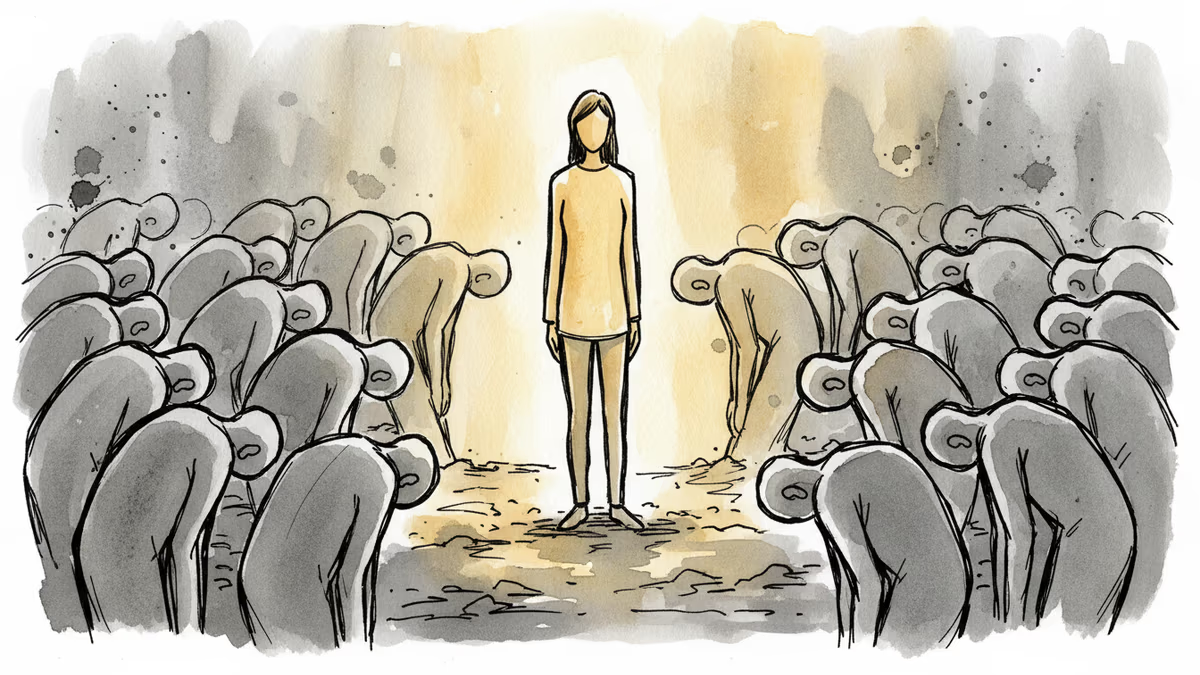
In a world shaped by social conformity, what makes some people defy convention to do what's right? Exploring the psychology behind ethical rebellion and moral courage.
How Muggsy Bogues defied physical limitations to succeed in the NBA reveals the psychology behind discovering and sustaining interests. Self-efficacy makes the difference.
More parents are admitting what was once unspeakable - they love their children deeply but find parenting boring. What does this confession reveal about modern parenthood?
Hollywood created a monster that doesn't exist. Scientists debunked the myths, yet we cling to fiction. What does this say about how we process truth?
In a world shaped by social conformity, what makes some people defy convention to do what's right? Exploring the psychology behind ethical rebellion and moral courage.
How Muggsy Bogues defied physical limitations to succeed in the NBA reveals the psychology behind discovering and sustaining interests. Self-efficacy makes the difference.
Thoughts
Share your thoughts on this article
Sign in to join the conversation