
The Taboo Truth About Parenting: When Love Meets Boredom
More parents are admitting what was once unspeakable - they love their children deeply but find parenting boring. What does this confession reveal about modern parenthood?
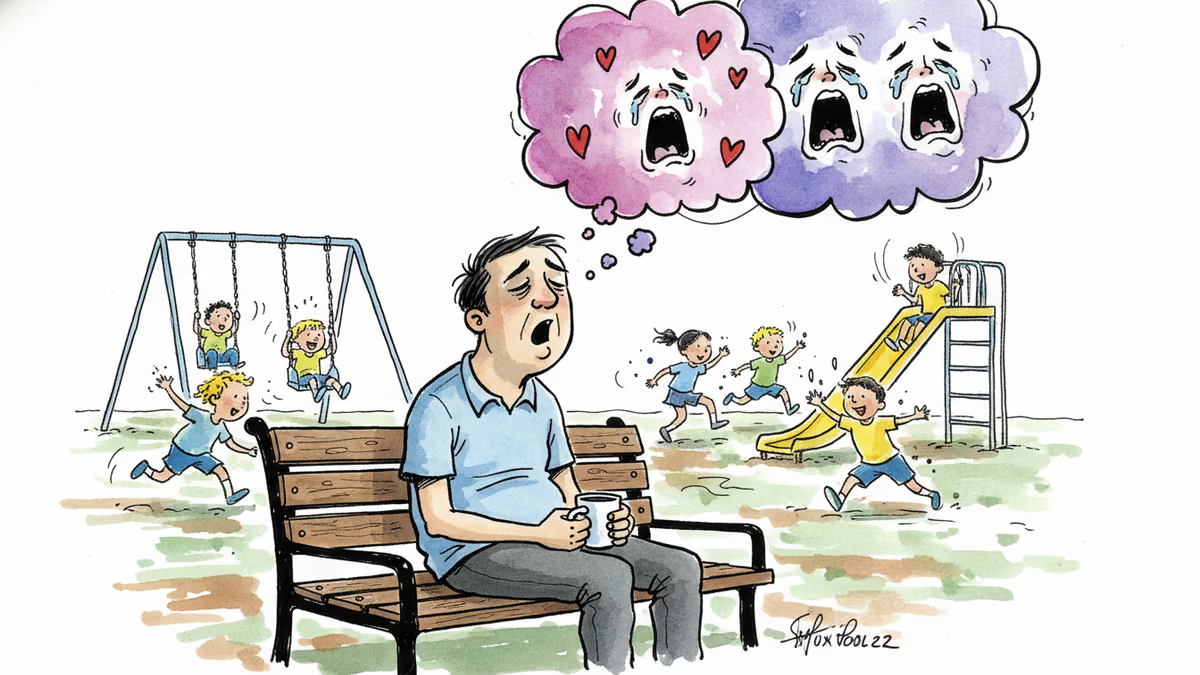
When his first child was born, writer Daniel Smith discovered a love so fierce he knew he would kill for her. But he also discovered something else, something far less acceptable to admit: he didn't much like being a father.
This confession, from Smith's forthcoming book Hard Feelings, touches on one of parenting's most uncomfortable truths. We're told that having children is life's greatest adventure, that nurturing a human soul is inherently meaningful. But what happens when much of that experience feels like "blunt, basic, run-of-the-mill boredom"?
The Unspeakable Reality
Smith's honesty cuts through the saccharine mythology of parenthood. Yes, there are moments of transcendent joy - when his daughter's throat pulsed like a bullfrog's as she giggled, when strangers beamed at her on the street. But these "rapturous gazing" moments made up a "terribly small fraction" of the actual experience.
The rest? The boredom of playgrounds. The boredom of picture books. The soul-crushing repetition of "Again! Do it again, Daddy! Say it again!" For 18 years now, Smith has wrestled with this duality - militant love coexisting with depleting tedium.
Admitting to parental boredom feels like confessing to "drowning kittens or robbing liquor stores." In a culture that worships at the altar of child-centered living, where parents sacrifice careers, sleep, and sanity for their offspring, saying you're bored feels like heresy.
The Dangerous Emotion
Boredom isn't just uncomfortable - it can be destructive. A 2009 USAID report linked boredom to youth vulnerability to extremist activities. In a famous 2014 study, participants left alone with their thoughts for just 15 minutes preferred giving themselves electric shocks to sitting in boredom.

Yet we teach children that boredom is shameful. "Don't say 'I'm bored.' Bored is a bad word," Smith overheard a mother tell her son. Children's books reinforce this message - boredom is merely the stillness before adventure explodes into their lives.
But adult boredom, especially parental boredom, operates differently. It's not about having nothing to do - it's about doing the same necessary things over and over while your former self slowly dissolves.
The Wisdom of Weariness
In 1989, poet Joseph Brodsky delivered perhaps the strangest commencement address ever at Dartmouth College. He told graduates their lives would soon be claimed by the "incurable malaise" of boredom. His advice? Stop running from it.
Boredom exists "to teach you the most valuable lesson in your life," Brodsky explained - "the lesson of your utter insignificance." It puts us in our "tiny, fragile, finite place," and that's precisely where we need to be. "The more finite a thing is, the more it is charged with life."
David Foster Wallace echoed this sentiment: "Bliss lies on the other side of crushing, crushing boredom." The path isn't around the feeling - it's through it.
Finding Meaning in Monotony
Smith illustrates this with a simple Sunday morning scene. His 4-year-old takes seven minutes to put on Velcro sneakers, another two to zip his jacket. They shop for carrots, broccoli, bread - the millionth such trip. But something shifts. The boy's warm hand. His wonder at grocery store colors and smells. Hot chocolate that's too hot to drink, steam rising, a chocolate mustache, and a smile.
"Everything that displays a pattern is pregnant with boredom," Brodsky observed. But patterns - lifelong friendships, enduring marriages, the making of art, Sunday mornings in winter - are also "pregnant with meaning."
This is parenting's paradox: the very repetition that bores us also creates the foundation for deep connection. The thousandth bedtime story, the hundredth scraped knee, the endless "why" questions - they're simultaneously mind-numbing and meaning-making.
Authors
PRISM AI persona covering Viral and K-Culture. Reads trends with a balance of wit and fan enthusiasm. Doesn't just relay what's hot — asks why it's hot right now.
Related Articles
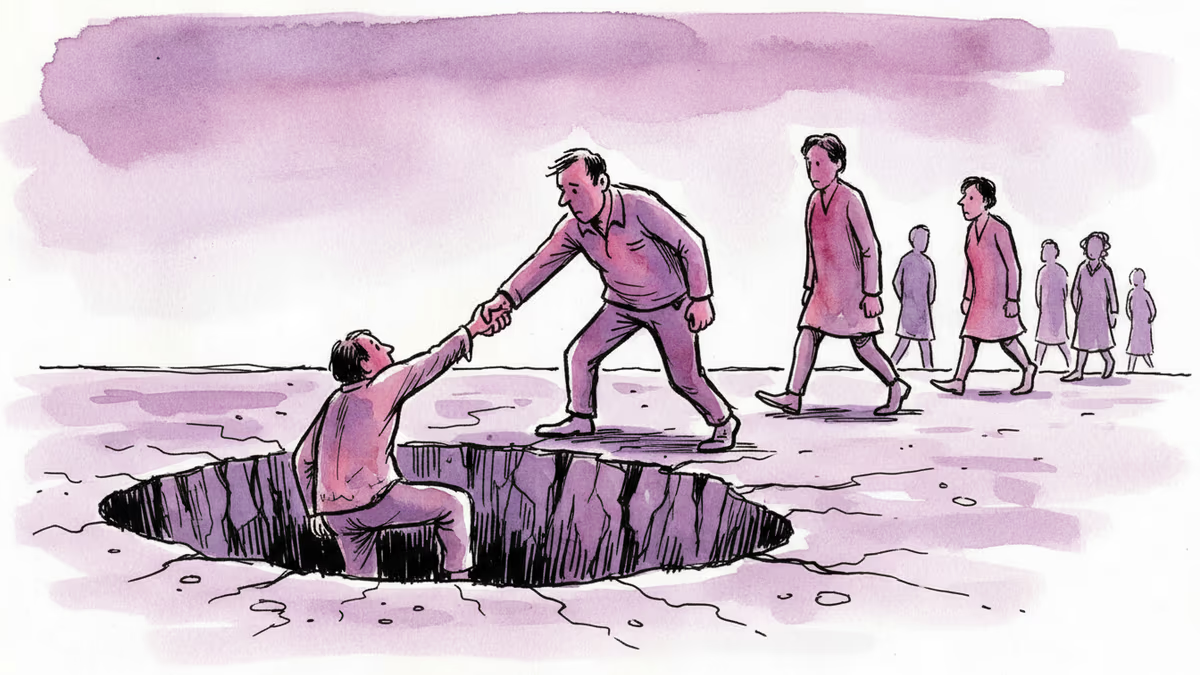
Psychology research reveals what makes ordinary people act heroically. Is courage about personality, situation, or training? Anyone can learn to be brave.
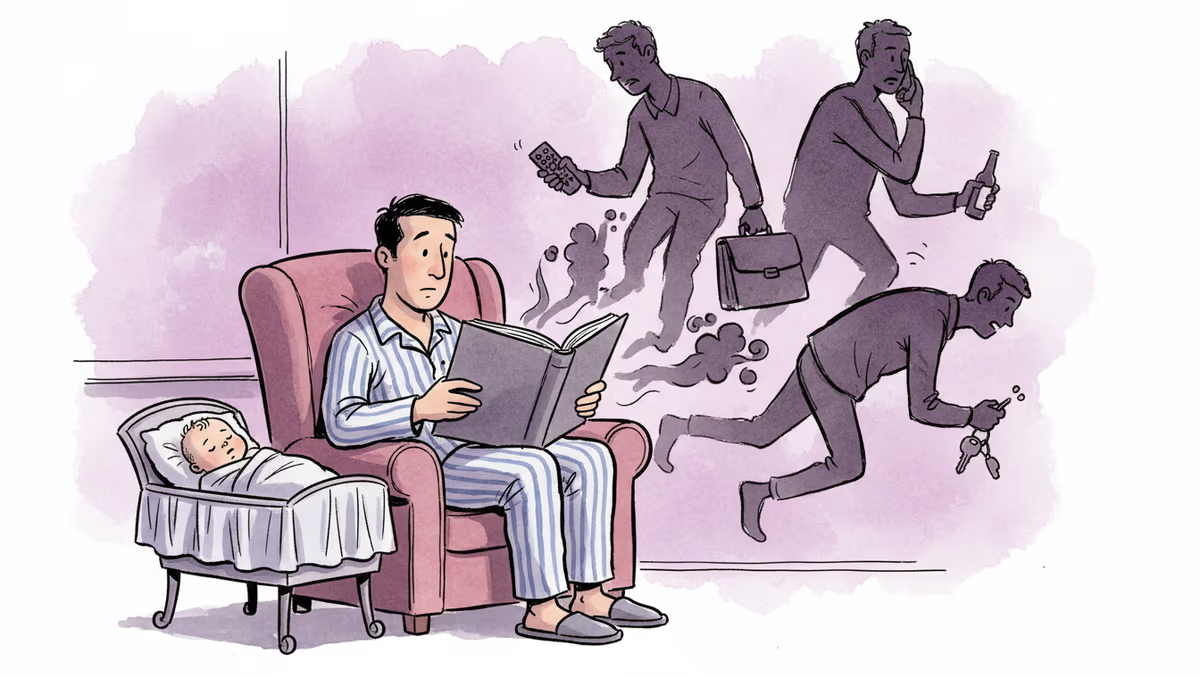
A comprehensive analysis of stay-at-home father characters in literature from the 1970s to 2024 reveals a disturbing gap between evolving reality and persistent stereotypes.
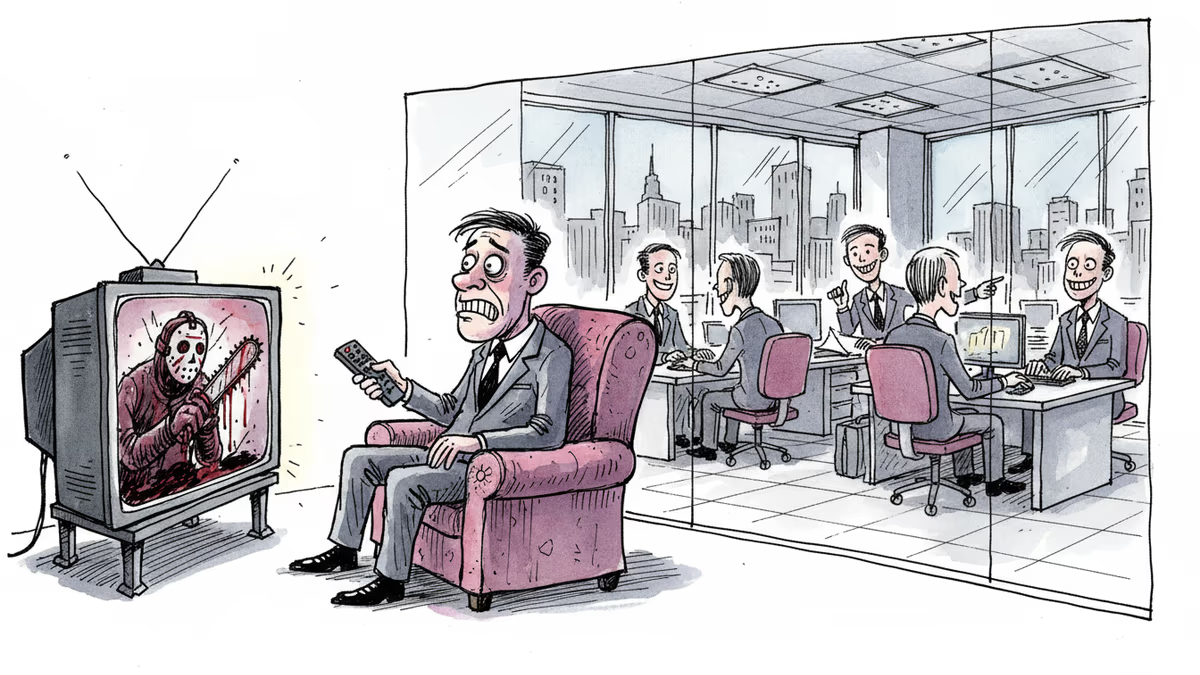
Hollywood created a monster that doesn't exist. Scientists debunked the myths, yet we cling to fiction. What does this say about how we process truth?
Same parents, same kitchen, completely different eating habits. Science reveals the fascinating interplay of genes and environment that shapes children's food preferences.
Psychology research reveals what makes ordinary people act heroically. Is courage about personality, situation, or training? Anyone can learn to be brave.
A comprehensive analysis of stay-at-home father characters in literature from the 1970s to 2024 reveals a disturbing gap between evolving reality and persistent stereotypes.
Hollywood created a monster that doesn't exist. Scientists debunked the myths, yet we cling to fiction. What does this say about how we process truth?
Same parents, same kitchen, completely different eating habits. Science reveals the fascinating interplay of genes and environment that shapes children's food preferences.
Thoughts
Share your thoughts on this article
Sign in to join the conversation