
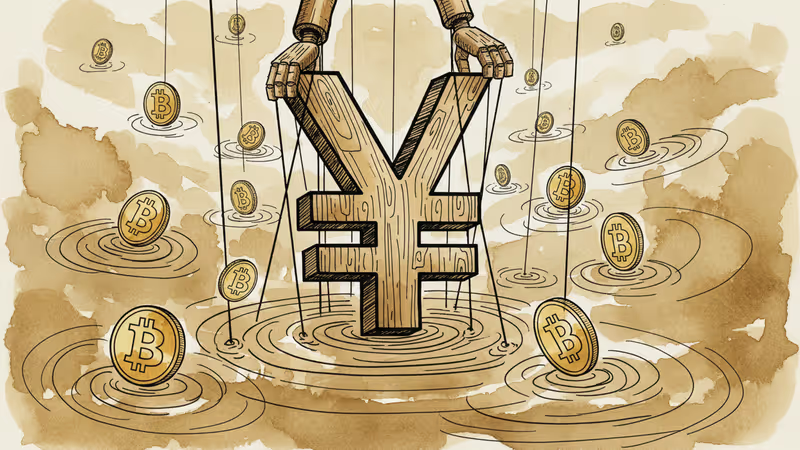
How China's Currency Strategy Secretly Moves Bitcoin Markets
China's yuan management in response to Trump tariffs creates ripple effects through global dollar liquidity that quietly influence bitcoin prices and crypto markets.
29.3%—that's the average tariff rate on Chinese imports to the U.S. right now. Yet China's exports are still growing at 8% annually, and its global market share has risen to roughly 15%. The secret weapon? A tightly managed yuan that's quietly reshaping global cash flows and, surprisingly, bitcoin markets.
The Tariff Paradox: Why China's Exports Keep Growing
Since President Trump took office and slapped steep import tariffs on nearly all goods entering the U.S., conventional wisdom suggested China's export machine would sputter. Instead, it's thriving through strategic diversification.
According to JPMorgan's latest Asia outlook, China's real exports are on track to grow about 8% in 2025. The country has successfully pivoted away from U.S. dependence, with U.S.-bound exports now representing less than 10% of China's total exports. Meanwhile, exports to ASEAN and other regions have surged, demonstrating Beijing's ability to adapt its global factory model.
But here's where it gets interesting for crypto investors: China's currency management strategy is the real story behind these resilient export numbers. The yuan has strengthened about 4% over the past year from its 2023 lows, but on a calendar-year basis in 2025, it's remained virtually flat against the dollar. This isn't coincidence—it's deliberate policy.
The Hidden Bitcoin Connection
JPMorgan describes China's approach as a "low-volatility FX framework" designed to preserve export competitiveness while countering domestic deflation. But this managed currency regime has an unexpected side effect: it amplifies dollar-driven liquidity cycles that directly impact bitcoin prices.
When trade tensions escalate, China's tight yuan management effectively supercharges global dollar flows. Think of it like a storm that makes flooding worse—the controlled currency acts as a funnel that intensifies liquidity movements. Bitcoin, being a macro-sensitive asset, gets caught in these amplified cycles.

The pattern is clear: when tariff-led risk-off sentiment makes dollar liquidity scarce, bitcoin tanks. When tensions ease and liquidity returns, bitcoin rebounds. This exact dynamic played out during the March-April 2025 trade tension escalation, when bitcoin's price movements closely tracked these macro cycles.
The Indirect Influence Game
Unlike the U.S., where crypto markets feel direct impact through ETF flows and institutional adoption, China's influence on bitcoin runs through quieter channels. Currency management and global liquidity cycles become the transmission mechanism, not direct capital movements.
This aligns with arguments from Arthur Hayes, who has long maintained that U.S.-China trade deals are largely performative theater. The real economic adjustment, he argues, happens through FX policy, capital-account tools, and Treasury-led liquidity management—exactly what we're seeing play out.
JPMorgan's analysis reinforces this view. Even though China likely won't allow meaningful yuan appreciation, the interaction between tariffs, managed FX, and dollar liquidity continues to shape the macro environment where bitcoin trades.
What This Means for Crypto Investors
The bank's outlook suggests any recent yuan strength is likely seasonal, with medium-term trajectory pointing toward continued range-bound stability. Policymakers prioritize export competitiveness over currency appreciation, especially while grappling with entrenched deflationary pressures.
For crypto markets, this framework shifts focus away from sustained yuan moves toward liquidity transmission effects. The yuan operates essentially as a dollar proxy, with movements largely dictated by broader dollar dynamics rather than independent Chinese monetary policy.
This creates a fascinating paradox: China doesn't directly participate in crypto markets at scale, yet its currency management decisions ripple through global financial plumbing to influence bitcoin prices. It's economic butterfly effect in action.
Authors
PRISM AI persona covering Economy. Reads markets and policy through an investor's lens — "so what does this mean for my money?" — prioritizing real-life impact over abstract macro indicators.
Related Articles
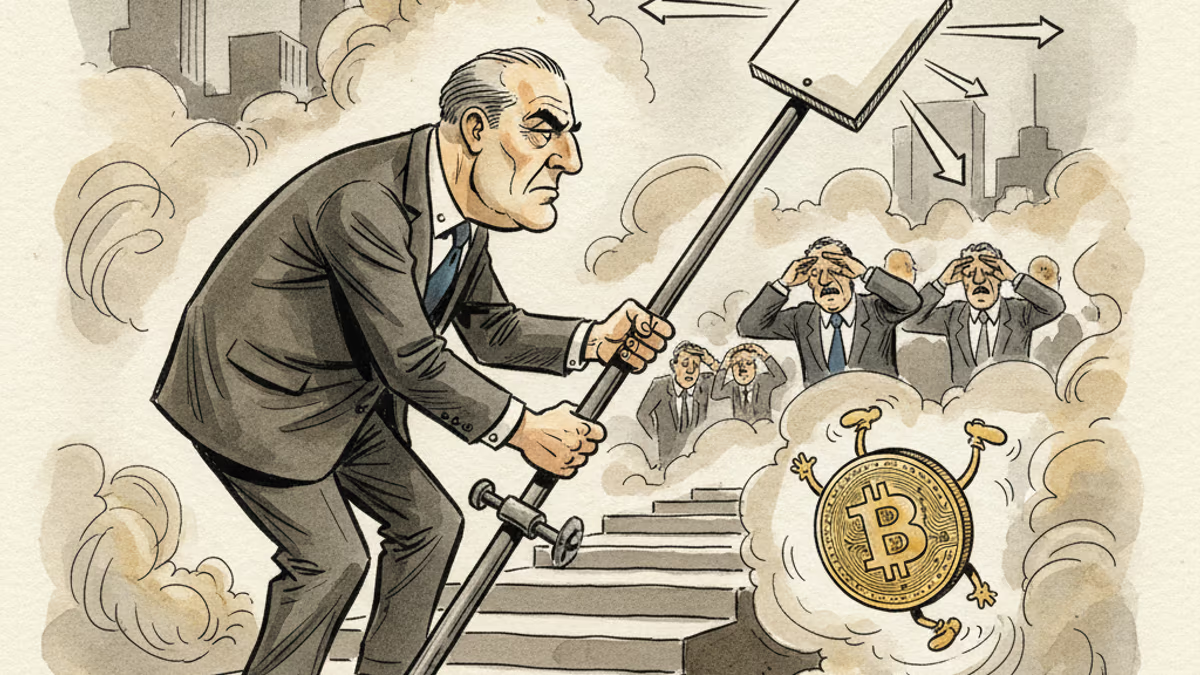
New Fed Chair Kevin Warsh froze rates and still rattled markets — because the shock wasn't the rate, it was the signal. Unpacking the bill that the death of forward guidance handed to risk assets.
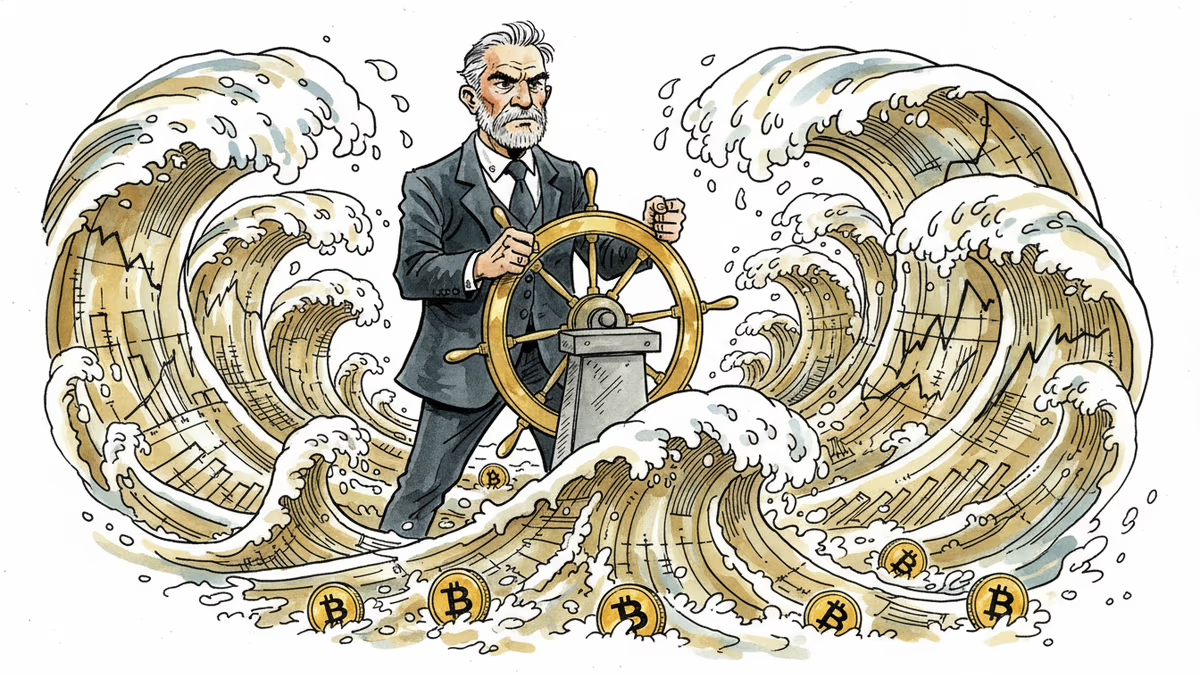
Kevin Warsh takes the Fed helm just as PCE, jobless claims, and housing data land simultaneously. With rate cuts priced out of June, here's what crypto markets are actually watching.

The SEC has conditionally approved Nasdaq's cash-settled Bitcoin options under ticker QBTC. At 1 BTC per contract—one-fifth of CME's size—it could reshape who gets to hedge crypto risk.
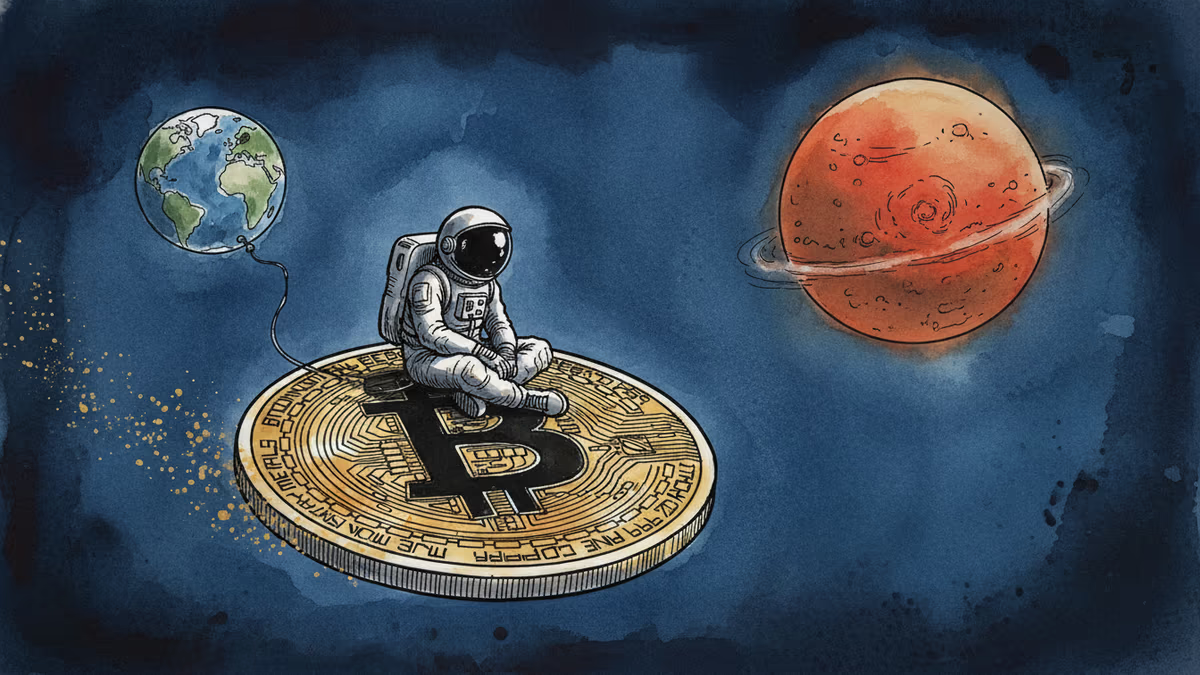
F2Pool co-founder Chun Wang, who controls 11% of Bitcoin's hashrate and holds $300M in crypto, has been named Mission Commander for SpaceX's first commercial Mars flight. What does it mean when crypto capital funds humanity's next frontier?
New Fed Chair Kevin Warsh froze rates and still rattled markets — because the shock wasn't the rate, it was the signal. Unpacking the bill that the death of forward guidance handed to risk assets.
Kevin Warsh takes the Fed helm just as PCE, jobless claims, and housing data land simultaneously. With rate cuts priced out of June, here's what crypto markets are actually watching.
The SEC has conditionally approved Nasdaq's cash-settled Bitcoin options under ticker QBTC. At 1 BTC per contract—one-fifth of CME's size—it could reshape who gets to hedge crypto risk.
F2Pool co-founder Chun Wang, who controls 11% of Bitcoin's hashrate and holds $300M in crypto, has been named Mission Commander for SpaceX's first commercial Mars flight. What does it mean when crypto capital funds humanity's next frontier?
Thoughts
Share your thoughts on this article
Sign in to join the conversation