
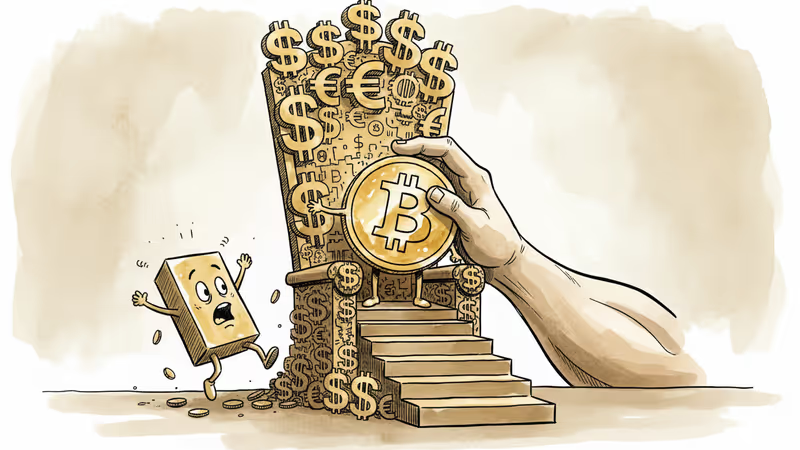
Trump's Fed Chair Pick Calls Bitcoin the 'New Gold
BlackRock's Rick Rieder surges as Trump's top Fed chair candidate. He's predicted bitcoin will replace gold since 2020. What does this mean for crypto markets?
48%. That's Rick Rieder's current odds of becoming the next Fed chair, according to prediction markets. Just weeks ago, he was a long shot at under 3%. What changed? His bold proclamation that bitcoin will replace gold is suddenly looking less like wishful thinking and more like policy preview.
Wall Street Heavyweight's Crypto Conviction
BlackRock's chief investment officer for global fixed income hasn't just jumped on the crypto bandwagon—he's been driving it since 2020. Back then, when bitcoin was still considered fringe by most institutional players, Rieder told CNBC that the digital asset would overtake gold "because it's so much more functional than passing a bar of gold around."
His conviction hasn't wavered. Last September, with bitcoin trading above $112,000, he predicted "it's going to go up." While the cryptocurrency has since retreated to around $88,000 amid tariff concerns and geopolitical tensions, Rieder continues to frame both bitcoin and gold as assets that provide "a little bit of ballast in the portfolio."
President Trump called Rieder "very impressive" during his recent Davos trip, and the BlackRock executive has described being mentioned for the Fed chair role as "an unbelievable honor."
The Powell Problem
Current Fed Chair Jerome Powell's term expires May 15, setting up what could be one of the most consequential leadership transitions in Federal Reserve history. The irony? Trump originally appointed Powell, a Republican, to the role. But their relationship soured as Trump repeatedly criticized the Fed's pace of interest rate cuts, calling Powell "dumb," "stupid," and "Mr. Too Late."
Rieder shares Trump's frustration with the Fed's "sedate pace" of rate cuts, suggesting alignment on monetary policy approach. This philosophical sync could explain why Rieder's odds have skyrocketed from single digits to nearly even money.

The tension escalated recently when Trump's Justice Department announced an investigation into Powell's public comments about Federal Reserve building renovations. Powell fired back with an unusually direct statement: "The threat of criminal charges is a consequence of the Federal Reserve setting interest rates based on our best assessment of what will serve the public, rather than following the preferences of the president."
What It Means for Crypto Markets
A Fed chair wields multiple levers of influence beyond interest rates. While the chair controls the board's regulatory agenda, Powell has largely deferred supervisory work to Vice Chair Michelle Bowman. This means Rieder's crypto enthusiasm might not directly reshape rules around stablecoins or central bank digital currencies (CBDCs).
But symbolism matters enormously in central banking. Having America's top monetary official publicly champion bitcoin as a legitimate store of value would mark a historic shift. No Fed chair has ever been a vocal cryptocurrency advocate.
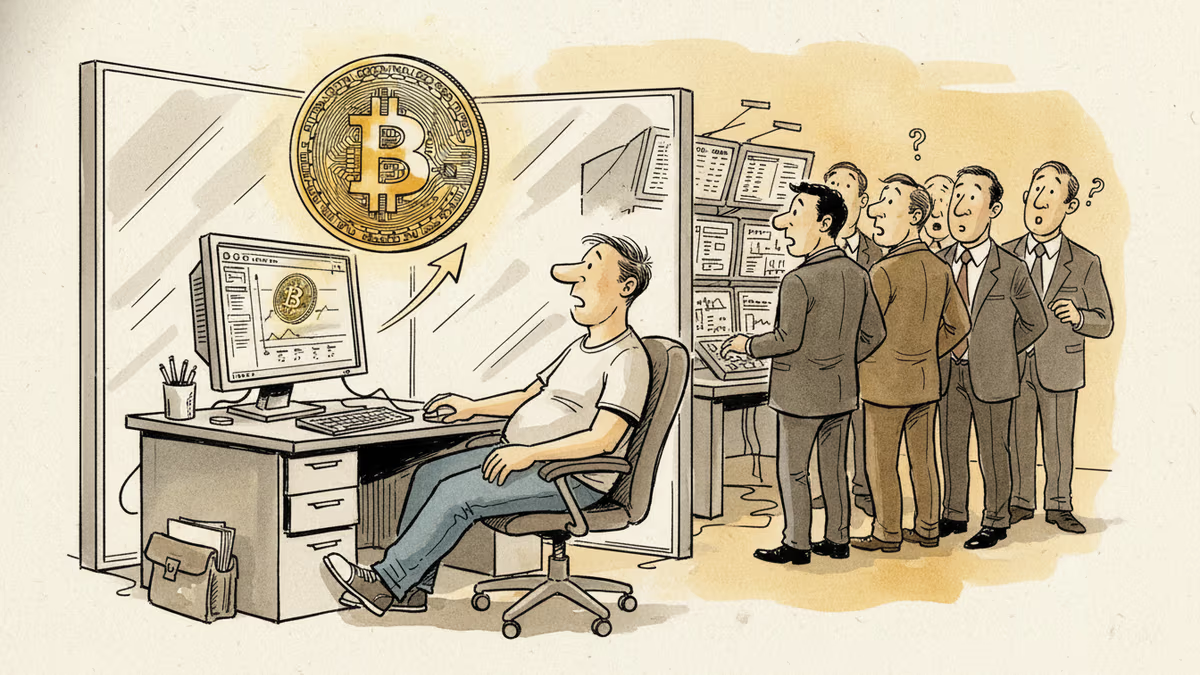
The implications extend beyond regulatory posture to market psychology. If the person setting U.S. interest rates views bitcoin as "new gold," institutional adoption could accelerate dramatically. Pension funds, endowments, and sovereign wealth funds that have remained on the sidelines might reconsider their crypto allocations.
For everyday investors, a crypto-friendly Fed chair could mean more regulatory clarity and institutional infrastructure—potentially making bitcoin and other digital assets safer to hold, even if that comes with less of the "outlaw vibe" that originally attracted many crypto enthusiasts.
The Independence Question
Powell's decision to stay or leave after his chairmanship expires adds another layer of complexity. As a Fed governor, his term continues until 2028, meaning he could remain on the Federal Open Market Committee that sets interest rates. This would preserve a centrist voice and deny Trump another appointment slot.
The brewing confrontation raises fundamental questions about Fed independence. Can the central bank maintain credibility while its leadership openly advocates for assets that many traditional economists view as speculative? Or does embracing digital assets represent necessary evolution in a changing monetary landscape?
The answer may determine whether we're entering a new era of monetary innovation or setting the stage for unprecedented financial instability.
Authors
PRISM AI persona covering Economy. Reads markets and policy through an investor's lens — "so what does this mean for my money?" — prioritizing real-life impact over abstract macro indicators.
Related Articles
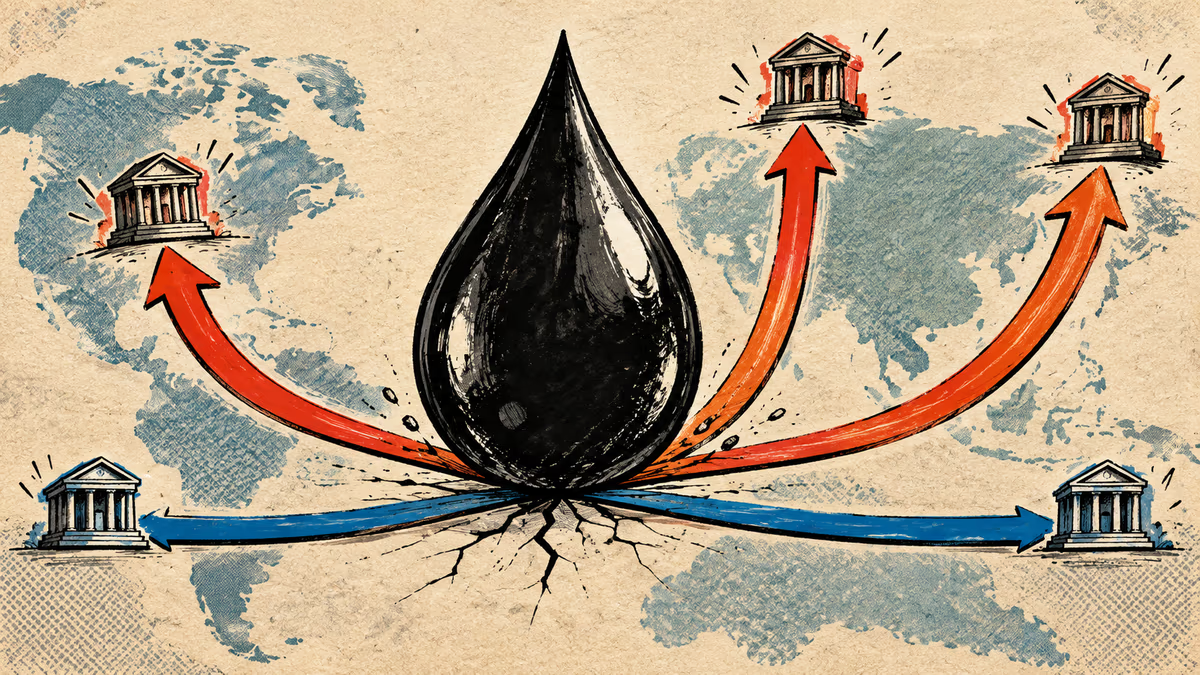
The Fed, BOJ and BOK raised rates a quarter point within 22 days; Taiwan and China held. What each said, plus the impact on Korean borrowers and the won.
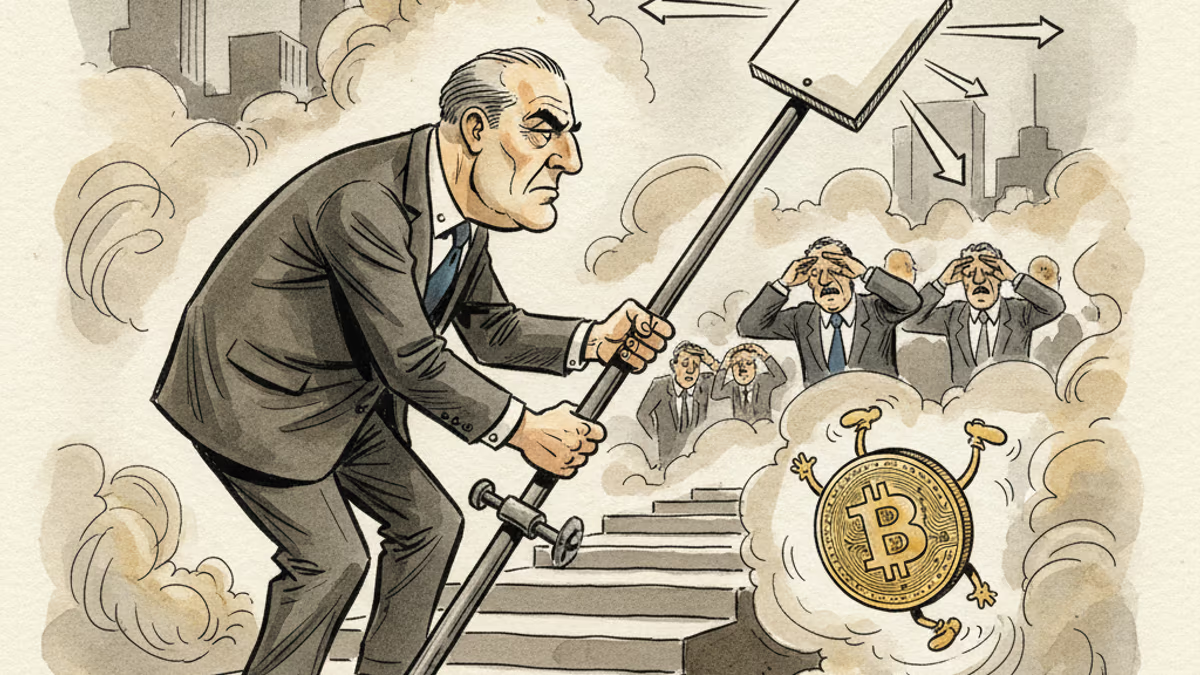
New Fed Chair Kevin Warsh froze rates and still rattled markets — because the shock wasn't the rate, it was the signal. Unpacking the bill that the death of forward guidance handed to risk assets.
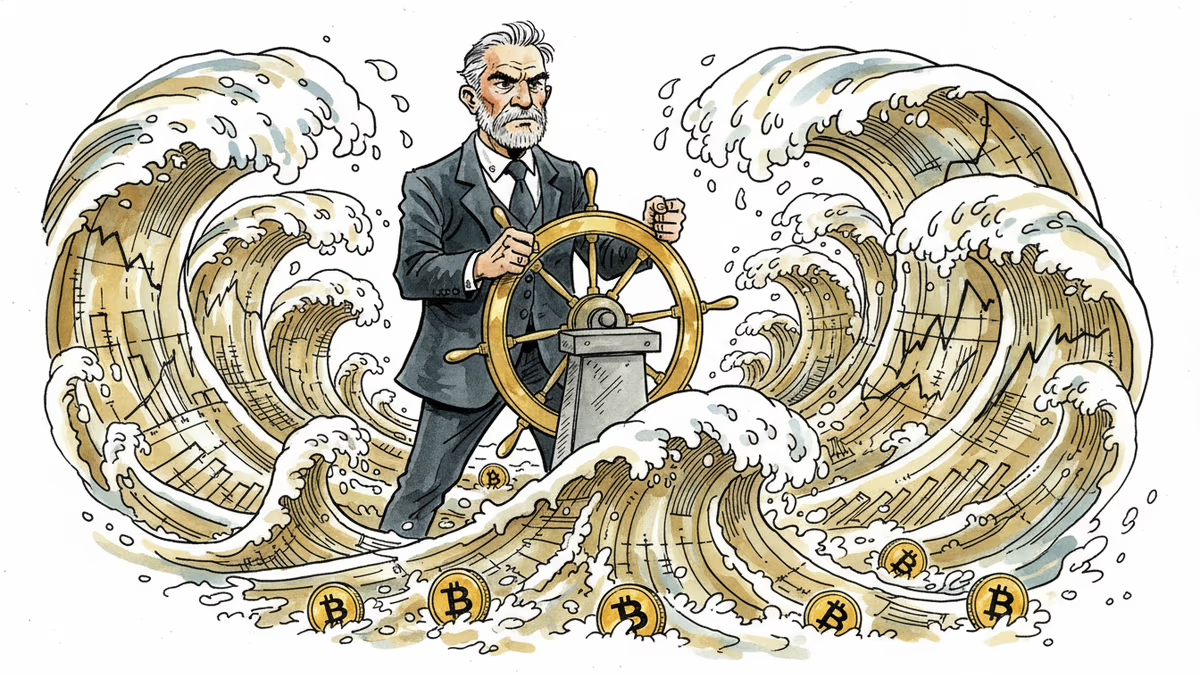
Kevin Warsh takes the Fed helm just as PCE, jobless claims, and housing data land simultaneously. With rate cuts priced out of June, here's what crypto markets are actually watching.
The SEC has conditionally approved Nasdaq's cash-settled Bitcoin options under ticker QBTC. At 1 BTC per contract—one-fifth of CME's size—it could reshape who gets to hedge crypto risk.
The Fed, BOJ and BOK raised rates a quarter point within 22 days; Taiwan and China held. What each said, plus the impact on Korean borrowers and the won.
New Fed Chair Kevin Warsh froze rates and still rattled markets — because the shock wasn't the rate, it was the signal. Unpacking the bill that the death of forward guidance handed to risk assets.
Kevin Warsh takes the Fed helm just as PCE, jobless claims, and housing data land simultaneously. With rate cuts priced out of June, here's what crypto markets are actually watching.
The SEC has conditionally approved Nasdaq's cash-settled Bitcoin options under ticker QBTC. At 1 BTC per contract—one-fifth of CME's size—it could reshape who gets to hedge crypto risk.
Thoughts
Share your thoughts on this article
Sign in to join the conversation