
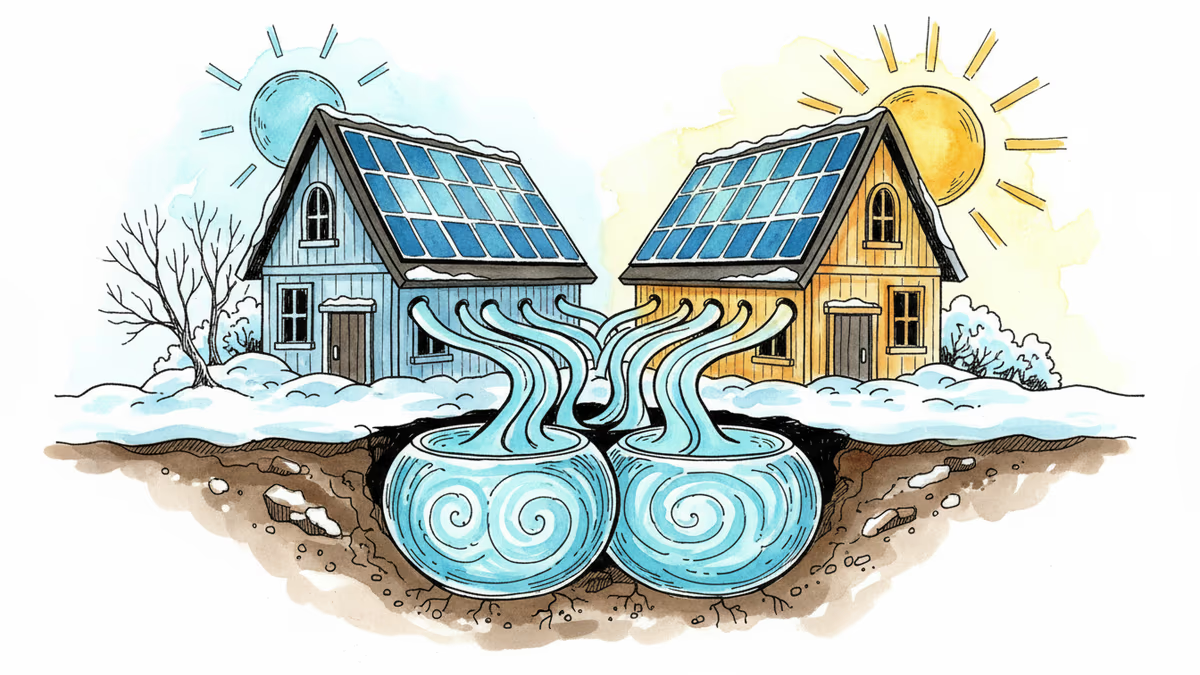
The Heat Storage Revolution That Could End Winter Bills
Scientists crack the molecular code for storing summer heat until winter arrives. Could this breakthrough finally make fossil fuel heating obsolete?
The $2 Trillion Heat Problem Nobody Talks About
While everyone obsesses over electric car batteries, there's a bigger energy puzzle hiding in plain sight: your heating bill. Nearly half of all global energy demand goes to heating buildings, and two-thirds of that still comes from burning fossil fuels. We've mastered storing solar electricity, but storing solar heat for months? That's been the holy grail of clean energy for decades.
Now, researchers from UC Santa Barbara and UCLA claim they've cracked the molecular code that could change everything.
The Chemistry Challenge
The problem isn't capturing heat—it's keeping it. Lithium-ion batteries work brilliantly for electricity, but heat storage requires a completely different approach. You need to trap thermal energy inside molecular bonds, then release it on demand weeks or months later.
This field, called Molecular Solar Thermal (MOST) energy storage, has tantalized scientists since the 1970s. The concept is elegant: certain molecules can absorb sunlight and rearrange their atomic structure, storing energy like a coiled spring. When triggered later, they snap back to their original form, releasing heat.
The catch? Previous MOST systems leaked energy, degraded quickly, or required exotic materials that cost more than gold.
The Breakthrough Moment

The new Science paper describes a breakthrough in the molecular design itself. The researchers engineered molecules that can store solar energy for extended periods without significant degradation—addressing the core problem that has plagued MOST systems for decades.
While the technical details remain complex, the implications are straightforward: imagine collecting summer heat and using it to warm your home in January, without any fossil fuels or electrical grid dependency.
Three Perspectives on the Revolution
The Homeowner's Dream: No more winter heating bills. Install solar collectors in summer, store the energy molecularly, and release it as needed throughout cold months. For regions with harsh winters and abundant summer sun, this could eliminate heating costs entirely.
The Utility Company's Nightmare: If households can store their own thermal energy for months, it disrupts the entire heating market. Natural gas companies, heating oil distributors, and even electric utilities could see demand plummet in residential markets.
The Climate Activist's Hope: Heating accounts for a massive chunk of global carbon emissions. If MOST technology scales, it could accelerate decarbonization faster than electric vehicles or renewable electricity generation.
The Reality Check
Before celebrating the end of winter bills, consider the hurdles ahead. Laboratory breakthroughs rarely translate directly to commercial products. The researchers haven't disclosed costs, scalability challenges, or real-world durability data.
Previous "revolutionary" energy storage technologies—from compressed air to molten salt—promised similar disruption but remain niche applications. The energy storage graveyard is littered with brilliant ideas that couldn't compete with cheap natural gas.
Moreover, MOST systems need infrastructure overhaul. Your current heating system can't simply plug into molecular storage—it would require new collectors, storage vessels, and heat release mechanisms.
Authors
Related Articles
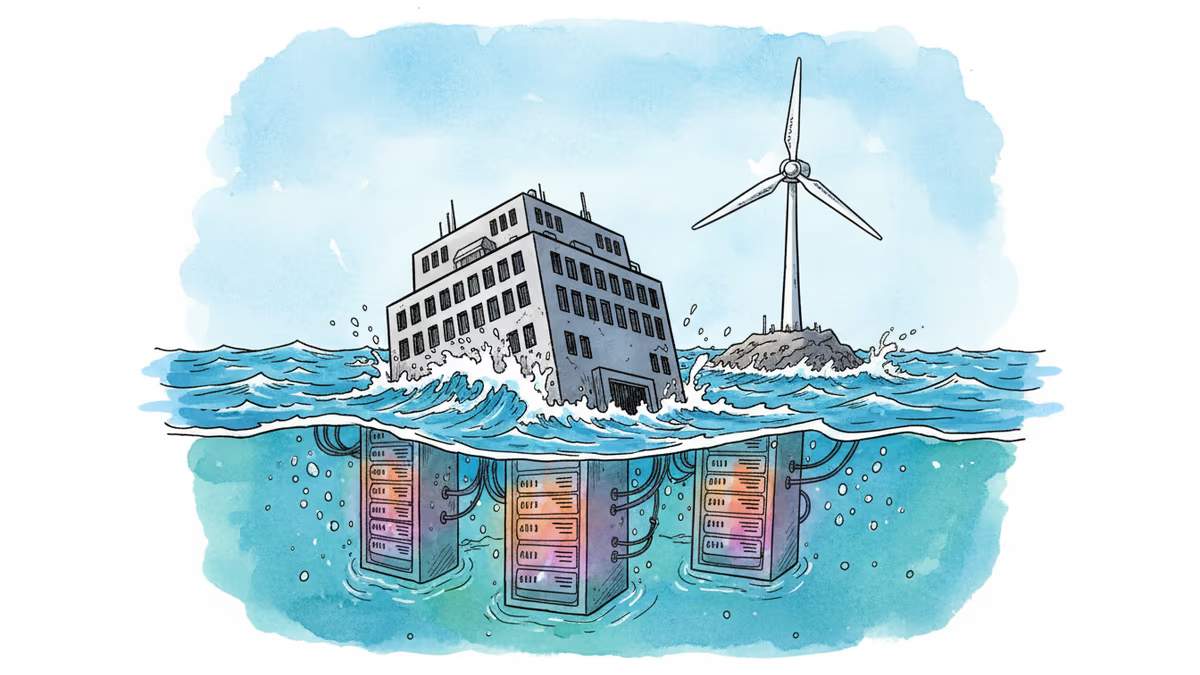
A Norwegian startup plans to submerge data centers offshore, powered by wind turbines. Could this solve AI's massive energy appetite, or create new problems? We examine multiple perspectives.

Lunar Energy raises $232M as stationary battery storage becomes the hottest investment in energy tech. Virtual power plants could replace costly peaking plants within years.
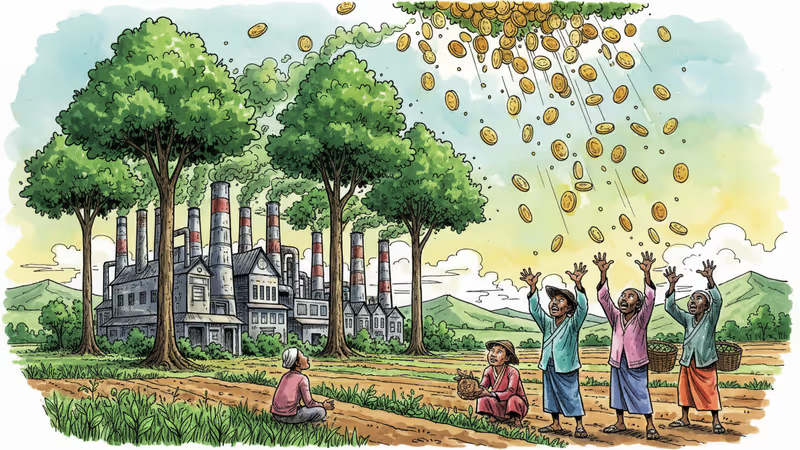
Varaha raises $20 million to scale carbon removal projects across Asia and Africa, positioning itself as a lower-cost alternative to European and North American competitors in the growing climate tech market.
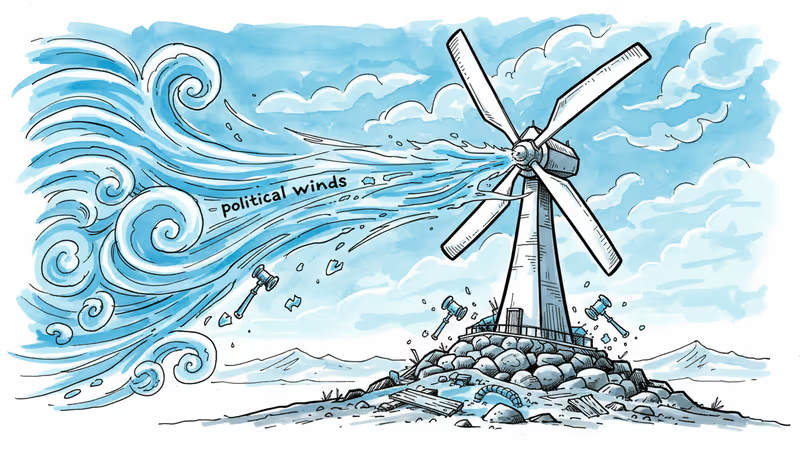
Trump administration's attempts to block offshore wind projects face unanimous court defeats. Five companies, five lawsuits, five wins reveal the limits of executive power.
A Norwegian startup plans to submerge data centers offshore, powered by wind turbines. Could this solve AI's massive energy appetite, or create new problems? We examine multiple perspectives.
Lunar Energy raises $232M as stationary battery storage becomes the hottest investment in energy tech. Virtual power plants could replace costly peaking plants within years.
Varaha raises $20 million to scale carbon removal projects across Asia and Africa, positioning itself as a lower-cost alternative to European and North American competitors in the growing climate tech market.
Trump administration's attempts to block offshore wind projects face unanimous court defeats. Five companies, five lawsuits, five wins reveal the limits of executive power.
Thoughts
Share your thoughts on this article
Sign in to join the conversation