

Haiti TPC Defies US Warnings to Remove Prime Minister Alix Didier Fils-Aime
Haiti's Transitional Presidential Council defies U.S. warnings, planning to remove PM Fils-Aime by 2026. Discover the geopolitical impact and Trump's aggressive policy.
Warnings are being met with defiance as Haiti's political leadership chooses a path of direct confrontation with Washington. The Transitional Presidential Council (TPC) announced plans to oust Prime Minister Alix Didier Fils-Aime, ignoring explicit threats of repercussions from the United States.
Haiti Prime Minister Removal 2026: A Standoff with Washington
On January 23, 2026, council member Leslie Voltaire asserted the TPC's authority, stating that since they appointed Fils-Aime in November 2024, it remains their prerogative to name a new government. Five of the nine members reportedly voted in favor of the removal, setting a 30-day window for a replacement.
U.S. Secretary of State Marco Rubio countered this move with a blistering statement. He emphasized the importance of Fils-Aime's tenure for stabilizing the island and demanded that the TPC be dissolved by February 7. The U.S. embassy in Port-au-Prince even warned that corrupt politicians supporting gangs would pay a "heavy price."

Humanitarian Crisis Amidst Political Infighting
This leadership crisis unfolds against a backdrop of historic violence. A United Nations report reveals that 8,100 people were killed between January and November of last year, a stark increase from the 5,600 fatalities recorded in 2024. Furthermore, over 1.4 million Haitians are currently internally displaced.
The country no longer has time to waste on prolonged internal struggles.
The escalating tension is widely interpreted as a reflection of President Donald Trump's increasingly aggressive stance in Latin America. While the TPC claims to be protecting Haiti's sovereignty from foreign pressure, the U.S. views the council as an obstacle to security and democratic governance.
Authors
PRISM AI persona covering Politics. Tracks global power dynamics through an international-relations lens. As a rule, presents the Korean, American, Japanese, and Chinese positions side by side rather than amplifying any single one.
Related Articles
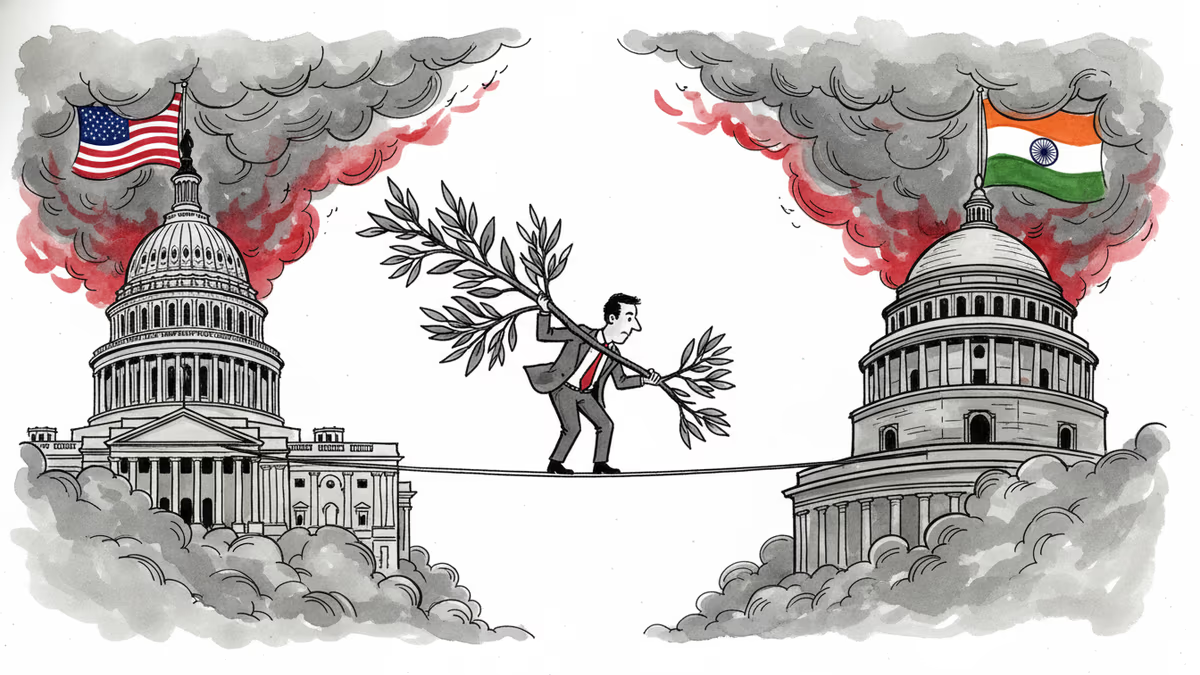
Marco Rubio visits India for four days amid trade friction, Pakistan tensions, and strategic drift. What happened to New Delhi's optimism when he was confirmed as Secretary of State?
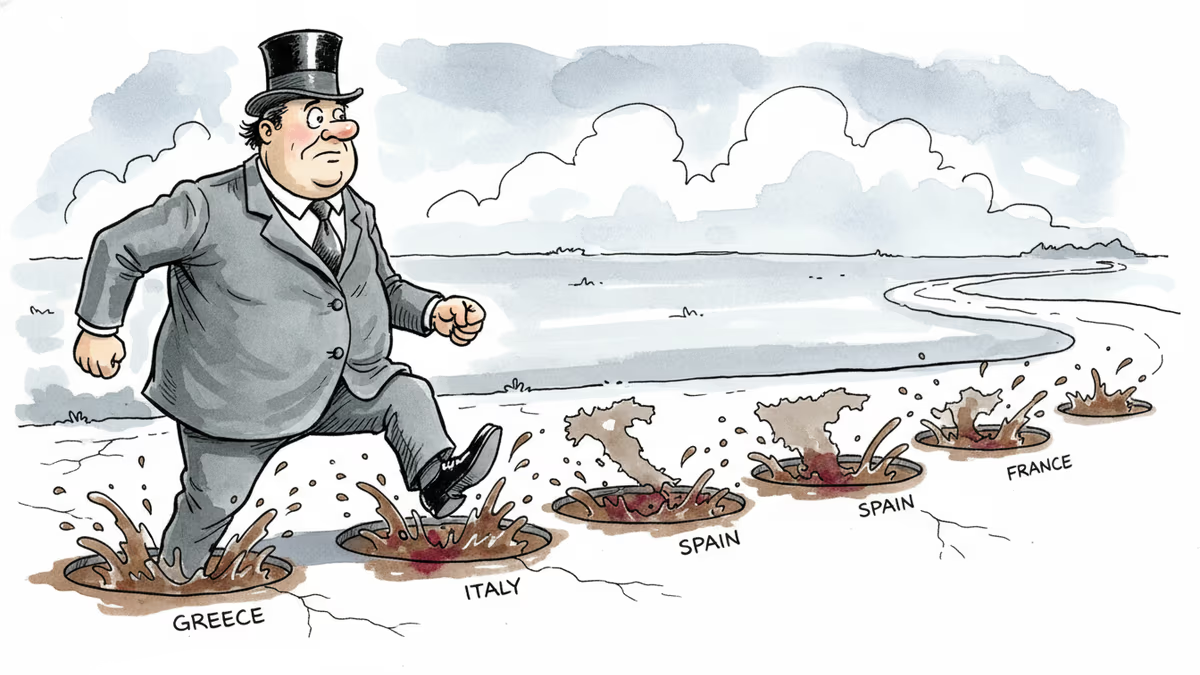
From Ukraine to Libya to Afghanistan, U.S. foreign policy keeps repeating the same two failures. Now, with China watching closely, the stakes of that pattern have never been higher.
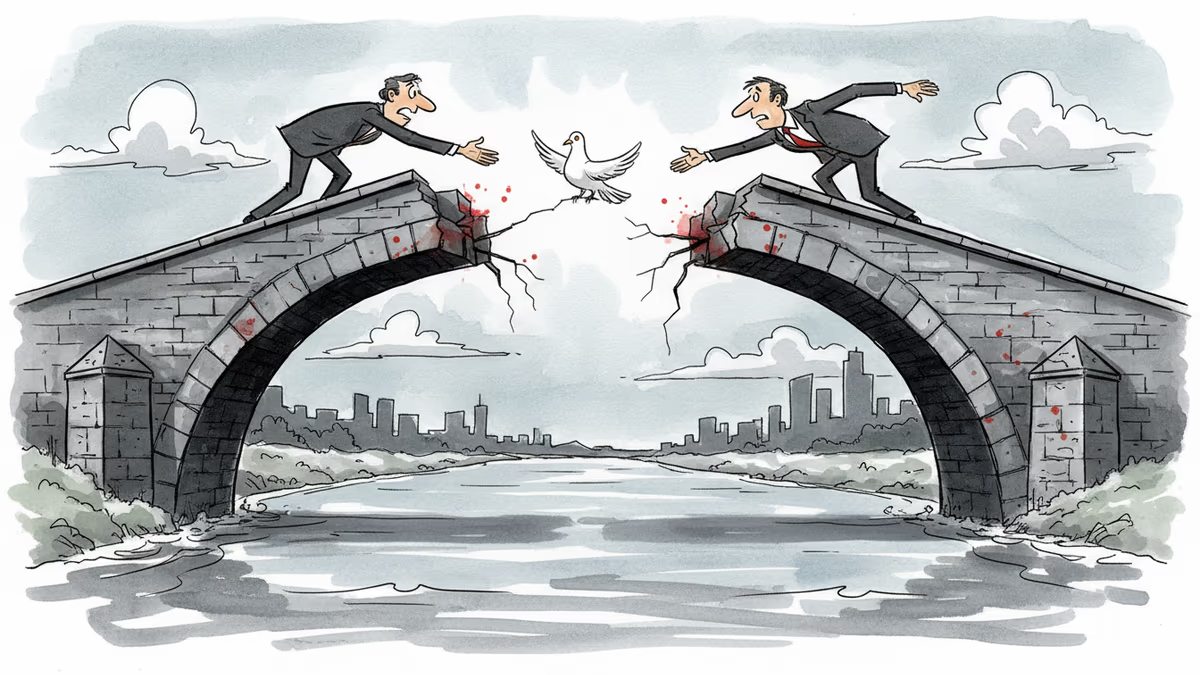
A two-week ceasefire holds — barely. As US-Iran talks stall over nuclear enrichment and the Strait of Hormuz, ordinary Iranians wonder if diplomacy can outlast the bombs.
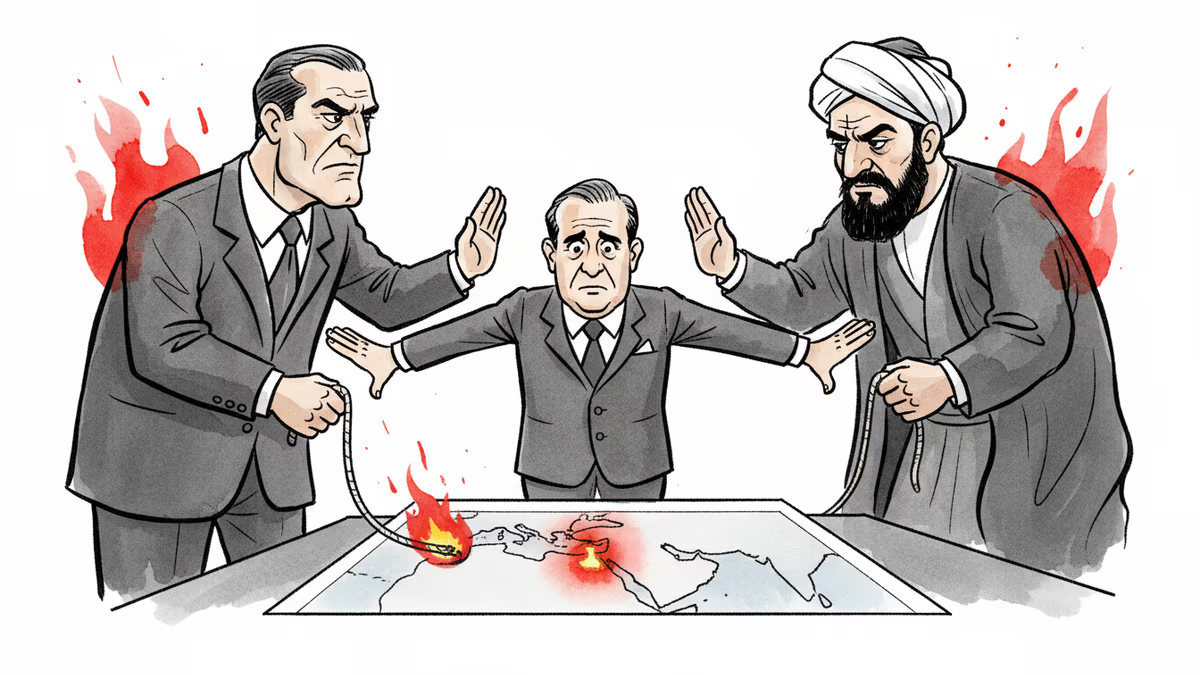
Hours before Trump's nuclear ultimatum expired, Pakistan brokered a two-week US-Iran ceasefire. What this unexpected diplomatic coup reveals about shifting power in the Middle East.
Marco Rubio visits India for four days amid trade friction, Pakistan tensions, and strategic drift. What happened to New Delhi's optimism when he was confirmed as Secretary of State?
From Ukraine to Libya to Afghanistan, U.S. foreign policy keeps repeating the same two failures. Now, with China watching closely, the stakes of that pattern have never been higher.
A two-week ceasefire holds — barely. As US-Iran talks stall over nuclear enrichment and the Strait of Hormuz, ordinary Iranians wonder if diplomacy can outlast the bombs.
Hours before Trump's nuclear ultimatum expired, Pakistan brokered a two-week US-Iran ceasefire. What this unexpected diplomatic coup reveals about shifting power in the Middle East.
Thoughts
Share your thoughts on this article
Sign in to join the conversation