
6,000 Companies Exposed: The DHS Hack That Revealed Government's Secret Partners
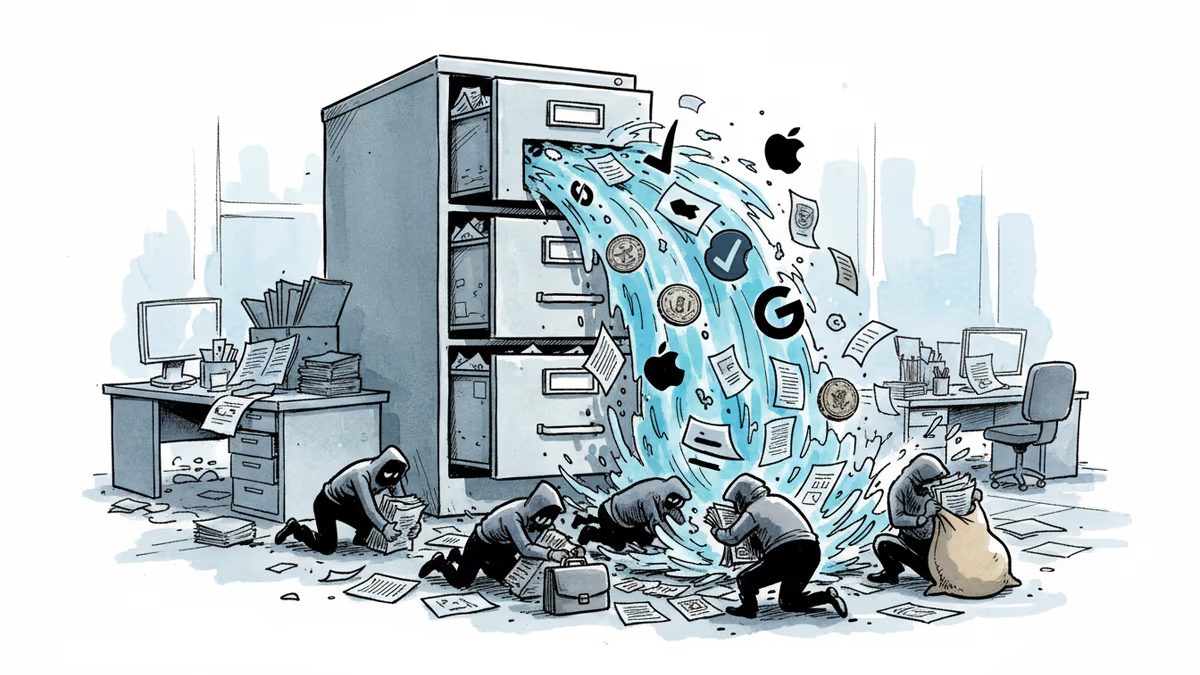
Hacktivists leaked contracts between DHS and 6,000+ companies including Palantir, Microsoft, and Oracle, exposing the private sector's role in mass deportations and surveillance operations.
$70 Million Contract You've Never Heard Of
A hacktivist group calling itself "Department of Peace" just pulled back the curtain on one of government's best-kept secrets: who's really building America's surveillance and deportation machine. Their hack of the Department of Homeland Security revealed contracts with over 6,000 companies, from household names like Microsoft and Oracle to obscure contractors you've never heard of.
The largest single contract? $70 million to Cyber Apex Solutions, a company with a barebones website that claims to secure "critical infrastructure." Most people have never heard of them, yet they're getting more taxpayer money than many Fortune 500 companies see in government deals.
The Hackers' Message: "People Deserve to Know"
The timing wasn't random. The hacktivist group explicitly cited the recent killings of two peaceful protesters—Alex Pretti and Renée Good—by federal agents in Minneapolis. "Why hack the DHS? I can think of a couple Pretti Good reasons!" they wrote, making their wordplay as pointed as their politics.
Their manifesto was clear: "The DHS is killing us and people deserve to know which companies support them and what they're working on." Since Trump's return to office, DHS and ICE have ramped up mass deportations, detaining people with no criminal records in what critics call inhumane conditions.
Follow the Money: Who's Profiting from Deportations?
The leaked data, organized by security researcher Micah Lee on a searchable website, reveals the full ecosystem:
Top Contractors by Value:

- Cyber Apex Solutions: $70 million (infrastructure security)
- Science Applications International: $59 million (AI services)
- Underwriters Laboratories: $29 million (testing and certification)
But the real story isn't in the dollar amounts—it's in the diversity. Defense giants like Raytheon and L3Harris sit alongside tech companies and consulting firms. The surveillance state isn't built by a few military contractors anymore; it's a sprawling network of corporate America.
Corporate America's Uncomfortable Truth
For companies like Microsoft and Oracle, this leak creates a PR nightmare. These firms have spent billions crafting images as progressive, employee-friendly companies that "empower every person on the planet." Yet here they are, directly enabling mass deportation operations.
Palantir, meanwhile, has been open about its government work, but even they might be surprised by the scope of corporate involvement revealed in these documents. The company has faced employee protests and lost talent over its ICE contracts, but they're far from alone in this space.
The leak also exposes something else: how little oversight exists over these partnerships. The Office of Industry Partnership, which manages these contracts, operates largely outside public scrutiny.
The Transparency Paradox
Civil liberties advocates are celebrating the leak as a victory for transparency, while cybersecurity experts worry about the precedent. Government officials and corporate executives are likely reviewing their security protocols and reconsidering the visibility of their partnerships.
But there's a deeper question here: Should these relationships be secret in the first place? In a democracy, shouldn't citizens know which companies are building the systems that monitor, track, and detain people?
The next time you use a Microsoft product or see an Oracle database, you'll know: your data isn't the only thing these companies are processing for the government.
Authors
Related Articles

UK Visa Portal, a private immigration service mistaken for an official government site, has been exposing passport scans and selfies of over 100,000 applicants. The breach remains unpatched.
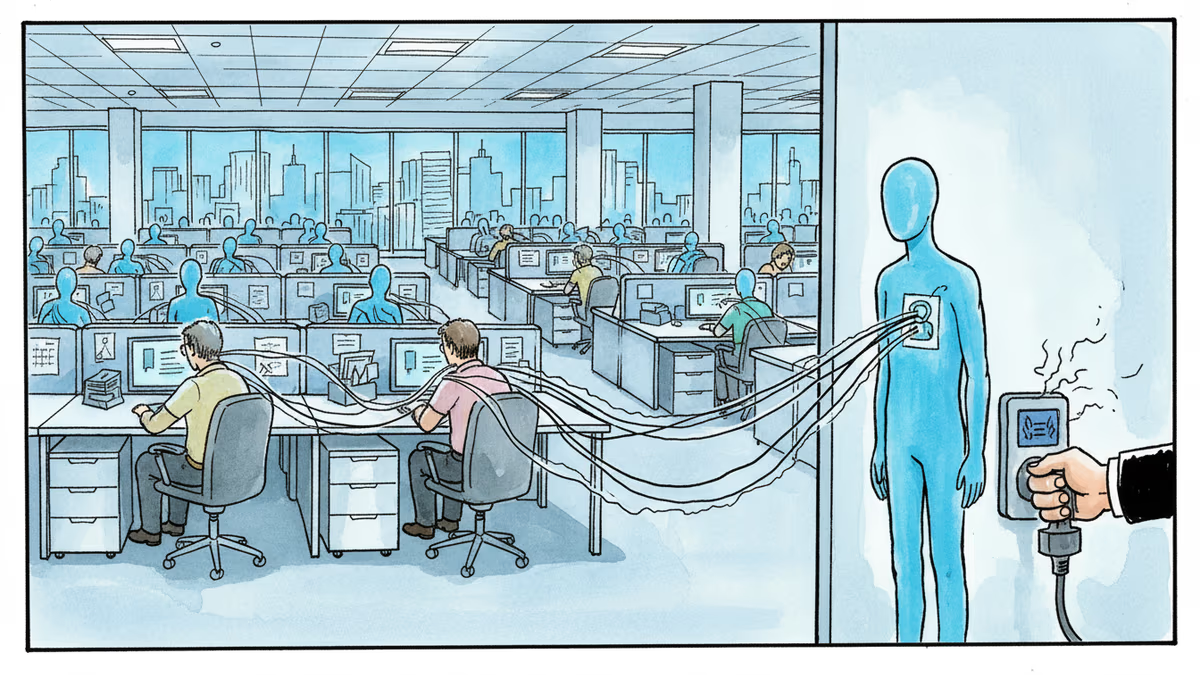
Okta CEO Todd McKinnon on why AI agents need identity management, the SaaSpocalypse threat, and why the kill switch might be the most important button in enterprise tech.
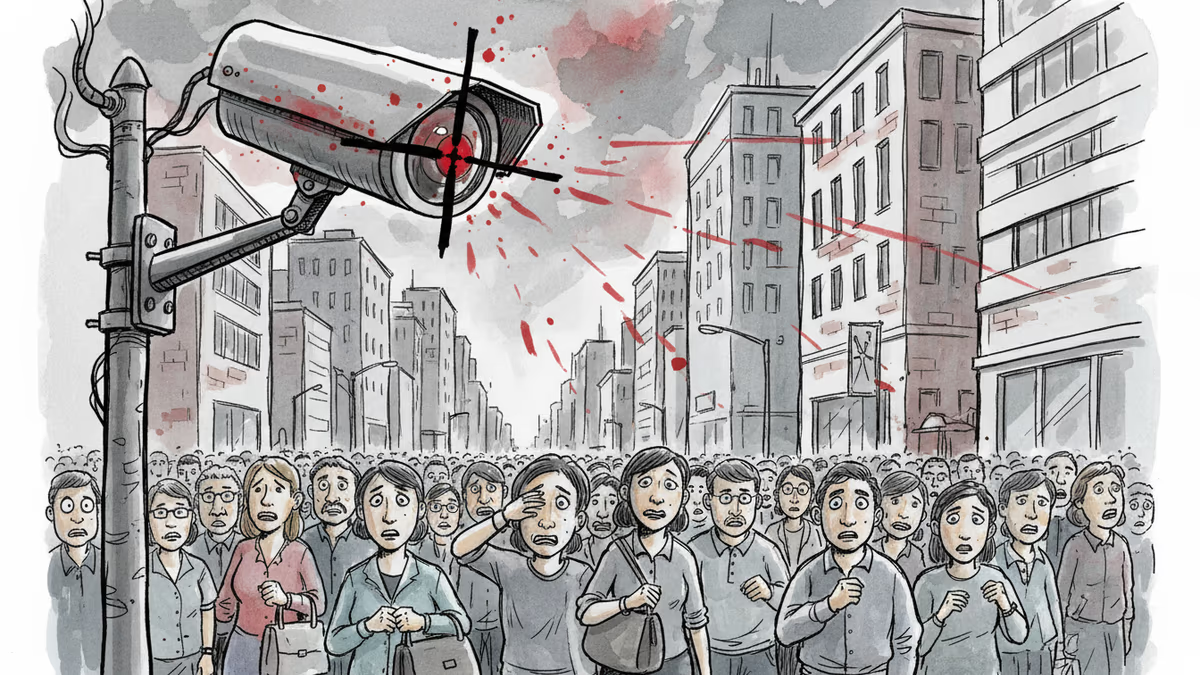
Iran and Israel are hacking civilian security cameras for military reconnaissance. How consumer surveillance devices became weapons of war.

CBP admits buying location data from ad industry while Meta contractors watch users in bathrooms through smart glasses. The digital privacy boundary is crumbling.
UK Visa Portal, a private immigration service mistaken for an official government site, has been exposing passport scans and selfies of over 100,000 applicants. The breach remains unpatched.
Okta CEO Todd McKinnon on why AI agents need identity management, the SaaSpocalypse threat, and why the kill switch might be the most important button in enterprise tech.
Iran and Israel are hacking civilian security cameras for military reconnaissance. How consumer surveillance devices became weapons of war.
CBP admits buying location data from ad industry while Meta contractors watch users in bathrooms through smart glasses. The digital privacy boundary is crumbling.
Thoughts
Share your thoughts on this article
Sign in to join the conversation