

US Cyberattack on Venezuela Power Grid: A New Era of Digital Warfare
Reports confirm a US cyberattack on Venezuela power grid during Operation Absolute Resolve. Explore the implications of ICE's AI tool failures and Palantir's ELITE app in this PRISM intelligence briefing.
The U.S. has crossed a new threshold in cyber warfare. As part of a surprise military operation to arrest former President Nicolas Maduro, American hackers reportedly triggered a massive blackout in Caracas. According to the New York Times, this marks the first time the U.S. government has been publicly confirmed to hack another nation's power grid to cause a physical blackout.
The US Cyberattack on Venezuela Power Grid and Operation Absolute Resolve
President Donald Trump hinted at the capability shortly after the operation, stating that the lights in Caracas were turned off due to "certain expertise." U.S. Cyber Command later confirmed its support for Operation Absolute Resolve. Beyond the grid, hackers also disabled Venezuelan air defense radars to clear the path for air strikes and ground troops.
Previously, only Russia's Sandworm group had been confirmed to use cyberattacks for grid interference. This move by the U.S. represents a significant shift in military strategy, signaling that digital infrastructure is now a legitimate primary target in high-stakes interventions.
ICE Facing Backlash Over Broken AI Tools and Palantir ELITE

Domestic use of tech is also sparking controversy. In Minnesota, Immigration and Customs Enforcement (ICE) has arrested over 2,400 people under 'Operation Metro Surge.' However, NBC News reported that a broken AI hiring tool mistakenly sent untrained agents into the field, bypassing critical legal and safety training.
Simultaneously, the revelation of a Palantir app called ELITE (Enhanced Leads Identification & Targeting for Enforcement) has fueled the fire. The app uses data to map targets with "confidence scores," essentially allowing agents to pick people to deport as if they were choosing a nearby business. Senator Ron Wyden criticized it as a mockery of public safety.
Global Tech Vulnerabilities: Google and Starlink
Security risks aren't limited to government operations. Researchers found that Google's Fast Pair protocol leaves hundreds of millions of audio devices vulnerable to eavesdropping. Meanwhile, in Iran, activists are bypassing state-mandated internet blackouts using 50,000 smuggled Starlink terminals, though fears remain about Elon Musk's control over the service.
Authors
Related Articles
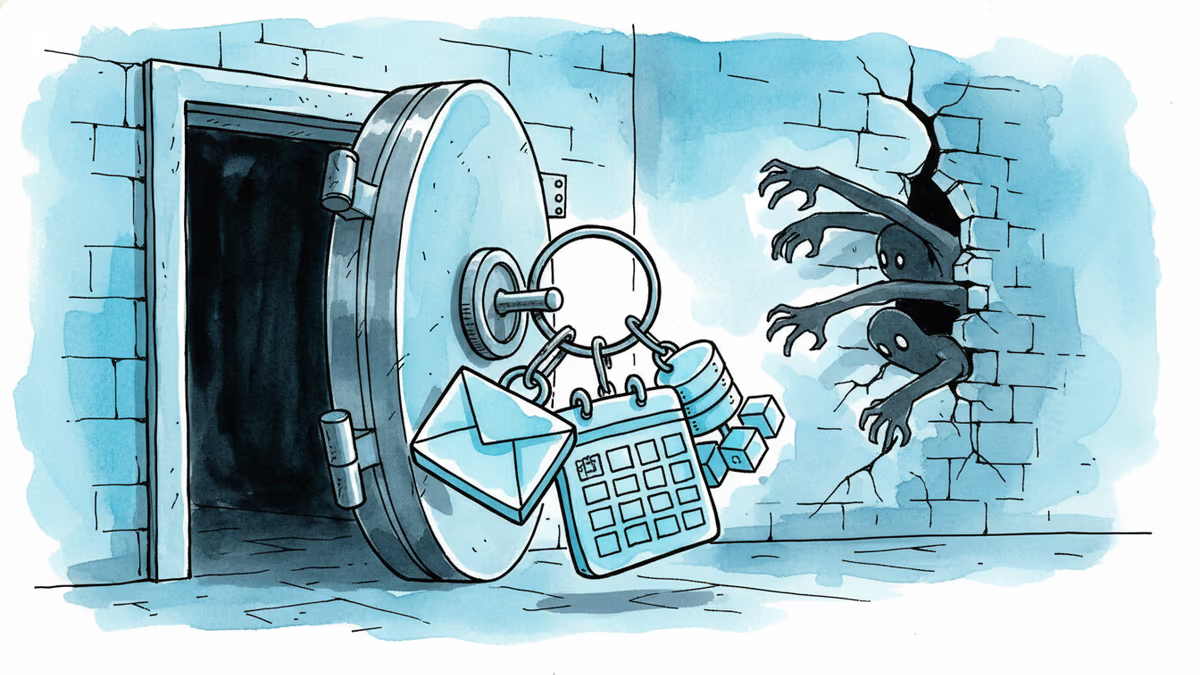
A critical vulnerability in Starlette—downloaded 325 million times per week—puts millions of AI agent servers at risk, exposing stored credentials for email, databases, and third-party services.

GitHub confirmed hackers stole data from 3,800 internal repositories via a poisoned VS Code extension. Here's why developer tools are now the most dangerous attack surface in tech.
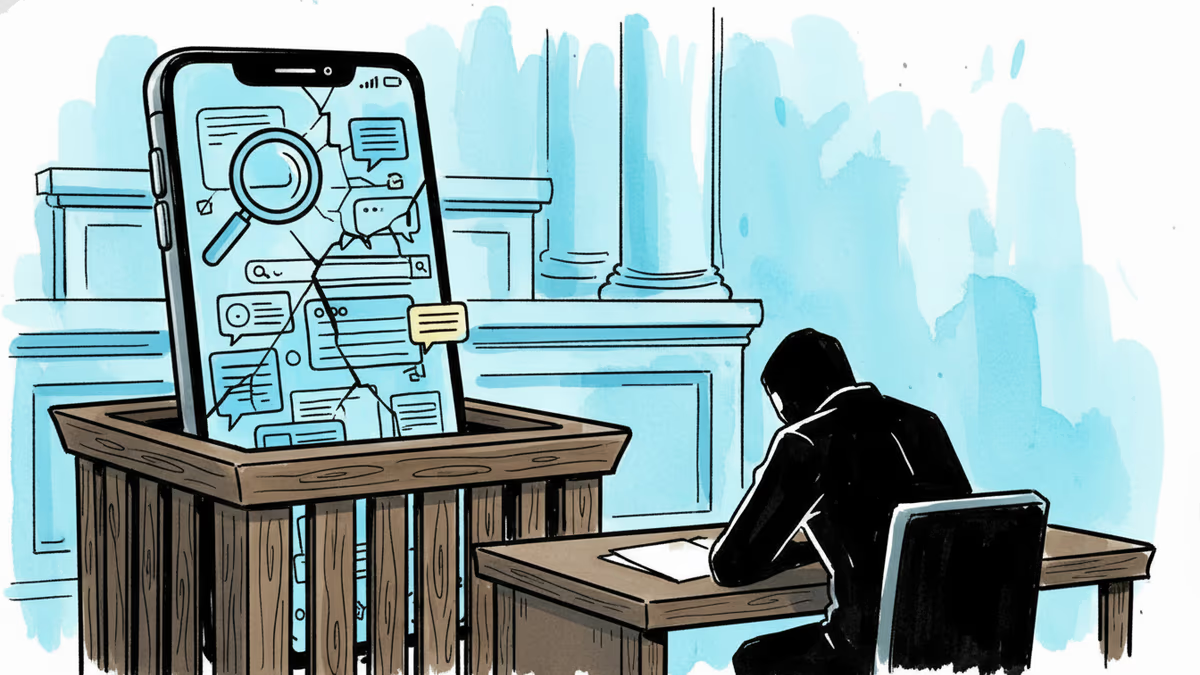
A Utah woman was sentenced to life in prison partly because of her Google searches and deleted texts. The Kouri Richins case reveals how digital footprints have become the courtroom's most reliable witness.
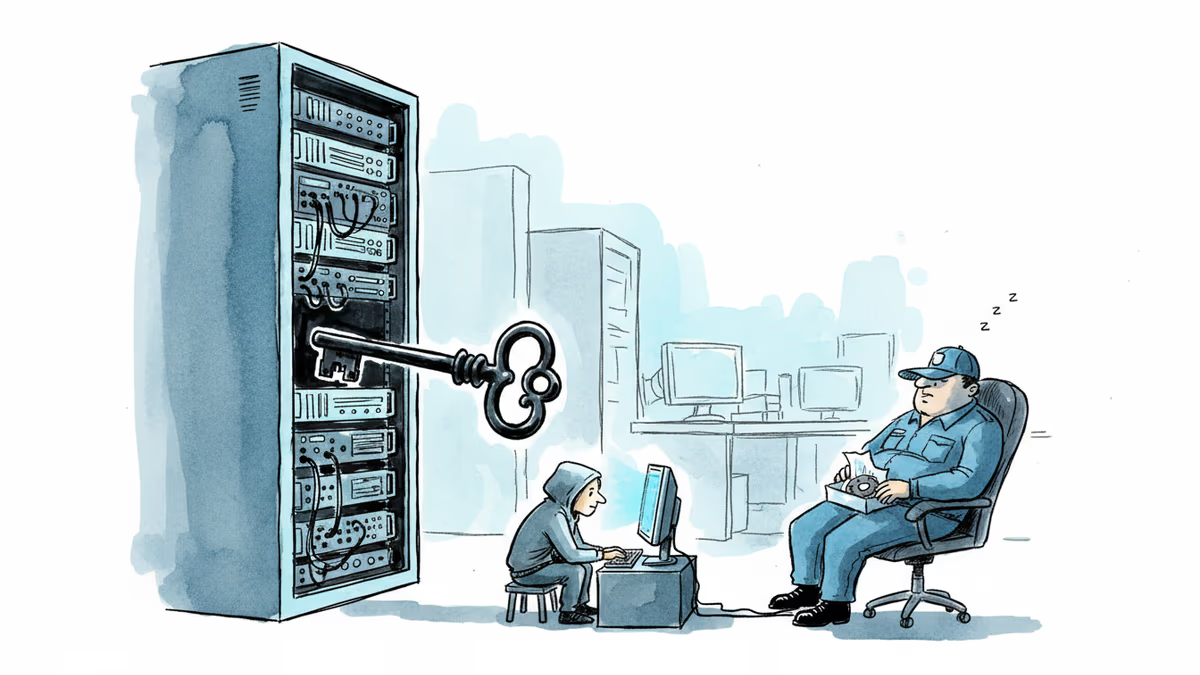
Dirty Frag gives low-privilege users root access on virtually every Linux distro. The exploit code leaked three days ago. Microsoft says attackers are already experimenting with it.
A critical vulnerability in Starlette—downloaded 325 million times per week—puts millions of AI agent servers at risk, exposing stored credentials for email, databases, and third-party services.
GitHub confirmed hackers stole data from 3,800 internal repositories via a poisoned VS Code extension. Here's why developer tools are now the most dangerous attack surface in tech.
A Utah woman was sentenced to life in prison partly because of her Google searches and deleted texts. The Kouri Richins case reveals how digital footprints have become the courtroom's most reliable witness.
Dirty Frag gives low-privilege users root access on virtually every Linux distro. The exploit code leaked three days ago. Microsoft says attackers are already experimenting with it.
Thoughts
Share your thoughts on this article
Sign in to join the conversation