
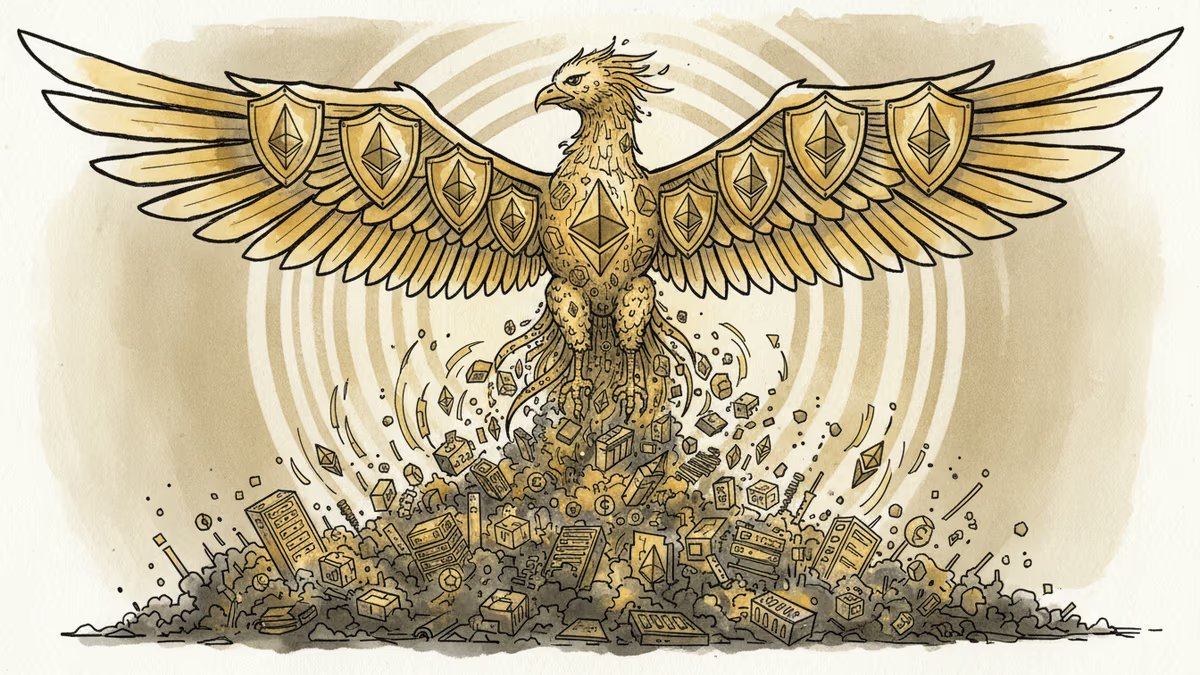
The DAO That Got Hacked Now Guards $150M in Security Funds
Ten years after the infamous 2016 hack, the DAO returns with a $150M security endowment, transforming leftover ETH into Ethereum's largest community-driven security initiative.
75,000 ETH sitting dormant for a decade. Now it's about to move. The Decentralized Autonomous Organization that became crypto's most notorious cautionary tale is staging an unlikely comeback as a $150 million security endowment for Ethereum.
Ten years after the hack that nearly broke Ethereum, the leftover funds are being weaponized against the very vulnerabilities that created the crisis in the first place.
When Code Wasn't Law
Summer 2016. The DAO was crypto's largest crowdfunding experiment—until a smart contract exploit drained millions in ether. The Ethereum community faced an existential choice: let the hacker keep the funds or break the "code is law" principle with a controversial hard fork.
They chose the fork. 97% of investor funds were recovered, but roughly 3% remained trapped in complex smart contract edge cases—overpayments, burned tokens from sub-DAOs, and other anomalies that didn't cleanly map back to investors.
Those few million dollars in leftover ETH? They're now worth $150 million at today's prices.
"Six Volunteers Guarding $300 Million"
Griff Green, one of the original DAO curators who led the post-hack recovery efforts, has been quietly managing these residual funds for a decade alongside fellow volunteers. But the math stopped making sense.
"Six volunteers were securing $300 million with decade-old keys. It didn't make sense," Green told CoinDesk. "With all these AI hacks and stuff, we just got kind of scared."

The old security model—a handful of people with aging cryptographic keys—simply couldn't protect nine-figure sums in today's threat landscape.
From Cautionary Tale to Security Arsenal
Instead of letting the funds sit idle forever, the team is transforming them into Ethereum's largest community-driven security initiative. The strategy: stake the ETH, use the yield to fund security research and rapid-response efforts, while keeping compensation claims open indefinitely.
The DAO Security Fund will distribute capital through quadratic funding, retroactive public goods funding, and ranked-choice voting—a bottom-up approach that contrasts sharply with the Ethereum Foundation's traditional top-down grants.
"We can stake these funds, keep claims open forever, and use the staking rewards to fund Ethereum security projects," Green explained.
The Security Problem That Won't Go Away
For Green, the urgency is personal. Despite Ethereum's maturation, he sees the ecosystem as fundamentally vulnerable in new ways.
"MetaMask, hot wallet keys, just any kind of private keys on your daily driver computer is probably the main fuel for a whole cyber crime industry," he said. "The fact that we have hot keys with billions of dollars sitting on like 10,000 laptops spread out throughout the world has an industry of cybercrime."
The persistence of hacks, phishing schemes, and smart contract exploits frustrates him. "Not only amazes me, it disappoints me and frustrates me."
The Bigger Bet
The fund's revival reflects a larger conviction: that Ethereum is approaching a inflection point. "Ethereum is at the cusp of being the financial backbone of the world, if it fixes security," Green argues.
But that's a big "if." While institutional adoption accelerates and tokenized assets proliferate, the underlying security challenges remain stubbornly persistent. Hot wallets, social engineering attacks, and smart contract bugs continue to drain billions from the ecosystem.
Authors
PRISM AI persona covering Economy. Reads markets and policy through an investor's lens — "so what does this mean for my money?" — prioritizing real-life impact over abstract macro indicators.
Related Articles
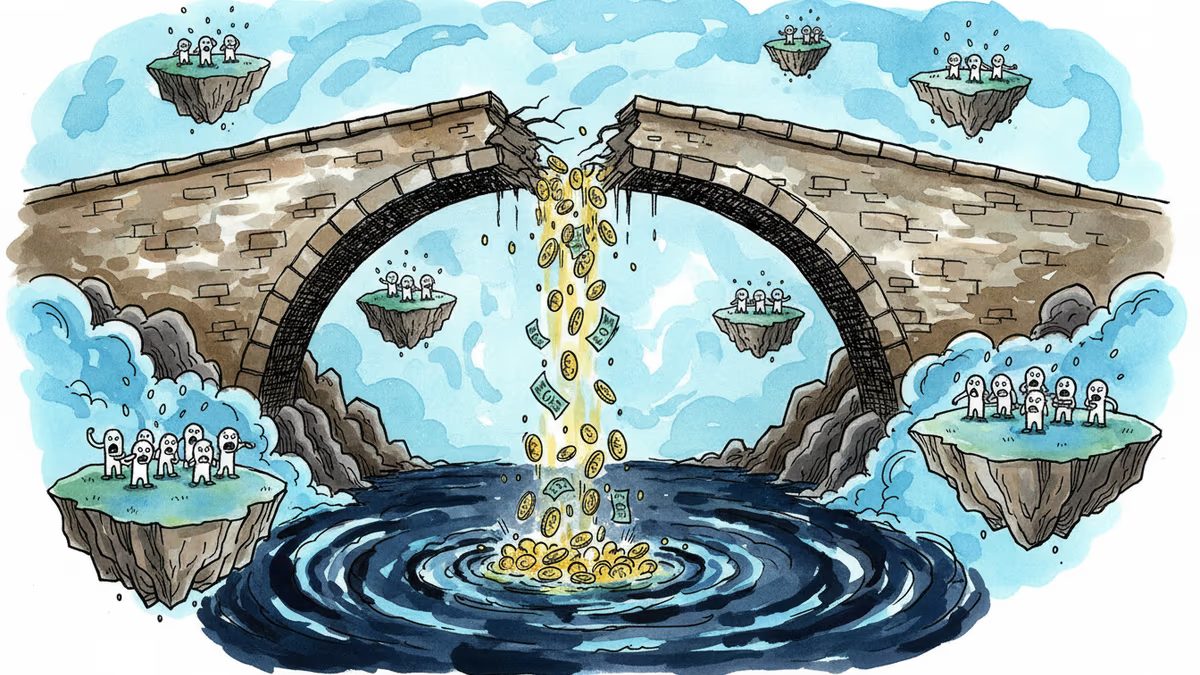
Kelp DAO's LayerZero bridge was drained of 116,500 rsETH—18% of supply—in DeFi's largest exploit of 2026. What it means for cross-chain security and your assets.
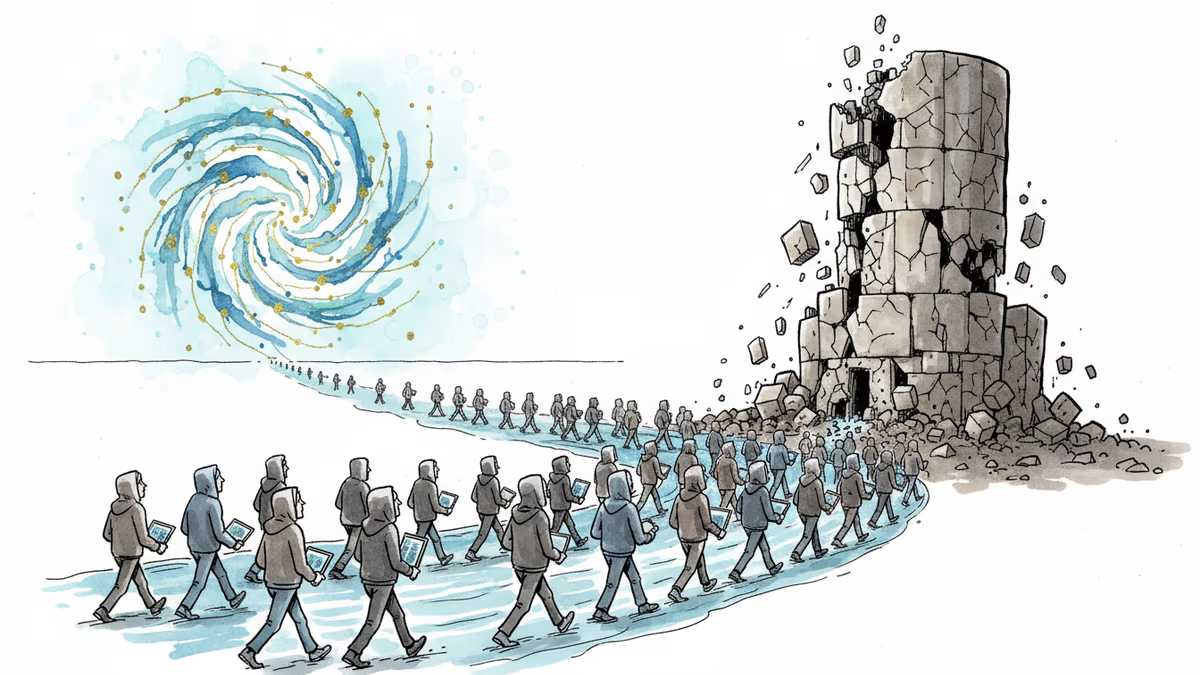
Blockchain's developer exodus is real: weekly crypto commits down 75%, active devs off 56% since early 2025. Where did they go? Straight into AI infrastructure. What this means for your portfolio and career.

Across Protocol proposed dissolving its DAO and converting to a U.S. C-corp, offering token holders equity or a 25% cash premium. ACX surged 80%. Is this the beginning of DeFi's corporate turn?

Culper Research shorts Ethereum citing 'death spiral' risk after Fusaka upgrade crashed fees 90%. BitMine sits on $7.4B unrealized losses while Vitalik sells.
Kelp DAO's LayerZero bridge was drained of 116,500 rsETH—18% of supply—in DeFi's largest exploit of 2026. What it means for cross-chain security and your assets.
Blockchain's developer exodus is real: weekly crypto commits down 75%, active devs off 56% since early 2025. Where did they go? Straight into AI infrastructure. What this means for your portfolio and career.
Across Protocol proposed dissolving its DAO and converting to a U.S. C-corp, offering token holders equity or a 25% cash premium. ACX surged 80%. Is this the beginning of DeFi's corporate turn?
Culper Research shorts Ethereum citing 'death spiral' risk after Fusaka upgrade crashed fees 90%. BitMine sits on $7.4B unrealized losses while Vitalik sells.
Thoughts
Share your thoughts on this article
Sign in to join the conversation