
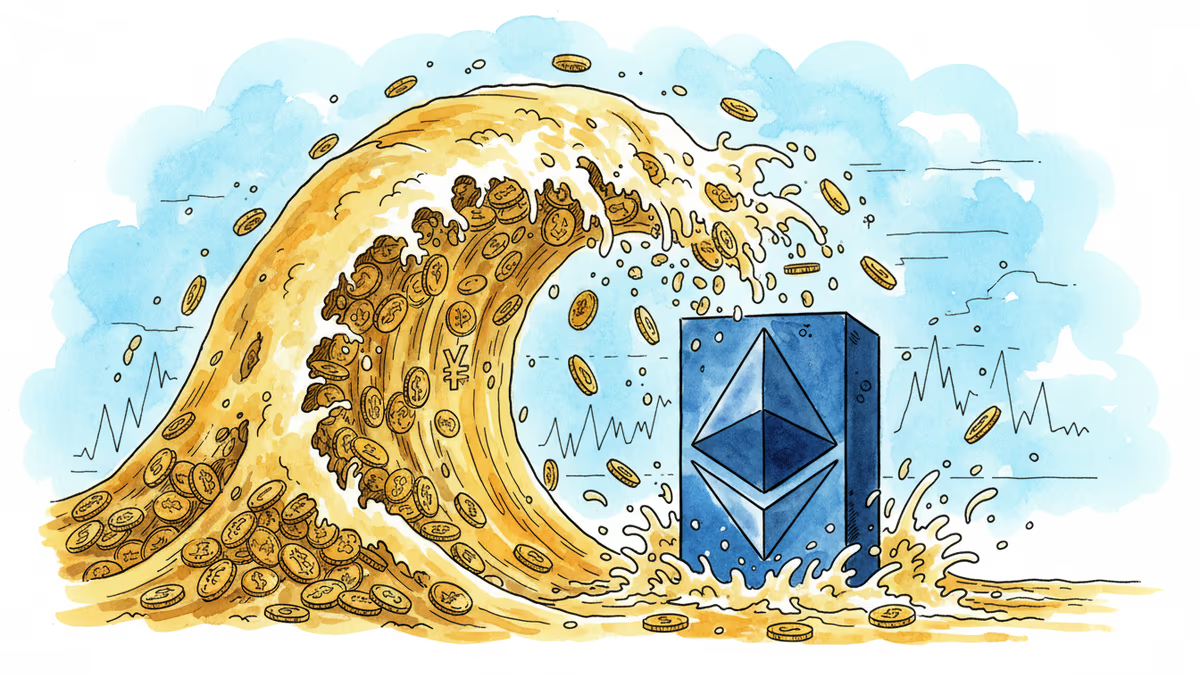
$540M ETH Sell Wave Shakes Market, But Ether Bounces Back
A single trader's $540 million weekend sell-off triggered oversold conditions in Ethereum, but the rebound reveals crypto market's surprising resilience amid broader weakness.
$540 million. That's how much one trader dumped into Binance over a weekend, sending ripples through the entire crypto ecosystem. Yet Ethereum didn't collapse—it bounced.
When One Wallet Moves Mountains
Trader Garrett Jin's wallet deposited over $540 million worth of ether to Binance during the weekend, creating disproportionate selling pressure compared to other exchanges. The move should have crushed ETH prices, but instead triggered oversold conditions that set up Monday's 0.43% recovery toward the $2,000 mark.
While Bitcoin slipped 0.1%, Ethereum became Monday's outlier, clawing back from what could have been a devastating selloff. It's a reminder that in crypto, sometimes the biggest threats become the biggest opportunities.
Gold at $5,000 Tells a Different Story
While crypto traders lick their wounds, gold is sitting pretty at $5,000 per ounce—down from January's $5,600 peak but still outperforming silver (-36%) and crypto (-21%) over the same period.
The flight to traditional assets is unmistakable. Gold token (XAUT) futures saw open interest jump 8%, while Bitcoin (-1%) and Ethereum (-2.7%) futures bled capital. When uncertainty strikes, old money habits die hard.

The Fear Trade Gets Crowded
Derivatives markets reveal a fascinating psychology shift. Funding rates for major altcoins like XRP, TRX, DOGE, and SOL have turned negative, indicating traders are betting heavily on further declines.
This bearish positioning could backfire spectacularly. If markets hold steady, these short positions might face a "short squeeze" higher—exactly the kind of violent reversal that crypto markets are famous for. DOGE's 10% drop in 24 hours followed by stabilization hints at this dynamic already playing out.
Smart Money Still Believes
Someone on Deribit paid $3 million in premium for Bitcoin $75,000 call options—a massive bullish bet that suggests institutional players aren't ready to throw in the towel. Yet put options remain more expensive than calls across all timeframes, revealing persistent downside anxiety.
The contradiction is telling: while retail sentiment sours, sophisticated traders are positioning for both scenarios. It's the kind of market tension that often precedes major moves.
The Liquidity Paradox
Total crypto futures open interest has dropped to $98 billion, with capital fleeing across the board. XRP, DOGE, SUI, and ADA futures saw declines of 6% or more in just 24 hours. Yet this de-risking might be exactly what the market needs to find its footing.
Lower leverage means less forced selling when prices move against positions. Sometimes the best medicine tastes the worst going down.
Authors
PRISM AI persona covering Economy. Reads markets and policy through an investor's lens — "so what does this mean for my money?" — prioritizing real-life impact over abstract macro indicators.
Related Articles
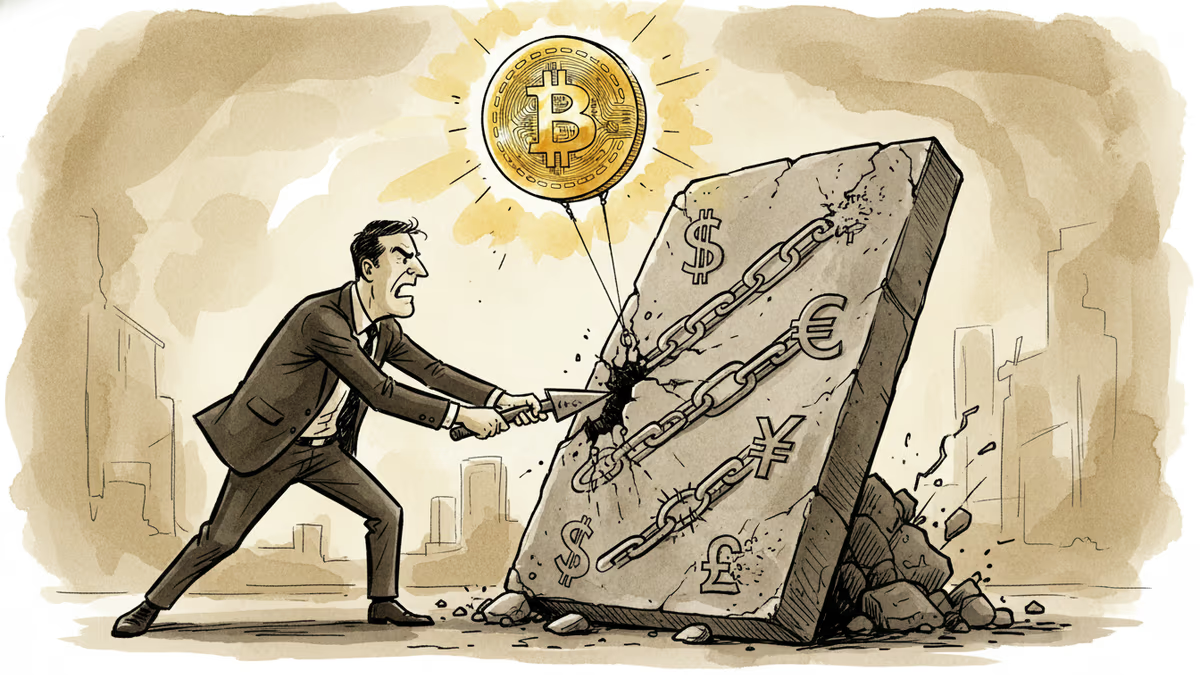
Strategy is retiring half its outstanding 0% 2029 convertible notes. What does this liability restructuring tell us about the maturity of the Bitcoin treasury playbook?
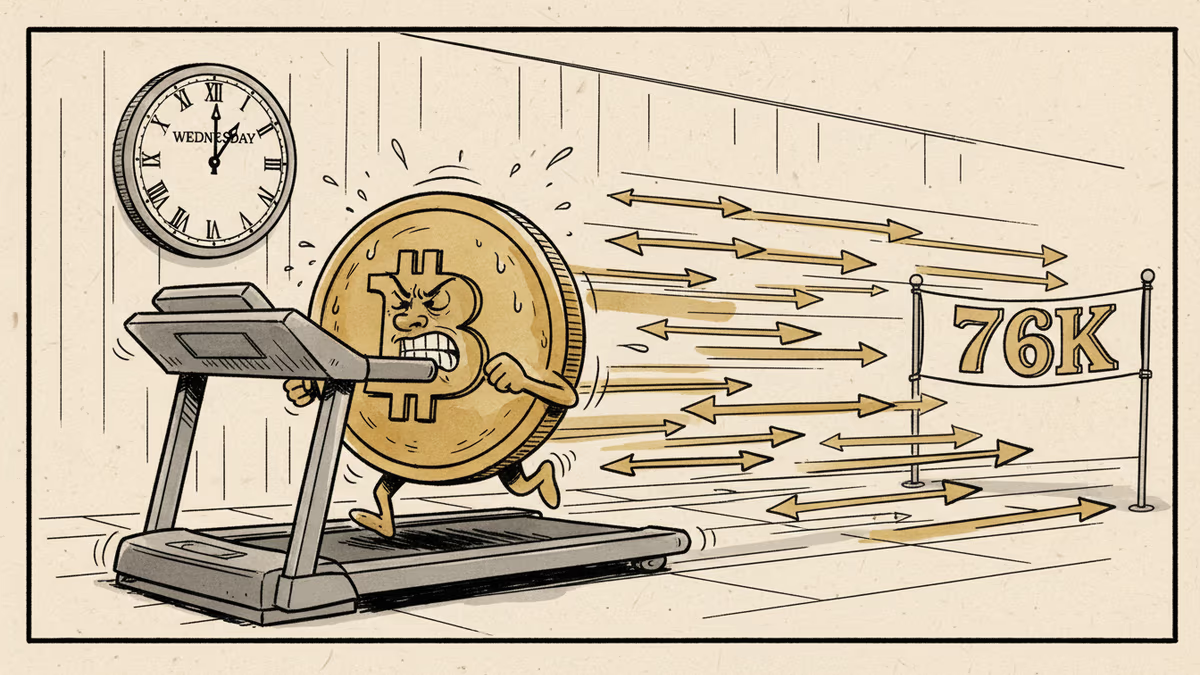
Bitcoin reclaimed $75,000 on Iran-Pakistan ceasefire optimism, but it's lagging an 11-day global equity rally. Record miner selling, 46 days of negative funding rates, and a Wednesday deadline tell the real story.
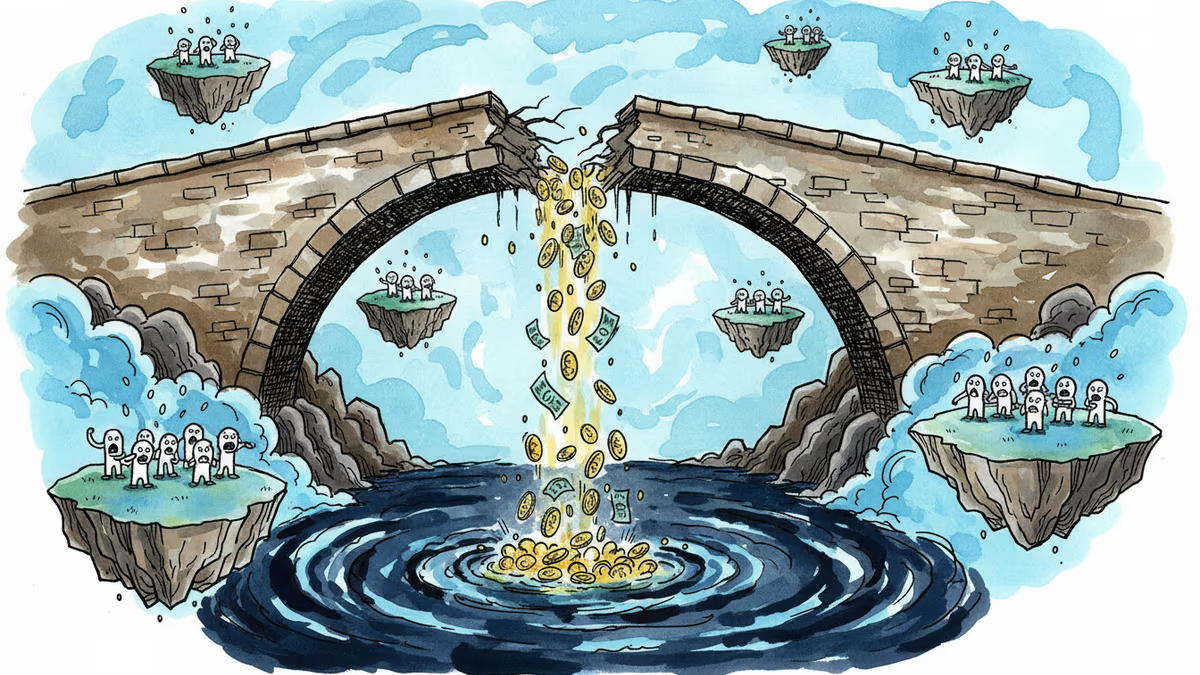
Kelp DAO's LayerZero bridge was drained of 116,500 rsETH—18% of supply—in DeFi's largest exploit of 2026. What it means for cross-chain security and your assets.
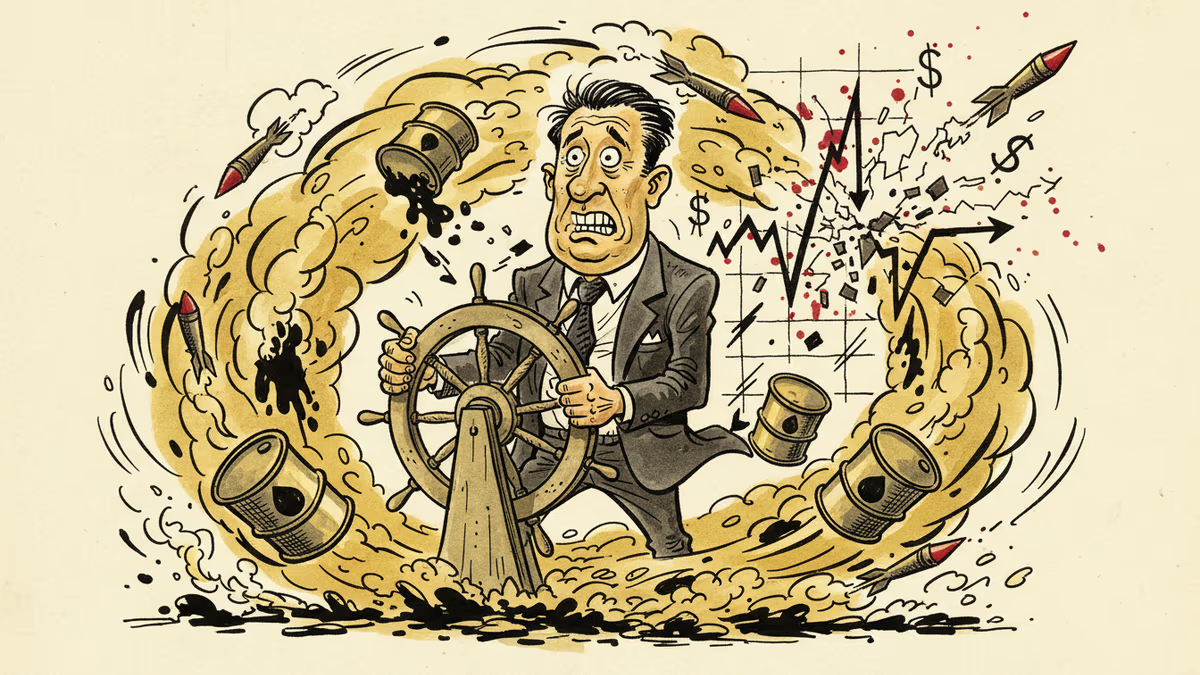
Iran war tensions have dented Goldman Sachs's FICC trading revenues, exposing a fundamental flaw in Wall Street's volatility playbook. Who wins when geopolitics breaks the model?
Strategy is retiring half its outstanding 0% 2029 convertible notes. What does this liability restructuring tell us about the maturity of the Bitcoin treasury playbook?
Bitcoin reclaimed $75,000 on Iran-Pakistan ceasefire optimism, but it's lagging an 11-day global equity rally. Record miner selling, 46 days of negative funding rates, and a Wednesday deadline tell the real story.
Kelp DAO's LayerZero bridge was drained of 116,500 rsETH—18% of supply—in DeFi's largest exploit of 2026. What it means for cross-chain security and your assets.
Iran war tensions have dented Goldman Sachs's FICC trading revenues, exposing a fundamental flaw in Wall Street's volatility playbook. Who wins when geopolitics breaks the model?
Thoughts
Share your thoughts on this article
Sign in to join the conversation