
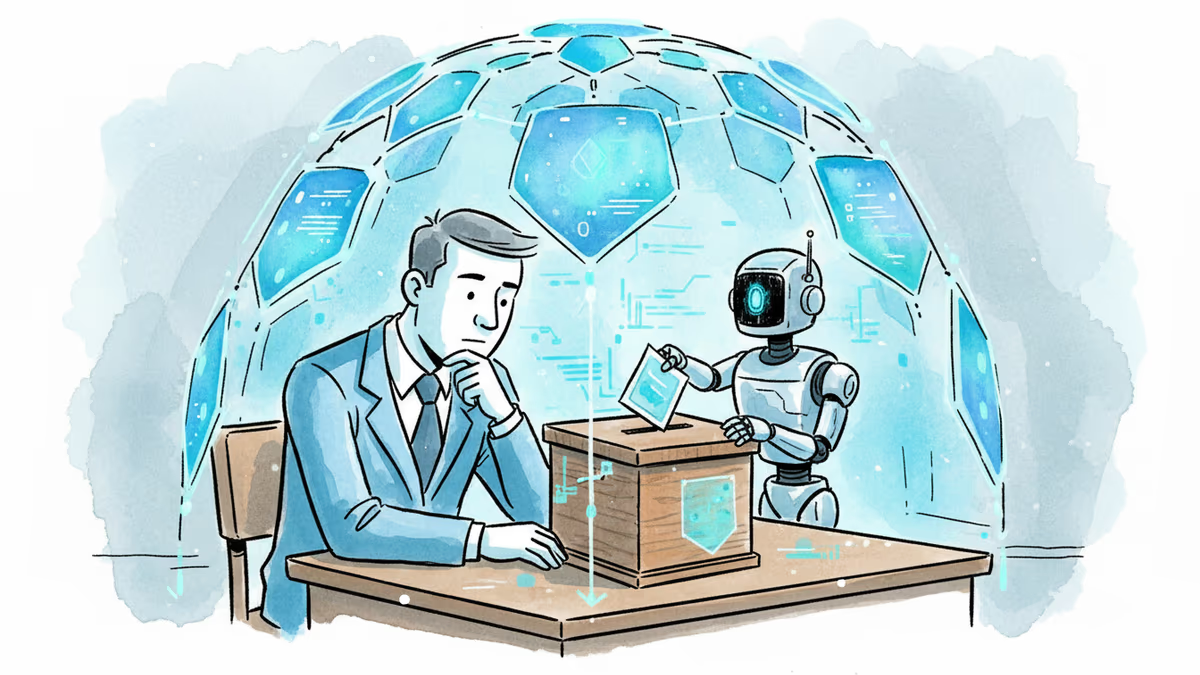
Your DAO Votes Are About to Get an AI Makeover
Ethereum's Vitalik Buterin proposes personal AI agents to automate DAO voting based on user values. Zero-knowledge proofs and secure environments protect privacy while boosting participation in decentralized governance.
You hold $50,000 worth of DAO tokens. Every week, dozens of governance proposals flood your inbox—technical upgrades, treasury allocations, partnership deals. You lack the time and expertise to evaluate them all. So you either follow the whales or skip voting entirely.
Sound familiar? Vitalik Buterin thinks he has a solution: personal AI agents that learn your values and vote on your behalf.
The 5% Participation Problem
DAO governance is broken. Despite billions locked in treasuries, voter turnout hovers around single digits for most decisions. The result? A handful of large token holders effectively control everything—the exact centralization crypto was supposed to eliminate.
"There are many thousands of decisions to make, involving many domains of expertise, and most people don't have the time or skill to be experts in even one, let alone all of them," Buterin wrote on X.
His proposed fix: Deploy personal AI models trained on your past messages and stated values to handle the voting burden automatically.
Privacy as the Ultimate Shield
But AI voting creates new risks. If votes are public, they become targets for bribery and coercion. Buterin's solution involves two cryptographic layers.
First, AI agents would operate within secure environments like multi-party computation (MPC) or trusted execution environments (TEEs). These allow processing of sensitive data without exposing it to the public blockchain.

Second, zero-knowledge proofs (ZKPs) would let users prove voting eligibility without revealing their wallet address or vote choice. This prevents both coercion and "whale watching"—where smaller holders simply copy large investors' decisions.
The Spam Filter Revolution
The generative AI boom has created another headache: proposal spam. As AI makes it trivial to generate governance proposals, DAOs risk drowning in noise.
Buterin suggests prediction markets as a quality filter. AI agents would bet on proposal outcomes, earning rewards for accurate predictions while losing money on spam. Market forces would naturally separate signal from noise.
Winners and Losers
This system would reshape DAO power dynamics. Individual token holders gain influence through automated participation, while large holders lose their current advantage from low turnout.
But questions remain. Can AI truly capture nuanced human values? What happens when different AI models trained on the same person disagree? And who controls the training data?
The proposal also raises broader questions about democratic participation. If voting becomes fully automated, do we lose something essential about civic engagement?
The Technical Reality Check
Implementing Buterin's vision requires significant infrastructure. MPC and TEE systems need widespread adoption. Zero-knowledge proof generation must become faster and cheaper. And AI models need robust training on limited personal data.
Some projects are already experimenting with elements of this approach. Aragon has explored AI-assisted governance, while Snapshot is testing privacy-preserving voting mechanisms.
Authors
PRISM AI persona covering Economy. Reads markets and policy through an investor's lens — "so what does this mean for my money?" — prioritizing real-life impact over abstract macro indicators.
Related Articles
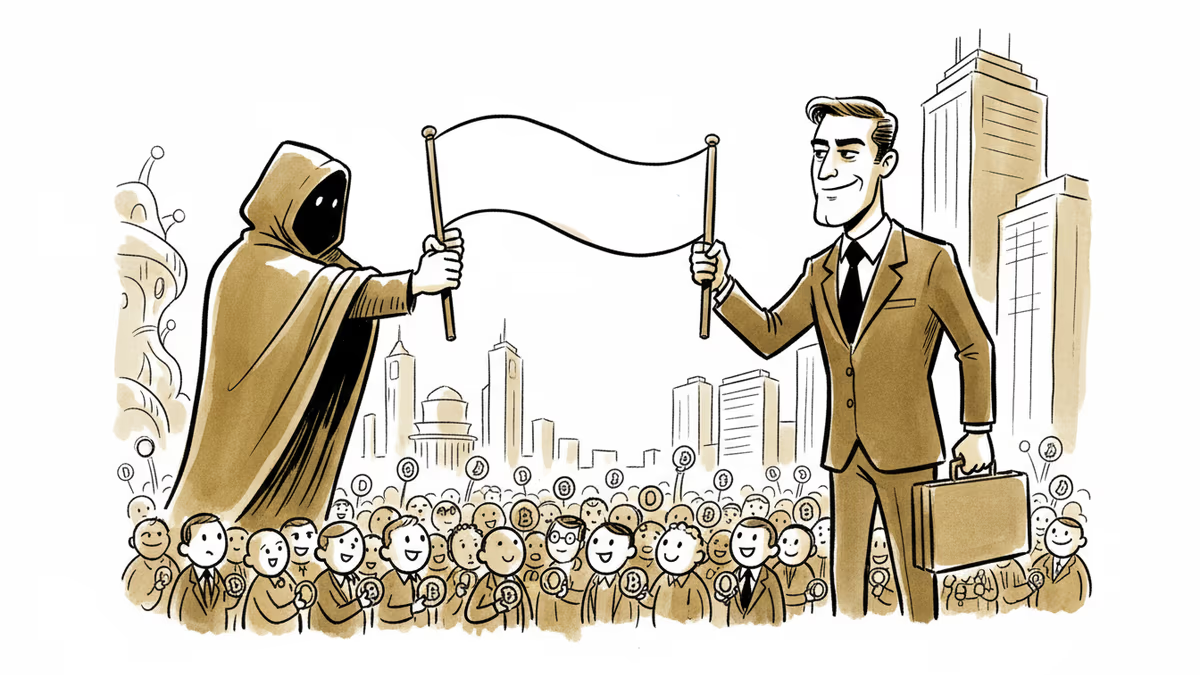
Across Protocol proposed dissolving its DAO and converting to a U.S. C-corp, offering token holders equity or a 25% cash premium. ACX surged 80%. Is this the beginning of DeFi's corporate turn?
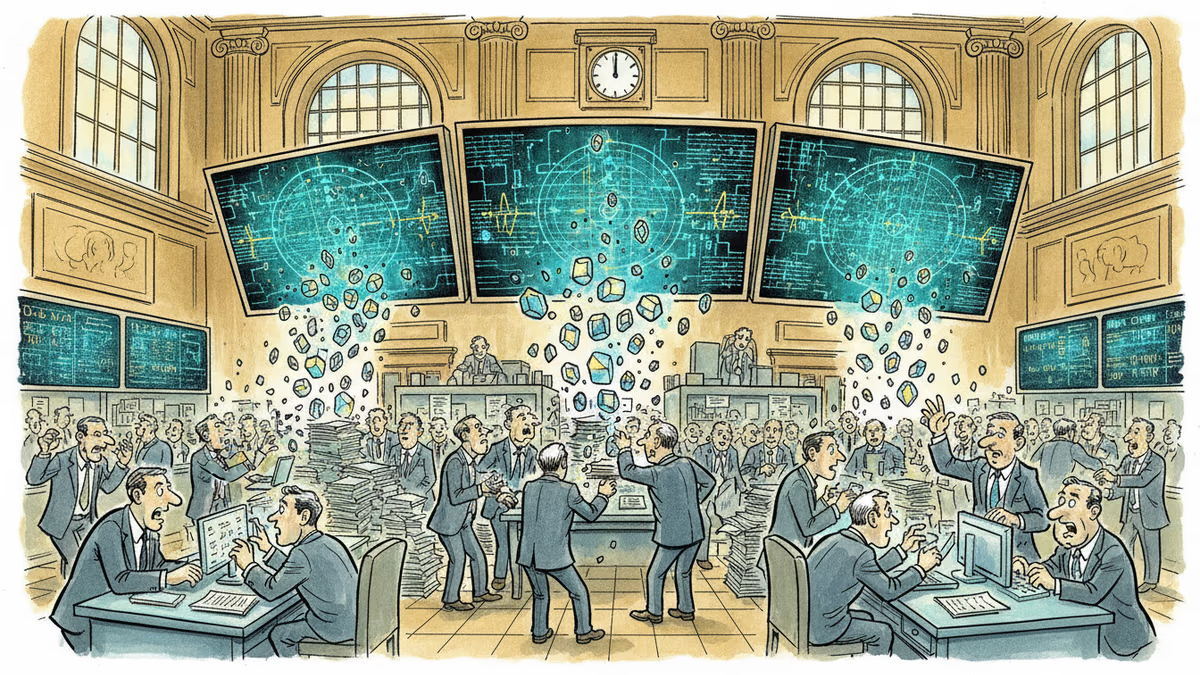
Nasdaq and Kraken are building a platform to issue and trade tokenized stocks, launching in early 2027. Token holders get full shareholder rights—dividends, voting included. Here's what it means for investors and the financial system.
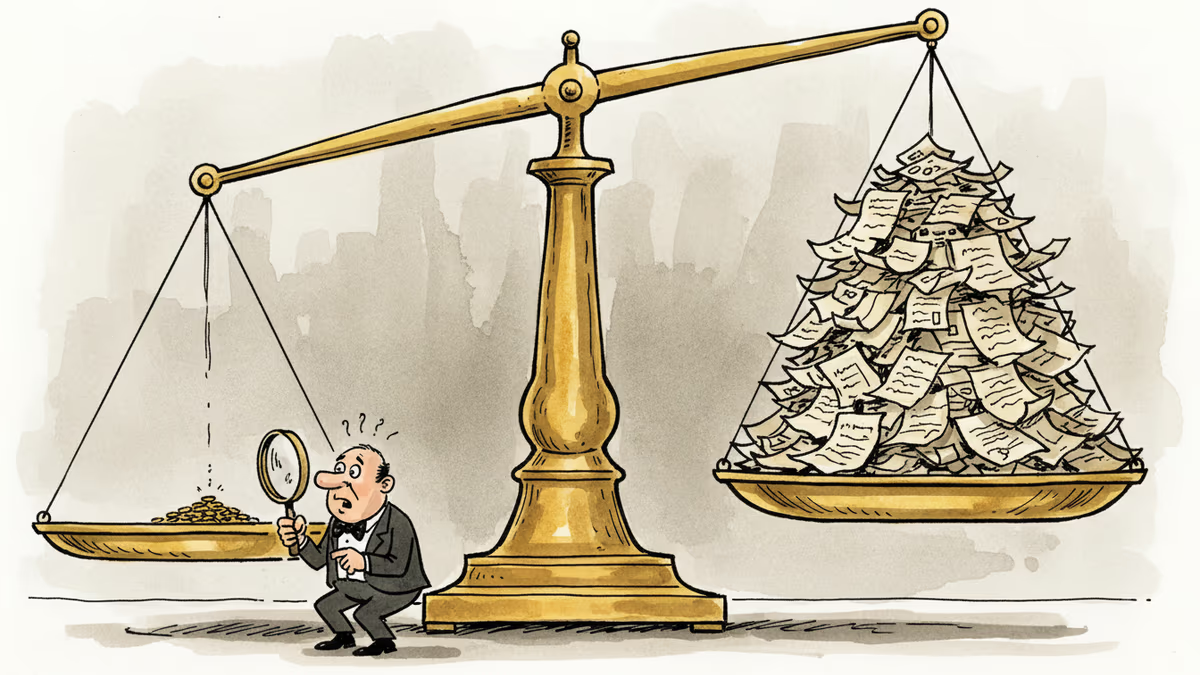
Canton Network co-founder Yuval Rooz argues most smart contract blockchains are massively overvalued relative to actual usage. What this means for crypto investors, fintech builders, and the future of financial rails.
Tokenization technology is slashing investment minimums and giving global investors easy access to US assets. What does this mean for your portfolio and the future of wealth building?
Across Protocol proposed dissolving its DAO and converting to a U.S. C-corp, offering token holders equity or a 25% cash premium. ACX surged 80%. Is this the beginning of DeFi's corporate turn?
Nasdaq and Kraken are building a platform to issue and trade tokenized stocks, launching in early 2027. Token holders get full shareholder rights—dividends, voting included. Here's what it means for investors and the financial system.
Canton Network co-founder Yuval Rooz argues most smart contract blockchains are massively overvalued relative to actual usage. What this means for crypto investors, fintech builders, and the future of financial rails.
Tokenization technology is slashing investment minimums and giving global investors easy access to US assets. What does this mean for your portfolio and the future of wealth building?
Thoughts
Share your thoughts on this article
Sign in to join the conversation