
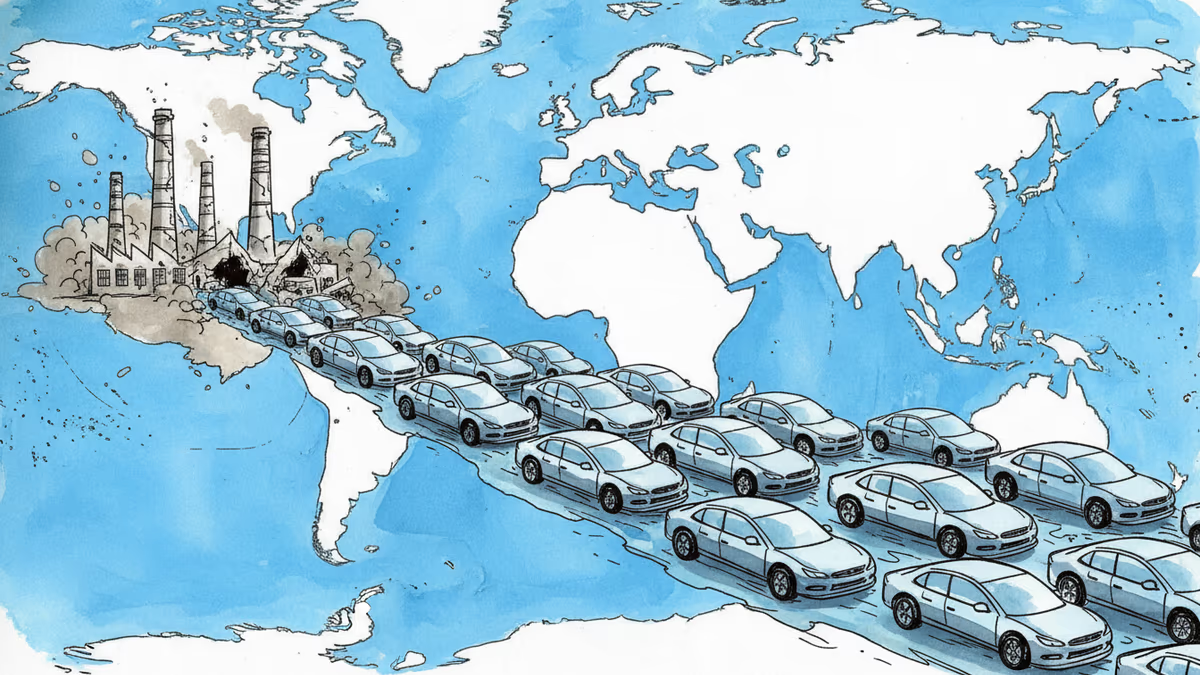
China's EV Exodus: Export or Die
Chinese EV makers face brutal consolidation with only 15 of 129 brands expected to survive. Exports surge 70% as companies flee domestic price wars for global markets
3.43 Million Cars Tell a Story of Desperation
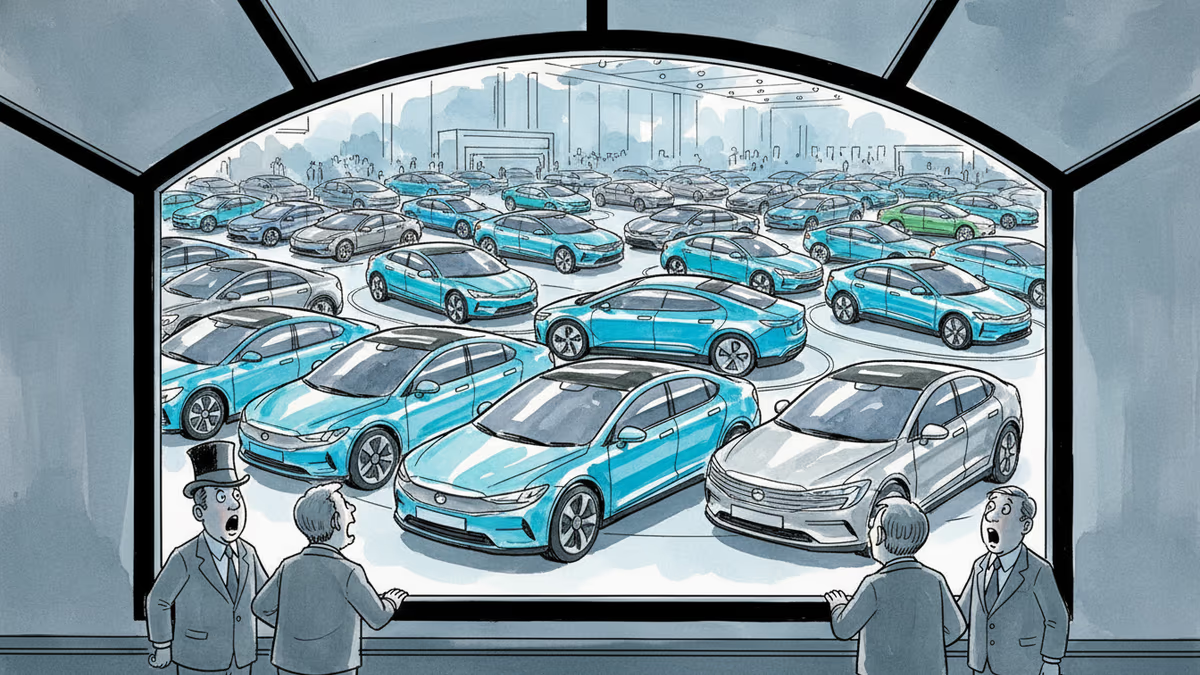
China exported 3.43 million electric vehicles last year—a 70% surge that sounds like triumph. But dig deeper, and you'll find desperation. Of China's 129 EV brands, analysts predict only 15 will turn a profit by 2030.
"Competition in 2026 will be even more brutal and bloody," warned XPeng CEO He Xiaopeng. Nio founder William Li called it the "final battle" in a memo to staff. They're not being dramatic. Since 2018, over 400 EV brands have collapsed.
The math is unforgiving. When government subsidies shrink and domestic price wars intensify, only the strongest survive—or find new hunting grounds abroad.
The Domestic Market Turns Hostile
China this year halved its EV purchase tax exemption, imposing a 5% levy for the first time. The message was clear: the training wheels are coming off.
The casualties are mounting. HiPhi halted production when debt overwhelmed assets. WM Motor, once backed by Baidu, went under in 2023. Neta Auto's parent company filed for bankruptcy after failing to pay wages, stranding Thai customers without after-sales support.
Only three Chinese EV startups met their delivery targets last year. The rest? Failed to deliver on their promises.
Going Global to Stay Alive
BYD, now the world's biggest EV seller after overtaking Tesla, aims to export 1.3 million vehicles this year—up 25% from last year. Geely targets overseas sales growth of more than 50%.
For the first time in 2025, Chinese carmakers invested more in foreign supply chains than domestic ones. It's a long-term bet on markets beyond China's borders.

The strategy is working. In Thailand, Chinese brands jumped from single-digit market share four years ago to almost one-fifth of passenger car sales, eating into Japanese dominance. Indonesia entered China's top 10 export markets after mandating local EV production for tax breaks.
Mexico and the UAE were China's fastest-growing EV export markets, with 221,000 and 192,000 vehicles sold respectively.
The Tariff Wars Begin
But the path abroad is treacherous. The U.S. maintains 100% tariffs and a national security ban on most Chinese EVs. Yet some barriers are falling.
Canada last month slashed tariffs from 100% to 6.1% for an annual quota of 49,000 vehicles. The Canadian auto industry immediately pushed back, claiming the policy would "undermine Canada's auto sector."
The EU struck a different deal—dropping duties of up to 35% in exchange for Chinese carmakers committing to sell above a minimum price floor. It's protectionism with a gentler face.
"The most important factor determining success is geopolitics," said Yichao Zhang of AlixPartners. "Tariffs, regulations, supply chain issues—it all matters."
Detroit's Dilemma
For American automakers, China's EV exodus creates an uncomfortable reality. While Ford and GM struggle with EV profitability, Chinese companies are flooding global markets with cheaper alternatives.
The irony is stark: U.S. companies that pioneered mass auto production now watch Chinese manufacturers master the same playbook for electric vehicles. The question isn't whether Chinese EVs will reshape global markets—it's how quickly.
Consumers are the clear winners. "More competition usually means lower prices and better products," said Felipe Munoz of Car Industry Analysis. But for established automakers, it's an existential challenge.
The New Rules of Survival
Chinese EV makers are learning they must "make cars where they sell them" to win abroad, as Munoz puts it. Local production isn't just about avoiding tariffs—it's about building trust with governments wary of subsidized competition.
The survivors will be those who can navigate this complex landscape of trade wars, local regulations, and consumer preferences. It's no longer about having the best technology—it's about having the best strategy for global expansion.
Authors
Related Articles
Waymo's new Ojai robotaxi isn't just a vehicle upgrade. It's the company's most serious attempt yet at cracking the cost problem that has kept autonomous vehicles from scaling. Here's what's really at stake.
China is restricting AI researchers and startup founders from traveling abroad as the U.S.-China AI performance gap narrows to just 2.7%. What Beijing's talent lockdown means for the global AI race.
Mercedes-AMG's new GT 4-door coupe packs three YASA axial flux motors producing 1,153 hp and 1,475 lb-ft of torque. Here's what it means for the EV performance race—and who actually wins.
Auto China 2026 set records with 1,451 vehicles and 181 world premieres. But the real story isn't the size—it's how Chinese automakers stopped competing on price and started competing on brains.
Waymo's new Ojai robotaxi isn't just a vehicle upgrade. It's the company's most serious attempt yet at cracking the cost problem that has kept autonomous vehicles from scaling. Here's what's really at stake.
China is restricting AI researchers and startup founders from traveling abroad as the U.S.-China AI performance gap narrows to just 2.7%. What Beijing's talent lockdown means for the global AI race.
Mercedes-AMG's new GT 4-door coupe packs three YASA axial flux motors producing 1,153 hp and 1,475 lb-ft of torque. Here's what it means for the EV performance race—and who actually wins.
Auto China 2026 set records with 1,451 vehicles and 181 world premieres. But the real story isn't the size—it's how Chinese automakers stopped competing on price and started competing on brains.
Thoughts
Share your thoughts on this article
Sign in to join the conversation