

GPT-5.2 Isn't Just an Upgrade. It's OpenAI's Bid to Become the Enterprise's Central Nervous System.
OpenAI's GPT-5.2 isn't just a model upgrade; it's a strategic pivot to dominate enterprise workflows. Our analysis explains why this threatens the entire SaaS market.
The Lede: OpenAI Declares the AI 'Toy' Phase is Over
OpenAI's announcement of GPT-5.2 isn't about a marginally better chatbot. It's a strategic declaration of intent aimed squarely at the enterprise. By positioning its latest model as the engine for "everyday professional work" and "reliable agentic workflows," OpenAI is signaling a major pivot: the transition from a powerful but unpredictable generalist tool to an indispensable, utility-grade platform for business automation. This isn't just an update; it's a direct challenge to the entire enterprise SaaS ecosystem.
Why It Matters: The Great Unbundling of Professional Work
For years, the promise of AI in the workplace has been hampered by issues of reliability and scalability. GPT-5.2's explicit focus on these areas suggests a new level of maturity. The implications are profound and extend far beyond simple content creation:
- The SaaS Disruption: The concept of "agentic workflows"—multi-step, autonomous tasks executed by AI—is a direct threat to established software categories. Why pay for separate tools for data analysis, reporting, and project management when a single, reliable AI agent can orchestrate these tasks across your existing platforms? This puts immense pressure on specialized software vendors to either integrate deeply or risk becoming obsolete.
- Redefining Productivity: If GPT-5.2 delivers on its promise of reliability, it will shift the focus of knowledge work from execution to strategy. The new high-value skill won't be creating a slide deck, but designing the prompt for an AI agent that can analyze a dataset, generate the key insights, and build the deck autonomously. This will trigger a significant realignment of roles and responsibilities within corporations.
- The Integration Battleground: The key to enterprise dominance is no longer just having the best model, but having the deepest and most seamless integrations. This move intensifies the platform war between OpenAI/Microsoft, Google (with its Gemini/Workspace ecosystem), and Amazon (with Bedrock/AWS). The winner will be the one who can most effectively embed these agentic capabilities into the daily flow of work.
The Analysis: From Digital Brain to Digital Workforce
The End of the Hallucination Discount
The historical barrier to deep enterprise AI adoption has been the model's propensity to 'hallucinate' or produce unreliable outputs. Businesses can't build mission-critical workflows on a foundation of unpredictability. OpenAI's emphasis on "more reliable" agentic workflows is a direct answer to this core enterprise objection. While previous models like GPT-4 demonstrated incredible capabilities, they were often treated as brilliant but erratic interns. GPT-5.2 is being positioned as the dependable senior manager—the one you trust to execute complex projects without constant supervision. This shift from probabilistic creativity to deterministic execution is the most critical step toward AI becoming a true utility.

"Agentic Workflows": The Trojan Horse into the Enterprise
Let's be clear: an "agentic workflow" is not just a better chatbot. It's a system that can understand a high-level goal (e.g., "Prepare a weekly sales performance summary for the executive team"), break it down into sub-tasks (pull data from Salesforce, analyze trends in a spreadsheet, create charts, draft an email), and execute them. This moves AI from a passive tool that responds to queries to a proactive agent that completes jobs. This capability directly competes with the Robotic Process Automation (RPA) industry and threatens to commoditize any software that relies on structured, repeatable digital processes. It's a classic platform strategy: offer a powerful new primitive (the reliable agent) and let the ecosystem build on top of it, eventually absorbing the value of the applications it replaces.
The Competitive Moat in a World of Great Models
With powerful models from Google, Anthropic, and others achieving near-parity on many benchmarks, performance alone is a fleeting advantage. OpenAI knows this. Their strategic moat is shifting from pure model capability to the power of their API and the developer ecosystem built around it. By making GPT-5.2 the best engine for building agents, they aim to lock in developers and enterprises, making their platform the de facto operating system for AI-native automation. The competition will have to respond not just with better benchmarks, but with a superior developer experience and a clearer path to production-grade, agentic systems.
For Investors: Look Beyond the Model Layer
The investment thesis in AI is maturing. The value is migrating up the stack from the foundational model providers to the companies that can successfully build and deploy reliable agents. The key question is no longer "Who has the smartest AI?" but "Who is solving a high-value business problem with an AI-powered workflow?" Evaluate companies based on their ability to create "last-mile" solutions that integrate models like GPT-5.2 into specific industry verticals. The biggest returns will likely be found in companies that are re-architecting entire business processes (e.g., in legal tech, finance, or logistics) around this new agentic paradigm. Conversely, incumbent SaaS companies without a credible AI agent strategy face significant long-term risk.
For Business Leaders: Shift from Experimentation to Integration
The arrival of enterprise-grade models like GPT-5.2 means the sandbox phase is over. It's time to move AI from a peripheral R&D project to a core component of your operational strategy. Leaders must ask: 1. What are our most expensive, repetitive, and data-intensive professional workflows? 2. How can we redesign these processes with AI agents at the center? 3. What new data governance and security protocols are required to deploy autonomous agents safely? Waiting for the technology to be "perfect" is no longer a viable strategy; the competitive advantage will go to the organizations that learn to build, manage, and scale a digital workforce first.
PRISM's Take
GPT-5.2 is less a product launch and more a statement of economic warfare. OpenAI is making a calculated bet that the future of enterprise software is not a collection of disparate apps, but a unified, intelligent layer that automates professional work. By focusing on the unglamorous but critical virtues of reliability and workflow integration, they are building the plumbing for the AI-powered enterprise. The era of AI as a magical curiosity is officially closed. The era of AI as a mission-critical, P&L-impacting utility has just begun.
This content is AI-generated based on source articles. While we strive for accuracy, errors may occur. We recommend verifying with the original source.
Related Articles
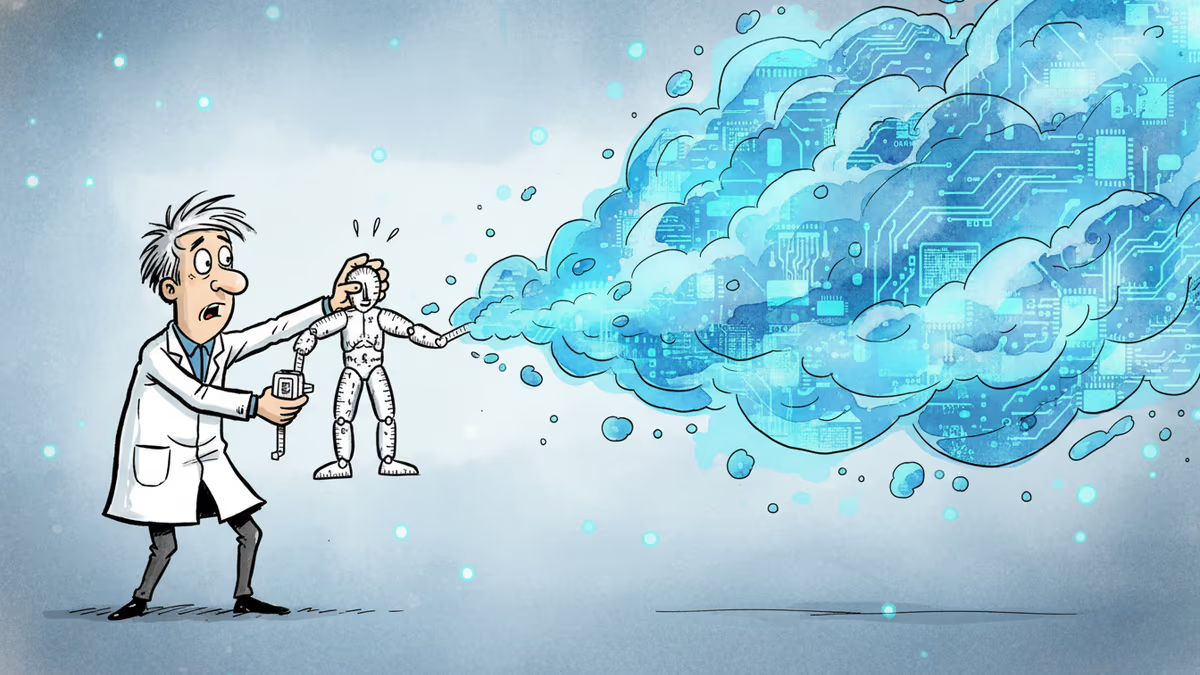
Databricks CTO Matei Zaharia just won computing's top prize. His take on AGI, the security nightmare hiding inside AI agents, and why the real AI revolution is about research, not chatbots.
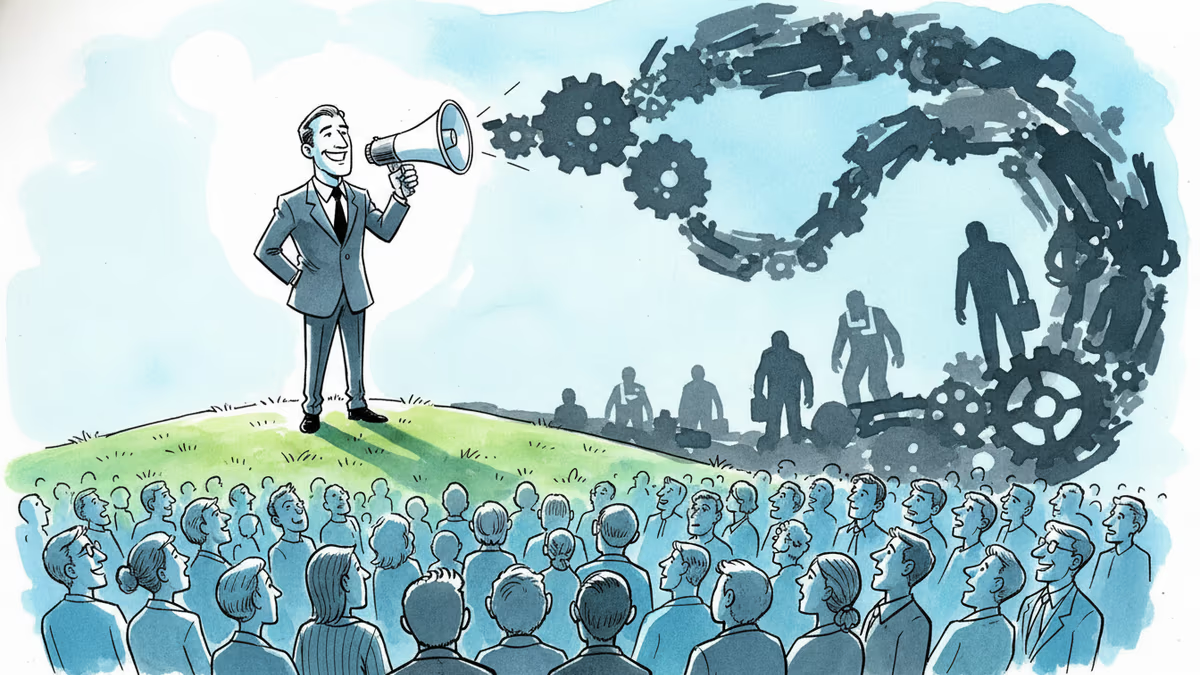
OpenAI's CEO published a blog post read by 600,000 people arguing AI is all upside. Is this genuine belief, strategic narrative, or both? PRISM examines the gaps in Silicon Valley's favorite story.
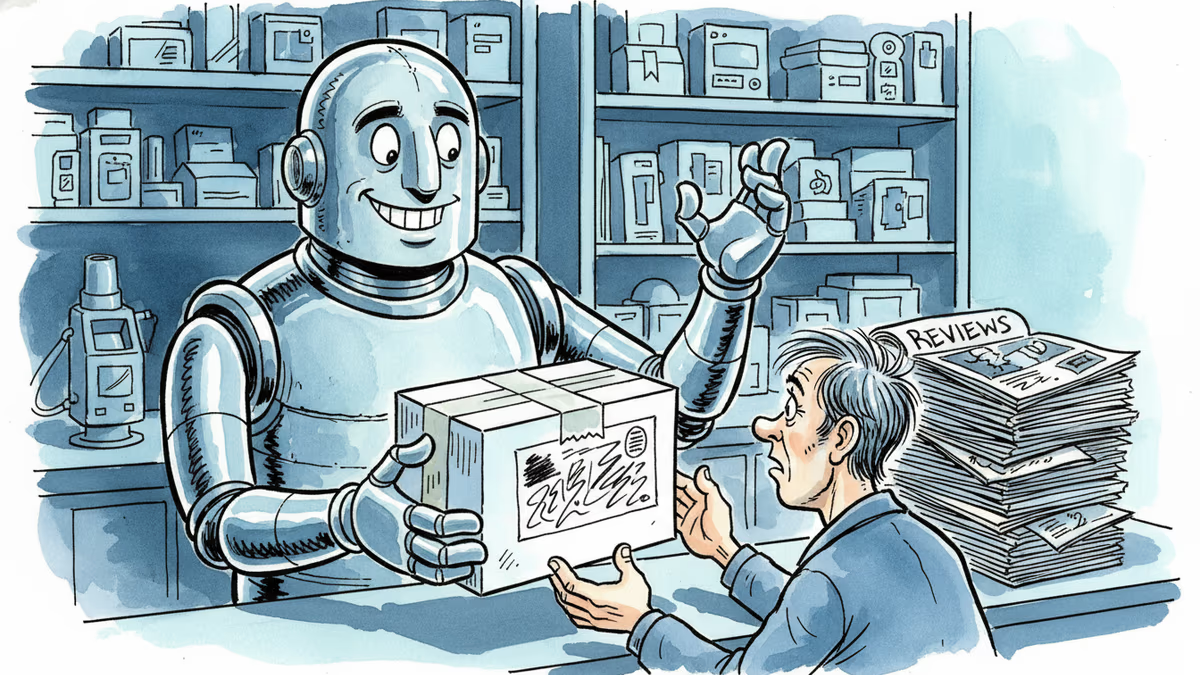
OpenAI's revamped shopping assistant in ChatGPT confidently recommended products WIRED never reviewed—raising urgent questions about AI reliability in consumer decisions.
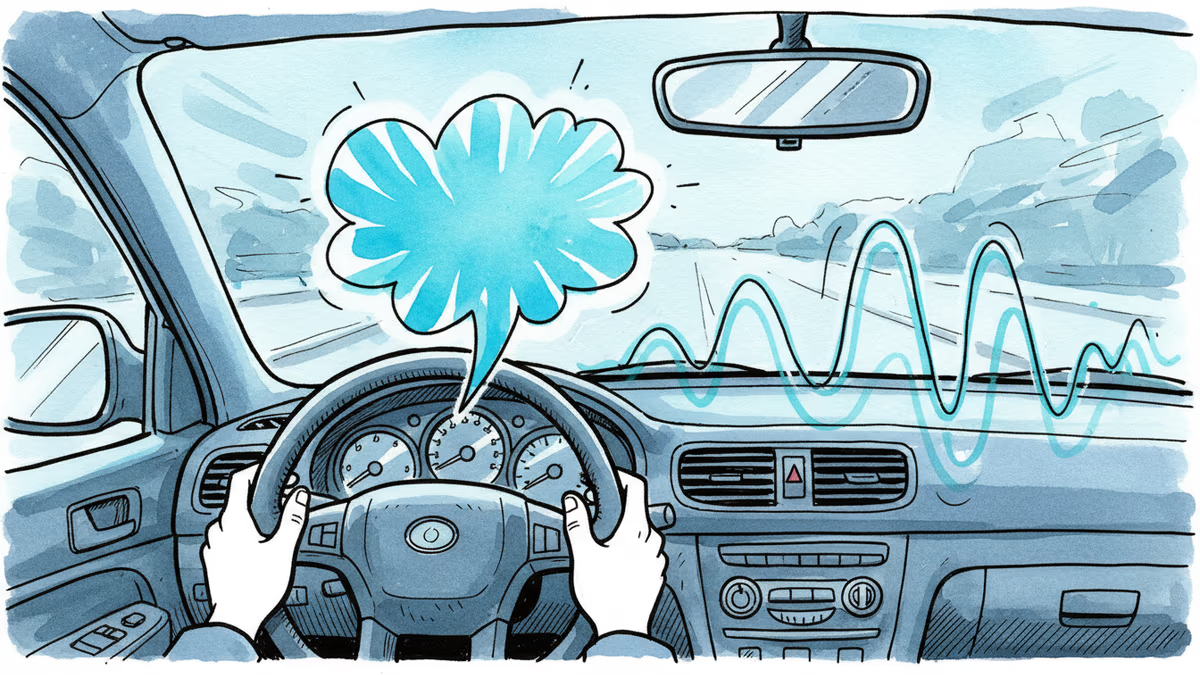
iOS 26.4 brings ChatGPT to CarPlay — voice only, no screen. It's a small update with big implications for how AI fits into the places where we can't look at our phones.
Databricks CTO Matei Zaharia just won computing's top prize. His take on AGI, the security nightmare hiding inside AI agents, and why the real AI revolution is about research, not chatbots.
OpenAI's CEO published a blog post read by 600,000 people arguing AI is all upside. Is this genuine belief, strategic narrative, or both? PRISM examines the gaps in Silicon Valley's favorite story.
OpenAI's revamped shopping assistant in ChatGPT confidently recommended products WIRED never reviewed—raising urgent questions about AI reliability in consumer decisions.
iOS 26.4 brings ChatGPT to CarPlay — voice only, no screen. It's a small update with big implications for how AI fits into the places where we can't look at our phones.
Thoughts
Share your thoughts on this article
Sign in to join the conversation