
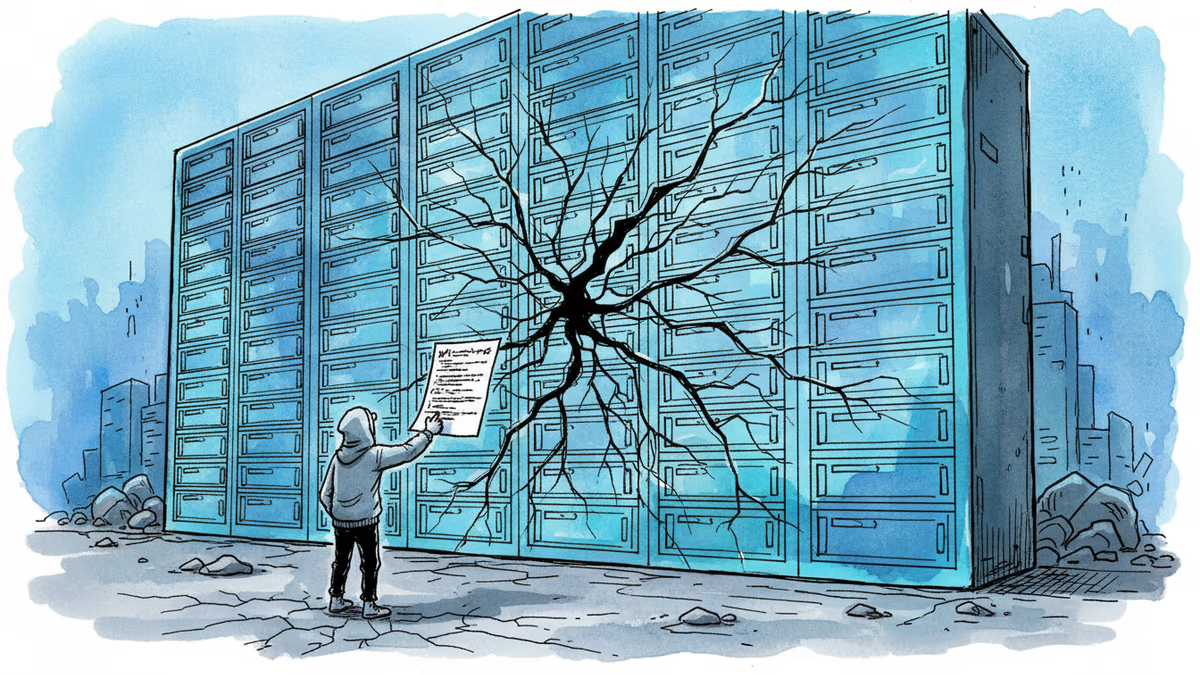
One Python Script. Every Linux Server Since 2017.
A critical Linux kernel vulnerability called CopyFail lets any low-privilege user seize full root access. It affects nearly every major distro, is being actively exploited, and patches haven't reached most systems yet.
A short Python script. That's the entire weapon. A few lines of code are enough to hand an attacker full administrative control over almost every Linux system shipped since 2017.
What Happened — and Why It's Already Too Late to Ignore
Security firm Theori discovered a critical flaw in the Linux kernel tracked as CVE-2026-31431, now publicly known as CopyFail. The vulnerability affects Linux kernel versions 7.0 and earlier — and the exploit code is already public. Within days of disclosure, CISA confirmed the bug is being actively exploited in the wild, and ordered all U.S. civilian federal agencies to patch affected systems by May 15.
The name CopyFail describes the flaw precisely: the kernel — the core of the operating system with near-total access to the entire machine — fails to copy certain data when it should. That failure corrupts sensitive kernel memory, giving an attacker a foothold to piggyback on the kernel's system-wide privileges. The result: a regular, limited-access user account becomes a full root administrator. On a shared server, that's catastrophic.
The scope is unusually broad. Theori verified the exploit against Red Hat Enterprise Linux 10.1, Ubuntu 24.04 LTS, Amazon Linux 2023, and SUSE 16. Developer Jorijn Schrijvershof independently confirmed it works on Debian, Fedora, and Kubernetes clusters. The CopyFail project page puts it bluntly: the same script "roots every Linux distribution shipped since 2017."
The Attack Surface Is Bigger Than One Server

CopyFail can't be triggered over the internet on its own — and that's the one piece of good news. But it's a thin comfort.
Microsoft has confirmed that chaining CopyFail with an internet-facing vulnerability gives a remote attacker full root access to any affected server. The attack paths are multiple: a malicious link or attachment targeting a Linux desktop user, a two-stage exploit combining a remote entry point with CopyFail for privilege escalation, or a supply chain attack where a compromised open-source developer's account plants the exploit in widely used code.
The downstream consequences of a single compromised data center server are severe. One breached machine can expose every application, database, and connected system on the same network — potentially spanning dozens of corporate tenants in a shared hosting environment. Linux runs the majority of the world's data centers. That's not a hypothetical blast radius. It's the actual infrastructure of the internet.
The Patch Exists. The Problem Is Everything After That.
The Linux kernel security team received the disclosure in late March and shipped a patch in roughly one week — a fast turnaround by any standard. But speed at the kernel level doesn't translate to speed at the system level.
Linux isn't a single product. It's an ecosystem of dozens of distributions — each maintained by different vendors, each with its own release cadence and testing pipeline. A kernel patch has to flow downstream through Red Hat, Canonical, Amazon, SUSE, Debian maintainers, and hundreds of smaller distributions before it reaches the actual servers running in production. That pipeline takes time. And during that window, every unpatched system is a live target.
For large enterprises with dedicated security teams, patch prioritization is already underway. For the long tail of small SaaS companies, self-managed VPS operators, and organizations running legacy Linux environments, the reality is grimmer: many don't yet know they're exposed. The open-source model's greatest strength — transparency and community — creates an inherent lag between vulnerability and protection that closed, centrally-updated systems don't face in the same way.
This content is AI-generated based on source articles. While we strive for accuracy, errors may occur. We recommend verifying with the original source.
Related Articles
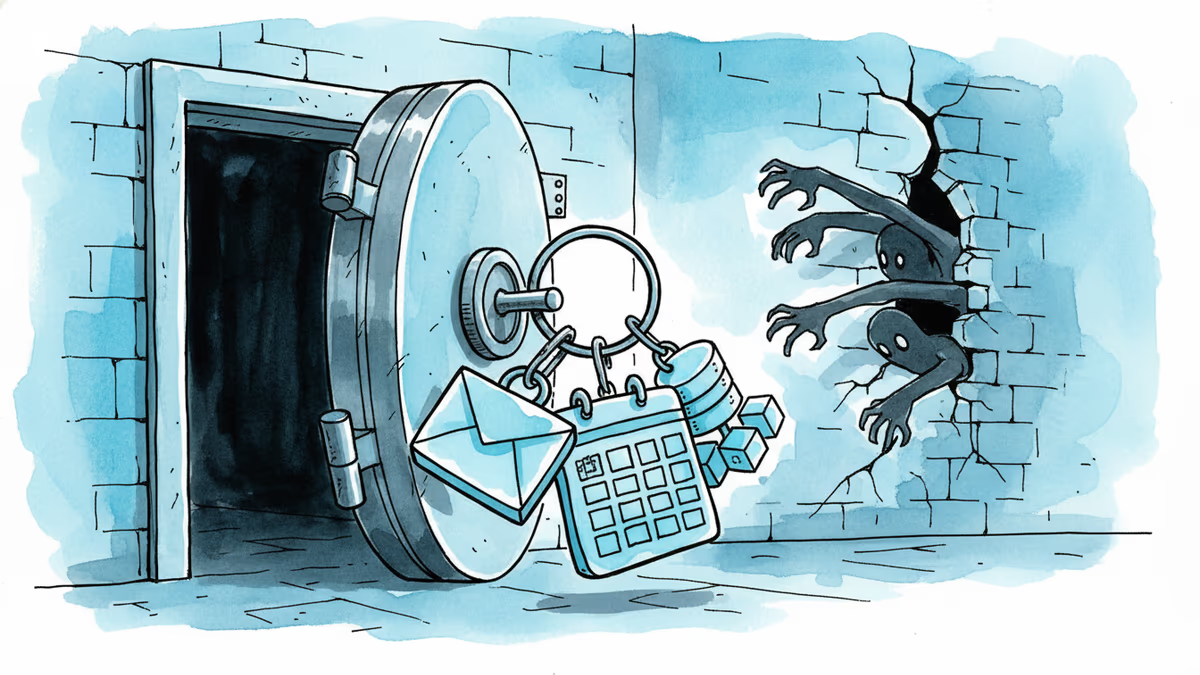
A critical vulnerability in Starlette—downloaded 325 million times per week—puts millions of AI agent servers at risk, exposing stored credentials for email, databases, and third-party services.

GitHub confirmed hackers stole data from 3,800 internal repositories via a poisoned VS Code extension. Here's why developer tools are now the most dangerous attack surface in tech.

A Utah woman was sentenced to life in prison partly because of her Google searches and deleted texts. The Kouri Richins case reveals how digital footprints have become the courtroom's most reliable witness.
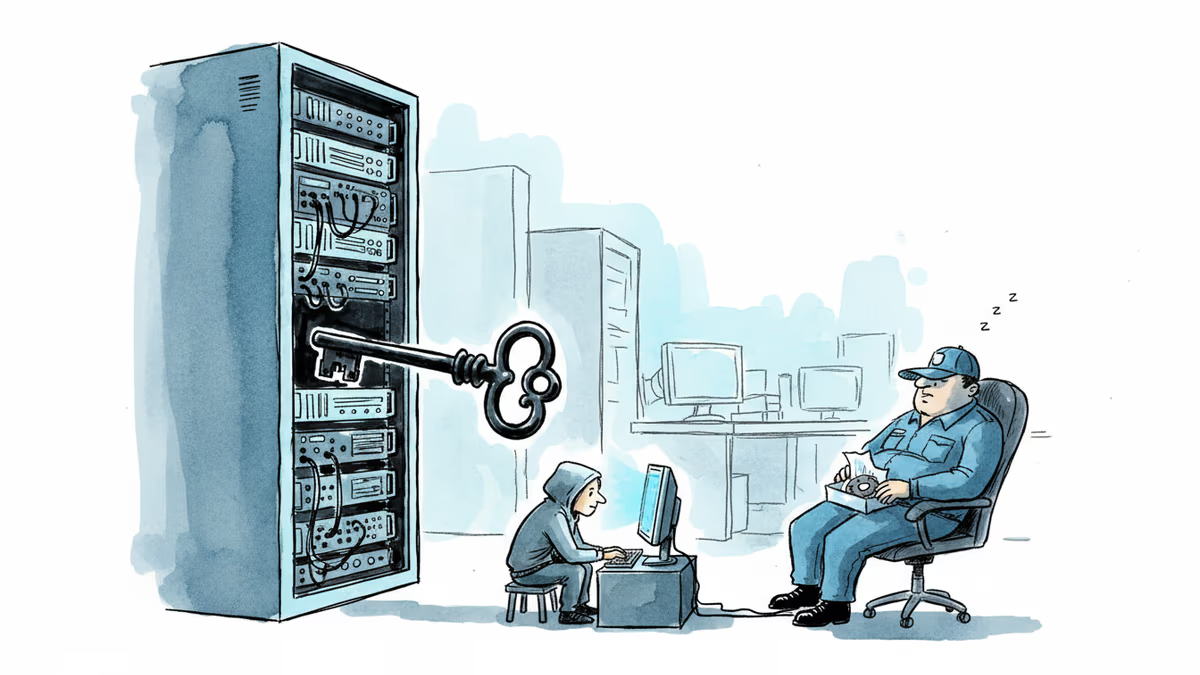
Dirty Frag gives low-privilege users root access on virtually every Linux distro. The exploit code leaked three days ago. Microsoft says attackers are already experimenting with it.
A critical vulnerability in Starlette—downloaded 325 million times per week—puts millions of AI agent servers at risk, exposing stored credentials for email, databases, and third-party services.
GitHub confirmed hackers stole data from 3,800 internal repositories via a poisoned VS Code extension. Here's why developer tools are now the most dangerous attack surface in tech.
A Utah woman was sentenced to life in prison partly because of her Google searches and deleted texts. The Kouri Richins case reveals how digital footprints have become the courtroom's most reliable witness.
Dirty Frag gives low-privilege users root access on virtually every Linux distro. The exploit code leaked three days ago. Microsoft says attackers are already experimenting with it.
Thoughts
Share your thoughts on this article
Sign in to join the conversation